DD
MM
YYYY

PAGES

DD
MM
YYYY

spot_img

PAGES

Home Blog Page 1822

Oyo 2027: How Candidates Are Aligning with Issues

0

As the race for Oyo State’s 2027 governorship election gradually unfolds, a closer look at the early positions of potential candidates and their supporters reveals much about how the contest is taking shape. While formal campaigns are still some distance away, the current landscape already shows important clues about the themes and messages shaping the political conversation.

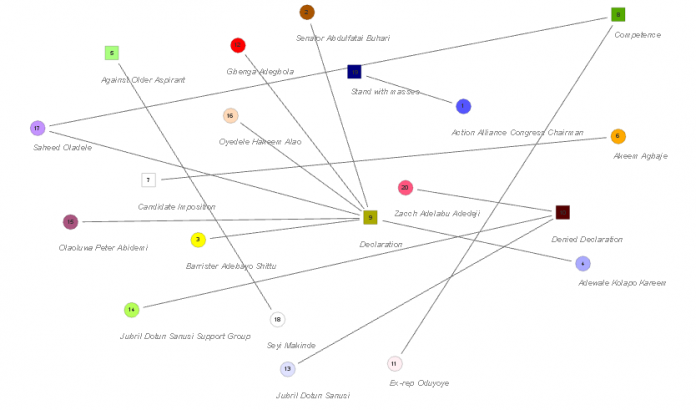
A recent analysis of political actors and their associations with key issues by our analyst highlights the early narratives guiding each player. These themes include competence, declaration of interest, generational change, and concerns over imposed candidates. The ways in which candidates and their support groups connect with these issues provide insight into their strategies and the messages they intend to amplify.

The most prominent issue at this stage appears to be declaration of intent to run. This is more than a ceremonial act. It represents a moment for candidates to make their ambitions known, test their public support, and send signals to allies and opponents. Several figures have already attached themselves clearly to this issue. Notable among them are Zacch Adelabu Adedeji, Chief Saheed Oladele, Mr. Olaoluwa Peter Abidemi, Barrister Adebayo Shittu, and Mr. Adewale Kolapo Kareem. Their visible connection to the idea of declaration suggests they are either already in the race or preparing to formally enter with confidence.

Not all candidates are eager to confirm their intentions so early. Chief Jubril Dotun Sanusi and his support group are both closely tied to the theme of denying a declaration. This may be a calculated move. By keeping his plans unclear, Sanusi remains part of the political conversation while preserving flexibility. This strategy helps maintain public interest without locking him into a specific course of action.

The theme of competence is another key pillar of this emerging political narrative. In a country where leadership is often shaped by personal networks or popularity, a focus on capability and experience is a noteworthy development. Saheed Oladele and a former member of the House of Representatives, Babatunde Oduyoye, are both linked to this issue. Their alignment with competence suggests an attempt to appeal to voters who value skill and performance over political loyalty or familiarity.

Meanwhile, Akeem Agbaje is positioning himself around the concern of candidate imposition. His stance suggests a pushback against internal party decisions that bypass grassroots input. This message could resonate with both party members and the wider public who want greater transparency and fairness in how candidates are chosen. It reflects a wider dissatisfaction with political godfatherism and top-down selection.

Governor Seyi Makinde stands out for a different reason. He is clearly associated with opposition to older aspirants. This indicates a desire to support new leadership, possibly encouraging a generational change in Oyo politics. As a sitting governor, Makinde’s stance may shape his party’s direction and influence which kinds of candidates gain traction. His position could also strengthen his image as someone invested in political renewal.

Some figures, however, are notably absent from the main themes. Senator Abdulfatai Buhari and Dr. Gbenga Adegbola are not directly connected to any of the dominant issues identified in the analysis. This may suggest a cautious or reserved approach at this stage, or it may reflect activity that is more behind-the-scenes. These politicians could be waiting for the field to settle before revealing their strategies.

The role of support groups in these early alignments is also significant. For instance, the Jubril Dotun Sanusi Support Group is actively engaged with the theme of denying declaration. Their visibility, even while their preferred candidate remains noncommittal, shows how grassroots supporters can help shape momentum and public perception. It also reflects the growing influence of organized political support outside of formal party structures.

These early alignments are more than just political statements. They are tools for building identity, attracting attention, and preparing the ground for future endorsements or partnerships. They also reflect deeper struggles within the political system—between insiders and outsiders, between youth and experience, and between controlled succession and open competition.

As the 2027 governorship race in Oyo State continues to unfold, the way candidates engage with these core issues will matter just as much as their official campaign announcements. Voters will be watching not only who steps forward, but how they justify their ambitions and which values they choose to stand for.

The months ahead will reveal more about who truly commands support and who is able to convert early narratives into lasting political capital. What is already clear is that the race has begun in earnest, and it is being shaped not only by personalities but also by the issues they choose to embrace or avoid.

Companies: Register Your Staff for Tekedia Mini-MBA Which Begins on June 9

0

Every company in the world is built on three pillars: people, tools and processes. And every modern company also works on four foundational factors of knowledge, entrepreneurial vision, labour, and capital. At Tekedia Institute, we have created a product and that product is KNOWLEDGE, and we make the PEOPLE better, to advance and strengthen the firm, fixing market frictions, and serving customers.

When your staff come to Tekedia Institute and co-learn with us, they will understand where all great companies operate, and that is the  perception level of customer satisfaction, well ahead of the needs and the expectations levels.

At the perception level, a company creates fandom in the market, and customers become fans. The result is a new basis of competition being created with massive disruption which changes the ordinance in the industry. When that happens, stars of markets are born, and profits show in the books. Glory! In 2011, I explained in Harvard Business Review here.

Good People, as we get ready for the best edition of Tekedia Mini-MBA yet, I ask you to register your staff. Start date is June 9. This is a great program. Click here to register


Ndubuisi Ekekwe

Professor & Lead Faculty

Tekedia Institute, USA

Nigeria Deepens AfCFTA Integration as 22 Banks Join PAPSS, Following CBN Directive to Adopt Africa-Wide Payment Platform

0

Nigeria has reinforced its position at the forefront of African trade integration, with 22 commercial banks now fully onboarded onto the Pan-African Payment and Settlement System (PAPSS) — the highest of any country on the continent.

The move follows a formal directive from the Central Bank of Nigeria (CBN), mandating all banks operating in the country to begin originating cross-border transactions through PAPSS, a unified platform designed to simplify and de-dollarize intra-African trade.

The CBN’s directive, which became effective through a circular issued on April 28, 2025, marks a significant departure from traditional cross-border payment systems that rely heavily on third-party currencies like the U.S. dollar. With the new policy, Nigeria’s financial system is now structurally positioned to better align with the goals of the African Continental Free Trade Area (AfCFTA) — the African Union-led initiative to boost intra-African trade by eliminating tariffs and creating a single market for goods and services across 54 countries.

According to the circular, referenced TED/FEM/PUB/FPC/001/006, the apex bank emphasized the importance of PAPSS in “deepening intra-African trade, enhancing payment efficiency, and reducing reliance on non-African currencies.” The CBN called on all banks to adopt the framework immediately, streamlining their infrastructure to accommodate PAPSS as a payment channel.

What is PAPSS?

Launched in January 2022 by the African Export-Import Bank (Afreximbank), in collaboration with the African Union and the AfCFTA Secretariat, PAPSS is a centralized payment system that enables instant, secure, and direct settlement of cross-border transactions in local African currencies. The system is aimed at minimizing foreign exchange conversion costs, speeding up payments, and reducing the friction that currently hampers African trade.

Unlike conventional cross-border transactions that pass through multiple intermediaries and foreign correspondent banks, PAPSS allows buyers and sellers in different African countries to pay and receive money in their respective local currencies. This not only removes exchange rate complexities but also enhances monetary sovereignty across the continent.

As of May 2025, over 150 banks across 16 African countries are connected to PAPSS, making Nigeria’s contribution both symbolic and operationally significant.

List of Nigerian Banks Now on PAPSS

The 22 Nigerian banks now integrated with PAPSS include both commercial and merchant banking institutions:

  1. First Bank
  2. United Bank for Africa (UBA)
  3. Access Bank
  4. Stanbic IBTC
  5. Sterling Bank
  6. Wema Bank
  7. Keystone Bank
  8. Lotus Bank
  9. Providus Bank
  10. Polaris Bank
  11. Union Bank
  12. Jaiz Bank
  13. Zenith Bank
  14. Fidelity Bank
  15. Optimus Bank
  16. Coronation Merchant Bank
  17. Parallex Bank
  18. Taj Bank
  19. FSDH Merchant Bank
  20. Ecobank
  21. FBNQuest Merchant Bank
  22. Unity Bank

This extensive participation reflects a major banking sector endorsement of the AfCFTA agenda. It also signals Nigeria’s readiness to tap into the broader African market, where demand for faster, cheaper, and transparent payment channels continues to grow.

Lower Barriers for Small Traders and SMEs

One of the most transformative aspects of the CBN’s April directive is the simplification of documentation for low-value cross-border transactions. Under the new framework, individuals transacting up to $2,000 (or its naira equivalent) and corporate entities transacting up to $5,000 are now permitted to conduct such operations using only the Know Your Customer (KYC) and Anti-Money Laundering (AML) documentation already submitted to their authorized dealer banks.

Transactions above those thresholds, however, will still require compliance with the standard documentation procedures outlined in the CBN’s Foreign Exchange Manual and related circulars. According to the CBN’s Acting Director of Corporate Communication, Mrs. Hakama Sidi Ali, this dual-tier approach is designed to widen access to intra-African trade channels without compromising financial integrity or regulatory oversight.

Analysts have long argued that initiatives like PAPSS could help African countries, particularly Nigeria, reduce dependency on foreign currencies in cross-border transactions — a dependency that has long contributed to volatility in the local forex market. With the naira now usable in direct trade settlements through PAPSS, the policy is expected to relieve some of the pressure on Nigeria’s foreign reserves and reduce the demand for hard currency in regional transactions.

Strategic Alignment With AfCFTA Goals

For Nigeria, PAPSS is not just a payment innovation — it’s a strategic move to unlock the benefits of the AfCFTA. By joining the platform and mandating adoption across its banking system, Nigeria is now better placed to take advantage of the $3.4 trillion economic bloc envisioned under AfCFTA.

The move is also timely, coming as Nigerian authorities attempt to diversify the economy and boost non-oil exports. With PAPSS, Nigerian producers and traders — particularly those dealing in textiles, agro-allied products, and manufactured goods — can now seamlessly tap into markets across Africa with minimal cost.

According to a joint report by the AfCFTA Secretariat and Afreximbank, intra-African trade is expected to grow by over 50% by 2030 if payment, logistics, and tariff barriers are removed. PAPSS is seen as the cornerstone to achieving that vision.

Thus, the widespread onboarding of Nigerian banks and the full adoption of PAPSS signals a new phase in Africa’s economic integration — one where Nigeria is not only participating but taking the lead.

However, stakeholders note that payment systems are just one part of the puzzle. To fully benefit from AfCFTA, Nigeria must also address non-tariff barriers, modernize its transport and logistics infrastructure, and streamline customs procedures.

India’s Crypto Industry Lobbying to Reduce 30% Capital Gains Tax

0

According to a Financial Times report dated May 27, 2025, India’s cryptocurrency industry is intensifying efforts to lobby the government for a reduction in the 30% capital gains tax and the 1% Tax Deducted at Source (TDS) on transactions, both introduced in 2022. Industry leaders argue these taxes, implemented to curb illegal activities, have driven over 90% of Indian crypto trading to offshore platforms, as noted in a report by the Esya Centre.

The push for tax reform is fueled by increased government engagement, with meetings between crypto executives and policymakers rising from biannual to monthly or weekly, especially following global pro-crypto developments like Donald Trump’s supportive stance. Industry figures, such as Ashish Singhal of CoinSwitch, propose reducing the TDS to 0.1% to encourage legitimate trading while maintaining transparency. Despite these efforts, no formal tax relief was included in the February 2025 budget, though the government is redrafting a key crypto policy discussion paper.

The implications of India’s 30% capital gains tax and 1% transaction tax on cryptocurrencies, combined with the industry’s lobbying efforts for reform, highlight a significant divide between regulatory goals and market dynamics. The high taxes have driven over 90% of Indian crypto trading to offshore platforms, as per the Esya Centre, reducing domestic exchange activity and tax revenue potential. This shift undermines India’s ability to regulate and monitor crypto transactions, increasing risks of unregulated trading and potential illicit activities—the very issues the taxes aimed to address.

Domestic crypto exchanges face reduced liquidity and competitiveness, as users prefer offshore platforms with lower tax burdens, impacting the growth of India’s blockchain and Web3 sectors. The stringent tax regime stifles innovation in India’s crypto and blockchain industries, which are seen as key to future tech economies. Industry leaders argue that lower taxes could foster a vibrant domestic crypto ecosystem, attracting investment and talent.

The 1% TDS, applied per transaction, discourages high-frequency trading and increases costs for retail investors, potentially limiting broader adoption of cryptocurrencies in India. Global shifts, such as pro-crypto policies in the U.S. under Donald Trump, put pressure on India to align its regulations to remain competitive. If India maintains high taxes, it risks losing its position as a hub for crypto innovation to jurisdictions with more favorable policies.

The lobbying push reflects a broader global trend where crypto industries seek regulatory clarity and tax relief to integrate digital assets into mainstream finance. While the taxes generate revenue, the offshore migration limits their effectiveness. A reduction to, say, 0.1% TDS, as proposed by industry leaders like Ashish Singhal, could increase transaction volumes on domestic platforms, potentially offsetting revenue losses through broader compliance and transparency.

The 30% capital gains tax and 1% TDS were introduced in 2022 to curb money laundering and speculative trading, reflecting a cautious approach to cryptocurrencies amid concerns about financial stability and illegal activities. The government prioritizes tax collection and regulatory oversight, viewing crypto as a high-risk asset class requiring strict controls to protect retail investors and the financial system. Despite increased engagement with the industry, the government’s slow pace in revising policies (e.g., the ongoing redraft of a crypto policy paper) suggests lingering skepticism about cryptocurrencies’ legitimacy and safety.

Crypto exchanges, startups, and industry bodies argue that the high taxes stifle innovation and push legitimate businesses offshore, undermining India’s potential as a global blockchain leader. The 1% TDS is seen as particularly punitive for retail investors and traders, as it applies to every transaction, not just profits, making crypto trading cost-prohibitive compared to other asset classes.

The industry seeks alignment with global trends, citing examples like the U.S., where pro-crypto policies are gaining traction. They advocate for a balanced framework that encourages compliance without stifling growth. The divide centers on balancing regulation with innovation. The government aims to mitigate risks and ensure fiscal control, while the industry pushes for a lighter tax regime to foster growth and retain market activity within India.

The lack of tax relief in the February 2025 budget, despite increased government-industry dialogue, underscores this tension. The industry’s call for a 0.1% TDS and lower capital gains tax reflects a desire for compromise, but the government’s cautious approach suggests a reluctance to fully embrace crypto without robust safeguards. The industry’s intensified lobbying, supported by global pro-crypto momentum, may pressure the government to reconsider its stance. A revised crypto policy, expected from the ongoing redraft, could bridge the divide by offering tax concessions while maintaining regulatory oversight.

If the government does not adjust its policies, India risks further offshore migration, reduced innovation, and missed economic opportunities in the rapidly growing crypto and blockchain sectors. A tiered tax structure or incentives for compliant platforms could align interests, encouraging domestic trading while addressing regulatory concerns. This divide reflects a broader global challenge of integrating cryptocurrencies into regulated financial systems, with India at a critical juncture to shape its role in the digital asset economy.

Has PopOK Gaming infringed on intellectual property rights?

0

Game developer Spribe accuses PopOk Gaming of distributing a paint game resembling Spribe’s Aviator game. According to the developer, this is an infringement of intellectual property rights. 

The company’s statement says that Spribe is the sole owner of the intellectual property rights to the Aviator game. The company’s rights include registration for several trademarks used for the game’s logo. In addition, Spribe’s game is tested and certified in more than 30 jurisdictions and is available on platforms offering the best Aviator game apps. Operators are warned about unauthorized copies of Aviator. 

PopOK Gaming is accused of being just that—an unauthorized third party that tried to sell customers a game that not only had a similar concept and design but was even called Aviator. The company claimed that it was offering exactly the original game. But the company appealed to consumers to let them know that these games were not authorized by it and violated Spribe’s intellectual property rights. The game offered by PopOK Gaming is falsely associated with the brand, meaning they intentionally mislead players. 

The company, which is headquartered in Poland, emphasized that it takes the matter very seriously and may take legal action. It urged operators to determine whether their platform offers any unauthorized and copyright-infringing versions of Aviator and remove all such games without delay. If this is not done, the consequences could be highly unpleasant. 

It is crucial for Spribe to assert its copyright for several reasons. For example, it has expanded its partnership with the UFC—the game’s logo will now be prominently placed on the octagon at every event around the world. The new partnership will also allow the UFC to run social media campaigns dedicated to the game and organize “premium hospitality.” 

In addition, Spribe has partnered with WWE—this partnership includes branding placed at major events, which is agreed upon in advance. Aviator is also the “Official Crash Game” of Italian soccer giant AC Milan, while Spribe holds the title of “Official Crash Game Partner.” Unsurprisingly, the company cares so much about copyright and reputation.