DD
MM
YYYY

PAGES

DD
MM
YYYY

spot_img

PAGES

Home Blog Page 2537

Shiba Inu (SHIB) vs. Pepe Coin (PEPE) vs. Rexas Finance (RXS): Which Token Will Deliver a 15000% Profit Soon?

0

The cryptocurrency market offers many chances since investors are looking for the next great item to pay off handsomely. Though Shiba Inu and Pepe Coin are making news, Rexas Finance (RXS) will soon show the most promise for a 15,000% profit. Here’s why Rexas Finance is set to create billionaire investors and surpass rivals.

Shiba Inu: Losing Momentum?

Often dubbed the “Dogecoin killer,” Shiba Inu gained recognition for its massive community and meme-driven approach.  But over the past year, the token’s enthusiasm has waned since its ecosystem expansion has yet to produce appreciable pricing movement. Although SHIB’s most recent initiatives to provide a metaverse project and Shibarium Layer-2 solution are admirable, investor gains have yet to materialize. For those looking for explosive gains, SHIB is a high-risk choice mainly due to its massive supply and overreliance on hype. Particularly with younger, more utility-driven tokens like Rexas Finance taking the front stage, it is unlikely to provide the 15,000% profit investors dream of.

Pepe Coin (PEPE): A Short-Lived Phenomenon?

Pepe Coin gained popularity as another joke coin influenced by internet culture. However, like most joke currencies, PEPE has struggled to maintain its early traction. Its absence of a defined path or utility has led investors to question its long-term viability. Although some traders might still profit from PEPE’s erratic price movements, the token’s longevity and capacity to provide large returns seem dubious. PEPE might soon become less important without significant innovation or ecosystem development, leaving Rexas Finance to take the front stage.

Rexas Finance (RXS): A High-Growth Contender

Rexas Finance (RXS) is a utility-driven token with numerous real-world uses rather than only a speculative asset like SHIB and PEPE. Real estate tokenization, staking, and governance characteristics are among the decentralized finance (DeFi) solutions the RXS ecosystem emphasizes. These use cases place RXS at a significant advantage. Rexas Finance (RXS) distinguishes itself from other initiatives by emphasizing closing the distance between blockchain technologies and conventional real-world assets. Rexas lets anyone purchase, sell, and trade real estate (worth $379.7 trillion), gold ($121.2 trillion), and art ($65 billion yearly), therefore enabling anyone to do so with simplicity and security.

The program lets individuals hold fractional shares of valuable assets, thus creating investment prospects once only available to the privileged. Rexas Finance’s innovative platform empowers users to tokenize real-world assets by creating fractional ownership of physical objects, making high-value investments accessible beyond just wealthy individuals. Through its Rexas Launchpad, the platform also enables startups and innovators to raise funds rapidly, supporting new token launches with a user-friendly approach.  Additionally, the Rexas QuickMint Bot simplifies token creation for non-technical users, allowing straightforward entry into the tokenization market on platforms like Telegram and Discord. For artists, Rexas’s AI Computer Generating Graphics NFT feature offers a seamless way to create and sell NFTs, leveraging AI to draft NFTs with minimal effort, thus expanding opportunities in the digital art space.

Furthermore, Rexas Finance (RXS) is creating waves for all the proper reasons. It sells more than 336.2 million tokens, and RXS has already raised over $26.5 million from its stage 10 presale at $0.15 per token. The substantial demand for RXS reveals its attraction among investors looking for exponential gains. One of RXS’s best successes is being included on two of the most reliable sites in the cryptocurrency market, CoinMarketCap and CoinGecko. This action promotes openness and accessibility, thereby boosting investor confidence in the project. Furthermore, top blockchain security company Certik thoroughly checks the cryptocurrency for security and dependability. Rexas Finance’s qualities will make it a coin that will soon show a 15,000% profit.

Conclusion

Although Shiba Inu and Pepe Coin have appeal, they need more development engines to provide near-term spectacular returns. Conversely, Rexas Finance (RXS) offers an unmatched investment possibility by combining modern technology, strong market performance, and general investor interest.  When searching for a token with a 15,000% profit margin, Rexas Finance (RXS) is the one to watch. From presale to public trading, RXS is poised to transform the market and yield early investors life-changing profits. Don’t miss this fantastic chance.

For more information about Rexas Finance (RXS) visit the links below:

Website: https://rexas.com

Win $1 Million Giveaway: https://bit.ly/Rexas1M

Whitepaper: https://rexas.com/rexas-whitepaper.pdf

Twitter/X: https://x.com/rexasfinance

Telegram: https://t.me/rexasfinance

 

Irawo Owode: A Community United in Resilience

17

Nestled in Oyo State, Irawo Owode is a small town where resilience and community spirit define its heartbeat. Here, progress comes not from government intervention but from the collective efforts of its people, both within the town and in the diaspora. The indigenes contribute tirelessly to building the foundations of education, healthcare, and social infrastructure to nurture future generations and sustain their community.

However, these efforts often grapple with significant limitations, revealing the glaring gap between the town’s needs and the available resources. In this captivating report, our analyst, fresh from a field data collection mission in Irawo Owode, unveils how the community’s relentless drive for sustainable socio-economic development knows no boundaries. From every corner of the town, the spirit of collective action shines, showcasing the remarkable determination of its people to shape their future against all odds.

Building Education through Collective Hands

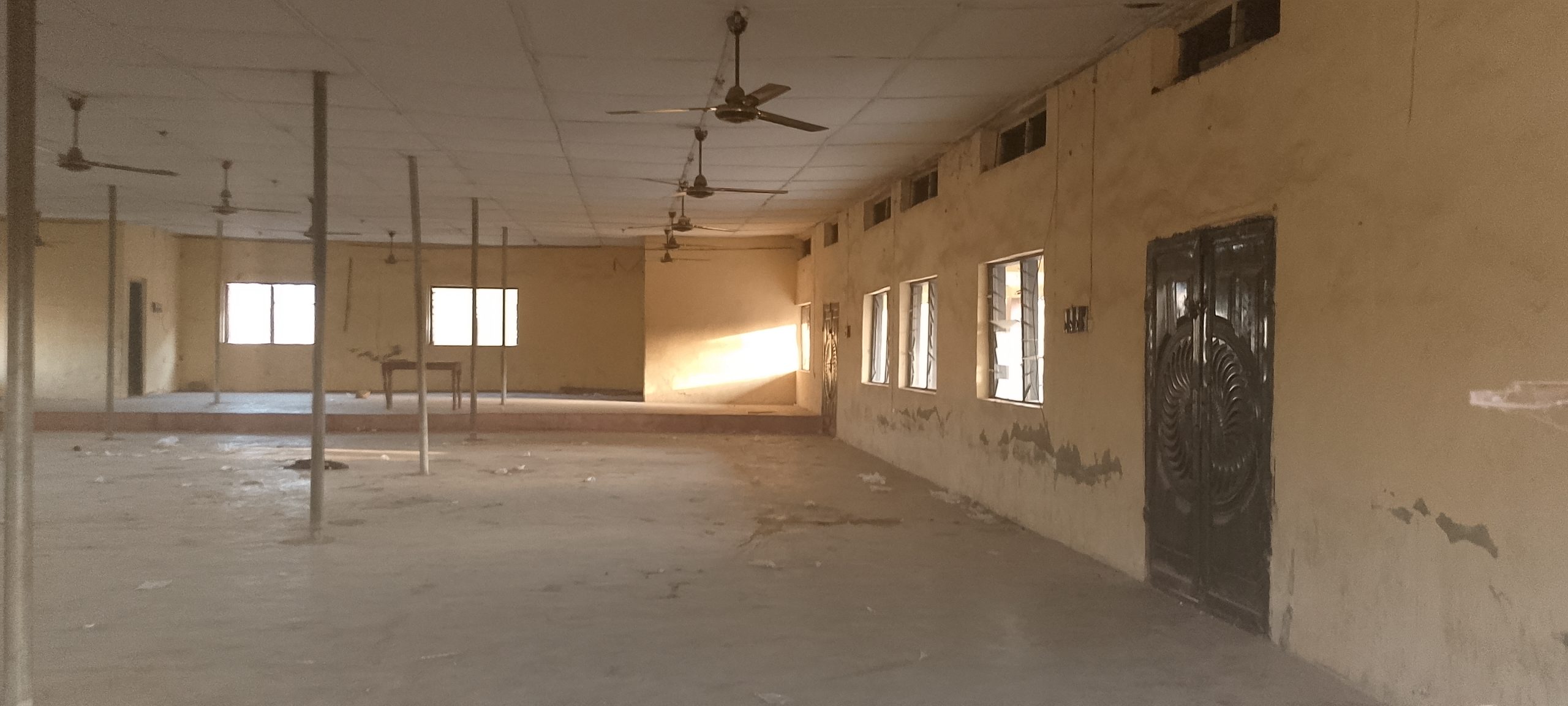
Education in Irawo Owode is a product of collective action. The town boasts three public primary schools, two public secondary schools, and two private schools. Despite these numbers, resources remain scarce. Community Grammar School, one of the town’s flagship institutions, symbolizes achievement and struggle. The school has a solar-powered computer laboratory but no proper examination hall, forcing the community to improvise by joining two blocks of classrooms. The existing hall remains dilapidated, a stark reminder of the challenges the town faces.

Irawo owode
The inside of one of the classrooms converted into an examination hall at the Community Grammar School

Ansarudeen Basic School mirrors these struggles, with one of its four classroom blocks now collapsed. Private schools like Aloyfas International Primary School operate on leased land, while Easy to Understand School, established in 1992, functions without a perimeter fence. Both private and public schools share a common challenge—limited infrastructure to support growing enrolment and no clear prospects of external assistance. Despite these constraints, the indigenes remain undeterred.

Abandoned school bus at the Community Grammar School

Yearly Contributions: The Lifeline of Progress

The town’s progress is sustained through yearly contributions from its indigenes, with amounts ranging from ?1,000 to ?4,000, depending on gender. Women are expected to pay at least ?1,000. These funds, pooled collectively, have enabled the construction of classrooms, the provision of basic equipment, and incremental upgrades to infrastructure. Though small, these contributions reflect a profound sense of ownership and responsibility toward the town’s development.

Healthcare on Fragile Foundations

The healthcare landscape in Irawo Owode is a testament to both ingenuity and adversity. The town relies on six private primary health centres and two public ones, supplemented by the nearby General Hospitals in Ago-Are and Tede. One notable public healthcare facility is located near Community Grammar School and managed by the town’s development association. Staffed by a government worker and two casual employees paid by the community, the centre operates under dire conditions.

Irawo Owode
A store with several pieces of equipment considered sophisticated to operate by health workers at the Comprehensive Health Centre located in front of the Community Grammar School

Water, a basic necessity, is a daily struggle. Workers and patients must trek 2 to 3 kilometres to fetch water, further complicating healthcare delivery. Sophisticated equipment provided by the Federal Government lies unused, as the expertise required to operate them is unavailable. The health centre’s medical ambulances, parked securely at the palace of Oba Jubril Adetunji Adeleke, the Olowode of Irawo-Owode, tell a poignant tale of unfulfilled potential. Originally meant to serve the Comprehensive Public Health Center near Community Grammar School, they remain at the palace for security reasons—a stark reflection of the centre’s vulnerabilities, including the lack of a protective perimeter fence. These life-saving vehicles, meant to stand ready at the frontlines of care, now symbolize both the community’s resourcefulness and the pressing need for stronger infrastructure.

Despite these challenges, figures like Mr Alaka Ojo Adekunle, the Ward Development Committee Chair, ensure the centre’s operations continue. His dual role as a community leader and health worker exemplifies the spirit of sacrifice that keeps the town afloat.

Social Infrastructure: Balancing Growth and Decline

Social infrastructure in Irawo Owode serves as both a gathering point and a reflection of unmet needs. The community viewing centre, once a hub for recreational activities, now hosts socio-political events, signalling a shift in its role due to the town’s evolving priorities. Efforts to build a proper examination hall for the Muslim High School and fences for schools like Easy to Understand School and Nomadic Primary School remain incomplete, illustrating the community’s stretched resources.

Irawo Owode
Inside of the viewing centre.

The lack of stable electricity compounds these challenges. Although solar power has supported the community for the past four years, grid electricity remains a luxury, with only two days of stable supply in an entire year. This instability limits the effectiveness of initiatives like the solar-powered computer laboratory and the broader aspirations of the town.

Irawo Owode
A once-promising well, drilled to supply water to the Comprehensive Health Centre near Community Grammar School, now stands abandoned—a dry reminder of its failure to produce enough water to sustain the facility’s needs.

A Tale of Perseverance

The story of Irawo Owode is not one of despair but of enduring hope. It is a town where people unite to fill the void left by an absent state. Indigenes from near and far contribute their time and money to build schools, equip health centres, and provide essential services. Their efforts highlight the power of community-driven development but also underscore the pressing need for external support to match their ambitions.

The road ahead is fraught with challenges, from collapsed classrooms to underutilized healthcare facilities, yet Irawo Owode perseveres. Its people’s strong commitment offers a blueprint for resilience in the face of adversity, a story that echoes the timeless adage that when a community comes together, even the heaviest burdens can be lifted.

As the sun sets on this small town, it illuminates not just the struggles but also the boundless spirit of its people. Irawo Owode is more than a place; it is a testament to what can be achieved when ordinary people dare to dream and act together.

Why Are Experts Calling Yeti Ouro The Best Altcoin Of 2024? Can It Really Outperform Shiba Inu And Bonk?

0

There is a lot of noise in the cryptocurrency market regarding Yeti Ouro (YETIO). It is being heralded as the best altcoin for 2024, leading to comparisons with Shiba Inu Coin (SHIB) and Bonk. But the question still looms: Can Yeti Ouro outshine these well-known tokens?

New Altcoin Sensation, Yeti Ouro

Yeti Ouro brings the virality of meme coins to the real world! Unlike many altcoins based on hype, Yeti Ouro is based on a gaming ecosystem. It is the driving force behind Yeti Go, a chaotic, action-packed play-to-earn racing game. With a solid use case in this entertaining game, Yeti Ouro differs from your average meme coin.

The project has a capped supply of 1 billion tokens to help ensure scarcity. Tokenomics includes staking rewards and a burning mechanism, which enables a deflationary model. Not only do these features create value, but they also attract long-term investors seeking sustainable returns.

The Yeti Go Advantage

Central to Yeti Ouro’s success is Yeti Go. Powered by Unreal Engine, this Play-to-Earn game offers top tier visuals and immersive gameplay. Players can be rewarded with Yeti Ouro tokens, establishing an ecosystem where the token has genuine utility.

What stands out with the game is its mix of head-to-head race competition and strategic gameplay. Dynamic maps, environmental hazards and power-ups keep things varied. These features make Yeti Go a game and a catalyst for Yeti Ouro’s adoption and growth.

Yeti Ouro Vs Shiba Inu Coin Comparison

Shiba Inu Coin drew interest as a “Dogecoin killer”. SHIB mostly survives based on its community and speculative trading. In addition to Yeti Ouro’s integration with a P2E ecosystem, ShibaSwap has DeFi functionality.

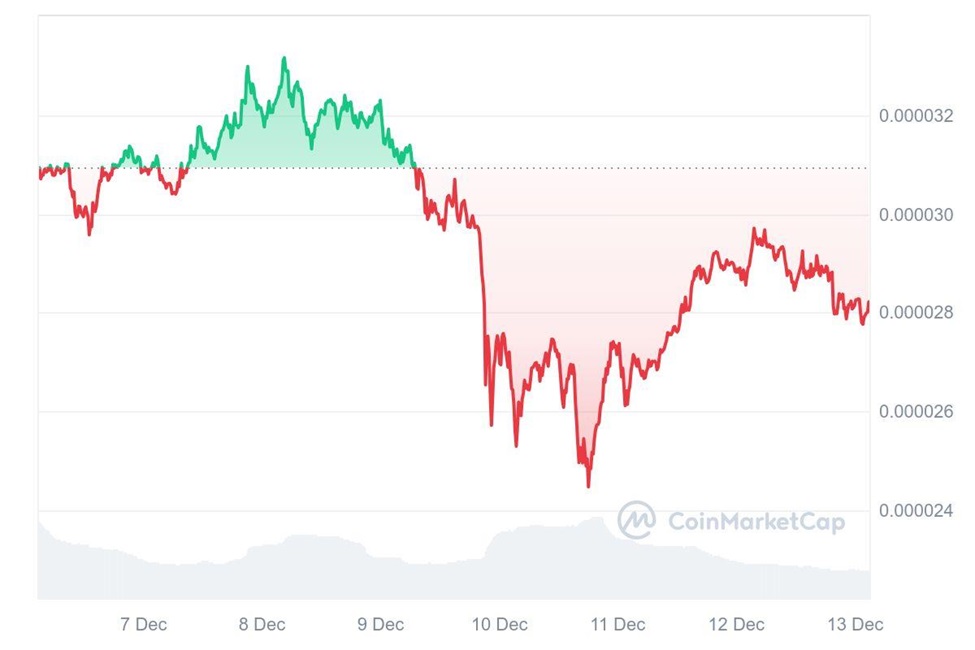
1-week Shiba Inu price chart- source: CoinMarketCap

Also, Yeti Ouro has an advantage in its deflationary model. Yeti Ouro mixes token burns with staking to generate value through participation. On the flip side, price movements of SHIB largely depend on the market sentiment.

How Does Yeti Ouro Stack Up Against Bonk?

Bonk, the first meme coin on Solana, created plenty of buzz when it launched. However, its dependence on the Solana ecosystem restricts its adaptability. Yeti Ouro on Ethereum leverages Ethereum’s vast network and developer ecosystem.

Bonk’s strength is its community-driven model but Yeti Ouro expands on this with a true use case. Yeti Go and its success means that Yeti Ouro isn’t just a fad and will have intrinsic value over time.

Why Experts Favor Yeti Ouro

Yeti Ouro’s balanced approach is attractive to crypto experts. It encapsulates the viral magic of meme coins, while providing real utility. Its P2E integration places it in the fast-growing blockchain gaming market, which is expected to be worth $250 billion by 2025.

Strong investor confidence is evident in the ongoing presale that has already raised over $1.15 million. Yeti Ouro’s potential for exponential growth especially excites early-stage investors. Its roadmap with new game features and staking mechanics adds to the long-term potential.

Can Yeti Ouro Outperform SHIB And Bonk?

Not only is outperformance compared to Shiba Inu Coin and Bonk possible, it’s probable. Yeti Ouro is more immune to market fluctuations due to its utility-driven model. Yeti Ouro’s potential grows with the expanding Ethereum ecosystem.

Also, gaming is a rapidly growing industry, which is an advantage for Yeti Ouro. Tokens with real-world utility tend to attract a larger base of investors who guarantee steady demand and price growth.

Conclusion

Out of the altcoins out there, Yeti Ouro is now proving to be the one to watch in 2024. Its duality of viral appeal and real-world utility has it dominantly leading the crypto market. Though Shiba Inu Coin and Bonk have their benefits, these crypto tokens simply cannot compete with the depth and sustainability Yeti Ouro provides.

Yeti Ouro is the pack’s leader for investors looking for long-term innovation and growth. Above all, it is not just a meme coin — it is a movement driven by strong fundamentals and an exciting P2E ecosystem. Explore what Yeti Ouro has to offer as it reigns supreme.


Join the Yeti Ouro Community

Website: https://yetiouro.io/

X (Formally Twitter): https://x.com/yetiouro

Telegram: https://t.me/yetiouroofficial

Discord: https://discord.gg/YtUsEZ2ZrV

The Transition to the Intelligence Age, the Accelerated Society Era

0

In recent years, the rapid advancement of technology, particularly in the realm of artificial intelligence (AI), has sparked a transformative wave across various industries and societal structures. Deep learning, a subset of AI that utilizes neural networks with multiple layers to process complex data, has emerged as a key driver of this evolution.

This technological progress is not merely about innovation but also about reshaping human capabilities and ushering in what some experts refer to as the Intelligence Age; I have called this the Accelerated Society Era. As we navigate this era of unprecedented change, discussions around the ethical implications of AI deployment and its impact on labor markets have taken center stage.

The integration of AI into our daily lives holds promises of shared prosperity and improved quality of life through enhanced efficiency and innovation. However, alongside these opportunities come significant challenges that must be addressed for a sustainable transition to this new age. As we contemplate the future landscape shaped by AI technologies, considerations around ethics, regulation, equity, and access become paramount.

The ongoing debates surrounding these issues will play a crucial role in determining how society navigates the potential risks and rewards presented by advancing AI capabilities. Ultimately, as we stand at the cusp of further technological breakthroughs in AI development, it is imperative that we collectively steer towards a future where innovation is balanced with responsibility to ensure a harmonious coexistence between humans and intelligent machines.

Technological advancements in the next few decades will enable capabilities that would have seemed like magic to previous generations. Society’s intelligence and capabilities have evolved over time, allowing us to achieve feats that were once deemed impossible. AI will provide tools to solve complex problems and contribute to human progress by enhancing our capabilities.

Largely, future generations will have access to personal AI teams and virtual tutors for personalized learning experiences. Shared prosperity and improved quality of life for all individuals globally are foreseeable outcomes of technological advancements. And deep learning has been a key driver of progress, with the potential for superintelligence on the horizon. AI models will serve as autonomous personal assistants, advancing scientific progress and enhancing various aspects of daily life.

The transition to the Intelligence Age will require abundant compute resources and energy to democratize AI access. While challenges lie ahead, the potential benefits of the Intelligence Age are vast, including massive prosperity and technological advancements. Despite potential downsides, such as shifts in labor markets, AI offers opportunities to amplify human abilities and foster positive-sum games in society.

I am confident that abundance is in the future and there is reason to have unbridled optimism that together even places like Africa will find its positioning in this fledgling era. Of course, hope is not a strategy. Simply, there is a need for action. Start and build AI companies in Africa

Mediatization and the 3MTT Programme

0
Screenshot

The mediatization framework offers a critical perspective through which to assess the media’s impact on social, political, and economic realities. In this piece, our analyst examines the media headlines around the 3MTT programme, drawing on news published by The Punch. Analysis indicates how its narrative was developed and understood, providing valuable insights into its implementation between 2025 and 2027.

Media Logic and Public Perception

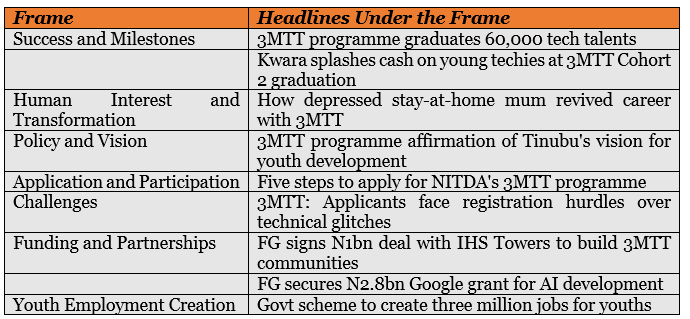
Media logic dictates how information is structured, affecting audience interpretation and shaping public sentiment. The 3MTT programme’s media coverage reflects a blend of celebratory, critical, and procedural narratives. Celebratory headlines, such as “3MTT programme graduates 60,000 tech talents” and “How depressed stay-at-home mum revived career with 3MTT”, showcase the programme’s success stories and human-interest angles. These narratives amplify the programme’s transformative impact on individuals, presenting it as a catalyst for career rejuvenation and societal progress. Similarly, “Govt scheme to create three million jobs for youths” frames 3MTT as a bold intervention against youth unemployment, positioning it as a pillar of national development.

While such celebratory framing builds goodwill and paints the programme as transformative, an over-reliance on positivity risks obscuring the challenges faced. Critical engagement with these limitations is vital to maintaining credibility and fostering balanced discourse. Complementing these are procedural and critical narratives, such as “3MTT: Applicants face registration hurdles over technical glitches”. This headline highlights structural inefficiencies, contrasting sharply with the celebratory tone. Meanwhile, “Five steps to apply for NITDA’s 3MTT programme” caters to potential participants’ informational needs, stressing accessibility. Together, these narratives provide a balanced media portrayal. However, excessive focus on operational glitches could undermine trust, especially if such issues persist unaddressed.

Institutional Mediatization and Strategic Partnerships

Institutional mediatization explores how entities, such as governments or corporations, adapt to media dynamics to align with public narratives. The 3MTT programme’s strategic partnerships with corporate giants like Google and IHS Towers exemplify this alignment. Headlines such as “FG signs N1bn deal with IHS Towers to build 3MTT communities” and “FG secures N2.8bn Google grant for AI development” emphasize collaborations that lend global legitimacy and underscore the programme’s scalability.

These partnerships bolster the programme’s image as a forward-thinking initiative. However, the sustainability of such media coverage hinges on the tangible benefits these collaborations yield. If results fail to meet expectations, these partnerships risk being perceived as symbolic rather than substantive.

The programme’s integration into political narratives, as seen in “3MTT programme affirmation of Tinubu’s vision for youth development”, underscores its positioning within broader governance strategies. While political association can enhance visibility, it also risks polarizing public opinion. Ensuring bipartisan support will be critical for the programme’s continuity and long-term success beyond 2027.

Media’s Amplification of Structural Challenges

Media coverage has not shied away from highlighting operational challenges within the 3MTT programme. For instance, “3MTT: Applicants face registration hurdles over technical glitches” shines a spotlight on the accessibility issues that marred the registration process. Such narratives are double-edged; while they underscore areas for improvement, they also risk eroding public trust if left unaddressed. To counteract this, the programme must prioritize transparency and actively communicate measures taken to resolve such challenges. Regular updates on improvements can mitigate the impact of negative press and reinforce the narrative of a responsive and adaptive initiative.

The Power of Human-Interest Stories

Human-interest narratives, such as “How depressed stay-at-home mum revived career with 3MTT”, add a relatable and emotional dimension to the programme’s coverage. These stories humanize the initiative, fostering a deeper connection with the public and encouraging participation. By spotlighting diverse participant experiences, the 3MTT programme can reinforce its inclusivity and demonstrate its broad societal impact. Proactive storytelling that highlights a range of demographics will further enhance the programme’s appeal, ensuring it resonates with varied audience segments.

Technology-Centric Framing and Future Relevance

The tech-oriented framing of the 3MTT programme is evident in headlines like “FG secures N2.8bn Google grant for AI development” and “Kwara splashes cash on young techies at 3MTT Cohort 2 graduation”. These narratives position the programme as a cutting-edge initiative aligned with global technological advancements. To maintain relevance, the 3MTT curriculum must continuously evolve to incorporate emerging trends, ensuring participants are equipped with future-ready skills. Expanding beyond a tech-centric focus to include entrepreneurial and creative industries could enhance inclusivity and broaden the programme’s impact.

Exhibit 1: Frames in headlining 3MTT

Source: The Punch, 2024; Infoprations Analysis, 2024

As Nigeria prepares for the significant implications of the 3 Million Technical Talent (3MTT) programme from 2025 to 2027, several strategic insights emerge from a comprehensive mediatization analysis. There is a need for a balanced media narrative. The programme should diversify its storytelling approach to encompass not only the successes but also the challenges faced and the resolutions implemented. Collaborating closely with journalists and stakeholders will help present an authentic and balanced picture, minimizing an over-reliance on either celebratory or critical extremes. Operational transparency is another critical area of focus. Addressing any technical glitches or administrative issues proactively can preempt negative press coverage. Establishing a robust feedback mechanism will also help in demonstrating accountability and foster continuous improvement for future cohorts.

Moreover, sustained partnerships are essential for reinforcing the program’s credibility. Showcasing the long-term impacts of collaborations with corporations such as Google and IHS Towers will strengthen these relationships. Additionally, exploring partnerships in underrepresented sectors will ensure inclusivity and relevance in an evolving economic landscape. The potential risks of politicization must also be considered. Ensuring bipartisan ownership of the initiative is crucial to safeguarding its continuity beyond 2027. Communication should focus on impact metrics rather than political affiliations to appeal to a broader audience.

An adaptive curriculum is necessary to keep pace with technological advancements. The programme should anticipate shifts in technology and diversify training to include essential skills such as entrepreneurship and creative industries. Monitoring labour market trends will allow for timely adjustments to the curriculum, ensuring that graduates remain employable across various sectors. A human-centric marketing strategy should be employed. Utilizing human-interest stories can effectively demonstrate tangible impacts while ensuring that diverse demographics and career pathways are represented to avoid oversimplification. Empowering graduates to act as ambassadors by sharing their experiences will inspire future participants and enhance the programme’s reach.