
DD
MM
YYYY

PAGES

DD
MM
YYYY

spot_img

PAGES

Home Blog Page 2638

Amazon Announces Additional $4bn Investment in Anthropic As AI Race Intensifies

0

Amazon has announced an additional $4 billion investment in Anthropic, escalating competition in the generative AI space, a market projected to reach $20 trillion in revenue within the next decade.

This latest funding raises Amazon’s total investment in the San Francisco-based startup to $8 billion, marking a significant bet on AI technology as a driver of its future growth.

While Amazon will remain a minority investor, the partnership positions Anthropic’s Claude chatbot and AI models as central to Amazon Web Services (AWS) offerings. The agreement strengthens AWS’s position as Anthropic’s “primary cloud and training partner,” ensuring that Anthropic utilizes AWS Trainium and Inferentia chips for training and deploying its large-scale AI models.

This collaboration enables AWS customers to fine-tune Anthropic’s Claude models with proprietary data, offering a competitive advantage in the rapidly evolving AI industry.

Amazon’s Growing AI Footprint

This new investment builds on Amazon’s $2.75 billion commitment in March 2024, its largest external investment to date, and an initial $1.25 billion stake announced in September 2023. These investments align Amazon with major players like Microsoft and Google, both of which have poured billions into AI ventures, signaling a high-stakes race for dominance in generative AI.

Notably, Amazon does not hold a board seat at Anthropic, allowing the startup operational autonomy—a key differentiator from other partnerships in the sector.

Anthropic, founded by former OpenAI executives, has rapidly scaled its capabilities and product offerings through the following innovations:

  • Claude AI Models: Anthropic’s Claude chatbot, competing with OpenAI’s ChatGPT and Google’s Gemini, has gained traction for its conversational and generative capabilities.
  • Computer Use Capability: Introduced in September 2024, this feature enables AI to perform complex tasks on a computer, including navigating websites, entering data, and executing multi-step processes, akin to human users. Early adopters include Asana, Canva, and Notion.
  • Enterprise and Business Tools: The rollout of Claude Enterprise and the Claude 3.5 Sonnet model this year underscores Anthropic’s commitment to catering to business needs.

Generative AI Arms Race

Amazon’s increased stake in Anthropic highlights a broader trend of tech giants leveraging investments in AI startups to bolster their core businesses. Google, for instance, committed $2 billion to Anthropic last year and holds a 10% stake in the company. Similarly, Microsoft has integrated OpenAI’s technology into its Azure cloud services and Office 365 products through a significant investment in OpenAI.

The AWS-Anthropic partnership offers Amazon a dual advantage: advancing its AI capabilities while expanding its cloud services’ appeal. The exclusivity of Anthropic’s features, such as customer-specific fine-tuning, positions AWS to attract businesses eager to deploy tailored AI solutions.

For Anthropic, Amazon’s backing provides resources to scale operations and maintain competitiveness against rivals like OpenAI and Google, while its independence from Amazon’s board ensures flexibility in innovation and strategy.

This development is likely to accelerate the innovation cycle, compelling companies to deliver more sophisticated and accessible AI solutions. With a market forecast to exceed $1 trillion annually in revenue within a decade, the competition will not only benefit businesses but also spur advancements that could democratize AI access across the globe.

Pathway to a $20 Trillion Valuation

The generative AI sector’s rapid growth, bolstered by massive investments, underlines its potential to achieve its projected $20 trillion valuation by 2030. This projection reflects the pervasive influence AI is expected to exert on global economies, akin to the transformative impact of the internet revolution.

Key drivers of this valuation

  1. Widespread AI Adoption Across Sectors: AI is increasingly embedded in critical industries, offering efficiencies, cost savings, and new revenue streams.
  2. Business Transformation: Tools like Claude, ChatGPT, and Google Gemini are enabling businesses to optimize operations, engage customers, and create new products, enhancing profitability.
  3. AI’s Role in the Cloud Economy: As AI models become central to cloud services, companies like Amazon, Microsoft, and Google are integrating AI into their ecosystems to drive customer retention and growth.
NNPC Failing to Honour Its Naira-for-crude Agreement Supply Obligation – Dangote Refinery

0

The Dangote Refinery has raised concerns over the Nigerian National Petroleum Corporation Limited’s (NNPCL) failure to fulfill its crude oil supply obligations under the naira-for-crude agreement.

This agreement was widely touted as a strategic move to address Nigeria’s foreign exchange (forex) crisis by reducing demand for dollars in crude oil transactions and stabilizing the naira.

In a statement reported by Reuters, Edwin Devakumar, Vice President of the Dangote Group, stated that under the naira-for-crude arrangement, NNPCL had agreed to supply a minimum of 385,000 barrels per day (bpd) to the refinery. However, NNPCL has reportedly failed to meet this quota.

“We need 650,000 barrels per day, and NNPC Ltd agreed to supply a minimum of 385,000 bpd, but they are not even delivering that,” Devakumar said, describing the current supply levels as “peanuts.”

The refinery, which is designed to process 650,000 bpd, is now forced to source crude oil from international markets, undermining the goals of the naira-for-crude policy.

The Backstory of The Naira-for-Crude Agreement

In July 2024, the Federal Executive Council approved a policy shift aimed at ending the sale of crude oil to local refineries in foreign currency. President Bola Tinubu’s administration positioned this move as part of efforts to tame the forex crisis, hoping it would alleviate pressure on the naira by reducing demand for dollars in domestic crude transactions.

Under this arrangement, NNPCL was tasked with supplying 450,000 bpd of crude oil for domestic consumption, including 385,000 bpd to Dangote Refinery. The agreement was supposed to go into effect in October. However, delays in the implementation of the agreement, coupled with NNPCL’s alleged inability to meet its supply commitments, have raised doubts about the effectiveness of the policy.

Due to the shortfall in crude oil supply, the $20 billion Dangote Refinery has resumed crude oil imports from the United States. Reports indicate that the refinery has purchased approximately two million barrels of WTI Midland crude from Chevron Corporation, with delivery expected in December 2024. Shipping records show that Chevron contracted the supertanker Azure Nova to transport the crude from the U.S. Gulf Coast to Lagos.

However, energy analysts have noted that while sourcing U.S. crude might provide a temporary solution, it contradicts the government’s original intent for the naira-for-crude arrangement. Moreover, importing crude from international markets introduces logistical and financial challenges that could affect the refinery’s operations and profitability.

The naira-for-crude policy was intended to stabilize fuel pump prices and boost the naira’s performance in the FX market. The plan was to increase foreign reserves which have been under pressure due to high demand and limited FX inflows.

However, NNPCL’s inability to supply adequate crude to the Dangote Refinery undermines these objectives. The refinery’s reliance on dollar-denominated crude imports means that pressure on forex reserves will persist, while the naira remains vulnerable to depreciation.

This development reflects broader issues in Nigeria’s oil and gas sector, including inefficiencies in crude oil allocation, policy implementation delays, and the financial strain on state-owned enterprises like NNPCL. This is not the first time the state-owned oil outlet has failed to fulfill its supply obligation with Dangote Refinery. Earlier this year, Dangote announced that the NNPC’s stake in the refinery had been reduced from 20 percent to 7.2 percent due to the company’s inability to meet its crude oil supply obligation. Under the deal, the NNPC was required to the refinery with 35,000 barrels of crude oil per day (bpd).

This backdrop has created concerns about the government’s capacity to implement critical economic reforms effectively. Energy experts have warned that if these issues are not addressed, they could jeopardize the government’s efforts to achieve energy self-sufficiency and economic stability.

Ripple CTO Highlights XRP Price Potential, But This Rival Aims for a 20,505% Rally

0

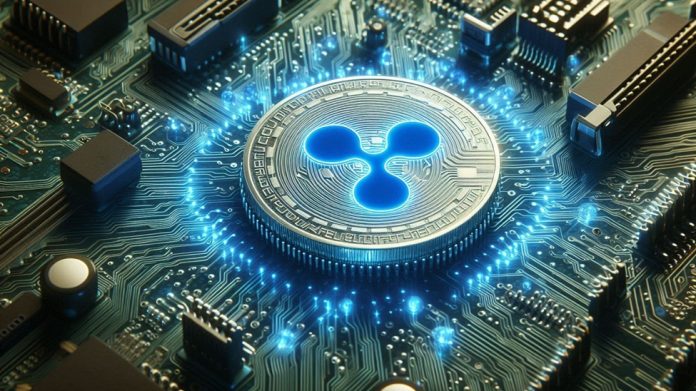
David Schwartz, Ripple’s Chief Technology Officer (CTO), is optimistic about the XRP price in light of recent developments that have strengthened its market position.

He emphasized XRP’s growing utility and its positive impact on regulatory clarity. This bullish stance is rallying investors looking to capitalize on XRP’s growing role in the market.

But Ripple’s token isn’t the only altcoin with high growth potential. This Ethereum rival, RCO Finance (RCOF), is an innovative project merging crypto and traditional financial markets. With its cutting-edge AI integration, RCOF is positioned for a staggering 20,505% rally that could eclipse XRP.

XRP Price Potential: Insights from Ripple CTO

Given recent regulatory clarity, David is bullish on XRP price appreciation, expanding use cases in cross-border payments, DeFi, and positive market developments.

With its fast and cheap transactions, XRP is the forerunner of the cross-border payment industry. That makes it increasingly alluring to financial institutions and payment providers, who want to leverage it because of the potential to execute international payments at low costs.

The more institutions utilize XRP, the higher its utility becomes, increasing the XRP price.

Ripple’s token is also gaining traction within the DeFi space as more users realize its potential beyond its original use case.

With the development of various dApps on the XRP ledger, Ripple’s token is gaining traction as a viable asset for lending, borrowing and trading. Such diversification in use cases can further increase demand, adding to its relevance and driving up the XRP price.

The recent court decision confirming XRP is not a security brings much-needed clarity.  It has helped alleviate legal status fears, reigniting investor confidence as XRP gets reinstated on major exchanges. Even though the case isn’t over, this ruling positively impacts the XRP price. Even institutional investors are willing to explore XRP-based products, further solidifying its growing position.

RCO Finance (RCOF): The Ethereum Rival Ready for Explosive Growth

As XRP gains traction, this Ethereum rival is hot on its heels. RCOF is an AI-powered token that provides real-world solutions blending crypto and traditional finance. It sets a new standard for utility-driven projects by integrating real-world assets and expanding how users can use crypto.

RCO Finance is an AI and machine learning-powered DeFi trading platform. This technology allows it to provide personalized investment guidance, in-depth market insights, and real-time market analysis, which help users make informed decisions without needing expert-level knowledge.

Out of its many AI-powered trading tools, the robo-advisor stands out. This trading assistant crafts investment plans tailored to your goals and risk tolerance. It can suggest the investments you need to make to achieve your goals.

For instance, investing more in high-yield options like bonds, stocks, or cryptos could be suggested if you want short-term gains. However, if you are focusing on long-term stability, it could diversify your options, including more stable assets. This personalized approach ensures your investments are aligned with your objectives, making it easier to achieve them.

The robo-advisor provides automated portfolio management, optimizing asset allocation and adjusting investment strategies based on market trends or evolving user preferences. This feature eliminates intermediaries, giving you more control over your assets. It also enables you to capitalize on emerging opportunities and manage your risk.

With its educational resources, this tool helps break down the complexities of crypto and financial markets. This benefits both experts and beginners and makes investment guidance more accessible.

This Ethereum rival bridges the gap between crypto and traditional finance by enabling investments in ETFs, stocks, and bonds. This unique feature enhances its utility and appeal to a broader range of investors.

You can earn passive income through staking RCOF tokens, with competitive rewards incentivizing long-term holding. RCOF’s interoperability ensures seamless integration with multiple blockchains, increasing accessibility and flexibility for users.

SolidProof has thoroughly audited RCOF’s smart contracts, ensuring their security and reliability. This builds trust among retail and institutional investors alike.

Don’t Just Watch: Secure Your Stake in RCOF Today

Even with Ripple’s CTO expressing his confidence in the growth of the XRP price, RCOF presents an unmatched opportunity for exponential gains.

Unlike XRP, which is already a well-established asset, this Ethereum rival is in its early stages and is projected to rally by 20,505%. Its innovative features and practical utility make it a high-growth asset.

Its low presale price creates the perfect opportunity for early adopters to achieve life-changing returns. In Stage 3, tokens are available at $0.055, with an anticipated listing price of $0.6, which is already a 990% increase.

Tokens are running out fast, so act now. Invest in RCOF and watch your gains grow.

For more information about the RCO Finance (RCOF) Presale:

Visit RCO Finance Presale

Join The RCO Finance Community

Dogecoin Price Prediction: DOGE Rally to Push Competitor PCHAIN from its Lowest Ever to a 22,394% Run

0

Despite the recent downturn, Dogecoin price predictions remain bullish. Investor confidence in a potential pro-crypto Trump administration that could drive further gains has reinforced trust among DOGE holders, many doubling down on the asset’s future potential.

At the same time, the recent Dogecoin price surge has captured investor attention and highlighted emerging competitors like PCHAIN.

As DOGE continues its rally, market dynamics indicate that PCHAIN could achieve an extraordinary 22,394% increase, rising from its lowest point to remarkable new heights and challenging the DOGEcoin price growth.

Dogecoin (DOGE): Balancing Decline and Optimism

Dogecoin (DOGE) has been navigating a rollercoaster of movements lately. Over the past week, the Dogecoin price saw a minor decline of -2.18%, reflecting short-term bearish sentiment. However, the broader picture tells a different story.

Over the past month, the DOGE surged by 164.42%, and the Dogecoin price climbed by 135.59% over the last six months. These figures underscore substantial growth in the medium to long term, painting a bullish outlook despite recent dips.

Currently, the DOGE trades between $0.28 and $0.45, with the nearest resistance level at $0.53. A break above this critical threshold could propel the price to $0.69, marking potential gains of 20% to 50%. Moreover, if all conditions are met, the price of Dogecoin will surge to $1.

Conversely, if the Dogecoin price loses its footing, support levels at $0.19 and $0.0263 could provide a safety net, though a breach of these could indicate deeper corrections.

Technical indicators show mixed signals. DOGE’s averages align near $0.39, and the RSI at 38.86 suggests an upward rebound. However, a negative MACD hints at bearish momentum. The Dogecoin price faces a pivotal moment with growth potential beyond key resistance levels.

PropiChain (PCHAIN): The Upcoming DOGE Competitor

While the Dogecoin price prediction is optimistic for the asset, investors are inclined to invest in prospective utility-based alternatives like PropiChain (PCHAIN). Despite being on presale, PCHAIN has caught the attention of investors looking for its projected rally of 22x and unique proposition to transform the global real estate markets.

PropiChain (PCHAIN) is at the forefront of a digital revolution in real estate. It combines the power of blockchain, AI, NFTs, and the metaverse to address inefficiencies in property management. This innovative platform is designed to simplify real estate investments while making them more accessible to all types of investors.

PropiChain introduces NFT-based tokenization, converting physical properties into digital assets that can be easily bought, sold, or transferred. The platform uses blockchain technology to ensure property transactions’ transparency, security, and efficiency.

The introduction of fractional ownership allows investors to own portions of high-value real estate, breaking traditional barriers of capital and documentation. It diversifies opportunities, enabling capital allocation across properties and easy share trading, making the market more inclusive.

At the heart of PropiChain is an advanced AI system that simplifies real estate processes, from valuation and market prediction to transaction execution.

With automated valuation models (AVMs), PropiChain provides investors with accurate, real-time insights into market trends, property values, and potential risks.

Additionally, AI streamlines transactions by automating complex tasks. Whether purchasing property at a target price or managing lease agreements through smart contracts audited by BlockAudit,  PropiChain’s AI reduces the risk of human error while saving time and resources.

PropiChain’s metaverse integration enables immersive virtual tours and 3D models, letting investors explore global real estate opportunities flawlessly. PCHAIN’s Propiverse improves property evaluation and connects buyers and sellers securely, eliminating geographical barriers for a transformative investment experience.

PCHAIN’s blockchain infrastructure assures all transactions are recorded on a decentralized ledger, eliminating fraud, corruption, and counterparty interference risks.

The platform’s commitment to transparency and security makes it a reliable choice for individual and institutional investors.

PropiChain (PCHAIN) Token Presale: A Chance for Impressive Gains

The recent surge in the Dogecoin price has enhanced DOGE’s market potential while fueling interest in promising alternatives like PropiChain (PCHAIN). This momentum was further amplified by PCHAIN’s listing on CoinMarketCap, pushing its position in the DeFi sector.

PropiChain’s current first presale offers early entry at $0.004 per token, with a projected $0.07 listing price, promising up to 1,600% ROI. This is an enticing opportunity for investors seeking profits like Dogecoin price surge profits.

By engaging in the presale, investors gain access to PCHAIN tokens at a favorable price and position themselves to benefit from the anticipated growth as the project progresses.

This strategic entry point aligns with the broader market trends and PCHAIN’s potential to disrupt the real estate sector and rival DOGE in market performance.

For more information about Propichain Presale

Visit Propichain Presale

Join The Propichain Community

The Physics of Recruiting Well-Paid Workers in Nigeria

1

Comment on the “success process” article: “Why do many well-paying jobs in Nigeria demand a first-class or, at minimum, a second-class lower degree? What about valuing skill sets and practical experience instead?”

My Response: First, a fresh graduate does not have a lot of practical experience for any serious employer to focus on. The experience for most recent  graduates is the university coursework, and that is validated by the associated grade. In other words, the real “practical experience” is that degree. It may not be perfect to focus on it, but that is a starting point. Companies have the right to select candidates  based on those grades since ideally there is  a “practical experience” in registering a course, taking lectures and writing an exam. When people say good grades do not matter, I like to ask them how bad grades do better? Yes, a company should bias towards students with good grades.

Also, on the skill component. The fact is this: exams test skills and through exams, you can evaluate skill sets. Those days in banking, they used to give 90 quantitative questions for you to answer in 20 minutes. If you are in your house, and decide to solve the questions over 4 hours,  you will get all of them correctly. Simply, the questions are very easy. However, the bank is not interested in ascertaining if you can solve the algebra within 5 minutes, it is testing if you can solve it in 14 seconds correctly. That is how the bank is testing many skills via an “exam”.

Why? The bank is testing you to know how you can perform under stress. Bankers work under severe stress and must still be accurate all the time. So, that “exam” gives them a window of how that candidate can perform with numbers under stress, modeling if under stress he will credit $10,000 instead of $1,000. Or a colleague has an emergency, and you are required to enter his teller box to reconcile the books at the shortest time possible. In that complexity, can you get that done? The bank models that by throwing different patterns of questions in the employment test.

Largely, degree classification is the culmination of these attributes because there are many smart people who cannot pass stress exams well. That does not mean they are not smart, it simply means they do not have the capacities to handle stress. Back to the bank test, those grading the exams will stop whenever you have two answers WRONG sequentially. They do think by then you have broken down since ideally you ought not to get those questions wrong.

So, you can get 1 to 10 correctly, fail 11 to 13, and get 14 to 20, your score will be 10/20. Another person who gets 1 to 13 correctly has a better score than you at 13/20. The question now is hoping there are not many people getting 1-18 correctly which means you cannot just relax.

While banks focus on testing accuracy under extreme stress, some companies test endurance.  So, exams do help to reveal skill sets! Most students who finish with poor grades quit before the grading. How? There are 10 modules for the course and without good planning, you studied only 6. Ideally, that exam has tested your project management skill with the understanding that managing our time is the grand project management assignment.

Comment on Feed

Comment 1: While I understand the points raised about grades reflecting certain skills and work ethic, I believe it’s crucial to avoid a blanket exclusion of candidates based solely on their academic performance. Many individuals with lower GPAs possess valuable skills and talents that may not be fully captured by traditional grading systems.
For instance, someone with a lower GPA might have dedicated significant time to internships, volunteer work, or personal projects where they gained practical skills and experiences directly relevant to the job. These experiences often demonstrate initiative, teamwork, and a commitment to continuous learning – qualities that are highly valuable in any employee.

My Response: Grades are results of 4 or 5 years. It would be a mistake to replace them with a jamboree of 2 or 3 hours of “holistic” evaluations. Most universities will not interview you for academic jobs if you have below 2.1. That does not mean you cannot work in the registrar office or the works dept. The point is clear: you are statistically better using a result generated over 5 years than one done in 2 hours. No 2 hours can replace those 5 years.  The irony is this: an oil company will not hire you because of your grade,  but in 10 years your company can become a contractor to that oil company. A consulting company may not hire you due to low grades, but in future, you can hire the same company to help your business expand. People work on statistics and that does not mean there are no misses.

Comment 2: I’ve personally witnessed cases where individuals with “average” grades have outperformed those with stellar academic records. This is because success in the real world often requires a diverse set of skills, including creativity, adaptability, and emotional intelligence, which aren’t always accurately reflected in university grades.
Instead of using GPA as a rigid cut-off, a more holistic approach that considers a candidate’s complete profile – including their experiences, skills, and drive – would ultimately lead to a more talented and diverse workforce. Offering interviews to a wider range of candidates, including those with lower GPAs but strong practical experience, could uncover hidden gems that would otherwise be overlooked

My Response: Grades are results of 4 or 5 years. It would be a mistake to replace them with a jamboree of 2 or 3 hours of “holistic” evaluations. Most universities will not interview you for academic jobs if you have below 2.1. That does not mean you cannot work in the registrar office or the works dept. The point is clear: you are statistically better using a result generated over 5 years than one done in 2 hours. No 2 hours can replace those 5 years.

The irony is this: an oil company will not hire you because of your grade,  but in 10 years your company can become a contractor to that oil company. A consulting company may not hire you due to low grades, but in future, you can hire the same company to help your business expand. People work on statistics and that does not mean there are no misses.

Comment 3: Why then do people like Elon Musk keep banging on about not caring about people’s degree talkless of having a first thus sometimes making it seem like these things are irrelevant in the real world of work…or could he be referring to other attributes like social, interpersonal, behavioural and maybe some entrepreneural qualities…surely people who work on those Tesla cars and spaceX rockets must be academically brilliant too…

My Response: Google or Microsoft may not list degree requirements. But check those who do get those jobs, 99.99% have degrees. Elon may tell you that degrees do not matter. But he got two undergraduate degrees: Bachelor of Arts in physics and Bachelor of Science in economics. He is among the few in the world with two bachelors. So, be guided. Those are sound bites.