DD
MM
YYYY

PAGES

DD
MM
YYYY

spot_img

PAGES

Home Blog Page 2736

Can cryptocurrencies revolutionize Arab casinos?

0

The online gambling industry in the Arab world is still relatively new, with the first online gambling site introduced in the mid-1990s. Although still in its infancy, the market is growing rapidly. According to a report by Research and Markets, it is expected to reach $72.02 billion by the end of 2024, with a compound annual growth rate (CAGR) of 12.3%.

One of the key reasons for this growth is its readiness to embrace new technological developments. Many industries remain cautious about accepting these changes, fearing they may harm their business future. However, this is not the case with online gambling. Arabic bitcoin casino and gambling sites are known for being risk-takers, constantly adopting new trends to meet the ever-changing market demands.

Cryptocurrencies and Arab online casinos

The adoption of blockchain technology has been one of the recent trends in the Arab casino industry. Bitcoin paved the way for this change as the first blockchain-based currency adopted by casinos in May 2012. Shortly afterward, other popular digital currencies followed, including XRP, Ripple, and Ethereum. Recently, we have seen the emergence of new cryptocurrencies, particularly designed for the online gaming industry, such as CasinoCoin.

Cryptocurrency casinos allow people to deposit funds and withdraw their winnings in digital currencies. These casinos have completely revolutionized the industry as more people benefit from using them.

Benefits for casinos and players using cryptocurrencies

  • Increased Security

Many people gambling online fear their banking information could be stolen by fraudsters. This year, Experian found that the increase in online gambling during the global pandemic led to a rise in online fraud.

Anyone who understands how cryptocurrencies work is likely aware of some benefits of blockchain technology. Blockchain can be defined as a database of information that records the source of digital assets in a way that is very difficult to alter. It is a digital ledger of transactions that provides an open record of every transaction involving value.

This makes using this technology extremely secure. Cryptocurrencies are easy to trace because each transaction has its own unique identification code. However, these transactions cannot be tampered with because all digital currencies are encrypted. This ensures that payments made using blockchain technology are more secure than traditional currencies. It also reduces the chances of unauthorized transactions online.

  • Anonymity

Blockchain technology also provides users with complete anonymity while playing. Since no identity is linked to a Bitcoin wallet, players can feel secure knowing that no one can access their personal information. Instead, they can focus solely on their games without worrying about other users seeing their progress. Additionally, online gambling will not negatively affect players’ credit scores or their ability to borrow money. Cryptocurrencies will not be visible in any bank statements. When applying for a loan, banks sometimes review these statements to better understand spending habits. If they detect any gambling activity, they are likely to reject the loan.

  • Speed

One of the most frustrating problems players face when gambling online is the number of hurdles they must overcome to receive their winnings. This is especially true when payments are made from international companies. SWIFT payments can take between 1 to 5 business days to receive casino payments, prompting many players to resort to traditional stores instead of playing online.

Gambling with cryptocurrencies like Bitcoin, Ethereum, or Litecoin prevents users from waiting long periods to receive their winnings. Cryptocurrency winnings are transferred to the player’s digital wallet immediately, allowing players to spend their winnings faster.

  • Cost-Efficiency

Since cryptocurrencies are decentralized, there is no governing body that verifies the validity of transactions. When transactions are made with traditional currency, there are always additional costs and transaction fees required by banks. For example, if you use your credit card to gamble, you will be charged a cash advance fee. According to Finder, these transactions attract cash withdrawal fees ranging from 3% to 5% and a high annual interest rate for cash withdrawals. These fees are even higher if it’s an international transaction.

These additional costs apply to both the player and the casino. Gambling with cryptocurrency means eliminating these fees entirely or significantly reducing them. You can also convert this cryptocurrency into fiat currency without needing to visit the bank.

Conclusion

The use of cryptocurrency remains a widely debated topic. Some feel it is too volatile for the average investor; others believe it is the way of the future. But could integrating cryptocurrency into online gambling be a perfect match? It seems so.

Offering this payment option will allow online casinos to attract new customers and provide additional benefits to existing ones. Moreover, this digital currency appears to solve many of the problems facing the online gambling industry. Using cryptocurrency could be a faster, safer, and more cost-effective solution for both players and online casinos.


Nigeria’s Innovation Landscape Under Scrutiny in Latest Global Index

0

The Global Innovation Index (GII) 2024 has positioned Nigeria at 113th out of 133 countries, reflecting a complex landscape of innovation performance in the nation compared to its global counterparts. This ranking highlights Nigeria’s ongoing struggles in fostering an innovation ecosystem, particularly when juxtaposed with other countries in Sub-Saharan Africa and beyond.

Nigeria’s Position in the Global Context

In the latest GII report, Nigeria’s score of 17.1 places it significantly behind leading countries such as Switzerland, Sweden, and the United States, which occupy the top three spots with scores of 67.5, 64.5, and 62.4 respectively. The stark contrast between Nigeria and these high-income countries reveals a broader narrative of innovation disparity on the global stage. While high-income countries continue to excel in research and development (R&D), Nigeria finds itself grappling with systemic challenges that hinder its innovation potential.

Comparative Analysis Within Africa

Within the African context, Nigeria ranks lower than several of its peers. Mauritius leads Sub-Saharan Africa at 55th globally, followed by South Africa and Tunisia at 69th and 81st respectively. This suggests that while Nigeria is one of the largest economies on the continent, it is not necessarily a leader in innovation. Countries like Rwanda and Côte d’Ivoire are also outperforming Nigeria in the low-income category, indicating that smaller nations can achieve significant strides in innovation despite limited resources. The GII report emphasizes that Rwanda ranks first among low-income countries, showcasing an innovative spirit that contrasts sharply with Nigeria’s performance. This raises critical questions about governance, investment in education, and infrastructure that support innovation.

Challenges Facing Nigeria

Several factors contribute to Nigeria’s low ranking on the GII. The country faces significant barriers including inadequate funding for research initiatives, insufficient technological infrastructure, and a lack of supportive policies for startups and entrepreneurs. Moreover, political instability and economic challenges further exacerbate these issues, creating an environment where innovation struggles to thrive.

Despite these challenges, there are pockets of progress within Nigeria’s innovation landscape. The rise of tech hubs and startup ecosystems in cities like Lagos demonstrates growth potential. However, these advancements have yet to translate into significant improvements in national rankings or overall innovation performance.

Global Trends Impacting Innovation

The GII 2024 report also highlights broader global trends affecting innovation across all countries. The aftermath of the COVID-19 pandemic has led to a downturn in global R&D investments after a boom period from 2020 to 2022. This trend is concerning for countries like Nigeria that rely on external investments to bolster their innovation capabilities. Furthermore, geopolitical tensions and economic uncertainties have made it difficult for many nations to maintain consistent investment levels in science and technology. As global competition intensifies, countries need to reassess their strategies to enhance their innovative capacities.

The Way Forward for Nigeria

For Nigeria to improve its standing in future GII assessments, a multi-faceted approach is necessary. Key strategies include:

  • Enhancing Education: Investing in STEM (Science, Technology, Engineering, Mathematics) education can cultivate a skilled workforce capable of driving innovation.
  • Increasing R&D Funding: Both government and private sector investments must increase to support research initiatives.
  • Fostering Public-Private Partnerships: Collaborations between government entities and private companies can stimulate innovation through shared resources and expertise.
  • Streamlining Regulatory Frameworks: Simplifying regulations can encourage entrepreneurship by reducing barriers to entry for startups.

While Nigeria faces significant hurdles in its quest for innovation leadership on the global stage, there remains hope through strategic reforms and investments. By learning from both regional peers and global leaders, Nigeria can unlock its potential and improve its position within future Global Innovation Index rankings.

Tesla’s Strategic Bitcoin Holding

0

As Tesla prepares to announce its earnings, the spotlight turns once again to its investment in Bitcoin. According to Arkham Intelligence, Tesla still holds approximately $780 million in Bitcoin, a decision that reflects the company’s confidence in the cryptocurrency as a long-term investment strategy.

The electric vehicle and clean energy company, led by Elon Musk, has been known for its unconventional strategies, and its investment in Bitcoin is no different. Despite the volatility associated with cryptocurrencies, Tesla’s steadfast hold on its Bitcoin assets suggests a bullish outlook on the future of digital currencies.

Arkham’s analysis indicates that the Bitcoin wallets associated with Tesla have not transferred any funds to crypto exchanges, which is typically a precursor to liquidating holdings. This move, or lack thereof, is particularly noteworthy as it comes ahead of Tesla’s earnings report, a time when companies often make strategic financial adjustments.

Moreover, Tesla’s sister company, SpaceX, also holds a significant amount of Bitcoin, valued at $560 million, making it the seventh-largest Bitcoin holdings by a private firm. These further cements the Musk-led ventures’ position in the cryptocurrency market.

The integration of Bitcoin into corporate treasuries has been a topic of much discussion and debate. While the digital asset offers a range of potential benefits, such as diversification of assets and a hedge against inflation, it also carries inherent risks that companies must consider.

Volatility is perhaps the most significant risk associated with Bitcoin. The cryptocurrency market is known for its rapid price fluctuations, which can introduce a high degree of uncertainty into a company’s balance sheet. This volatility can affect not only the valuation of Bitcoin holdings but also the company’s overall financial stability.

Another risk is regulatory uncertainty. The legal landscape for cryptocurrencies is still evolving, with varying regulations across different jurisdictions. Companies must navigate these uncertain waters carefully to ensure compliance with all applicable laws and regulations, which can change rapidly and have significant implications for the use of digital assets.

Operational risks also exist, particularly in the realm of security. Holding Bitcoin requires robust security measures to prevent theft or loss due to hacking or fraud. The irreversible nature of Bitcoin transactions means that any loss can be permanent, making security a top priority for corporate holders.

Furthermore, there are concerns about the impact of Bitcoin on a company’s reputation. Public perception of cryptocurrencies is still mixed, and association with Bitcoin can lead to reputational risks if not managed properly. Companies must weigh the potential benefits against the possibility of negative public or investor sentiment.

Lastly, the lack of expertise in managing and understanding cryptocurrencies can be a barrier for many companies. The complexity of the technology and the market requires specialized knowledge, which may necessitate additional investment in training or hiring of experts.

While Bitcoin presents an innovative opportunity for corporate investment and operations, it is not without its challenges. Companies considering Bitcoin as part of their treasury must conduct thorough due diligence, understand the risks involved, and implement strategies to mitigate them.

Tesla’s approach to its Bitcoin investment could be indicative of a broader trend among corporations looking to diversify their portfolios with digital assets. The company’s decision not to sell any Bitcoin holdings in the third quarter of 2024, continuing a trend for five consecutive business quarters, showcases a commitment to the cryptocurrency space despite market fluctuations.

As the financial world eagerly awaits Tesla’s earnings report, the company’s Bitcoin holdings remain a topic of interest and speculation. Tesla’s strategy may influence other corporations’ decisions in the cryptocurrency market, potentially leading to increased mainstream adoption of digital assets.

The implications of Tesla’s Bitcoin holdings extend beyond mere financial investment. It reflects a vision of a future where digital currencies play a significant role in corporate finance. As Tesla continues to navigate the complex landscape of cryptocurrency, its actions will undoubtedly be closely monitored by investors and industry observers alike.

LG ELECTIONS IN NIGERIA: The Politics of Double Standards

0

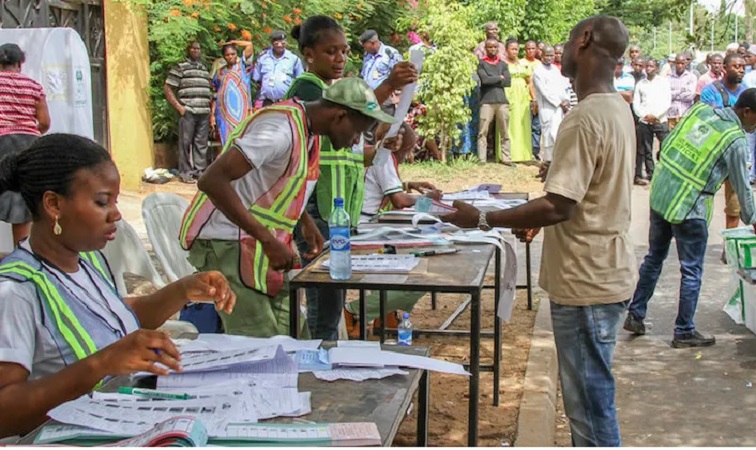
The recent local government elections in Nigeria present an intriguing case for analysis through the lenses of governmentality and positionality. The outcomes, which saw dominant victories for the People’s Democratic Party (PDP), the All Progressives Congress (APC), and other smaller parties, reveal much about the dynamics of power and control in Nigeria’s political landscape. Despite many state governors having previously criticized the integrity of the national electoral system—especially when results were unfavorable to them—they appear to be beneficiaries of a similarly flawed local electoral process. Our analyst notes that this contradiction raises questions about their motivations and how they view elections as governance and political power instruments.

Governmentality: Elections as Instruments of Control

The concept of governmentality, introduced by French philosopher Michel Foucault, refers to how the state exercises control over the population through institutions, knowledge, and administrative measures. In the context of the recent local government elections in Nigeria, the results suggest that elections are not just democratic processes but also mechanisms through which the ruling political class exercises and consolidates power.

Local government elections are ostensibly designed to give grassroots citizens a voice in governance. However, the overwhelming victories by the ruling parties in nearly every state raise concerns about the transparency and fairness of these elections. In states where the PDP or APC is in power, their parties won every available seat. For example, the PDP secured all chairmanship positions in Adamawa, Delta, and Oyo, while the APC achieved similar dominance in Borno, Imo, and Kaduna.

These results suggest that local government elections may serve more as instruments of state control than as reflections of genuine political competition. State governors, acting as the local representatives of their parties, have substantial influence over the local electoral commissions, which are responsible for conducting these elections. This creates a system in which local elections can be manipulated to maintain the ruling party’s dominance, using the machinery of the state to secure victory. The governors, who criticize the Independent National Electoral Commission (INEC) when they lose at the state level, are now in a position where they can control the local electoral process to ensure their party’s continued dominance at the grassroots level.

Foucault’s notion of biopolitics—the control of populations through the regulation of political and social life—can be seen in these local government elections. The elections are not simply about governance; they are a means of maintaining political stability for the ruling elite by controlling key institutions at the local level. By securing these positions, the governors and their parties ensure that they retain influence over local resources and political allegiances, all of which are vital for consolidating power.

Positionality: Power Dynamics and Political Interests

Positionality, which refers to the social and political context that influences one’s perspective and actions, is another useful framework for analyzing the outcomes of local government elections. The political actors involved—governors, local party leaders, and voters—each occupy different positions of power and influence, and their actions can be understood in relation to these positions.

At the state level, governors are often seen as political powerhouses with significant control over local structures. When these governors lose state or national elections, they are quick to criticize the electoral process, calling it fraudulent or rigged. However, when it comes to local elections, where they have more control over the process, they are less inclined to speak out against the system. This demonstrates the positional nature of their criticism: they critique the electoral process only when it does not serve their interests. When it does, they are content to remain silent or even endorse the outcomes.

The local government elections also highlight the positional relationship between political parties and electoral outcomes. In many states, the dominance of one party is reinforced through a lack of competition. For example, in Kogi and Kaduna, the APC won all the chairmanship and councillorship positions, with no significant opposition. In Rivers State, the Action Peoples Party (APP) won a majority of the chairmanship positions, largely due to the absence of the major parties (PDP and APC) in the contest. These outcomes reflect the strategic positioning of parties in local elections: when a party dominates a state at the gubernatorial level, it often extends this dominance to local government elections by eliminating or marginalizing opposition.

Also, voters themselves are subject to positional dynamics. In many local elections, voter turnout is low, and the electorate may feel disenfranchised or powerless, believing that the outcome is predetermined by the ruling party. This sense of powerlessness is exacerbated by the patron-client relationships that often characterize local politics in Nigeria. Local political actors may secure votes through promises of patronage, jobs, or favors, positioning the electorate as passive recipients of political largesse rather than active participants in a democratic process.

The Double Standard: Critiquing Federal Elections but Benefiting from Local Control

The irony in these local government election outcomes lies in the fact that many state governors who criticize federal elections conducted by INEC for being unfair or biased are now presiding over local elections that reflect the same issues. This double standard underscores the instrumental nature of elections in Nigeria: they are seen not as opportunities for genuine democratic engagement but as tools for consolidating power when convenient.

Governors who lose governorship elections conducted by INEC often claim that the electoral process is rigged or flawed. However, when local government elections, controlled by state electoral commissions, deliver clean sweeps for their parties, these same governors remain silent. This reveals a positional hypocrisy: they criticize the system when it works against them but embrace it when it works in their favor. The state electoral bodies, which lack the independence of INEC, are often seen as extensions of the state government, and their control by the governors allows for manipulation of the electoral process to secure favorable outcomes.

A Call for Structural Reforms

The outcomes of the recent local government elections in Nigeria highlight the need for structural reforms to the country’s electoral system. The dominance of ruling parties in local elections reflects a broader issue of governance and accountability, where elections are used as instruments of control rather than mechanisms for democratic participation.

To address these challenges, reforms are needed to ensure the independence of state electoral commissions, similar to the reforms that have been implemented at the federal level with INEC. Additionally, there should be greater oversight of local government elections to prevent the undue influence of state governors and ensure that these elections reflect the will of the people rather than the interests of the ruling party.

Ultimately, the governmentality of elections in Nigeria must shift from being about controlling the population and consolidating power to promoting genuine democratic engagement. Without such reforms, local government elections will continue to be seen as tools of political manipulation, reinforcing the positionality of governors and their parties rather than empowering the electorate.

Nigerians React to FG’s Endless Cycle of Superficial Reforms

0

In a recent post, Professor Ndubuisi Ekekwe pointed out a perplexing paradox in Nigeria’s governmental structure and its supposed efforts to reduce inefficiencies. The Federal Executive Council’s (FEC) decision to abolish the Niger Delta Ministry and the Ministry of Sports Development, while appointing more ministers and reshuffling government personnel, seems less like a genuine attempt at fiscal discipline and more like an exercise in political theater. This raises important questions about Nigeria’s governance structure, its ability to reform meaningfully, and why repeated attempts to “reduce the size of the chequebook” appear doomed to fail.

This conversation resonates with many Nigerians who are deeply skeptical of such reforms, seeing them as hollow gestures that fail to tackle the root of the problem: a bloated, inefficient government apparatus that has become more about sustaining patronage networks than delivering public service. Our analyst examines the public reactions to Professor Ekekwe’s post through a conversation analysis approach, which reveals a critical assessment of the government’s actions. These reactions offer valuable insights into the wider discourse surrounding Nigeria’s perennial governance challenges.

The Failure of Superficial Reforms

Professor Ekekwe’s argument hinges on the need for Nigeria to adopt more meaningful structural reforms to curb government waste and inefficiency. He contrasts Nigeria’s large and bloated government with leaner structures in countries like South Africa and the United States, both of which manage to run their economies efficiently with far fewer ministries. Nigeria, with an economy that pales in comparison, continues to maintain an excessive number of ministers and ministries.

A common theme among the commenters on Professor Ekekwe’s post is frustration with the cosmetic nature of these reforms. Comment A laments the systemic corruption and greed that underpins Nigeria’s governance, describing it as a country that “creates ministries and commissions for every living and non-living thing.” This observation points to a deeper, more troubling issue: rather than eliminating waste, these commissions and ministries serve as conduits for corruption. In essence, Nigeria’s government has become self-serving, creating bureaucracies not to deliver services but to sustain political patronage networks and reward loyalists.

This is a sentiment echoed across the board. Comment C, for instance, expresses disillusionment with the abolition of ministries, arguing that personnel from defunct ministries are simply reshuffled into new agencies, leading to “zero resultant progress.” The metaphor of a scalar quantity—something that moves but does not achieve any meaningful change—perfectly encapsulates the futility of these efforts. It becomes clear that downsizing in Nigeria has become a numbers game with no real intention of increasing efficiency or reducing waste. The illusion of progress is created, but the underlying inefficiencies remain untouched.

Governance and Constitutional Failures

In Comment B, the focus shifts from the moral failings of Nigeria’s leadership to its structural flaws. The commenter critiques the constitution’s lack of provisions that would prevent a president from unilaterally reorganizing ministries, effectively granting the executive unchecked powers to reshape government at will. This lack of legislative oversight is seen as a fundamental flaw in Nigeria’s governance framework. The commenter suggests a “Government Organisation Bill” as a potential remedy, proposing that any restructuring of ministries should be subject to legislative approval, thereby ensuring that such changes are driven by law and not by political expediency.

This critique points to a deeper issue with Nigeria’s political structure. The concentration of power in the executive not only facilitates inefficiency but also allows for arbitrary decision-making that often does little to improve governance outcomes. Moreover, this unchecked executive authority ensures that any restructuring is likely to be superficial, with ministries being abolished in name only, while the actual apparatus of government remains intact.

The need for a more robust constitutional framework is clear. Without institutional checks and balances, any attempt at governance reform will remain cosmetic. As Comment B rightly points out, Nigeria’s problems are not just about waste and inefficiency; they are about the inadequacy of the legal and constitutional framework that enables such inefficiency to persist.

The Illusion of Downsizing

One of the most poignant critiques in the conversation comes from Comment D, which points out the irony of Nigeria’s supposed downsizing efforts. The commenter sarcastically notes that while five ministers were sacked, seven new ones were appointed, leading to an even thicker chequebook. This observation underscores a paradox at the heart of Nigeria’s governance structure: efforts to reduce the size of government often result in its expansion. The creation of new ministries or commissions, such as the Ministry of Regional Development, merely replaces old structures with new ones, leading to bureaucratic redundancy rather than efficiency.

This pattern of bureaucratic bloating is not unique to Nigeria, but it is particularly pronounced in a country where governance is often viewed as a tool for distributing political rewards rather than a mechanism for delivering public goods. As Comment A notes, Nigeria’s government is overloaded with ministries and commissions that serve little practical purpose beyond sustaining a political patronage system. This, in turn, leads to a situation where the country is always “living large,” with a government that is far too large for its economic means.

The Need for Real Reform

So, what is the solution? If superficial cuts and reshuffling of personnel are not the answer, then what is? Professor Ekekwe suggests that Nigeria needs to make deeper structural cuts, reducing the number of ministries and focusing on efficiency rather than expansion. This would require not only a reduction in the number of ministers but also a redefinition of the role of government in Nigerian society.

Comment B’s call for a Government Organisation Bill is a step in the right direction. By institutionalizing the process of government reorganization, Nigeria could ensure that changes in government structure are driven by necessity rather than political expediency. This would also help to curb the president’s unilateral powers, creating a more balanced and accountable system of governance.

Moreover, Nigeria needs to shift its focus from creating new ministries and commissions to strengthening existing ones. Rather than expanding the government’s footprint, the focus should be on streamlining operations and ensuring that the ministries and commissions that remain are effective and accountable. This will require not only legal and constitutional reform but also a change in the political culture—a shift away from governance as patronage and towards governance as service.