DD
MM
YYYY

PAGES

DD
MM
YYYY

spot_img

PAGES

Home Blog Page 2737

SPECIAL REPORT: Addressing Infrastructural Gaps in Osun Local Governments

0
Osun local government

Infrastructural development is a fundamental driver of economic growth, social progress, and overall human well-being. In Osun State, like many other states in Nigeria, infrastructural deficiencies remain a significant bottleneck to achieving sustainable development goals. The absence of reliable infrastructure impacts essential services such as healthcare, education, transportation, water supply, electricity, and housing, hindering socioeconomic advancement. A recent locational quotient analysis of key infrastructural challenges across local governments in Osun State conducted by our analyst reveals insights that policymakers, private sector actors, and civil society organizations must address to facilitate transformative development.

The Persistent Challenge of Education and Healthcare Infrastructure

One of the most glaring challenges facing many local governments in Osun State is the lack of basic educational and healthcare facilities. In  Atakunmosa East, Ayedire, Ifedayo, and Isokan, the shortages are not merely infrastructural but extend to staff deficits, particularly in healthcare. Without adequate medical personnel and facilities, healthcare outcomes suffer, contributing to higher mortality rates, preventable diseases, and diminished quality of life. This healthcare infrastructure gap also places a disproportionate burden on rural communities, where access to quality health services is often a matter of life and death.

Inadequate educational infrastructure compounds this challenge. In councils like Ifedayo and Atakunmosa West, where education facilities are either lacking or severely underfunded, the ability of young people to receive quality education is severely limited. Poor school infrastructure leads to low educational attainment, which hinders future economic mobility and keeps generations trapped in cycles of poverty. For Osun State to realize its potential, urgent investments are needed to build and improve schools, train teachers, and provide essential learning materials across underserved local governments.

Transportation and Mobility: The Backbone of Development

In nearly every analysis of infrastructural challenges, poor road networks, and limited transportation options emerge as critical barriers to progress. From Ayedaade to Ejigbo, local governments are experiencing transportation bottlenecks that restrict access to markets, healthcare facilities, and educational institutions. The impact of poor roads is most acute in rural areas, where inadequate transportation infrastructure isolates communities, cuts them off from economic opportunities, and limits access to essential services.

Investing in road rehabilitation and development is not merely about improving mobility; it is about unlocking the full potential of rural and semi-urban economies. Ejigbo, for example, could benefit from better transportation networks that would allow local farmers to access larger markets, increasing agricultural productivity and contributing to regional food security. Similarly, improved road infrastructure in Atakunmosa East could foster better trade connections, facilitating economic growth in this agriculturally rich region.

Power Supply: The Lifeblood of Economic Activity

Osun State’s power supply challenges are widespread, affecting both urban and rural areas alike. The frequency of power outages, particularly in Atakunmosa West, Ayedire, and Ife Central, stifles economic activities, limits industrial productivity, and disrupts healthcare and educational services. Small businesses that rely on a stable electricity supply are forced to bear additional costs for alternative power sources, which increases their operating expenses and diminishes profitability.

The lack of reliable electricity also directly impacts healthcare outcomes, as medical facilities cannot function effectively without power. In local governments like Iwo and Ifelodun, hospitals and clinics are unable to store vaccines or perform critical surgeries due to power shortages, putting lives at risk. Addressing these issues requires a multi-stakeholder approach, with the government, private sector, and international development partners collaborating to expand electricity generation, invest in renewable energy, and modernize the state’s energy grid.

Water Scarcity and Sanitation: A Public Health Crisis

Water is a basic human necessity, yet for many local governments in Osun State, access to clean water remains an elusive goal. The table reveals that Ayedaade, Ede North, and Ife South are grappling with water supply shortages that threaten public health and hinder socio-economic development. Water scarcity is further compounded by poor sanitation infrastructure, which poses significant health risks, especially in areas like Irewole and Ayedire, where improper waste management exacerbates the spread of diseases.

To address this, the state government must prioritize investments in water infrastructure—expanding water treatment facilities, modernizing existing systems, and ensuring that rural areas are included in these improvements. Additionally, promoting public-private partnerships for sanitation infrastructure development can help alleviate the burden on overtaxed government systems, creating more sustainable waste management solutions that improve public health and environmental outcomes.

Urban Planning and Housing: Reclaiming Livable Cities

Osun State is experiencing rapid urbanization, but many of its local governments, such as Ilesa West, Ede North, and Olurunda, lack the urban planning and housing infrastructure to accommodate this growth. Overcrowding, poorly maintained roads, and a shortage of affordable housing are driving urban decay in these areas. In Olurunda, for example, poor waste disposal systems and inadequate drainage infrastructure contribute to frequent flooding and exacerbate public health risks.

Addressing these urban challenges requires more than incremental improvements. A comprehensive urban renewal strategy, focused on affordable housing development, waste management, and infrastructure modernization, is necessary to create livable cities that foster economic growth and social cohesion. In particular, engaging urban planners, architects, and environmental experts to design sustainable cities will be critical in overcoming these challenges.

Policy Implications and Recommendations

To overcome these infrastructural challenges and unlock Osun State’s full potential, a targeted, multi-sectoral approach is needed. Policymakers should prioritize the following:

  1. Healthcare and Education Infrastructure: Focus on building new schools and healthcare facilities, particularly in underserved LGAs. Recruit and train more healthcare workers and teachers to improve service delivery.
  2. Road and Transportation Development: Invest in road rehabilitation and expansion projects, especially in rural areas, to improve access to essential services and boost economic activity.
  3. Power Sector Reform: Expand electricity generation capacity, explore renewable energy sources, and modernize the state’s energy infrastructure to ensure reliable power for businesses, healthcare, and education.
  4. Water and Sanitation: Prioritize the development of clean water infrastructure and sustainable waste management systems to improve public health outcomes and environmental sustainability.
  5. Urban Planning: Implement comprehensive urban renewal projects in cities facing overcrowding, housing shortages, and infrastructure decay. This includes investing in affordable housing and improving urban mobility through better transport systems.

 Building a Resilient Future for Osun State

The challenges facing Osun State’s infrastructure are complex, but they are not insurmountable. With strategic investments and coordinated action from both public and private sectors, the state can overcome these barriers to development and create a more inclusive, sustainable future. By addressing these infrastructure gaps, Osun can unleash the full potential of its people, foster economic growth, and significantly improve the quality of life for all its residents. In this transformative journey, the time to act is now.
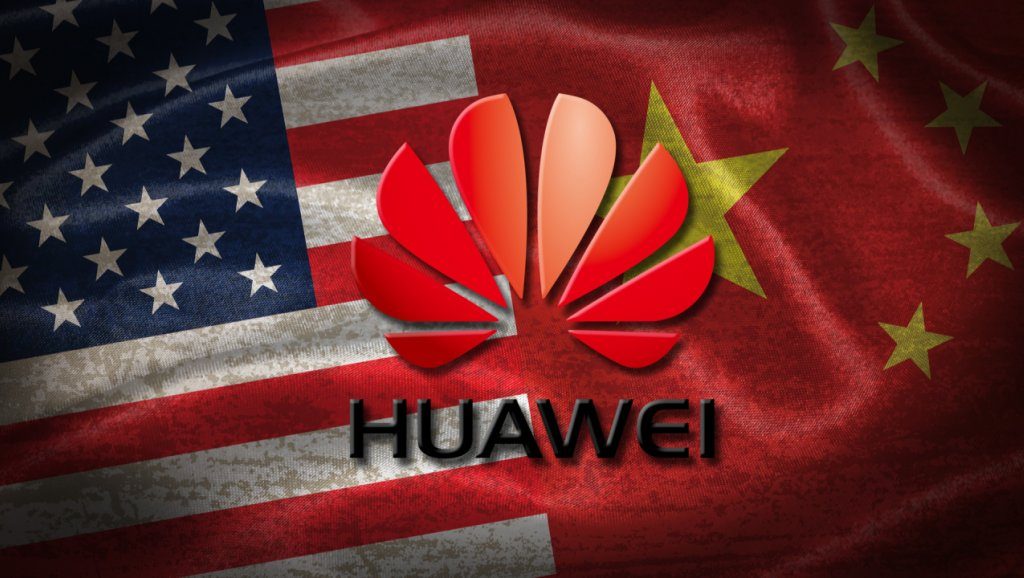

As Huawei Unveils HarmonyOS, US Must Modulate On Its Sanction Toolkit

1

Do not wake up a sleeping tiger. Yes, the United States has scored an own-goal by making China’s Huawei to decouple from America, and in the process restructured and redesigned its business. Before the big sanctions, Huawei depended on many American firms. They made money from Huawei and Huawei used their technologies to make money – call it win-win, the benefits of globalization to a large extent.

Under sanctions, Huawei was forced to return to the basics. And now it is back: “Huawei has formally launched HarmonyOS NEXT, marking a definitive break from the Android ecosystem and representing a significant step in its quest for technological independence from Western platforms. The launch, announced on Wednesday, officially initiates public beta testing for the OS on select Huawei smartphones and tablets powered by the company’s Kirin and Kunpeng chips.” Notice, they have cut-off from Google’s Android and Intel, AMD and Qualcomm chips.

As that happens, Russia’s Putin dropped a line today: “We did not refuse nor fight the dollar, we were forbidden to use it … so we must look for alternatives” as BRICS pursues a US dollar alternative.

Sanctions are tools but I am not sure how that is helping the US when you look at how the superpower is using sanctions to motivate its competitors, and inspire them to go and do big things. Of course, you can ask: who is this village boy offering a perspective on how America can use its sanction toolkit? Let me be….I am just a teacher!

Huawei Breaks Completely Free from Android OS with The Formal Launch of HarmonyOS NEXT

Huawei Breaks Completely Free from Android OS with The Formal Launch of HarmonyOS NEXT

0

Huawei has formally launched HarmonyOS NEXT, marking a definitive break from the Android ecosystem and representing a significant step in its quest for technological independence from Western platforms.

The launch, announced on Wednesday, officially initiates public beta testing for the OS on select Huawei smartphones and tablets powered by the company’s Kirin and Kunpeng chips.

This latest version of HarmonyOS is a departure from previous iterations, as it no longer supports Android apps—a bold move underlining Huawei’s growing confidence in its proprietary ecosystem. Prior versions of HarmonyOS relied heavily on the Android Open Source Project (AOSP) for essential functions, a strategy initially adopted due to the restrictions imposed by U.S. sanctions in 2019 that cut Huawei off from Google’s Mobile Services.

With HarmonyOS NEXT, Huawei has effectively shed its dependence on Android, signaling its determination to carve out a distinct identity in the software landscape.

With a huge domestic market to leverage, Huawei has been unfazed after cutting ties with Android as major Chinese tech companies show readiness to embrace the new operating system. Meituan, Douyin (the Chinese version of TikTok), Taobao, Xiaohongshu (Little Red Book), Alipay, and JD.com are among the prominent players that have developed native applications for HarmonyOS NEXT. These apps cover key areas such as e-commerce, social media, and digital payments, underscoring the broad ecosystem Huawei is building to support its OS.

At the time of the announcement, Huawei disclosed that over 15,000 HarmonyOS-native applications and meta-services were already available. Although this figure pales in comparison to the millions of apps on established platforms like the Google Play Store and Apple’s App Store, it represents a growing base of support for HarmonyOS that could help it gain traction in the Chinese market.

Huawei is touting HarmonyOS NEXT as a major upgrade over its predecessors, boasting 110 million lines of code and significant performance improvements. According to the company, devices running HarmonyOS NEXT will experience a 30 percent boost in overall performance, longer battery life with an added 56 minutes of usage, and an average of 1.5GB of free memory for applications beyond the operating system.

The OS aims to deliver a seamless user experience across smartphones and tablets, maintaining a consistent interface between devices. This unified approach aligns with Huawei’s broader strategy of creating a tightly integrated ecosystem that encompasses a range of smart devices, from mobile phones to wearables and potentially even PCs in the future.

Limited Availability Outside China

However, Huawei has indicated that the new OS will not be available outside China for the foreseeable future. This decision reflects the company’s cautious approach, especially given the limited success of earlier attempts to export HarmonyOS to international markets. Previous efforts included outreach to developers to create apps for the platform with a focus on global markets, but uptake was minimal.

Nonetheless, Huawei has had some success in attracting international developers. Companies such as Singapore-based super app Grab and the airline Emirates have created applications for the HarmonyOS platform, indicating some level of offshore interest and potential future growth.

Background: U.S. Sanctions and The Birth of HarmonyOS

The development of HarmonyOS was accelerated by the 2019 U.S. sanctions against Huawei, which prevented the company from accessing Google’s Android services. In response, Huawei embarked on a journey to create a self-sufficient operating system that would reduce its reliance on U.S. technologies.

The initial versions of HarmonyOS integrated elements of the Android Open Source Project to retain compatibility with Android apps, allowing Huawei to provide a familiar experience for users while continuing to expand its app ecosystem.

HarmonyOS NEXT, however, represents the culmination of years of development aimed at achieving true software independence. Huawei is positioning HarmonyOS as a homegrown alternative that supports China’s broader push for technological self-reliance by moving away from Android altogether. This initiative aligns with China’s ongoing efforts to reduce dependence on foreign technology amid geopolitical tensions and trade restrictions.

Beyond Mobile, HarmonyOS Sees Ambitions in the PC Market

In a move that signals Huawei’s broader ambitions for HarmonyOS, the company announced that it plans to replace Windows with HarmonyOS in future PC models. Yu Chengdong, the chair of Huawei’s consumer business group, revealed last month that the company intends to roll out HarmonyOS-powered PCs, though specifics regarding the launch timeline and potential adoption by other manufacturers remain uncertain.

However, analysts believe that the transition from Windows to HarmonyOS on PCs comes with both opportunities and challenges for Huawei. They note that it could pave the way for a fully integrated ecosystem where users experience seamless interactions across all Huawei devices, but the dominance of Windows in the global PC market poses a significant barrier to entry, as software compatibility and user familiarity with Windows-based systems are deeply entrenched.

A Major Blow to Android’s Market Share?

The launch of HarmonyOS NEXT is expected to resonate far beyond Huawei’s individual fortunes, posing a substantial challenge to Android’s dominant position in one of the world’s largest smartphone markets: China.

By this launch, China is no longer just a massive consumer market but also a crucial battleground for smartphone operating systems. Android has long enjoyed a dominant share in the country, powering the vast majority of smartphones sold there.

However, with HarmonyOS NEXT making a complete break from the Android Open Source Project (AOSP) and its lack of support for Android apps, Google’s operating system is set to lose a large segment of the Chinese market. This is not merely a shift of one company from Android to another system but represents a more profound change, given Huawei’s prominent market position in China and its substantial user base. With over 240 million HarmonyOS devices already activated across previous versions of the OS, Huawei’s ability to migrate its existing user base to HarmonyOS NEXT could mean the transfer of millions of users away from the Android ecosystem.

As Huawei pushes forward with the new OS, Google’s influence in China could be further marginalized. Analysts believe that if other Chinese smartphone manufacturers follow Huawei’s lead and begin developing or adopting alternative operating systems, Android’s grip on the market may weaken even further.

Nigeria Reduces The Thickness of Its Chequebook In Marginal Cabinet Reshuffle

0

Hello…Nigeria reduces the thickness of its chequebook: “Nigeria’s Federal Executive Council (FEC) in a meeting in Abuja, on Wednesday, announced the abolition of the Niger Delta Ministry and the Ministry of Sports Development, …”

. Of course, to balance your books, asking your bank to make a thinner chequebook is not the solution. You know what you have to do: you change your spending habits. South Africa uses less than 20% of our federal workforce to earn EXTRA $100 billion more yearly. So when ministries are closed, you need to get an idea how far we are.

The US runs with 15 executive departments (they call them secretaries, in Nigeria, we go with ministers) in an economy that is about 90x the Nigerian economy.  Today, even after the thinning of the chequebook, we will still have close to 40 ministers from tomorrow.

Someone needs to get a big plough and cut down the government. Get this down to 6 people from each region and marginally expand the offices of Director Generals to head the departments. Already, DGs are political appointees which work well for any government to have the capacity to execute its vision. We need more cuts…to save Nigeria.

The ministers affected.

BREAKING: President Tinubu Sacks Five Ministers.

  1. Barr. Uju-Ken Ohanenye, Minister of Women Affairs
  1. Lola Ade-John, Minister of Tourism
  1. Prof Tahir Mamman,  Minister of Education
  1. Abdullahi Muhammad Gwarzo, Minister of State, Housing and Urban Development
  1. Dr. Jamila Bio Ibrahim, Minister of Youth Development.

Nigeria Abolishes Niger Delta, Sports Development Ministries, to Establish Regional Dev. Ministry

Nigeria Abolishes Niger Delta, Sports Development Ministries, to Establish Regional Dev. Ministry

1

President Bola Tinubu, during a Federal Executive Council (FEC) meeting in Abuja on Wednesday, announced the abolition of the Niger Delta Ministry and the Ministry of Sports Development, marking an attempt to implement the Oronsaye’s report.

The presidency revealed that the responsibilities of these ministries would be absorbed by other entities as part of a broader restructuring effort aimed at streamlining government operations.

Bayo Onanuga, the presidential spokesperson, stated that a new Ministry of Regional Development would be established to oversee all regional development commissions across Nigeria. This new ministry will consolidate the functions of the Niger Delta Development Commission (NDDC) and other regional bodies, including the North West Development Commission, South West Development Commission, and North East Development Commission.

This restructuring is seen as an effort to centralize the management of regional development and reduce administrative redundancies.

In addition to the changes affecting the regional commissions, the FEC approved the merger of the Ministry of Tourism with the Ministry of Culture and Creative Economy. This decision reflects the government’s drive to simplify its structure and consolidate overlapping responsibilities within the federal administration.

With the dissolution of the Ministry of Sports Development, the government announced that the National Sports Commission would now assume its functions. The commission, previously a parastatal under the sports ministry, will be responsible for overseeing the administration and development of sports in Nigeria.

“The National Sports Commission will take over the role of the Ministry of Sports. The FEC also approved the merger of the Ministry of Tourism with the Ministry of Culture and Creative Economy. The decisions were taken today at the meeting of Federal Executive Council in Abuja,” the statement said.

Short of the Oronsaye Report’s Recommendations

While the recent changes mark a significant step in the reorganization of Nigeria’s federal structure, they fall short of fully implementing the Oronsaye report, a comprehensive public sector reform proposal submitted in 2012.

The Oronsaye report, spearheaded by former Head of the Civil Service of the Federation, Stephen Oronsaye, aimed to overhaul Nigeria’s bloated public sector to improve efficiency and reduce government spending. The 800-page document recommended slashing the number of statutory agencies from 263 to 161, merging 52 agencies, scrapping 38, and converting 14 into departments within existing ministries.

Among its key proposals was the elimination of the National Salaries and Wages Commission, whose functions were to be absorbed by the Revenue Mobilization and Fiscal Responsibility Commission. The report also advocated for merging Nigeria’s leading anti-corruption agencies—the Economic and Financial Crimes Commission (EFCC), the Independent Corrupt Practices and Other Related Offences Commission (ICPC), and the Code of Conduct Bureau (CCB)—to create a unified entity for combating corruption.

If fully implemented, the Oronsaye report was estimated to save the Nigerian government over N241 billion annually. The restructuring efforts announced by Tinubu, however, cover only a fraction of the recommendations, signaling a lack of political will toward comprehensive public sector reform.

In February, Tinubu’s administration declared its intention to implement all aspects of the Oronsaye report, including merging, scrapping, and relocating about 32 government agencies. Mrs. Hadiza Bala-Usman, Special Adviser to the President on Policy Coordination, disclosed that a committee had been set up to oversee these changes within 12 weeks. However, the implementation has stalled, with Wednesday’s decisions representing baby steps rather than a sweeping overhaul.

Implications for the Niger Delta and Other Regions

The abolition of the Niger Delta Ministry raises questions about the future of development efforts in the oil-rich region, where issues like environmental degradation, resource mismanagement, and underdevelopment have long been a concern. The Niger Delta Development Commission (NDDC), a regional body created to address the developmental challenges of the area, will now operate under the newly established Ministry of Regional Development.

Many argue that scrapping the Niger Delta Ministry could dilute focus on the region’s unique challenges, potentially leading to decreased funding and slower development. Conversely, supporters of the move believe it could lead to better coordination across regional development commissions and address criticisms of mismanagement and corruption that have plagued agencies like the NDDC.