DD
MM
YYYY

PAGES

DD
MM
YYYY

spot_img

PAGES

Home Blog Page 2741

Kenya And Egypt Lead African Start-Up Funding in 2024, as Investments in Female-Founded Ventures Continue to Lag

0

According to a recent report by Africa: The Big Deal, Kenya, and Egypt have emerged as the top destinations for start-up funding in Africa, with the two countries collectively capturing three-quarters of all investments in Q3 2024.

Together, these two countries accounted for over three-quarters of all investments in the third quarter of 2024, underscoring their status as leading tech hubs on the continent. Egypt led the way, securing $272 million in funding (43%), followed closely by Kenya with $201 million (32%). Significant deals like .light and MNT-Halan, which together accounted for more than half of the total funding raised in the quarter, propelled Egypt to the lead.

While Kenya and Egypt continue to dominate, other African markets are also making strides. Across the rest of the continent, only four other markets secured $10 million or more during the period. This includes Tanzania ($43 million), South Africa ($40 million), Ghana ($35 million), and Nigeria ($26 million). Also, Ten additional countries managed to close at least one deal worth $100k or more, while 38 markets recorded no notable start-up funding activity.

Taking a broader look at 2024 as a whole, Kenya ($437 million, 31%) and Egypt ($373 million, 27%) continue to dominate the funding landscape, accounting for 58% of the total funds raised so far this year.  This marks a record high for both countries since 2019,  surpassing the previous full-year and Q1-Q3 performance. On the opposite side, the other two members of the “Big Four” in African start-up ecosystems, Nigeria and South Africa, have seen their shares decline.

Nigeria and South Africa, the two other members of the “Big Four” in African start-up ecosystems, have seen their shares drop. Nigeria’s share of funding stands at 15% ($218 million), a slight increase from last year’s 14%, but significantly lower than its 35% share from 2019 to 2022. South Africa’s performance is even more concerning, with a 9% share ($125 million, its lowest since 2019, far below its 18% average.

This year, only 18% of total funding has gone to the rest of Africa, with 23 markets recording at least one $100k+ deal. Among them, Tanzania, Ghana, Morocco, Uganda, and Rwanda have each secured at least 10 such deals since January. However, in most cases, one major transaction heavily influenced the numbers, such as Spiro’s $50 million deal in Benin and Nala’s $40 million deal in Tanzania. Despite the overall growth in funding, gender disparities persist. In 2024, less than 5% of total investments have gone to start-ups led by female CEOs, a decline from the 5.6% average between 2019 and 2023.

Gender Disparity

Despite the overall growth in funding, gender disparities persist in the African tech ecosystem. In 2024, less than 5% of total investments went to start-ups led by female CEOs, a decline from the 5.6% average between 2019 and 2023. Additionally, only 9% of funding was allocated to start-ups with at least one female founder, down from 17% in previous years. Start-ups with exclusively female founders received less than 1% of funding, a drop from 2.1% during 2019-2023.

While the gender gap remains a significant challenge, a few women like Carrol Chang (CEO of Andela), Cikü Mugambi (CEO of KOBO, Anu Adasolum (CEO of Sabi), Belinda Shaw ( Co-founder and CEO of CAPE BIO PHARMS) and Uche Ogboi (CEO of LORI), continue to make their mark despite the odds, standing alongside 96 male CEOs leading Africa’s most funded ventures.

Since 2019, 27 African start-ups have raised over $100 million in equity, debt, or grant funding, with MTN-Halan leading the charge, raising nearly $1 billion in the past five and a half years, followed by Sun King and OPay. Broadening the scope to those that have raised $50 million or more, the number rises to 56 ventures, with the Top 100 being a key benchmark for future success.

Tech Companies Need Tech-savvy Executives to Thrive – Zuckerberg

0

Mark Zuckerberg, co-founder of Facebook and current CEO of Meta, recently shared his perspective on the importance of having a tech-savvy leadership team in today’s rapidly evolving tech industry.

During an appearance on the Acquired podcast, Zuckerberg emphasized that companies that consider themselves technology-driven should be led by CEOs and senior executives with substantial technical expertise to truly thrive.

Reflecting on the key factors that have contributed to Meta’s growth, Zuckerberg highlighted the critical role of having a leadership team that not only understands product development but also embraces technological innovation as core to the company’s identity. According to him, Meta’s success can be attributed to maintaining a strong balance between product innovation and technological leadership.

“I think that that’s something that we’ve held ourselves to and built a good organization around,” he remarked, indicating that Meta’s structure emphasizes technical knowledge and development throughout its organizational hierarchy.

Zuckerberg did not shy away from critiquing what he views as a common flaw in many so-called tech companies—namely, the lack of technical proficiency among their leadership. Drawing from his early experiences in Silicon Valley, he described a recurring scenario where firms identified as technology companies lacked leadership teams with technical expertise.

“The CEO wasn’t technical, the board of directors had no one technical on it. They had one dude on the management team who was the head of engineering, who was technical, and everyone else wasn’t,” Zuckerberg recounted, noting that such companies, despite their potential success in certain aspects, could not genuinely be considered tech firms unless a significant portion of the leadership possessed strong technical acumen.

He suggested that firms claiming to be tech-oriented need more than just one or two technical roles at the top. Instead, they must cultivate a culture where technical understanding permeates the senior leadership, allowing them to drive innovation and adapt to rapid technological advancements.

The Meta vs. Apple Approach

In the interview, Zuckerberg also drew comparisons between Meta and other tech giants, notably Apple, to illustrate different approaches to product development. Apple is known for taking its time to perfect products before launch, while Meta has cultivated a culture that values agility and rapid iteration.

Zuckerberg pointed out that Meta has consistently embraced a more reactive approach: “We have a culture that values shipping and getting things out and getting feedback,” he said.

He admitted that this mindset sometimes brings Meta close to “the line of being embarrassed about what [it] put[s] out,” but stressed that this approach has proven valuable for the company’s growth.

Learning from Competitors and Embracing Feedback

Beyond advocating for tech-savvy leadership, Zuckerberg emphasized the importance of being open to external insights, warning companies against overprotecting their pride.

“There are more smart people outside of your company than inside your company,” he said, underscoring the need for businesses to stay humble and learn from the successes and failures of others. He suggested that companies often gain valuable insights from observing rival firms’ strategies and outcomes.

Navigating Emerging Trends like AI

Zuckerberg’s insights come at a time when many companies are grappling with the rapid advancement of technologies such as artificial intelligence (AI), which requires quick adaptation to maintain competitiveness. He indicated that innovation should not just be about pushing the envelope with new technologies but also about having the right leaders who understand these advancements well enough to guide strategic decisions.

His views echo a growing trend among some tech giants to elevate engineers and product developers to senior leadership roles. For instance, companies like Google and Microsoft have appointed leaders with deep technical backgrounds—such as Sundar Pichai and Satya Nadella, respectively—who have played pivotal roles in shaping their companies’ focus on AI and cloud computing. This aligns with Zuckerberg’s argument that a solid grasp of technology at the leadership level is essential for companies to thrive in today’s market.

At Meta, Zuckerberg has practiced what he preaches, ensuring that the company’s leadership team is infused with technical expertise. His background as a coder who co-founded Facebook in a dorm room informs his hands-on approach to technological leadership. Furthermore, Meta’s focus on emerging technologies, such as virtual reality, augmented reality, and AI, reflects a deliberate strategy to stay ahead of the curve by fostering a culture of technical innovation.

Nigeria Lost N13.2tn to FX Subsidies Between 2021 And 2023 – World Bank

0

The World Bank has reported that Nigeria lost a staggering N13.2 trillion due to mismanagement of its foreign exchange policy between 2021 and 2023.

This loss, attributed to the government’s dual exchange rate system, has sparked significant discussion about how the country got to its current economic trajectory and the measures needed to correct its fiscal course.

The breakdown of the losses reveals that N2 trillion was lost in 2021, N6.2 trillion in 2022, and N5 trillion in 2023. These figures highlight the disparity between an official exchange rate—where the government controlled the price of the naira—and a parallel market rate that was governed by market forces.

The two-tier exchange rate system was initially introduced as a stabilizing measure, designed to protect the naira and specific sectors of the economy. However, as time passed, the policy became a massive financial drain.

According to the World Bank, the difference between the official rate and the parallel market rate significantly reduced the amount of naira-denominated revenue that flowed into Nigeria’s treasury. Vital sectors such as oil and gas, import and export duties, value-added tax (VAT), and corporate taxes were deeply impacted by this practice.

In their report, the World Bank stated, “Quantifying the fiscal cost, through forgone revenue of multiple exchange rates: Prior to the full FX unification in February 2024, the presence of a parallel FX premium generated enormous fiscal costs, in the form of forgone revenues.”

The report further explained that revenues, particularly those linked to foreign exchange, were being converted into naira at the official rate, significantly lower than the parallel market rate. This resulted in the government earning far less than it could have had it unified the exchange rates earlier.

Impact on the Nigerian Economy

During the years in question, the impact of these losses was felt across key areas of the economy. Of the N13.2 trillion lost, N3.9 trillion was attributed to forgone revenues from the non-oil sector. The World Bank’s report noted that about 44.3% of Nigeria’s net VAT revenue came from imported goods paid for in foreign currency, while 40% of total company income tax was also paid in foreign currency.

“The unification of the FX rate has therefore eliminated the forgone revenues that previously benefited certain groups at the expense of the entire nation,” the report said, emphasizing the profound implications of these losses.

The report makes a direct comparison between the cost of Nigeria’s foreign exchange subsidy and its fuel subsidy. In 2022, the government spent N4.5 trillion on the Premium Motor Spirit (PMS) subsidy, which represented 2.2% of the Gross Domestic Product (GDP). Meanwhile, the losses due to the foreign exchange premium amounted to N6.2 trillion—representing 3% of the GDP.

“These forgone revenues due to the parallel FX premium were even larger than the PMS subsidy, underscoring the importance of maintaining a unified FX rate,” the World Bank explained.

The breakdown of the FX-related losses further revealed that N4.5 trillion was lost from gross oil revenues, while N1.7 trillion was lost from non-oil tax revenues, underscoring the widespread fiscal impact across multiple sectors of the economy.

The cost of maintaining FX subsidies is believed to be the major reason the present administration floated the Nigerian FX market in June 2023.

Nigeria has long subsidized fuel and foreign exchange, spending enormous amounts to keep prices artificially low. However, this has come at a high cost. In its report, the World Bank argued that the FX subsidy, which was finally eliminated in February 2024, had been a larger drain on Nigeria’s economy than even the fuel subsidy.

However, eliminating the subsidies has brought about severe economic hardship to the Nigerian people, as it has shot up the cost of living. Finance Minister Wale Edun announced last Thursday that Nigeria would no longer subsidize fuel and foreign exchange. He made this declaration during an event where the World Bank unveiled its latest report on Nigeria’s development.

“Fuel and FX subsidies are extinguished,” Edun declared, explaining that the policies were no longer sustainable for Nigeria’s economy. He explained that these subsidies had been a major strain on the country’s finances, and removing them was a necessary step to avoid further economic deterioration.

Recommendations for Economic Recovery

The World Bank’s chief economist for Nigeria, Alex Sienart, pointed to the gains Nigeria has made since removing the foreign exchange subsidy, which has significantly boosted government revenue. Sienart noted that government revenues in the first half of 2024 increased largely due to the unification of the exchange rate.

“We are seeing a fiscal consolidation underway with the fiscal deficit shrinking from 6.2 per cent of GDP in the first half of 2023 to 4.4 per cent of GDP in H1, 2024,” he said, noting that while government expenditures have remained relatively constant, the removal of the FX subsidy has contributed to the surge in revenue.

Sienart further explained that the elimination of the FX subsidy had a more significant positive impact on Nigeria’s finances than the removal of the fuel subsidy.

“This surge in revenue is largely due to the removal of the implicit subsidy which was even larger than the PMS subsidy that we talk about,” he noted.

The World Bank report also strongly advised Nigeria to maintain its unified exchange rate policy going forward. It argued that reverting to multiple exchange rates would once again result in significant losses and that the government must avoid falling back into the costly practices of the past.

US Announces $325m Investment to Support Hemlock Semiconductor Michigan

0

The Biden administration has announced a significant investment of up to $325 million to support Hemlock Semiconductor in building a new factory in Michigan, a move that could have strategic political implications in the battleground state ahead of the upcoming election.

The funding, which comes from the CHIPS and Science Act signed into law by President Joe Biden in 2022, is intended to bolster U.S. semiconductor production and strengthen the country’s manufacturing base. The project is expected to create 180 permanent manufacturing jobs in Saginaw County, along with numerous construction jobs during the building phase.

Commerce Secretary Gina Raimondo emphasized the administration’s broader strategy of revitalizing American manufacturing and reducing reliance on foreign semiconductor supplies, which are critical for a wide range of technologies, from electronics to solar energy.

“What we’ve been able to do with the CHIPS Act is not just build a few new factories, but fundamentally revitalize the semiconductor ecosystem in our country with American workers,” Raimondo said. “All of this is because of the vision of the Biden-Harris administration.”

The decision to channel federal funds to a project in Michigan could help sway voters in a state that has been hotly contested in recent presidential elections. Both Republicans and Democrats were nearly evenly matched in Saginaw County during the last two races.

In 2016, Donald Trump narrowly carried the county and the state of Michigan, but the tables turned in 2020 when Joe Biden managed to flip both back to the Democrats. With Saginaw County expected to be a key battleground in the 2024 election, the new investment could give Democrats a valuable edge.

Timing, Election Gimmick?

A senior administration official, speaking on condition of anonymity, explained that the announcement’s timing was driven by the completion of negotiations on the grant terms rather than political motivations. However, the economic boost in a swing state during an election year inevitably carries political weight. While the investment is part of a larger strategy to secure U.S. semiconductor supply chains, it provides high-quality jobs, thus positioning the administration to showcase economic achievements.

Hemlock Semiconductor, a key player in the production of hyper-pure polysilicon used in semiconductors and solar panels, plans to begin construction on the new facility in 2026, with production starting by 2028. The investment aims to not only support immediate job creation but also lay the foundation for long-term economic growth in Saginaw County and the broader region.

Hemlock Semiconductor is a significant player in the U.S. semiconductor supply chain, producing hyper-pure polysilicon, a crucial material for semiconductor wafers and solar panels. The expansion into Saginaw County is expected to enhance domestic production capabilities, contributing to the Biden administration’s goal of reshoring critical supply chains and supporting the broader semiconductor ecosystem.

The announcement also highlights contrasting economic strategies between the two major political parties. While the Biden-Harris administration has focused on government-led investment in high-tech industries, using initiatives like the CHIPS Act to spur job creation and industrial growth, former President Donald Trump has advocated for an approach centered on trade policy and tax cuts. Trump, the Republican nominee, has argued that raising tariffs and cutting income taxes would be more effective at revitalizing American manufacturing than the Biden administration’s approach.

The CHIPS and Science Act, signed into law by Biden, has allocated billions to support domestic semiconductor production. It is part of a broader push to reduce dependency on foreign suppliers, especially from countries like China, and to ensure that the U.S. remains a leader in high-tech industries. Vice President Kamala Harris, the Democratic candidate, has fully backed the legislation as part of her campaign, emphasizing the role of such investments in building a sustainable economic future.

As the factory project moves forward, it is expected to serve as a tangible example of the administration’s commitment to industrial revitalization. Raimondo highlighted that the CHIPS Act has gone beyond merely facilitating new factories, with a larger aim of fundamentally reshaping the U.S. semiconductor industry to be more resilient and globally competitive.

However, the CHIPS Act’s goal extends beyond individual factory projects; it aims to establish a comprehensive ecosystem that supports semiconductor design, manufacturing, and supply chain resilience in the United States.

Key Semiconductor Initiatives Under the CHIPS Act

Several initiatives have been launched under the CHIPS Act to meet these ambitious objectives, focusing on key regions and major companies. Some of the significant projects include:

Intel’s $20 Billion Investment in Ohio

One of the most high-profile investments under the CHIPS Act is Intel’s $20 billion plan to construct two new semiconductor manufacturing plants, known as fabs, in Licking County, Ohio. Announced in early 2022, the investment is one of the largest in the history of the state and aims to make the new facilities the cornerstone of what Intel hopes will be a new “Silicon Heartland” in the Midwest.

The project is expected to create 3,000 permanent high-tech jobs and support tens of thousands of indirect jobs in construction and related industries. These fabs will manufacture advanced semiconductor chips and are seen as a critical step toward reducing U.S. reliance on overseas chip production.

Taiwan Semiconductor Manufacturing Company (TSMC) Expansion in Arizona

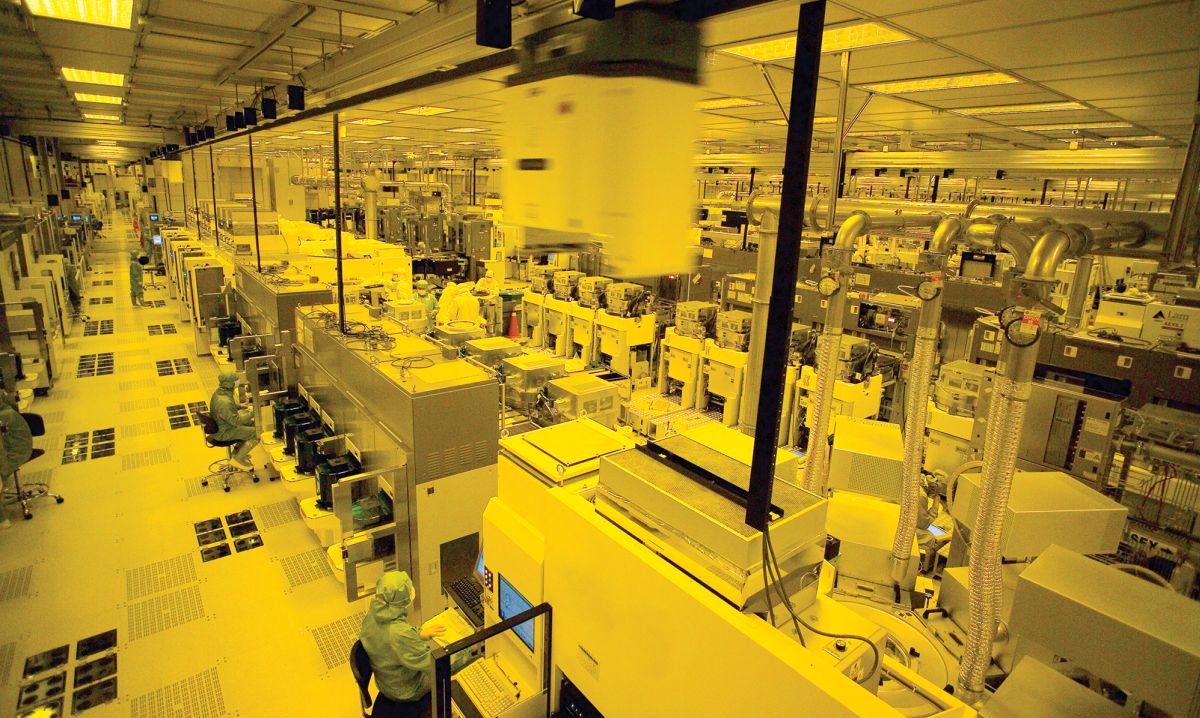
TSMC, one of the world’s leading chipmakers, is expanding its manufacturing capabilities in Arizona, with support from the CHIPS Act. The company has pledged over $40 billion to build a semiconductor fabrication facility in Phoenix, which will eventually house two fabs.

The first phase of the project is slated for completion by 2024, with plans to manufacture advanced 5-nanometer and 3-nanometer chips that will be used in a variety of applications, from smartphones to military equipment. The investment marks one of the largest foreign direct investments in U.S. history, and the CHIPS Act funding aims to facilitate the transfer of cutting-edge technology to support U.S. chipmaking leadership.

Micron Technology’s Mega-Project in New York

Another major initiative under the CHIPS Act is Micron Technology’s plan to invest up to $100 billion over 20 years to build the largest semiconductor fabrication facility in the U.S., located near Syracuse, New York. Micron’s commitment was made possible through both federal and state incentives, with the CHIPS Act playing a critical role in supporting this massive undertaking.

The facility will focus on producing advanced memory chips and is projected to create 9,000 direct jobs, in addition to thousands of construction and supply chain positions. This initiative aligns with the administration’s focus on scaling up domestic capabilities in critical technology sectors.

Samsung’s $17 Billion Plant in Texas

Samsung is building a $17 billion semiconductor manufacturing facility in Taylor, Texas, which will be its largest investment in the U.S. to date. The new plant will help Samsung expand its production of advanced chips, with a focus on meeting the growing demand for chips used in data centers, artificial intelligence, and 5G technology.

Although the project was announced before the CHIPS Act was signed, the legislation has provided a framework for additional support, including infrastructure improvements and workforce development incentives to ensure the facility’s success.

As Elon Musk Plans To Launch extra 30k Satellite, African Union Must Develop A Plan for Starlink on Taxes

1

I remain convinced that the best days of terrestrial broadband providers like GSM companies are behind them, as Elon Musk goes all out with an asymmetric competitive playbook: “Elon Musk’s SpaceX has renewed its push for approval to significantly expand the Starlink satellite constellation, seeking permission from the Federal Communications Commission (FCC) to launch nearly 30,000 more satellites into low-Earth orbit.”

If they do approve these satellites, he could crash the cost of his data by up to a factor of 4, and by 2027, his cost model will be cheaper than whatever your local mobile provider is giving you. And because he has the satellite-to-cellphone capabilities already in place, a massive disintermediation is loading.

I understand that our regulators and policymakers are always sleeping, but they cannot afford to do that on this matter. If Africa loses all the core taxes from the telecom sector to satellite providers which are not indigenous, our economies could collapse. So, they need to immediately put a tax regime at the African Union level on how to handle this new vector.

Understand that the solution is not for MTN, Glo or Safaricom going satellite. That is a waste of time. Why? None has the engineering capacity to design, make and launch satellites, and can only rely on external providers. But for Starlink, it is end-to-end in-house, and because of that, the Starlink price model could be superior on multiples. This is why this is an existential threat to many telcos in terrestrial space!