DD
MM
YYYY

PAGES

DD
MM
YYYY

spot_img

PAGES

Home Blog Page 3120

Japanese Metaplanet’s Strategic Bitcoin Play

0

In the dynamic world of cryptocurrency, strategic corporate maneuvers can create ripples across the market. A prime example of this is the bold move by Metaplanet, a Japanese firm that has recently made headlines with its significant investment in Bitcoin. This decision marks a pivotal moment in the integration of cryptocurrency into traditional corporate finance strategies in Japan.

Metaplanet, originally a budget hotel operator known as Red Planet Japan, has pivoted to become a Web3 developer, embracing the potential of blockchain technology. In a striking move, the company has added $6.56 million in Bitcoin to its balance sheet. This decision was driven by a desire to minimize exposure to the Japanese yen, which has been weakened by Japan’s prolonged low-interest-rate environment. The yen’s diminished status as a key global currency has prompted companies like Metaplanet to seek alternative assets like Bitcoin as a hedge against inflation and a tool for macroeconomic resilience.

The company’s strategy mirrors that of MicroStrategy, a Virginia-based software developer that began accumulating Bitcoin in 2020. MicroStrategy’s approach has been to use Bitcoin as an alternative to holding cash, viewing it as a hedge against inflation. Metaplanet’s adoption of Bitcoin follows a similar rationale, aiming to provide long-term capital appreciation for the company and its shareholders.

Metaplanet’s Bitcoin play is not just about diversifying assets; it’s also about seizing the digital market in Japan. By committing an initial ¥1 billion ($7.5 million) to Bitcoin, the company is positioning itself at the forefront of Japan’s digital economy.

This move is particularly significant given the preferential tax structure in Japan for crypto investments, which offers Japanese investors a more favorable environment to engage with cryptocurrencies. This aggressive investment strategy has led to Metaplanet being referred to as “Asia’s MicroStrategy,” highlighting the company’s commitment to integrating Bitcoin into its financial portfolio.

The company’s stock, however, has experienced volatility, with a significant drop following a decrease in Bitcoin prices. Despite this, Metaplanet’s shares remain significantly higher than at the beginning of 2024, indicating a strong market interest in their cryptocurrency strategy.

Metaplanet’s innovative approach to Bitcoin investment not only showcases the potential for digital assets to play a role in corporate finance but also signals a shift in the Japanese corporate landscape towards embracing Web3 technologies and cryptocurrency. As the digital market continues to evolve, Metaplanet’s Bitcoin play could pave the way for other firms to consider cryptocurrency as a viable component of their financial strategies.

The impact of Metaplanet’s investment has been palpable, with the company’s stock price soaring by 90% following the announcement. However, the volatile nature of Bitcoin’s price has also led to fluctuations in Metaplanet’s stock value. Despite these market dynamics, Metaplanet’s aggressive Bitcoin buying has earned it the moniker “Asia’s MicroStrategy,” highlighting its commitment to integrating cryptocurrency into its financial strategy.

Metaplanet’s Bitcoin acquisition is a clear indication of the growing acceptance of cryptocurrencies in corporate Japan. It reflects a broader trend of companies exploring digital assets as part of their treasury management. This strategic play by Metaplanet could pave the way for other Japanese firms to consider cryptocurrency as a viable component of their financial portfolios.

As the landscape of corporate finance continues to evolve, the intersection of traditional business and cryptocurrency will likely become more prevalent. Metaplanet’s Bitcoin play is a testament to the transformative power of digital currencies and their potential to redefine corporate asset management. It will be intriguing to watch how this integration progresses and what it means for the future of corporate investments in Japan and beyond.

The Umpire of Crypto Taxation is Booming

0

The landscape of cryptocurrency taxation is undergoing significant changes, reflecting the growing integration of digital assets into the global financial system. As governments around the world grapple with the challenges and opportunities presented by cryptocurrencies, regulatory bodies are stepping up to establish clear tax guidelines.

In the United States, the Internal Revenue Service (IRS) has finalized new regulations for crypto tax reporting, set to take effect in 2026. These regulations are part of a broader effort to standardize the reporting of gains from digital assets, akin to traditional financial instruments. The move aims to simplify tax compliance for crypto users and crack down on tax evasion, which has been a concern in the decentralized nature of digital currencies.

The finalized regulations stipulate those custodial platforms, such as exchanges that hold customer assets, will be required to provide standardized 1099 forms to both investors and the IRS. This aligns with the practices of banks and traditional brokerages, fostering a more transparent tax reporting process. However, decentralized platforms that do not hold assets directly are currently exempt, highlighting the unique challenges that the crypto industry presents to tax authorities.

The response from the crypto community to these new regulations has been mixed. While some view it as a necessary step towards legitimizing and stabilizing the market, others express concerns over the potential overreach and the difficulties in enforcing compliance among decentralized operations. The debate underscores the complexity of regulating a technology that inherently resists centralized control.

The tax implications of staking cryptocurrencies are becoming increasingly important as more investors engage in this activity. According to recent guidance from the IRS, staking rewards must be included in gross income for the taxable year in which the taxpayer acquires dominion and control of the awarded cryptocurrency. This means that when you receive new tokens as a reward for staking, you are required to report their fair market value as income on the date you gain the ability to transfer, sell, or use those tokens.

The process of staking involves committing your cryptocurrency to support a network and validate transactions, and in return, you earn rewards. These rewards are akin to earning interest on a savings account or dividends from stocks. However, unlike these traditional financial instruments, the tax treatment of staking rewards has been less clear until recently.

With the new IRS ruling, it’s evident that staking rewards are treated similarly to mining rewards, which have been taxable upon receipt for some time. This clarity helps taxpayers understand their obligations and ensures that they remain compliant with tax laws. It’s important for participants in staking to keep detailed records of their transactions, including the date and fair market value of any rewards received, to accurately report their income.

Despite the controversies, the establishment of clear tax rules is seen by many as a positive development for the industry. It provides a framework for investors to accurately report their transactions and could potentially lower the barrier to entry for new participants wary of the uncertain tax implications of crypto investments.

As the “umpire” of crypto taxation continues to evolve, it is clear that the dialogue between regulators and the crypto community will be crucial in shaping a fair and effective tax system for digital assets. With public hearings and comment periods allowing for industry input, there is an opportunity for a collaborative approach to regulation that balances the need for oversight with the innovative spirit of the crypto world.

The booming interest in crypto taxation reflects a maturing market that is increasingly intersecting with traditional financial systems. As this trend continues, it will be interesting to observe how the regulatory landscape adapts to accommodate the unique characteristics of digital assets while ensuring fairness and compliance in taxation.

Huawei Optimistic That China’s Innovation Will Overcome Advanced AI Chip Shortage Enabled by U.S. Sanctions

0

At the World AI Conference in Shanghai, Zhang Ping’an, CEO of Huawei Cloud, addressed the current challenges posed by the U.S. restrictions on advanced AI chip shipments to China, asserting that China’s ambition to lead in artificial intelligence (AI) remains undeterred.

“Nobody will deny that we are facing limited computing power in China,” Zhang stated. He acknowledged the significant hurdle posed by the U.S. ban on sales of advanced AI chips to China, including those from major players like Nvidia.

However, Zhang emphasized that reliance on these chips alone should not define the future of AI innovation in China.

“If we believe that not having the most advanced AI chips means we will be unable to lead in AI, then we need to abandon this viewpoint,” he said.

Huawei, which has been placed on the U.S. Entity List, has developed its own AI chip, Ascend, as a strategic response to these restrictions. While the Ascend AI chip is currently considered inferior in computing power compared to Nvidia’s offerings, it is widely used within China to train AI models.

Zhang called for innovative solutions that focus on cloud computing, suggesting that improvements in computing architecture could compensate for the lack of cutting-edge AI chips. He also highlighted the importance of a converged approach that integrates cloud, edge, and networks to enhance efficiency and reduce energy consumption.

The World AI Conference: A Showcase of China’s Resilience and Innovation

The World AI Conference saw numerous Chinese tech companies, from industry giants to startups, demonstrating their latest innovations and reaffirming their support for China’s AI sector despite the sanctions. More than 150 AI-related products and solutions were exhibited, with a few international firms such as Tesla and Qualcomm participating.

Notably, SenseTime, a company previously focused on facial recognition technology, showcased its new generative AI product, SenseNova 5.5, which aims to rival OpenAI’s GPT-4 in areas like mathematical reasoning.

Meanwhile, China has also unveiled ambitious plans to expand its national computing capacity significantly. At the Global Digital Economy Conference 2024, Wang Xiaoli of the China Academy of Information and Communications Technology revealed that China currently operates over 8.1 million data center racks, with a combined processing power of 230 exaFLOPS.

The nation aims to increase this capacity by 30% within the year, targeting 300 exaFLOPS by 2025. This ambitious growth plan underscores China’s commitment to overcoming the limitations imposed by U.S. sanctions and continuing its push toward AI leadership.

The United States has maintained a lead in the AI race largely due to its access to the most advanced AI chips, which are crucial for high-performance computing and training complex AI models. Companies like Nvidia, with their cutting-edge GPU technology, have given the U.S. a significant advantage. This has enabled American firms to dominate in fields such as machine learning, natural language processing, and computer vision.

Despite the chip constraints, China’s efforts in AI innovation demonstrate resilience and the potential to challenge U.S. dominance. Huawei’s development of the Ascend AI chip and its focus on cloud computing are strategic moves to mitigate the impact of U.S. sanctions. The company is leveraging its vast resources and innovative capabilities to create alternative solutions that can support the country’s AI infrastructure.

Moreover, the Chinese government’s significant investments in AI research and development, coupled with its plans to expand national computing capacity, indicate a strong commitment to advancing its AI capabilities. This is underlined by the target of reaching 300 exaFLOPS by 2025, widely regarded as an aggressive push to enhance computing power, which is essential for AI development.

The dynamic between the U.S. and China in the AI sector is likely to intensify as both nations continue to invest heavily in technology and innovation.

China is also pushing forward with a global AI ambition, particularly for regions like Africa. Chinese technology firms are increasingly looking towards Africa as a potential market for its EVs and other tech innovations, given the constraints in the U.S. and European markets.

While the U.S. currently enjoys a lead due to its chip advantage, China’s comprehensive strategy encompassing chip development, cloud computing, and international market expansion positions it as a formidable competitor.

The outcome of this technological rivalry will significantly influence the global AI industry. If China successfully overcomes the chip constraints and leverages its strengths in other areas, it could narrow the gap with the U.S. and potentially set new benchmarks in AI innovation.

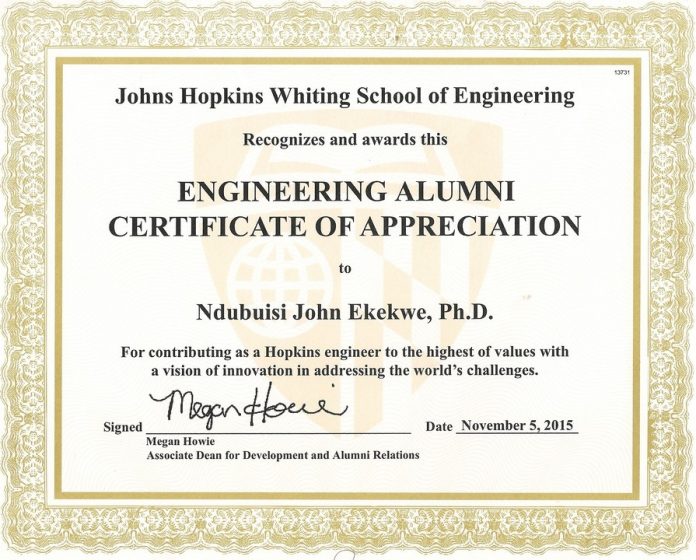
Getting Admitted into Johns Hopkins University Engineering PhD Program

0

Question: can international students benefit from the Johns Hopkins University scholarships as you reported on the $1 billion Bloomberg donation? 

My response: We all benefitted, and I do assume that remains the case; check the school website for the latest update. For the engineering PhD, if Johns Hopkins University admits you for a PhD program in engineering, it will have 100% funding for you. They will pay about $60,000 of your yearly tuition and pay you about $37,000 stipend annually. As you progress in the program, you can even get more scholarships as they have tons of money there. 

So, there is no harm if you want to take a chance. It is a top-ten university in the United States, and is the world’s finest medical school. The probability of getting a job before graduation is close to 99.99% as recruiters flood the campus hiring students. 

Yet, it is super selective. When I applied for my electrical computer engineering PhD program, more than 900 applied; they picked 15 students. So, you have to be on top of your game; I entered with a GRE Quantitative 800/800 and a CGPA of 4.00/4.00 from my Master’s degree. 

Understand that Johns Hopkins does not have any course requirement for the PhD program. In other words, no one will tell you that you have to take 180 credits or whatever. The program is designed such that a huge problem is assigned to you, and you have to solve it! You have to decide on courses you will take; I took courses in medical school, Math, and English departments besides the engineering ones. As I write,  I am not even sure there is a CGPA for PhD students; the focus is on solving the world’s greatest problems and not grades. During my time, I invented a technology on robotics for medical and space applications and the University patented it for me. In 2017, we licensed some rights to the United States Government. 

What again….on the inmails. Check the school website. Hope my context helps. If you can go for it; it is the world’s finest university on how it develops scholars.  Good luck 

Nigerium And Why The Government Should Allow Young People to Invent the Future

0

Nice name there: – Nigerium: “In a move to enhance national security and safeguard citizens’ data, the National Information Technology Development Agency (NITDA) has announced plans to develop an indigenous blockchain technology, aptly named “Nigerium.” This initiative comes in response to concerns over the control exerted by foreign developers on popular blockchain platforms like Ethereum, which may not prioritize Nigeria’s interests.”

Good luck Nigeria. Anything that works is the best policy and strategy. That said, the government should not get into this vector. Rather, the focus should be allowing young people to do their thing in an atmosphere which promotes innovation.

The soundbites from the new SEC team is very promising; if they propel the vision with ACTION, the young people will build what they have to build. Yes ohh, the government should just get out of the way, and that includes getting out of any idea of any government inventing a national blockchain technology. We need progressive policies from the government; the operationalization belongs to the market!

Nigeria to Develop Indigenous Blockchain “Nigerium” for Data Security and National Sovereignty