DD
MM
YYYY

PAGES

DD
MM
YYYY

spot_img

PAGES

Home Blog Page 3126

Regional Economic, Social differences decreasing in Europe

0

In recent years, Europe has witnessed a significant shift in its regional landscape, with economic and social disparities across various regions showing a marked decrease. This development is a testament to the country’s concerted efforts to foster a more balanced and equitable distribution of resources and opportunities.

In Germany, the Federal Government’s Equivalence Report 2024, approved by the Cabinet, reveals a promising trend towards regional equality. The report indicates that out of 38 equivalence indicators, 27 are converging across regions.  The report highlights a decrease in disparities across a majority of economic, social, and other indicators.

This is a testament to the concerted efforts by the German government to address issues of inequality and promote a more balanced development across its regions. These indicators encompass a wide array of metrics, including municipal tax revenue, unemployment rates, crime rates, birth rates, life expectancy, accessibility to supermarkets, and the proportion of forested areas within the 400 districts and independent towns.

This positive trajectory is not without its challenges, however. Regions with dwindling populations face significant hurdles, highlighting the need for ongoing support and innovative policies to ensure sustainable growth and development. Despite these challenges, the overall trend points to a Germany that is gradually bridging the gap between its wealthiest and most challenged regions.

The report also sheds light on areas where disparities have widened, such as the proportion of skilled labor and experts in the workforce who contribute to social insurance, residential building density, the ratio of children to daycare places, the proportion of single-person households, and the old-age dependency ratio. These findings underscore the complexity of regional development and the necessity for targeted interventions.

Economic integration processes within the EU have also contributed to diminishing regional inequalities. The integration has led to a more homogeneous economic, legal, and political field, promoting social and economic cohesion. This is particularly evident in the gradual economic convergence between Eastern and Western Europe.

Europe has long been a continent of diverse cultures, languages, and economies. The disparities between its regions have been a subject of study and policymaking for decades. However, recent trends suggest a gradual decrease in these regional economic and social differences, signaling a shift towards greater cohesion within the European Union (EU).

The International Monetary Fund (IMF) has highlighted that while productivity gaps largely reflect the level of disparities across regions in advanced European economies, diverging unemployment rates have increased since the Great Recession. The COVID-19 pandemic posed further challenges, as regions with lower teleworkability rates—often poorer regions—faced greater vulnerability. Yet, despite these setbacks, there is evidence of a narrowing gap in regional disparities.

The European Parliament briefing on regional inequalities in the EU supports this optimistic view. The EU Parliament has also noted that while regional disparities have been decreasing across the EU as a whole, they have been increasing within some countries. This paradox highlights the complex nature of regional inequality, which can manifest differently within national borders compared to the broader EU context.

The decreasing regional disparities in Europe signal a move towards a more inclusive and unified continent. This trend presents opportunities for shared prosperity and a stronger collective identity. However, it also calls for continued vigilance and action to ensure that all regions and individuals can benefit from Europe’s growth and progress.

Moreover, studies have shown that the economic differences between East and West Europe are gradually diminishing, fostering a more homogeneous economic, legal, and political field across the EU. This homogenization is crucial for social and economic cohesion, which is a central goal of the EU. The impact of EU integration processes has been profound. Inter-regional inequalities in the EU have strongly declined since 1995 due to the economic, monetary, and political integration of the EU.

Beyond Balance Sheets, The Power of Perception in Markets

1

In the past, the mantra was this: I will just go and execute, and the numbers will do the talking. Interestingly, you can execute, but the numbers will not help you. Simply, how you make money, and where you make money, are more important than the actual numbers on the balance sheet and P&L.

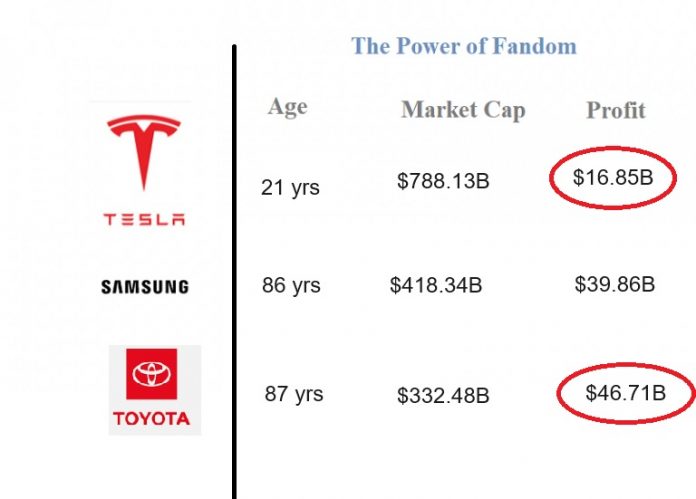
You can generate more $30 billion in profit and still be valued less than 50% of another company in the same industry!

Tesla is a car company which sells “software subscription” and emission credits, and makes all its competitors look lost, even though most are delivering “better automobile numbers”; Toyota sells more than 10 million cars than Tesla, but Tesla is valued at more than 2x.

Remember: Toyota sold around 11.23 million vehicles worldwide in 2023 while Tesla sold 1.8 million vehicles

Look at the profit of Samsung, but see how the market has valued Tesla; it goes beyond absolute $$. Tesla has turned customers into FANS and created a fandom in markets.

Momentum drives the future, and momentum is anchored on Perceptions in markets. But perception is not physics and that means you have to play it.  You can have speed, but companies with velocity win because they have a clear direction.  Markets like companies with clear anchors into the future, and they invest on those growth vistas. Tesla is seen as part of the future and it is rewarded heavily.

Chinese EV Makers Eye Africa to Mitigate Impact of Europe, US Tariff Hike

0

Amidst rising tariffs from Europe and the United States, Chinese electric vehicle (EV) manufacturers are turning their gaze towards Africa, viewing it as a burgeoning market with vast potential to fill the gap.

However, this strategic pivot is not without its challenges, primarily due to the continent’s poor infrastructure, unstable electricity supply, and low income levels.

Neta Auto, a prominent Chinese EV maker, recently labeled the increased tariffs from Europe and the US as a “temporary setback.” According to SCMP, Neta Auto’s vice-president, Zhou Jiang, noted that these tariffs are pushing Chinese companies to explore alternative markets. In his view, the tariffs, while challenging, are unlikely to impede the long-term growth of Chinese EV brands.

“If the policies last long, that would have a negative effect on consumers’ experience with product selection and our technology development,” Zhou noted.

The European Commission’s decision to impose additional tariffs of up to 38 percent on imported Chinese EVs from July 4 has significantly impacted the industry. This move, following the US’s decision to quadruple duties on Chinese EVs from 25 percent to 100 percent, stems from accusations of market distortion due to Chinese subsidies. Beijing has rejected these claims as unfounded, and Zhou echoed this sentiment, asserting that the competitive pricing and quality of Chinese EVs are the results of over a decade of development, not merely government subsidies.

Despite these setbacks, Chinese EV brands are making inroads into the Middle East as well as Africa. Zhou’s recent visit to Kenya, where he opened Neta Auto’s first African store, exemplifies this shift. He believes that global consumers will ultimately choose superior technology, quality products, and excellent service in time. This sentiment is driving Neta Auto and other Chinese EV giants to invest in Africa, Southeast Asia, South America, and select European markets.

In Nairobi, Neta Auto has debuted its Neta V star model and plans to introduce more models like the Neta Aya and Neta X. According to The SCMP, the company has signed a memorandum of understanding with Kenya-based Associated Vehicle Assemblers (AVA) to assemble 250 EVs monthly, with local production slated to begin by mid-2025.

“Together with AVA, we will quickly produce local EVs in Kenya. Neta will provide our resources for training and technology transfer,” Zhou stated.

However, the path to success in Africa is fraught with obstacles. The continent’s poor infrastructure, particularly the lack of a stable electricity supply, and low income levels pose significant challenges. For instance, many African countries, including South Africa, experience frequent power disruptions, complicating the adoption of electric vehicles. Moreover, the high cost of EVs compared to the average income levels in many African nations makes widespread adoption difficult.

Recognizing these challenges, Chinese EV makers are exploring ways to mitigate them. BYD, another Chinese EV giant, recently launched the Seal U DM-i model in Morocco and plans to expand its footprint across the continent. In Rwanda and Kenya, BYD has partnered with local EV manufacturer Ampersand to build 40,000 electric motorbikes by the end of 2026, aiming to electrify a significant portion of Africa’s commercial motorbike fleet.

“Electrifying the intensively used commercial motorcycles found across Africa is a logical first step to decarbonizing a very large potential market of motorcycles across the Global South,” said BYD spokesman Sihai Zhang.

Additionally, other African countries are witnessing increased Chinese EV assembly projects. Nairobi’s EV start-up BasiGo is assembling electric buses from knock-down kits imported from Chinese state-owned CHTC Motors.

“Our first electric buses have completed assembly with our partners at Kenya Vehicle Manufacturers (KVM),” said Jit Bhattacharya, co-founder and CEO at BasiGo. “These are the first units in what we believe will be the first high-volume, serial assembly line for electric buses in Kenya.”

While these developments are promising, experts caution that the lack of EV infrastructure and unstable energy supplies in many African countries are significant hurdles. Walt Madeira, principal analyst for Europe, the Middle East, and Africa vehicle forecasting at S&P Global Mobility, suggested that Chinese carmakers should focus on plug-in hybrid electric vehicles (PHEVs) as a transitional technology.

“Our forecast shows a positive demand development for Chinese carmakers in Africa, but at a slow sustainable rate,” Madeira said.

He explained that “at the moment, hybrids are gaining in popularity among consumers, exactly because they are fuel-efficient and give peace of mind with no need for charging headaches.”

While Chinese EV manufacturers are strategically expanding into Africa to counteract Western tariffs, they must navigate the continent’s infrastructural and economic challenges. Analysts believe that their success will depend on their ability to adapt to local conditions and overcome significant hurdles in a market with both vast potential and substantial obstacles.

Kenyan President Ruto Announces Sweeping Spending Cuts, Plan to Borrow $1.3bn to Compensate for Tax Bill

0

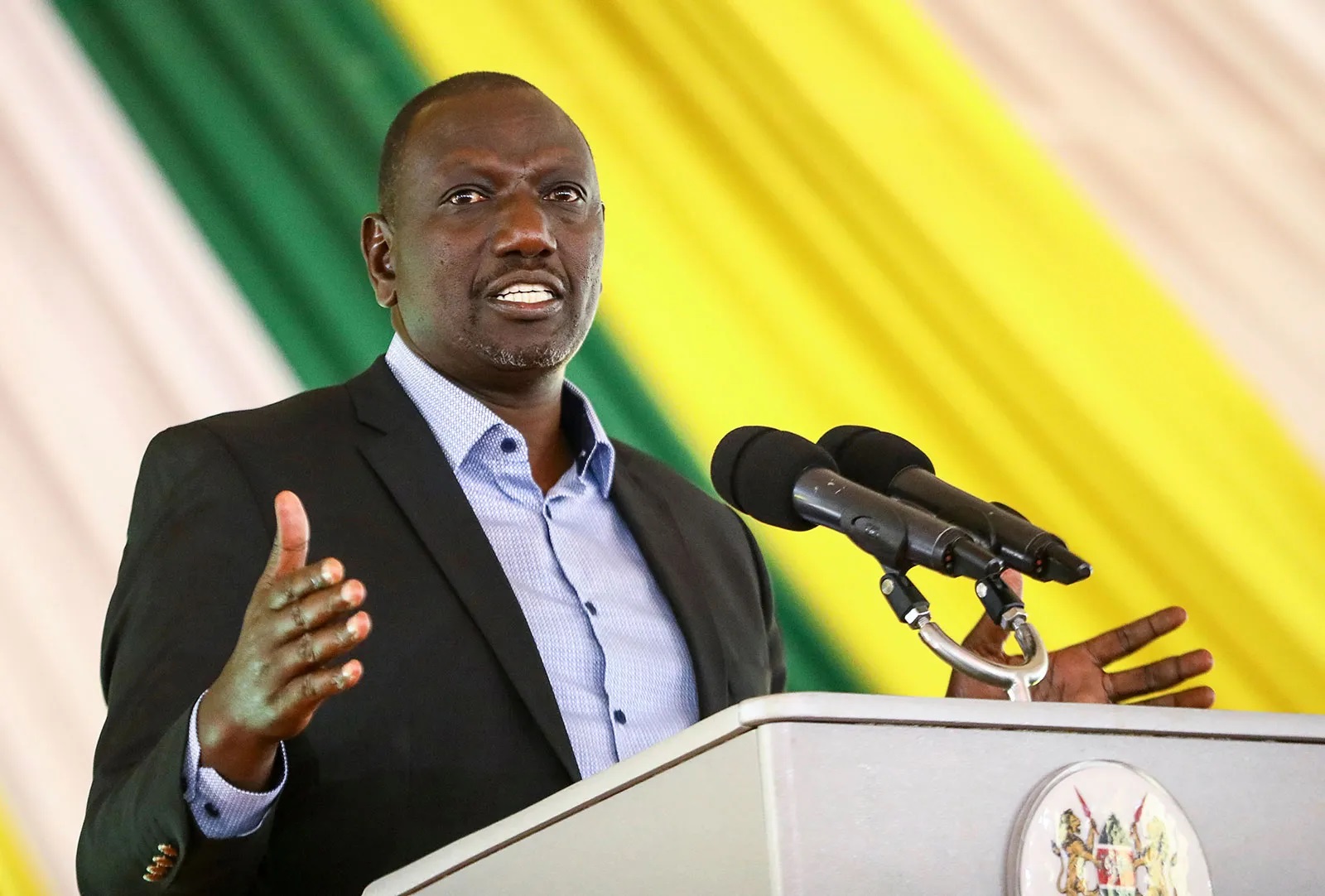
In a desperate move to address economic turmoil and nationwide protests, Kenyan President William Ruto announced on Friday a significant reduction in government spending, amounting to 177 billion shillings ($1.39 billion) for the fiscal year starting in July.

This decision follows weeks of intense protests that forced the government to abandon planned tax hikes, which had sparked widespread unrest.

The government, facing a substantial budget shortfall due to the withdrawal of the controversial finance bill, will also increase borrowing by approximately 169 billion shillings ($1.3bn) to bridge the 346 billion shilling gap. This fiscal adjustment has pushed the projected budget deficit for the 2024/25 financial year to 4.6% of GDP, up from an earlier estimate of 3.3%.

The Protests and Their Impact

The protests, initially peaceful, escalated into violent confrontations, becoming the most significant challenge to Ruto’s presidency, which is now in its second year. Human rights groups have reported hundreds of arrests and at least 39 deaths related to the government’s severe crackdown on demonstrators, sparking concerns about a potential regression in civil liberties.

The nationwide protests were ignited by Ruto’s proposal to introduce new tax hikes, which many Kenyans saw as an additional burden amid already challenging economic conditions. The protests were largely driven by the younger generation, particularly Gen-Z activists, who took to the streets demanding economic justice and accountability from the government. Their actions were characterized by their use of social media to organize and amplify their message, making it difficult for the government to ignore their demands.

The protests quickly gained momentum, with demonstrators voicing their frustrations over high living costs, unemployment, and perceived government corruption. Despite the peaceful intentions of many protestors, the demonstrations turned violent as police clashed with crowds, leading to numerous injuries and fatalities. The government’s heavy-handed response, including the use of tear gas and live ammunition, drew widespread condemnation both domestically and internationally.

Measures to Cut Spending

In a televised address to the nation, Ruto outlined several drastic measures aimed at reducing government expenditure. There are the following:

  1. Dissolution of State Corporations: The government will dissolve 47 state corporations as part of its efforts to streamline operations and reduce costs.
  2. Reduction of Government Advisors: The number of advisors in the government will be halved immediately.
  3. Suspension of Non-Essential Travel: All non-essential travel for public office bearers will be suspended.
  4. Elimination of Certain Budget Lines: Funding for the operations of the Office of the First Lady, the spouse of the Deputy President, and the Prime Cabinet Secretary will be removed.
  5. Mandatory Retirement for Public Servants: Public servants who have reached the retirement age of 60 will be required to retire immediately.

President Ruto also announced plans for a forensic audit of the country’s debt, indicating a commitment to transparency and accountability in managing Kenya’s financial obligations. He hinted at upcoming changes in the government structure, promising further announcements soon.

A Precedent for Other African Countries

The developments in Kenya set a significant precedent for other African countries facing similar economic challenges amid lavish government spending. In Nigeria, for instance, the government has been criticized for its extravagant budget that benefits political elites while the general population struggles with high inflation and unemployment. Nigerian President Bola Tinubu’s administration has faced similar calls for fiscal prudence, especially given the country’s dwindling oil revenues and heavy reliance on borrowed funds.

Analysts believe the success of Kenya’s Gen-Z-led protests in forcing the government to rethink its economic policies may inspire similar movements across the continent, warning that governments with similar challenges should address them urgently.

The Future of Health and Wellness in Africa: Trends to Watch in 2024

0

As we look ahead to the future of health and wellness in Africa, several exciting trends are emerging that have the potential to transform lives across the continent. From innovative digital health solutions to a growing focus on preventive care and natural remedies, here are some of the key developments I believe will shape the African wellness landscape in 2024 and beyond.

The Rise of Telemedicine

One of the most significant trends is the rapid adoption of telemedicine and digital health tools. With mobile phone penetration skyrocketing across Africa, more people than ever have access to health information and virtual consultations with medical professionals right at their fingertips.

Startups like mPharma and 54gene are leveraging technology to increase access to quality healthcare, especially in underserved rural areas. Expect to see even more innovative solutions emerge, from AI-powered diagnostic apps to wearables that track vital signs.

The convenience and affordability of telemedicine will make it an increasingly attractive option, empowering Africans to take charge of their health like never before. Of course, it won’t replace in-person care, but it will certainly complement and enhance traditional health services.

Preventive Care Takes Center Stage

Another key shift is a growing emphasis on preventive care and wellness. Rather than just treating diseases after they develop, forward-thinking healthcare providers and policymakers are focusing on promoting healthy lifestyles to stop illnesses before they start.

This includes initiatives to encourage regular exercise, nutritious diets, stress reduction, and other positive behaviors. Governments and NGOs are launching public awareness campaigns, while private sector players create new products and services to support healthy living.

From fitness apps and healthy meal delivery services to wellness retreats and spas, Africans will have more tools than ever to prioritize self-care. This proactive approach won’t just lead to better health outcomes, but can also reduce healthcare costs in the long run.

Natural and Traditional Remedies Gain Popularity

Africa has a rich heritage of traditional medicine, with natural remedies used for centuries to promote healing and wellness. Today, many are rediscovering the power of these time-tested methods, often integrating them with modern medical care.

Herbal treatments, mind-body practices like meditation and yoga, and other holistic approaches are surging in popularity. Consumers are seeking out natural, locally-sourced products for everything from skincare to vitamins supplements.

This trend reflects a desire for more natural, sustainable ways to enhance well-being. It also presents exciting opportunities for African entrepreneurs to develop and market homegrown wellness brands rooted in traditional knowledge.

At the same time, it will be important to ensure safety and quality standards, through rigorous research and sensible regulation. The most successful players will strike a balance between honoring tradition and meeting the expectations of modern consumers.

Wellness Tourism on the Rise

As more people prioritize health and wellness, we’re also seeing growth in wellness-focused travel to Africa. From safari yoga retreats to beachside meditation camps, a wide range of experiences are attracting health-conscious visitors from across the globe.

This trend holds great promise for African countries looking to expand their tourism offerings beyond traditional nature and cultural attractions. By developing high-quality wellness facilities and services, they can tap into a lucrative and fast-growing market.

Wellness tourism can also have positive ripple effects across communities, creating jobs, driving economic development, and promoting cultural exchange. As long as it’s developed sustainably and inclusively, it offers an exciting avenue for African nations to share their unique wellness traditions with the world.

A Holistic, Community-Based Approach

Perhaps the most important shift is towards a more holistic, community-based approach to health and wellness. Increasingly, Africans recognize that well-being isn’t just about physical health, but encompasses mental, emotional, social, and even spiritual dimensions.

There’s also growing awareness of the social determinants of health – factors like poverty, education, and environment that shape health outcomes. Tackling these underlying issues requires a whole-of-society effort that goes beyond the healthcare system alone.

We’re seeing more grassroots initiatives that empower communities to come together to promote wellness. From local fitness clubs to women’s health support groups to youth mentorship programs, Africans are finding innovative ways to uplift and care for one another.

This spirit of solidarity and shared responsibility will be key to building healthier, more resilient communities in 2024 and beyond. By working together and leveraging each other’s strengths, Africans have the power to create a brighter, healthier future for all.

The Road Ahead

As these trends take hold, I’m excited to see how they will transform the African health and wellness landscape in the coming years. While challenges like access, affordability, and infrastructure remain, I’m optimistic that the convergence of technological innovation, traditional wisdom, and community action will drive meaningful progress.

Of course, realizing the full potential of these trends will require sustained effort and investment from all stakeholders – governments, businesses, civil society groups, and individuals alike. But if we can harness their power, I believe we can make great strides in improving the health and well-being of people across Africa.

So let’s embrace these exciting developments, while also staying grounded in the timeless values of compassion, resilience, and unity that have always been at the heart of African wellness traditions. Together, we can create a future where every African can thrive – in mind, body, and spirit.