
DD
MM
YYYY

PAGES

DD
MM
YYYY

spot_img

PAGES

Home Blog Page 3152

Interswitch Verve Has A Huge Opportunity In Nigeria Right Now

1

Interswitch has a rare opportunity to make Verve an absolute dominant card brand in Nigeria. Yes, the inflation, forex paralysis, etc provide a huge equilibrium shift in the nation that I do not think makes sense for banks and fintechs to continue the issuance of Mastercard and Visa cards at scale.

Simply, why do you need a Visa or Mastercard card when you do not have a Nigerian passport to travel outside the country? And if you do, that card is not likely going to work outside Nigeria due to many controls. So, practically, for a bank or a fintech to be paying Visa and Mastercard hefty fees, shows lack of cost management. I do not see any strategic value in issuing Visa and Mastercard cards in Nigeria right now. You’re just wasting money for really nothing when Verve is there.

Interswitch Verve in my model will gain market share and if the economy continues the way it is, it can reach 70% of market share by 2025 (we hope Nigeria returns to real growth and opportunity of course).

And the last word: Interswith can use this window to go IPO because I expect the Verve growth to accelerate, and if that is the case, it can solidify its position by partnering with companies like Evea to offer Verve credit cards.  This is the Verve decade and it must take it!

(And if Interswitch does not want to IPO, it can unbundle and IPO Verve alone. That business is a category king. Of course, I do see a softening on the card business in Nigeria due to fees. Merchants do not like those fees. That said, the best part of card business is a credit era which is just around the corner with the CrediCorp. It is easier to use a card to issue those credits than using bank accounts; Verve has a promise there).

The Nigeria Consumer Credit Corporation (CrediCorp) is a company owned by the Federal Government of Nigeria. CrediCorp has one mission: to accelerate consumer credit access to 50% of working Nigerians by 2030. CrediCorp achieves this mission by:

A) fixing the structural barriers to accessing consumer credit in Nigeria.

B) catalysing the market with capital, guarantees, and policy.

CrediCorp including its consumer credit guarantee fund, works closely with the Central Bank of Nigeria, the financial sector, identity management, credit registries, fintechs, consumer protection, and policy makers on this mission.

The CrediCorp business is focused on the following:

  1. Strengthening Nigeria’s credit reporting systems, ensuring every economically active citizen has a dependable credit score. This score becomes personal equity they build, facilitating access to consumer credit.

  2. Offering credit guarantees and wholesale lending to financial institutions dedicated to broadening consumer credit access today.

  3. Promoting responsible consumer credit as a pathway to an improved quality of life, fostering a cultural shift towards growth and financial responsibility.
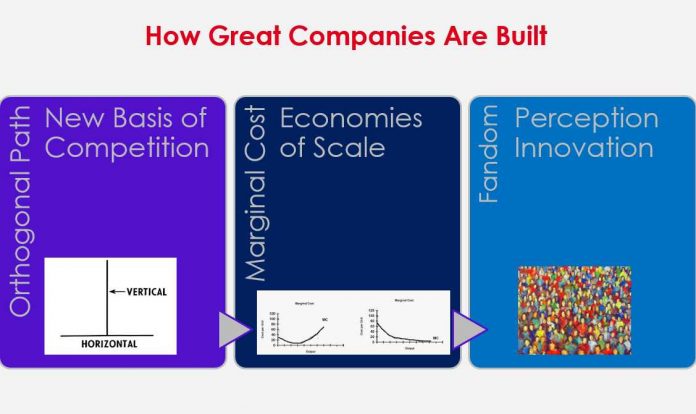

How Great Companies Are Built [video]

0

The pillars of the empires of the future. Dominant, category-king companies with impenetrable moats, protecting the castles of profits and market shares. Will expand all the components as we examine the winning Business Models of the 21st century in the program.

Tekedia Mini-MBA >> our product is KNOWLEDGE.

PZ Cussons Nigeria Reports N96.4bn Loss for FY 2024

0

In a stark illustration of the economic challenges gripping Nigeria, PZ Cussons Nigeria has reported a net loss of N96.4 billion for the fiscal year ending May 31, 2024.

This daunting figure was revealed in the company’s latest unaudited financial statements, underscoring the severity of the macroeconomic headwinds it faces.

PZ Cussons Nigeria’s financial woes are a reflection of the broader economic landscape. The company has been grappling with high interest rates, a depreciating exchange rate, and rampant inflation—factors that have collectively eroded its profit margins. Despite these challenges, the company managed to post a revenue of N152.2 billion, marking a 33.5% increase from the N114 billion recorded in the previous fiscal year. This revenue growth, however, was not enough to offset the substantial financial losses incurred.

Revenue Growth Amidst Mounting Losses

The company’s gross profit soared to N60.6 billion, an impressive 84% increase from the N32.95 billion reported in the previous year. Achieving a 40% gross margin is noteworthy, yet it was overshadowed by a colossal exchange loss of N158 billion. This loss turned what could have been a profitable year into one marked by a negative operating margin and a subsequent operating loss of N111.5 billion.

A closer look at the financial figures reveals the depth of the crisis. PZ Cussons Nigeria’s net loss eradicated its retained earnings of N34.5 billion, resulting in retained losses of N53.6 billion by the end of the fiscal year. Consequently, the company reported a negative equity of N47.2 billion. The group’s net cash also dwindled to N32.7 billion, a steep 68% decline from N101.6 billion at the close of the previous fiscal year, driven primarily by an N87.3 billion negative cash flow from operating activities.

The financial strain led PZ Cussons Nigeria to increase its borrowings from its parent company, PZ Cussons (Holding) Limited, to N59.8 billion by the end of the fiscal year, up from N18.7 billion the previous year. This surge was largely due to a $40.26 million non-interest loan facility extended by the parent company in June 2022, with an FX revaluation adjustment adding N41.1 billion to the original amount borrowed.

Delisting Controversy

In September 2023, PZ Cussons’ parent company announced plans to buy out the remaining 26.73% shareholding of its Nigerian subsidiary and delist from the Nigerian Exchange Group (NGX). The initial offer of N21 per unit was rejected by minority shareholders, prompting an increase to N23 per unit in November. However, the Securities and Exchange Commission (SEC) declined the delisting request in March 2024, a decision that received support from some minority shareholders.

In response, PZ Cussons (Holding) Limited announced a strategic review of its Nigerian operations to mitigate risks and maximize shareholder value.

Nigeria’s growing economic headwinds

PZ Cussons Nigeria’s financial troubles mirror the broader economic difficulties faced by many businesses and individuals in the country. Firms across various sectors are grappling with similar challenges, including high operational costs, volatile exchange rates, and inflationary pressures. These conditions have led to reduced profit margins, increased borrowing costs, and operational inefficiencies.

For instance, companies in the consumer goods, telecommunications, and oil sectors have reported declining profits and increased financial strain. The economic instability has forced many businesses to scale back investments, lay off employees, and in some cases, exit the Nigerian market entirely.

The uncertainty surrounding the economic environment has also deterred new foreign investments, further impacting the growth and development of the Nigerian economy.

Business leaders say the economic trajectory has created an urgent need for the government to address the underlying economic issues affecting businesses and citizens.

How Spot ETF on Ethereum will foster global intuition on Decentralization

0

Spot Ether Exchange-Traded Funds (ETFs) by the U.S. Securities and Exchange Commission (SEC) will mark a significant milestone in the evolution of cryptocurrency as a recognized financial asset. This development is not just a leap forward for Ethereum, but it also has broader implications for the global understanding and adoption of decentralization principles.

Spot ETFs on Ethereum are designed to hold Ether directly, allowing investors to gain exposure to the price movements of Ether without the complexities of managing cryptocurrency wallets and keys. This simplification of investment in Ethereum could lead to a wider acceptance and a deeper understanding of its underlying technology—blockchain—and its ethos of decentralization.

Decentralization is at the heart of blockchain technology. It represents a shift from centralized control, where a single entity has authority, to a distributed and transparent system where control is spread across a network of participants. Ethereum’s blockchain, with its smart contract capabilities, has been a frontrunner in demonstrating the practical applications of this technology.

The introduction of Spot ETFs could foster a global intuition on decentralization by:

Democratizing Access: By lowering the barrier to entry, Spot ETFs make it easier for a broader audience to participate in the Ethereum market. This inclusivity can lead to a more diverse group of participants engaging with and contributing to the decentralized ecosystem.

Enhancing Education: As traditional investors encounter these new products, there will be a natural incentive to understand the underlying assets. This curiosity can drive education around Ethereum and its decentralized nature, leading to a more informed investor base.

Encouraging Innovation: With increased capital inflow and interest, Ethereum could see a surge in innovative decentralized applications (dApps), further showcasing the potential of decentralization.

Strengthening Network Security: The influx of institutional investment through Spot ETFs could lead to a more robust and secure Ethereum network.

The decision to classify Ether as a commodity rather than a security post-‘The Merge’ is a pivotal moment for Ethereum’s ecosystem. This classification could pave the way for other Ethereum-based tokens and PoS-driven cryptocurrencies to gain similar recognition, thereby fostering a more inclusive financial landscape where a variety of digital assets can coexist and be traded with regulatory backing.

However, the introduction of Spot ETFs on Ethereum also raises questions about the impact on the network’s decentralization. The central tenet of blockchain technology is the distribution of control away from central authorities, and the introduction of major financial instruments such as ETFs could potentially concentrate influence among a few institutional players. This concentration could lead to price manipulation if the market depth is insufficient to absorb large trades without significant volatility.

Furthermore, the exclusion of staking from these ETFs due to regulatory concerns may shortchange investors from the full benefits of participating in the Ethereum network. Staking is a critical component of the proof-of-stake (PoS) mechanism, which secures the network and validates transactions. Without the ability to stake, the ethos of decentralization that underpins cryptocurrency could be undermined, as direct ownership and participation in the network are diminished.

Despite these concerns, the advent of Spot ETFs on Ethereum is a testament to the growing recognition of cryptocurrency’s potential to reshape the financial industry.

Catholic Priests Who Attended Tekedia Mini-MBA Unveil A Book

1

It was a great honour to be asked by Catholic Priests to write a Foreword for their book. Good People, Reverends in the Catholic Diocese of Okigwe spent time with us in Tekedia Institute, and over the last few months, they have put their experiences in a book: ‘This book, “That they may have life in abundance” (John 10:10): Blueprints for Economic Growth and Sustainable Development in the Catholic Diocese of Okigwe” is a compilation of articles of Okigwe diocesan priests who did a mini-MBA at Tekedia Institute’, Rev. Fr. Dr. Chidiebere Obiodu, the book editor, wrote in the Preface.

He continued: “The articles cover a wide spectrum of business areas the Church can explore. The first part examines entrepreneurship in general and proposes establishing a TV channel and a communications directorate. The second part focuses on the economic sustainability initiatives for the three seminaries in the diocese. The third part concentrates on agricultural opportunities for the diocese to explore. Generally, it examines the need to turn parish and school lands into farmlands and set up an agro-conglomerate. Specifically, it proposes establishing a 500 white wagon piggery farm, a plantain plantation, a palm oil business, and a cassava food production facility.

“The fourth part focuses on the service sector. It examines the use of ICT in managing Okigwe diocesan enterprises, how efficient logistics is indispensable in supporting Okigwe diocese in achieving the Church’s salvific mission, the establishment and management of Okigwe diocesan hospitals, the prospects of tourism in Okigwe diocese, and the importance of the welfare of priests in Okigwe diocese.’“

Let me use this moment to thank David Onaolapo who donated $7,000 to support imams and priests to study in our Institute. The feedback has been amazing, from a mosque which has added an entrepreneurial center to churches opening ventures to become a hub in their communities. We THANK David for scaling Knowedge.


Book Contributors:

Rev. Fr. Dr. Chidiebere Obiodu is a lecturer in canon law and religion at Seat of Wisdom Seminary, Owerri.

Rev. Fr. Emmanuel Chigozie Okafor is the Parochial Vicar of St. Anthony’s Parish, Umuozu.

Rev. Fr. Christian Ajomiwe is the Vice Principal of the Technical Section of All Saints Secondary School, Ugwuaku, Okigwe.

Rev. Fr. Chibuike Uwakwe is the Financial Administrator of the Catholic Diocese of Okigwe.

Rev. Fr. Augustine Ezeonyiwara is the Vice Rector II and Academic Dean of St. Peter’s Seminary, Okigwe.

Rev. Fr. Mark Okocha is the Rector of St. Thomas Aquinas Seminary, Ihitte.

Rev. Fr. Vitus Ohagwu is the Vice-Rector of St. Charles Borromeo Spiritual Year Seminary, Ehime Mbano.

Rev. Fr. Patrick Uchego was a former Vice-Rector of St Charles Borromeo Spiritual Year. He is currently a post- graduate student of liturgy at the Catholic Institute of West Africa.

Rev. Fr. Paschal Nwosu is the Parochial Vicar of St. Peter’s Parish, Umunohu, Ihitte.

Rev. Fr. Emmanuel Igbokwe is the Parochial Vicar of St. Patrick’s Parish, Ogbor, Ugiri, Isiala Mbano.

Rev. Fr. Chamberlain Udochukwu Anyanele is the Parochial Vicar of St. Patrick’s Umuezeala Owerre, Ehime Mbano.

Rev. Fr. Adolphus Muojeke is the Parochial Vicar of St. Joseph’s Umualumaku, Ehime Mbano.

Rev. Fr. Joshua Orji is the Parochial Vicar of St. Mary’s Parish, Amuzi, Obowo.

Rev. Fr. Valentine Obianyanwu is the Vice Principal of St. Paul’s High School, Osu, Isiala Mbano.

Rev. Fr. Kingsley Ugochukwu Nwanonaku is the Parochial Vicar of St. Patrick’s Ugonna Parish, Lowa, Uboma.

Rev. Fr. Michael Ukaji is the Parochial Vicar of St. Anthony’s Parish, Uboma.

Rev. Fr. Stanislaus Nwachukwu is the Parochial Vicar of St. Paul’s Parish, Umuezeala Ama.

Rev. Fr. Gerald Awah is the Parochial Vicar of St. Mary’s Parish Amuzi, Obowo

Rev. Fr. Nicholas Ibeh is the Parochial Vicar of St Theresa’s Parish, Umunakanu Owerre, Ehime Mbano.