DD
MM
YYYY

PAGES

DD
MM
YYYY

spot_img

PAGES

Home Blog Page 3373

Effects of Surging Metal Costs

0

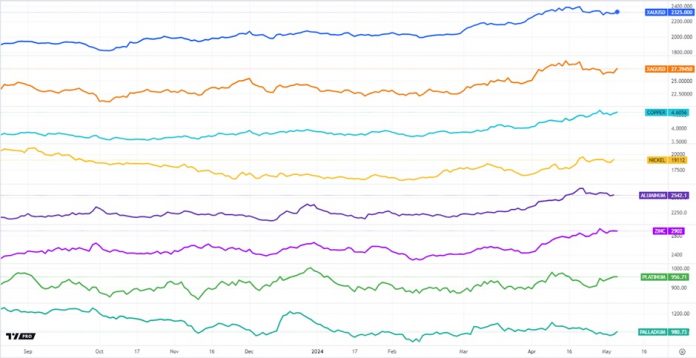
The global economy faces numerous challenges, including the sharp rise in metal prices over the past five years. This is particularly evident in the electronics industry, as metals are key components in semiconductors and various electronic components manufacturing. Over the past five years, metal prices, including precious metals like gold (XAUUSD) and silver (XAGUSD), have surged. Copper, for instance, has seen a significant price hike. In 2020, it was priced at $5000 per ton, and now it is already at $8300. Because of this, several Chinese semiconductor companies have reported price rises. In the foreseeable future, this trend may affect many more electronics manufacturers. Verify this using a free bar replay chart to compare the historical prices.

The main reasons for the surge in metal prices include geopolitical instability, environmental restrictions, and heightened demand. Political conflicts and trade wars significantly affect pricing, especially among large metal producers and consumers. International tensions can result in sanctions, tariffs, and export restrictions, leading to supply chain disruptions. Pursuing stricter environmental standards and sustainable production increases the costs of mining and recycling metals, thereby contributing to higher prices. The advancement of technologies and electronic devices fuels increased demand for metals, especially in the semiconductor industry, where the production of electric vehicles literally “absorbs” copper, cobalt, nickel, and other metals.

The escalation in metal prices directly affects chip manufacturers, as raw material expenses become a significant part of production costs. To sustain profitability, companies have to either cut costs or raise product prices, a challenge exacerbated by fierce competition.

A rise in chip production costs will inevitably translate into higher prices for electronics consumers. This can affect a range of products, from smartphones and laptops to consumer electronics and automotive components. Companies like HaloChip, Chiplink, TG-Star Electronics Technology, Sanliansheng, and Kangqiang Electronics have already announced price hikes. They supply essential components used in most modern smartphones, computers, and other electronic products. These semiconductor manufacturers, based in China, supply their products worldwide. For example, Smart Chiplink’s customers include Broadcom, Texas Instruments, Intel/Altera, and Analog Devices. This means the price increase will trickle down to end products and eventually affect consumers.

The shares of companies in the mining and processing sectors usually mirror raw materials prices. As metal prices rise, these companies’s stocks may rise in anticipation of improved profitability increase. However, the risk of reduced demand from inflated prices should also be taken into account, potentially affecting long-term outlooks negatively.

Graphics cards, among the most metal-intensive electronics components, may become one of the first products to witness price hikes. In a high-demand environment, driven largely by the rise of graphics-intensive video games and advancements in AI, graphics card prices could skyrocket.

Demand for metals remains consistently high in economically developed regions such as North America and Europe, as well as in rapidly growing economies such as China and India, due to substantial industrial output and electronic consumption.

The possibility of metal price reductions hinges on various factors, including geopolitical scenarios, new deposit discoveries, and advancements in mining and recycling technologies. Nevertheless, given current trajectories, a significant price drop seems improbable.

The surge in metal prices presents significant challenges for the electronics industry and may result in higher product costs for consumers. As producers and consumers adjust to these new conditions, it’s crucial to monitor market dynamics and explore avenues to cut costs, enhance efficiency, and invest in innovative technologies to mitigate the adverse effects of prevailing metal price trends.


Why Is Kaspa and KangaMoon Pumping While the Rest of the Market Is Bleeding?

0

In the current volatile cryptocurrency market, Kaspa (KAS) and KangaMoon (KANG) differ. While the top crypto coins bleed all over, these two are pumping as traders wonder what’s helping them move. Not only that, but many analysts have pegged KANG, which is now in the Bonus Stage of its presale, as the next 50x crypto in 2024. Let’s see why.

Miko Genno Reveals Kaspa (KAS) Trends

Recently, Kaspa (KAS) has been rising on the price charts. According to CoinMarketCap data, the Kaspa price increased by over 480% in the past year alone. Its market cap rose from $410M to $2.70B during that time. Crypto analyst Miko Genno claims that Kaspa behaves independently of the general market, following its distinct adoption curve and 8-month cycles.

In this respect, Genno introduces the idea of rapid emissions by Kaspa precipitating supply reduction and leading to these cycles. Unlike Bitcoin’s 4-year cycles, the Kaspa coin cycles are much more frequent. With this fact, plus over 16 technical indicators in the green, experts have made a bullish Kaspa price prediction. They foresee a rise to $0.16 for Kaspa within Q2 of 2024.

KangaMoon (KANG): The Top Crypto To Buy Now

Amidst the market turmoil, KangaMoon (KANG) has emerged as a standout presale performer. It has already provided early buyers a 400% ROI while boasting nearly 10,000 KANG holders. Evidently, global traders are enamored with this groundbreaking cryptocurrency. Analysts claim this is because of its SocialFi and Play-to-Earn (P2E) mechanics.

KangaMoon aims to dominate the P2E gaming market, which may reach a value of $8856M by 2028. It will accomplish this by launching its own P2E game where users can earn KANG by winning matches or participating in activities. With KANG, players can buy in-game items or even access exclusive challenges for extra rewards.

But, what really makes KangaMoon unique is its SocialFi aspect. Notably, KangaMoon rewards its most active community members with free KANG tokens before its official launch. This development has made over 20,000 registered community members begin liking/sharing KangaMoon’s social media content.

Currently, KANG is in the Bonus Stage of its presale and costs just $0.025. With two confirmed CEX listings coming in Q2 of 2024, analysts predict a potential 50x jump soon. If you want to buy it now, know that KangaMoon has already completed token audits while also finishing two extra smart contract audits. This makes KANG the best crypto investment at the moment.

Kaspa vs. KangaMoon: Which Crypto Has the Upper Hand?

In the Kaspa vs. KangaMoon war, KangaMoon is in a better position given its relatively low $25M market cap. KANG only needs $25M for its current price to double, while KAS needs $2.70B. With this advantage, KANG could soon become one of the top crypto coins. You can buy this crypto before its presale ends and capitalize on its growth.

Discover the Exciting Opportunities of the KangaMoon (KANG) Presale Today!

Website: https://Kangamoon.com/

Join Our Telegram Community: https://t.me/Kangamoonofficial

BlockDAG’s Spectacular Display in Piccadilly Circus Sparks Excitement, Exceeding ATOM and Avalanche Projections

0

Using its interoperability capabilities, Cosmos forecasts a favorable future for ATOM as it boosts communications across blockchains. At the same time, Avalanche has achieved a remarkable milestone, surpassing one billion transactions, highlighting its contribution to enhancing blockchain scalability and security.

Amid these milestones, BlockDAG stands out, launching with $100 million in liquidity. Its listing on CoinMarketCap, celebrated at Piccadilly Circus in London, underscores BlockDAG’s potential for significant profits and sets a new benchmark in the cryptocurrency sector.

Charting the Course: Optimistic ATOM Price Predictions Amid Enhanced Interconnectivity

Cosmos (ATOM) continues to capture attention with its Internet of Blockchains initiative, drawing traction through enhanced interconnectivity among various blockchain platforms. This interoperability is crucial in today’s segmented technological world, boosting the ATOM price outlook.

Recently, ATOM’s price reached $9.32, with its technical indicators, such as an RSI of 63.67, indicating strong buying interest. Surpassing its 200-day moving average of $10.046 might signal a reliable upward trajectory, particularly as it nears the $10 mark.

Avalanche Celebrates Over a Billion Transactions: A Key Achievement in Blockchain Operations

Avalanche (AVAX) has marked a significant achievement by crossing one billion transactions, underscoring its pivotal role in decentralized finance (DeFi). This milestone accentuates Avalanche’s ability to manage a large volume of transactions and its commitment to boosting scalability and security in the blockchain environment.

Since its inception, Avalanche has been at the forefront of DeFi innovation, propelled by its advanced consensus mechanism. This technology speeds up Avalanche transactions, maintains rigorous security standards, and improves compatibility with other blockchain networks. 

BlockDAG Prepares for Market Dominance with $100M Initial Liquidity Following CoinMarketCap Listing

BlockDAG is set to transform the crypto market, securing a formidable $100 million in liquidity for its launch. This substantial financial support, backed by top market makers and exchanges, reflects strong confidence in BlockDAG’s potential and its commitment to market stability. These financial strategies are about launching a new cryptocurrency and establishing a reliable and promising market presence.

BlockDAG has also captivated a global audience, gathering over $25.4 million in its presale, demonstrating robust investor confidence and belief in its value. Its visibility has been boosted by major events at globally recognized sites like Shibuya in Tokyo and Piccadilly Circus in London for its CoinMarketCap listing, reinforcing its growing influence in the crypto industry. These events have significantly advanced BlockDAG’s reputation as the top cryptocurrency for substantial gains.

Having sold over 8.9 billion BDAG coins and raised over $2.4 million from miner sales alone, BlockDAG is rapidly becoming a leading contender in cryptocurrency. Its strategic approach to creating a scalable and stable ecosystem positions it as a prime candidate for significant returns.

With its strategic launch and robust financial base, BlockDAG is well-equipped to lead in the cryptocurrency market, presenting an attractive investment opportunity in a digital asset poised for substantial growth.

Summing Up!

As ATOM’s price forecast remains strong with Cosmos enhancing interoperability, and Avalanche celebrates surpassing one billion transactions, BlockDAG sets itself apart with a groundbreaking $100 million liquidity at its launch.

With a grand celebration at London’s Piccadilly Circus, BlockDAG demonstrates strong market confidence and cements its position as the premier cryptocurrency for major gains, offering a more appealing presale option than its counterparts in the vibrant cryptocurrency market.


Join BlockDAG Now!

Website: https://blockdag.network

Presale: https://purchase.blockdag.network

Telegram: https://t.me/blockDAGnetworkOfficial

Discord: https://discord.gg/Q7BxghMVyu


BlockDAG Shines Bright at Piccadilly Circus: CoinMarketCap Listing Success Tops Shiba Inu Adoption & Polygon Price

0

BlockDAG has taken the crypto world by storm with its highly successful presale, raising $25.4 million and preparing for its twelfth batch, and through a high-profile showcase at London’s Piccadilly Circus. This strategic visibility effort underscores BlockDAG as 30,000x potential crypto, setting it apart from the competition. As the Polygon (MATIC) price continues to face resistance and Shiba Inu adoption rates are high, BlockDAG’s rapid accumulation of interest and capital highlights its innovative edge and promising future in the cryptocurrency market. 

Challenges Facing Polygon (MATIC) Price

Despite a broader market upturn, the Polygon (MATIC) price remains unable to surpass its significant resistance level, and it is consistently facing intense sell-offs at this point. The Polygon (MATIC) price has recently seen a notable correction, emphasising a prolonged bearish outlook in the crypto market.

The Cross EMA 50/200-day indicator presents a Death Cross, further dampening sentiment around the Polygon (MATIC) price. Technical indicators like the MACD suggest a decrease in buying enthusiasm, with trends showing neutrality and hinting at ongoing price uncertainty. Future movements for the Polygon (MATIC) price hinge on whether it can overcome these persistent challenges and breach key resistance points.

Shiba Inu Adoption Amid Market Fluctuations

Despite market volatility and challenges in breaking resistance levels, Shiba Inu’s adoption remains impressive. The New Adoption Rate metric indicates a consistent influx of new market participants, suggesting a strong interest in the Shiba Inu market.

This trend is further supported by the growth in small Shiba Inu addresses, which signifies renewed confidence among investors. Additionally, the Address Birth-Death Ratio reveals a healthy increase in new users compared to inactive ones, underscoring the ongoing engagement and growth within the Shiba Inu community. This sustained interest highlights Shiba Inu’s potential resilience and appeal in crypto.

BlockDAG Charms Piccadilly Circus with 30,000X ROI

BlockDAG recently celebrated its CoinMarketCap listing with a high-profile appearance at London’s Piccadilly Circus, enhancing its visibility and affirming its position as a strong market contender.

This platform has captivated the crypto community with its innovative features and impressive presale numbers, accumulating $25.4 million and selling over 8.9 billion coins. It is priced at just $0.007 in its eleventh presale batch and is expected to soar to $0,0075 in the twelfth batch.

BlockDAG transcends the typical cryptocurrency model by merging the practicality of traditional financial tools with the advanced benefits of blockchain technology. Influencers have been pivotal in boosting BlockDAG’s profile, with predictions that the coin could soar to $10 by 2025, making it  30,000x potential crypto. These endorsements and anticipation of a $2 million giveaway have significantly heightened FOMO, propelling BlockDAG’s ongoing presale excitement.

To accommodate increasing investor interest, BlockDAG has rolled out ten new payment methods, including major cryptocurrencies like BTC, USDT (Tron Network), Doge, SHIB, Solana, XRP, Polygon (MATIC), Kaspa, Fantom, and Cardano. This expansion simplifies investment, allowing crypto enthusiasts to convert various digital assets into BlockDAG coins.

Last But Not Least

While the Polygon (MATIC) price faces bearish trends and Shiba Inu adoption signals market resilience, BlockDAG sets a new standard for investment potential in the cryptocurrency sphere. With its innovative approach and broadening acceptance of diverse payment methods, BlockDAG keeps up and leads the charge towards offering a 30,000x potential crypto investment, distinguishing itself as the premier choice for forward-thinking investors in a competitive landscape.


Invest in the BlockDAG Presale Now:

Website: https://blockdag.network

Presale: https://purchase.blockdag.network

Telegram: https://t.me/blockDAGnetworkOfficial

Discord: https://discord.gg/Q7BxghMVyu

Biden Administration Plans 100% Tariff Hike on Chinese Electric Vehicle Imports

0

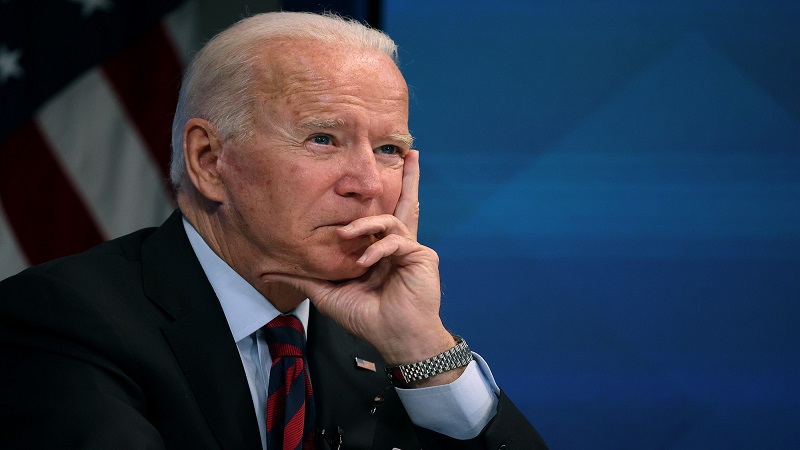
In a move aimed at safeguarding American industry, the Biden administration has moved to announce plans to significantly raise tariffs on Chinese electric vehicle (EV) imports from 25 percent to a whopping 100 percent, the FT has reported, citing sources.

This decision, set to be officially announced on Tuesday, underscores the administration’s intensified efforts ahead of the upcoming US election to shield domestic industries from perceived threats posed by foreign competition.

Sources familiar with the situation revealed that the sharp escalation in tariffs is driven by mounting concerns that China could inundate the US market with cheap EVs, potentially jeopardizing the American car industry. 

President Joe Biden, keen on appeasing union members in key swing states, has made protecting jobs a focal point of his agenda, prompting a series of actions aimed at bolstering domestic industries.

The Biden administration has been engaged in a three-year-long review of tariffs imposed by former President Donald Trump on Chinese imports as part of the broader trade war initiated in 2018. The decision to ramp up tariffs on EVs coincides with the conclusion of this review, overseen by the US Trade Representative (USTR).

China’s industrial prowess comes with cheaper manufacturing that has made its products more affordable, threatening goods and services in the US as the Asian giant’s export grows.

Against this backdrop that has seen most Americans choosing Chinese-made goods over their domestic products, Washington is moving to use tariffs and import restrictions to protect domestic manufacturers.

During a recent visit to Pennsylvania—a crucial swing state in the upcoming election—President Biden expressed his desire to triple tariffs on Chinese steel and aluminum, signaling his administration’s intent to take a tough stance on trade issues. Moreover, the USTR has initiated an investigation into unfair practices within the Chinese shipbuilding industry following a petition from the United Steelworkers union.

The decision to increase tariffs on EVs reflects growing concerns within the Biden administration regarding China’s dominance in the green industrial sector, particularly in areas such as solar panel production. Wendy Cutler, a former trade official and vice-president of the Asia Society Policy Institute, highlighted the administration’s proactive approach to prevent a repeat of the decimation witnessed by the US solar industry due to unfairly traded Chinese imports.

“The Biden administration is trying to get ahead of the curve and ensure that the US car industry does not suffer the same fate as the US solar industry, which was virtually decimated by unfairly traded Chinese imports,” Cutler was quoted by the FT as saying.

While Chinese automakers had previously absorbed the costs of existing tariffs to gain a competitive edge over their US counterparts, the proposed tariff hike presents a significant obstacle to this strategy. Cutler noted that quadrupling the tariff rate would effectively shield US auto manufacturers from unfair competition posed by Chinese vehicles, safeguarding American jobs and industries.

“A quadrupling of this tariff rate, however, would more effectively shield US auto manufacturers from unfairly traded Chinese vehicles before they can gain a foothold in the US market,” Cutler said.

In addition to tariff measures, the Biden administration has allocated substantial subsidies for EV and battery production in the US, signaling a broader strategy to foster investment in domestic clean tech sectors. This initiative is part of a larger effort to reindustrialize regions affected by economic decline, reduce carbon emissions, and reduce dependence on Chinese supply chains.

Furthermore, President Biden recently ordered an investigation into whether Chinese “connected vehicles,” including EVs, pose a national security risk to the US. These tariffs represent the latest in a series of actions demonstrating the Biden administration’s resolve to impose costs on China while simultaneously engaging in efforts to stabilize bilateral relations, particularly in areas such as climate cooperation.

China, in recent times, has learned to reciprocate tariff imposition, restrictions, and other bilateral moves made by Washington. It is not clear how Beijing will respond to this latest US’ move.