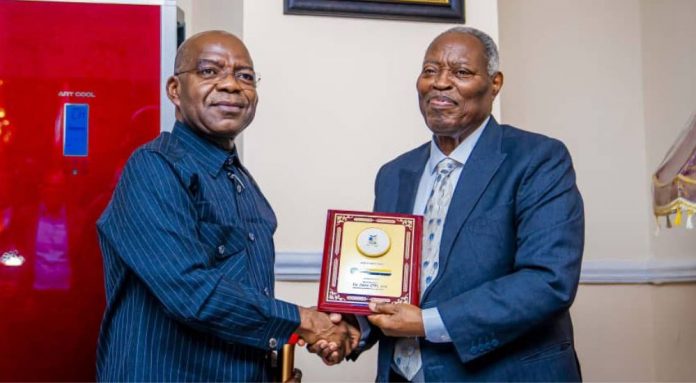
As a kid growing up in Ovim, his teachings shaped us. In the Scripture Union in secondary school, he influenced us. In the University Chapel, as a Sunday School teacher, I borrowed his teachings. And today, whenever I am in Lagos, going to the temple, Deeper Life Gbagada, is… pic.twitter.com/jPm13bhe74
— Ndubuisi Ekekwe (@ndekekwe) May 1, 2024
The Visit from the Pastor
How to Introduce Financial Concepts in a Child-Friendly Manner
From the time a kid is born, parents teach them various things to ensure they survive and thrive in the world. They are taught to talk, walk, and even ride a bike. However, one thing that is often forgotten is financial literacy. At the appropriate age, you’ll give your kids money to go and buy candy and allowances to do with the cash as they please.
But have you taught them how to make good financial decisions? This is crucial because research shows that early awareness of finances provides a solid basis for effective wealth planning, responsible decision-making, and long-term financial stability. Luckily, this post has several tips that you can use to ensure your kid has a great start.
Make the Learning Process Fun
Educating your children about money when they are young prepares them for success in managing their finances later in life. It’s a key trait that will help them throughout their life. The key to ensuring the lesson sticks is to make the learning experience enjoyable. For example, develop scenarios where children can pretend to be shopkeepers or consumers. They may practice basic mathematics and budgeting by trading for goods with fake currency.
If your toddlers enjoy reading, look for fantastic books from the best UK essay writing service with colorful illustrations that you can use to explain key financial concepts to write an entertaining tale for you. Kids who prefer board games can use Monopoly to learn strategies that will lead them to make sound business decisions.
Don’t Overthink
Your little one may not fully comprehend the concept of putting away extra cash, but when they are adults and receive the rewards of smart financial decisions, they will thank you. You don’t have to start talking about cryptocurrency, assets, and bonds. Because they are young, you can concentrate on teaching the fundamentals, such as depositing a few coins from their weekly allowance into a container.
The money will then be used to buy something special like an expensive toy or a present for grandparents. You might have to add to their money, especially if their allowance is small. But that’s okay because they would have learned the intended lesson.
Start With the ABCs
Since people who are not financially literate can make reckless decisions later in life, such as spending too much, going into debt, or falling for various scams, providing your kids with the information needed in the area will help them avoid those traps and acquire everything that is needed for a successful future.
Some of the basics they should know include the difference between coins and bills and the concept of saving or keeping their money safe. If the kids are old enough to change their beds or take out the garbage, you should explain how they can earn an allowance by doing small jobs. This enables children to comprehend the relationship between work and income. Another lesson that children should learn is to distinguish between needs and wants so that they can practice thoughtful spending.
Consider Your Kid’s Age
The challenge is that there is no approach that will work for each kid. The reason is that each youngster is an individual and has his/her own unique preferences. Likewise, for every child, the level of knowledge of such words is various because it depends on what the grownups were saying at home and what other children were talking about.
This is why when it comes to teaching children these concepts, the method you choose should be tailored to suit the interests and needs of each child. For examples some take interest and apply the taught concepts when they are five years old, and others do it later.
Serve as a Role Model
Kids look up to their parents and learn so much from them. They even want to emulate what their parents or older siblings do. So imagine a scenario where you’re telling your little one to save their allowance or spend it wisely, yet they can see you’re extravagant. It’s even worse when kids witness their parents arguing about unnecessary bills and finances.
Like other aspects of guiding a child’s development, you should be their financial role model. By demonstrating responsible financial habits, parents provide tangible examples for children to learn from. In addition, children who see their role models make wise financial choices are more likely to mimic those actions.
Consider Cognitive Competence
Always assess the cognitive competence stage of your child’s development before introducing financial education. This stage typically occurs around ages 6 to 12, when children have developed improved cognitive abilities such as critical thinking and abstract reasoning. At this stage, children can better understand and apply financial concepts. Thus, making it a suitable time for parents to start talking about various aspects of financial literacy.
While cognitive competence generally occurs during middle childhood, it’s essential to recognize that every child develops at their pace. As a parent, you are in the best position to assess your child’s level of responsibility and maturity when deciding when to start teaching financial literacy.
We think that in order to tell whether a child is ready for advanced financial literacy lessons or not, one should look at the topics they are interested in. For example, the child might be showing interest in money topics and express responsible behaviour with an allowance. However, if they mix up coins or are impulsive with spending, you should introduce some basic money concepts before trying to teach advanced topics.
Include Lessons About Digital Currency
The point is that today digital transactions are gradually becoming more and more common. It is partly due to increased use and popularity, as well there are also many more different forms of such. For example, people can pay for different types of services using digital currency, including their subscriptions to various online services like Netflix, Spotify or pay for essay services for online students.
The primary reason for educating your children about such means of payment is to help them better understand its role in the future economy and adapt more effectively to the many advances in technology. Try to provide as compatible with the level of the child’s world as simple a definition as possible, such as explaining what passwords, PINs, or many other safe ways you use are, which might be bad for the digital wallets.
Tekedia Capital Open – Time to #Build
It is Tekedia Mini-MBA Graduation Day. Everyone is invited to this free and open event. Join us in 40 minutes. The Zoom link is below..

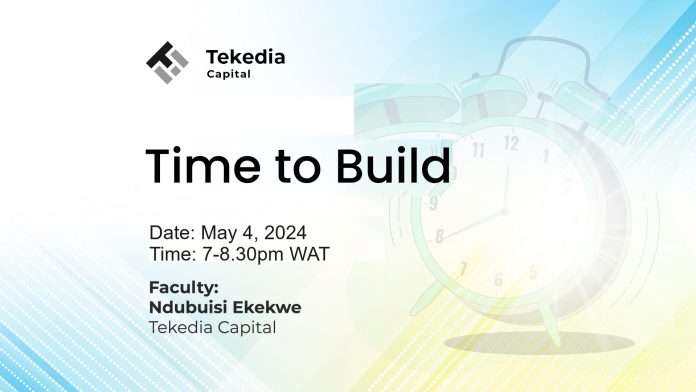
We invite you to Tekedia Capital OPEN which is scheduled on Saturday, May 4, 2024 at 7-8.30pm WAT. Ndubuisi Ekekwe, the Chairman of Tekedia Capital, will make a presentation titled “Time to Build”. This is an open free event – and every person is invited.
In this presentation, he will explain how Africa is being redesigned by technologies and business models, re-architecting the economies, and in the process unlocking abundance for citizens, communities and nations, across markets and industrial sectors. And upon those, posit that this is the time to #build.
We’re in a new age of value creation, a cambrian moment of entrepreneurial capitalism, and it would be decades-long. The transformations will offer new ordinances in Africa’s market systems, and the implications will be massive: wealth, scaled exponentially, for builders, makers, creators and doers.
Indeed, there is power in a line of software code, the switching of a transistor, and a new business model; Africa will experience that power at scale. Come and learn about the future, and find a path on how to #build.
- Event: Tekedia Capital Open
- Topic: Time to Build
- Date: Saturday, May 4, 2024
- Time: 7-8.30pm WAT
- Zoom link: click the link here
- Contact: capital@tekedia.com
Share this message and come with your friends, associates, colleagues, families, investment club members, etc.
(This event is co-hosted with Tekedia Mini-MBA)
About Tekedia Capital: Tekedia Capital offers a specialty investment vehicle (or investment syndicate) which makes it possible for citizens, groups and organizations to co-invest in innovative startups and young companies in Africa and around the world. Capital from these investing entities is pooled together and then invested in a specific company or companies.
We invest in mainly technology-anchored companies and are sector-agnostic which means those companies could be operating in any industry, including finance, real estate, education, health, logistics, etc.
The opportunity is open for individuals in Africa, Africans in diasporas, global citizens in any place in the world, investment groups and organizations around the world. To learn more about Tekedia Capital Syndicate, go here.
Tekedia Capital charges $1,000 (or Naira equivalent) annual fee to include an investor in Tekedia Capital deal flows for 12 months or 4 investment cycles. You can join here.
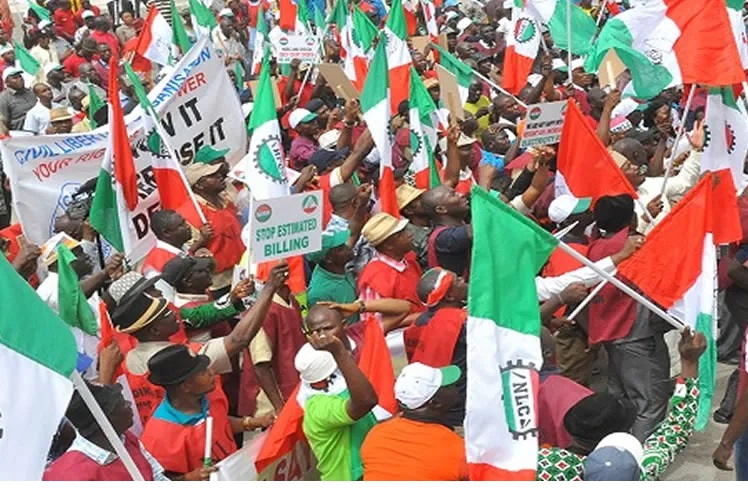
NLC Rejects Government’s 35% Salary Increase, Proposes N615,000 as Livable Wage
Trade Union Congress Asserts Minimum Wage Increase Will Not Worsen Inflation, Citing Increase in FAAC Allocation to States.
In the wake of President Bola Tinubu-led government’s approval of a 35% pay rise for civil servants, the President of the Nigeria Labour Congress (NLC), Joe Ajaero, has voiced strong opposition, advocating for a livable wage of N615,000 for workers in the country.
President Tinubu’s announcement on Tuesday, sanctioning a salary increase ranging from 25% to 35% for civil servants on six consolidated salary structures, sparked controversy within the labor community.
The six salary structures are; the Consolidated Public Service Salary Structure (CONPSS), Consolidated Research and Allied Institutions Salary Structure (CONRAISS), Consolidated Police Salary Structure (CONPOSS), Consolidated Para-military Salary Structure (CONPASS), Consolidated Intelligence Community Salary Structure (CONICCS) and Consolidated Armed Forces Salary Structure (CONAFSS).
However, during an interview with ChannelsTV, Ajaero expressed dissatisfaction with the proposed increase, asserting that discussions on a new minimum wage had been stalled. He added that the current minimum wage of N30,000 expired on April 18, meaning that discussion around the new minimum wage should have been concluded before now.
“The federal government through the National Assembly legislated on it. But we saw that the discussion entered voice mail because the federal government refused to reconvene the meeting that was adjourned,” he said.
Ajaero also stated that organized labor had agreed on N615,000 as the livable wage for civil servants.
“Living wage is such that will, at least keep you alive. It is not a wage that will make you poor and poorer. It is not a wage that will make you borrow to go to work. It is not a wage that will lead you to be in the hospital everyday because of malnutrition. For that living wage, we have tried to look at N615, 000,” he said.
Ajaero elaborated on the NLC’s proposal for a livable wage, outlining a breakdown of expenses that culminated in the figure of N615,000.
“Let me give you a breakdown of how we arrived at that figure. We have housing and accommodation of N40,000. We asked for electricity of N20,000 — of course that was before the current tariff increase. Nobody can spend this amount currently. We have utility that is about N10,000. We looked at kerosene and gas that is about N25,000 to N35,000,” he said.
“We looked at food for a family of six, that is about N9,000 in a day. For 30 days, that is about N270,000. Look at medical, N50,000 provided there will be no surgery or whatever.
“For clothing, we looked at N20,000. For education, N50,000. I don’t know for those who tried to put their children in private school, they will not be able to cope with this amount. We also have sanitation of N10,000.
“I think where we have another bulk of the money is transportation. This is because the workers stay on the fringes and because of the cost of PMS, which amounted to N110,000.
“That brought the whole living wage to N615,000 and I want anyone to subject this to further investigation and find out whether there will be any savings when you pay somebody on this rate.”
He emphasized the need for a wage that would enable workers to meet basic living standards without financial strain.
Earlier this year, the Nigerian Labour Congress (NLC) and Trade Union Congress (TUC) submitted proposals for a significant increase in the national minimum wage. These demands varied across different geopolitical zones, with figures reaching as high as N794,000 for workers in the Southwest and N540,000 for those in the Southeast. These proposals reflect the unions’ efforts to secure higher wages for workers across various regions in Nigeria, amid the crippling impact of inflation on their earnings.
In a similar vein, the Trade Union Congress (TUC) echoed sentiments regarding the minimum wage increase. Amidst the Government’s argument that accepting the proposed wage increase will compound inflation, TUC President, Festus Osifo, disagrees. He cited the significant rise in revenue allocation to states since May 2023 as justification for the wage increase.
Osifo stated, “Giving workers what is due them won’t necessarily worsen inflation,” highlighting the crucial role of labor in economic production.
“If you look today, from May 2023 to date, revenue from the Federation Accounts Allocation Committee (FAAC) to the state governments has tripled,” he said.
“This means the state government has more money to build roads and schools to purchase other items.
“The most critical aspect of production is labour. It is for you to take part of the money and pay workers. That won’t increase inflation because the money will be spent anyway; if you don’t give it to workers, it will be spent on other projects.”
Meanwhile, amidst conflicting reports on the effective date of the salary increase, Minister of State Labour, Nkeiruka Onyejeocha, clarified that the new minimum wage would take effect from May 1, 2024, despite ongoing negotiations by the Tripartite Committee On National Minimum Wage.
Abu Dhabi Autonomous Racing League (A2RL) Debuts, Showcasing Advancements in AI-powered Driverless Cars
The motorsport world witnessed the dawn of a new era over the weekend with the inaugural race of the Abu Dhabi Autonomous Racing League (A2RL) at the iconic Yas Marina Circuit, AI Business has reported.
In the event hailed as a fusion of technology and racing, a team from Germany’s Technical University of Munich (TUM) emerged victorious, marking a milestone in the evolution of autonomous racing.
Described as “bringing a science experiment to the racetrack,” the A2RL pushed the boundaries of autonomous technology as eight teams from across the globe competed for a $2.25 million prize fund. Representing countries ranging from the United States to Italy, the teams showcased their prowess in coding skills, AI algorithms, and machine learning to teach the cars how to drive.
All teams had access to the same vehicle, the 2023 Dallara Super Formula, equipped with advanced autonomous driving technology including seven Sony cameras, four ZF radar sensors, three Seyond lidar units, and a Nvidia GPU. The cars, capable of speeds up to 186 mph, required mastery in understanding grip levels, managing tire temperatures, predicting rival movements, and executing overtakes.
While autonomous racing has been explored previously, A2RL marked the first time four AI-driven race cars competed simultaneously on track. The race format featured an eight-lap shootout following a time trial, which saw some unexpected challenges including spins and technical issues.
Ultimately, the TUM team clinched victory after an intense battle, overtaking the leading car from Italy’s Unimore which encountered difficulties on track. Despite the hiccups, organizers hailed the event as a success, with ASPIRE, a subsidiary of Abu Dhabi’s Advanced Technology Research Council (ATRC), spearheading the initiative.
ASPIRE CEO Stephane Timpano expressed satisfaction with the event’s outcome, highlighting its impact on the intersection of sports and technology. Looking ahead, Timpano noted plans to diversify the league by including different vehicle types and attracting top talent globally.
“The launch of A2RL has reshaped the landscape of sports and technology, leaving a lasting impact for years to come,” Timpano said. “Moving forward, we’re broadening our focus to include different vehicle types, while actively attracting top talent worldwide to showcase their mettle.”
The A2RL debut attracted around 10,000 spectators at Yas Marina, showcasing the growing interest in autonomous racing. In a captivating side event, former Formula One racer Daniil Kvyat participated in an “AI vs Human” challenge, which demonstrated the capabilities of autonomous technology despite the clear advantage of human expertise on track.
Despite the excitement surrounding the event, there remain concerns about the impact of autonomous racing on the traditional motorsport industry. While acknowledging the potential for technological advancement, many have highlighted several key considerations.
To some, autonomous racing represents a significant departure from traditional motorsport, where human drivers are central to the action. Thus, while the introduction of autonomous technology opens up new possibilities for innovation, it also raises questions about the role of human skill and intuition in racing.
Others point to the potential challenges in ensuring the safety and reliability of autonomous racing technology. They note that the development of autonomous driving systems is still in its early stages, and there are inherent risks associated with relying on AI algorithms to navigate complex racing environments.