DD
MM
YYYY

PAGES

DD
MM
YYYY

spot_img

PAGES

Home Blog Page 3453

2024’s Top Crypto Presales: BlockDAG’s 30,000x ROI Leads, Followed by SLOTH, SPONGEV2, SMOG, and BTCMTX

0

The 2024 crypto presale arena is buzzing with promising opportunities. Leading the charge is BlockDAG (BDAG), having already crossed a staggering $20.2 million in presale so far. Not far behind, we see innovative projects like Slothana with multi-chain capabilities, Sponge V2 enhancing meme coin utility, Smog aiming for the “Greatest Airdrop in History,” and Bitcoin Minetrix revolutionising cloud mining. Each offers unique benefits, but BlockDAG’s combination of technological prowess and market excitement sets it apart as the top pick for investors.

  1. BlockDAG – Pioneering the Next Crypto Frontier with a $20.2M Presale

BlockDAG has rapidly become a frontrunner in the crypto presale arena, surpassing $20.2 million in a short time period. The project’s price has escalated from $0.001 to $0.006, with expectations to climb further in upcoming batches. Thanks to it’s successful initiatives like DAGpaper v2 release and the captivating keynote video, BlockDAG is not just promising but delivering, making it an excellent choice for those seeking long-term growth, as analysts predict 30,000x ROI and $20 value for BlockDAG by 2027.

  1. Slothana – Bridging Chains with The First Doge-Themed Meme Coin

Slothana’s Dogeverse introduces an intriguing concept of a multi-chain compatible meme coin, symbolized by Cosmo, the chain-hopping Doge. It aims to raise $17 million in its presale, offering accessibility across multiple blockchains for optimal transaction efficiency. This unique approach positions Slothana as a compelling choice for investors interested in versatility and innovation in the crypto space.

  1. Sponge V2 – Amplifying Meme Coin Utility with Innovative Staking

    Building on the explosive success of Sponge V1, Sponge V2 introduces a Stake-to-Bridge model that promises substantial returns and enhanced functionality. With a strong community base and strategic expansion plans, Sponge V2 is setting itself up as a major player in the meme coin market, aiming to replicate and surpass its predecessor’s performance.

  2. Smog – Aiming For ‘Greatest Airdrop’

Smog enters the market with a promise of the “Greatest Airdrop in History,” focusing heavily on marketing and community engagement. While its ambitious distribution strategy may raise eyebrows, its promises for significant early involvement makes Smog a notable entrant in this year’s list of top crypto presales, especially for those looking to join a growing community from the ground up.

  1. Bitcoin Minetrix – Revolutionizing Bitcoin Mining with Tokenized Access

Bitcoin Minetrix offers a unique take on Bitcoin mining by decentralizing the cloud mining process. Its low token supply and staged pricing increases create a sense of urgency among investors. As it stands, Bitcoin Minetrix provides a transparent and secure way to engage with cryptocurrency mining, appealing to those interested in passive income opportunities.

Why BlockDAG Dominates 2024’s Crypto Presale Landscape

As we review 2024’s top crypto presales, BlockDAG emerges distinctly ahead of the curve. Its technological advancements and massive presale success not only showcase its capability but also forecast its potential for an astonishing 30,000x ROI by 2027. For investors seeking a mix of innovation, stability, and explosive growth potential, BlockDAG represents the pinnacle of this year’s crypto investments, outshining contenders like Slothana, Sponge V2, Smog, and Bitcoin Minetrix.

Join BlockDAG Now!

Website: https://blockdag.network

Presale: https://purchase.blockdag.network

Telegram: https://t.me/blockDAGnetworkOfficial

Discord: https://discord.gg/Q7BxghMVy

Which Electronic Vehicle is the Lowest Cost Car to Maintain?

0

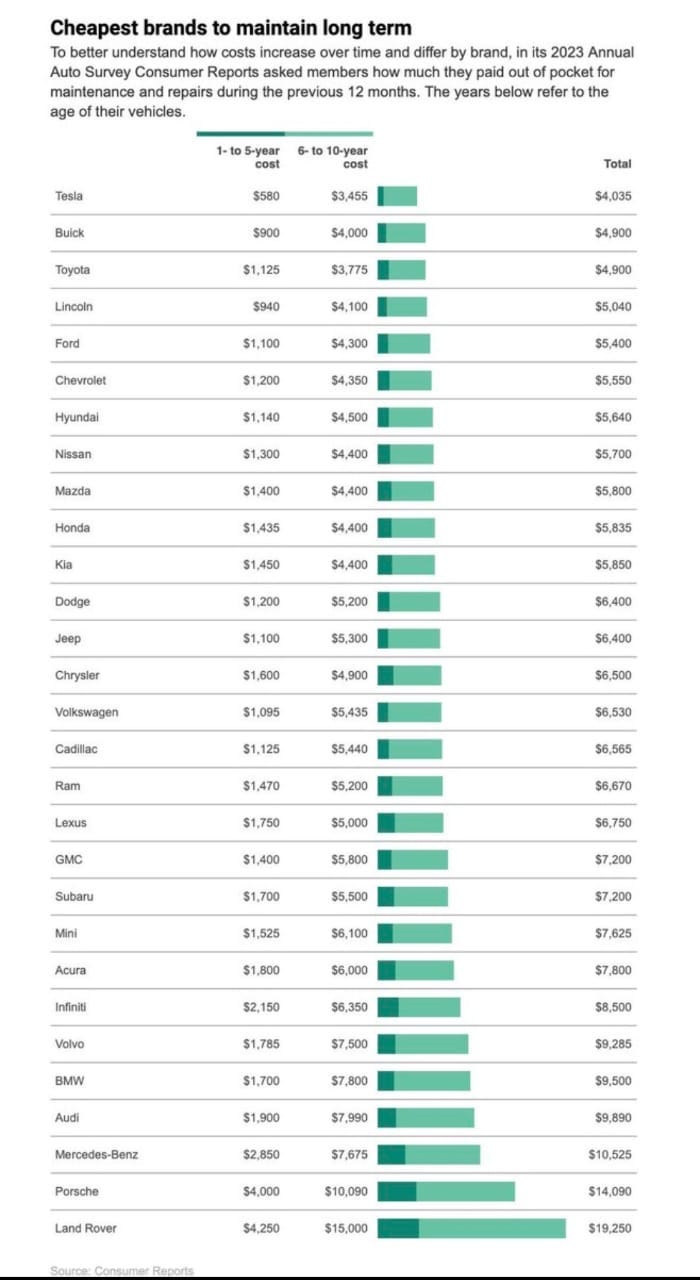
The claim that Tesla vehicles are the lowest cost cars to maintain has been a topic of discussion among consumers and industry experts alike. With the automotive landscape rapidly evolving, particularly with the advent of electric vehicles (EVs), maintenance costs have become a crucial factor for potential buyers.

Tesla, a leader in the electric vehicle market, has often been cited for its innovative approach to vehicle maintenance. Unlike traditional internal combustion engine vehicles, Tesla’s electric cars require no oil changes, fuel filters, spark plug replacements, or emission checks. These factors contribute to the lower routine maintenance needs of Tesla vehicles.

When it comes to maintenance, Tesla has taken a unique approach. The company recommends specific maintenance services on an “as-needed” basis, which means that instead of a fixed schedule, Tesla’s engineers continuously review, and update maintenance recommendations based on the vehicle’s condition and performance data. This can lead to cost savings over time, as unnecessary services are avoided.

Recent data suggests that the average annual repair cost for a Tesla is approximately $832, which is higher than the industry average of $652 across all brands. However, it’s essential to consider that Tesla’s maintenance schedule operates on an “as-needed” basis, as opposed to a fixed schedule. This means that Tesla engineers continuously review, and update maintenance recommendations based on the vehicle’s condition and performance data.

For instance, Tesla recommends cabin air filter replacements every two to three years, depending on the filter type, and tire rotations every 6,250 miles or when there is a significant tread depth difference. These recommendations are relatively standard across the industry.

When comparing long-term maintenance costs, a Tesla Model Y’s 100,000-mile maintenance estimate ranges from $8,250 for base trims to $15,000 for performance trims. In contrast, a Toyota Highlander had a 100,000-mile maintenance and repair cost of $14,029, while a Honda Accord came in at $7,684. These figures indicate that while Tesla’s maintenance costs are competitive, they are not necessarily the lowest in the industry.

It’s also worth noting that while the upfront maintenance costs for Tesla vehicles may be lower, some repairs can be expensive due to the specialized care required for electric vehicles. This is where third-party extended warranties can play a role in managing ownership costs, especially as the vehicle ages.

While Tesla vehicles do offer some advantages in terms of maintenance costs due to their electric nature, the claim that they are the lowest cost cars to maintain does not hold universally. Maintenance and repair costs can vary widely based on the model, usage, and individual circumstances. Prospective buyers should consider the total cost of ownership, including potential repairs, when making their decision.

Tesla’s maintenance costs are competitive within the EV market, but not necessarily the lowest. The company’s “as-needed” maintenance philosophy can lead to savings, but potential owners should be aware of the possibility of higher repair costs. As the EV market continues to expand and evolve, maintenance costs will likely become an even more critical factor for consumers. Keeping an eye on how Tesla and other EV brands adapt their maintenance strategies will be essential for those look1ing to make an informed decision on their next vehicle purchase.

IBM Expands Cloud Footprint with $6.4 Billion Acquisition of HashiCorp

0

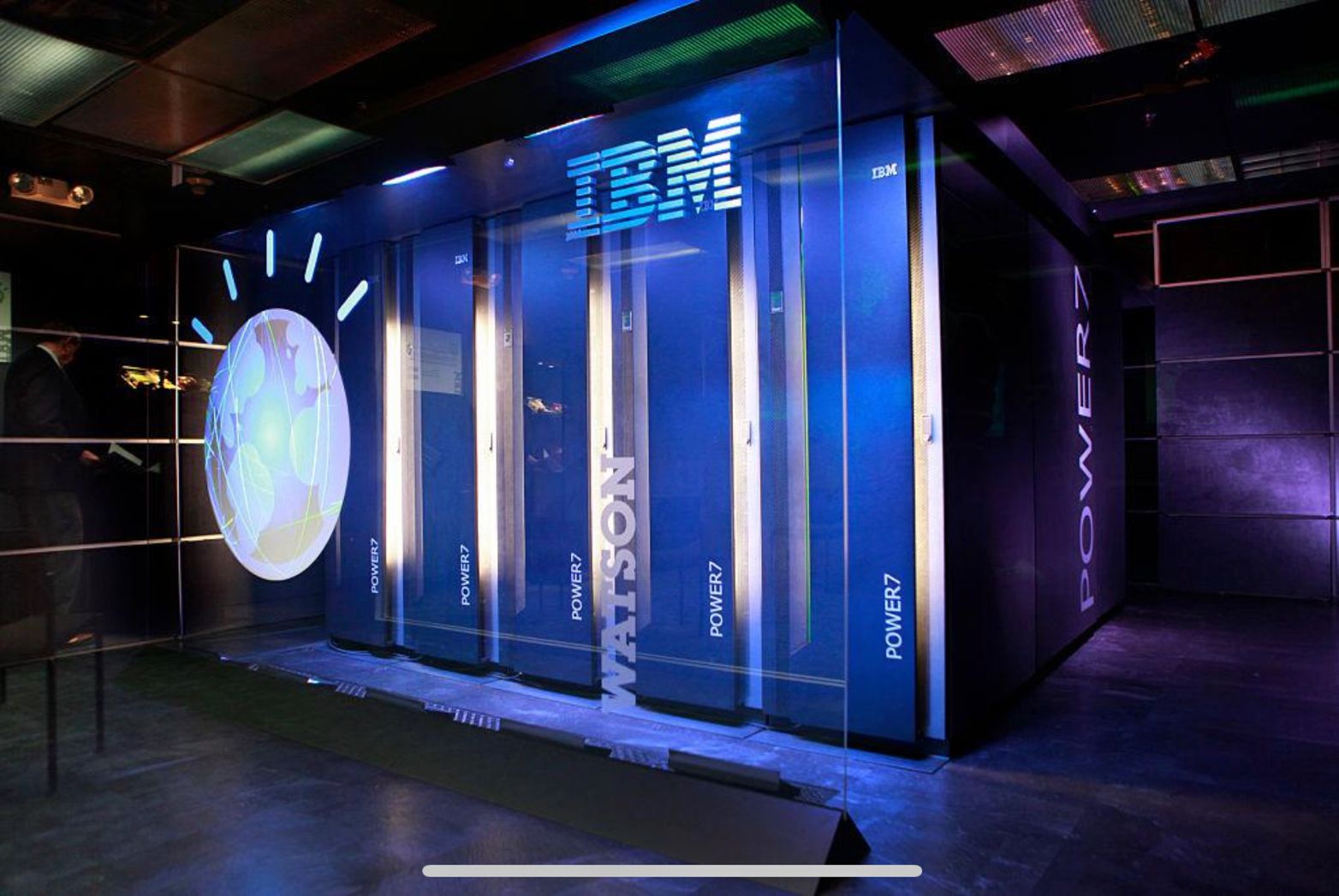
In a move aimed at fortifying its position in the competitive cloud software market, technology giant IBM has announced its intention to acquire HashiCorp, a prominent player in cloud infrastructure automation, in a deal valued at $6.4 billion. 

The acquisition, which is expected to be finalized by the end of 2024 pending regulatory approvals, represents a significant step in IBM’s ongoing efforts to bolster its cloud computing capabilities.

Under the terms of the agreement, IBM will pay $35 per share in cash for HashiCorp, signaling confidence in the potential synergies between the two companies. Dave McJannet, the current CEO of HashiCorp, is expected to join IBM’s ranks, reporting directly to Rob Thomas, IBM’s senior vice president in charge of software, once the deal is completed

This strategic alignment of leadership is seen as part of IBM’s commitment to seamlessly integrate HashiCorp’s expertise and technology into its existing portfolio.

The decision to acquire HashiCorp comes on the heels of speculation fueled by reports from reputable sources such as The Wall Street Journal and Bloomberg, which hinted at IBM’s interest in the cloud software maker. This speculation, in turn, triggered a surge in IBM’s stock price, reflecting investor optimism about the potential benefits of such a strategic move.

Commenting on the acquisition, IBM noted its confidence in the financial implications of the deal, stating that it expects the transaction to be accretive to adjusted earnings before interest, taxes, depreciation, and amortization (EBITDA) in the first full year after close, with further accretion to free cash flow anticipated in the second year post-acquisition. This financial outlook underscores IBM’s belief in the long-term value proposition presented by HashiCorp’s innovative cloud solutions.

The acquisition of HashiCorp is expected to complement IBM’s earlier acquisition of Red Hat in 2019, a landmark deal valued at $34 billion. Since then, Red Hat’s expertise in open-source technology, particularly its Linux operating system, has played a pivotal role in driving IBM’s revenue growth. 

By integrating HashiCorp’s cloud infrastructure automation tools with Red Hat’s offerings, IBM aims to enhance its ability to deliver comprehensive and scalable cloud solutions to its customers.

Despite the promising prospects associated with the HashiCorp acquisition, IBM’s latest quarterly financial results fell short of analyst expectations. The company reported revenue of $14.46 billion for the first quarter, slightly below the anticipated $14.55 billion. This marked IBM’s third revenue miss in the last five quarters, highlighting the ongoing challenges faced by the company in the tech industry grappling with downturns fueled by numerous factors, including global economic headwinds.

Revenue from software, a key segment for IBM’s growth strategy, reached $5.90 billion, reflecting a modest increase of approximately 6% year-over-year. However, this figure fell short of analyst consensus, signaling the need for continued efforts to drive revenue growth in this critical area.

Meanwhile, consulting revenue totaled $5.19 billion, slightly below expectations, while infrastructure revenue exceeded analyst estimates, reaching $3.08 billion.

Despite the initial market reaction, characterized by a 6% decline in IBM shares during extended trading, the company’s stock has demonstrated resilience, boasting a 13% increase year-to-date, outperforming the broader market as represented by the S&P 500 index. 

This positive trajectory reflects investor confidence in IBM’s long-term strategic vision and its ability to navigate challenges while capitalizing on opportunities in the dynamic technology sector.

EFCC Freezes 300 P2P FX Accounts as ABCON Pledges to help Government Fight Illegal FX Transactions

0

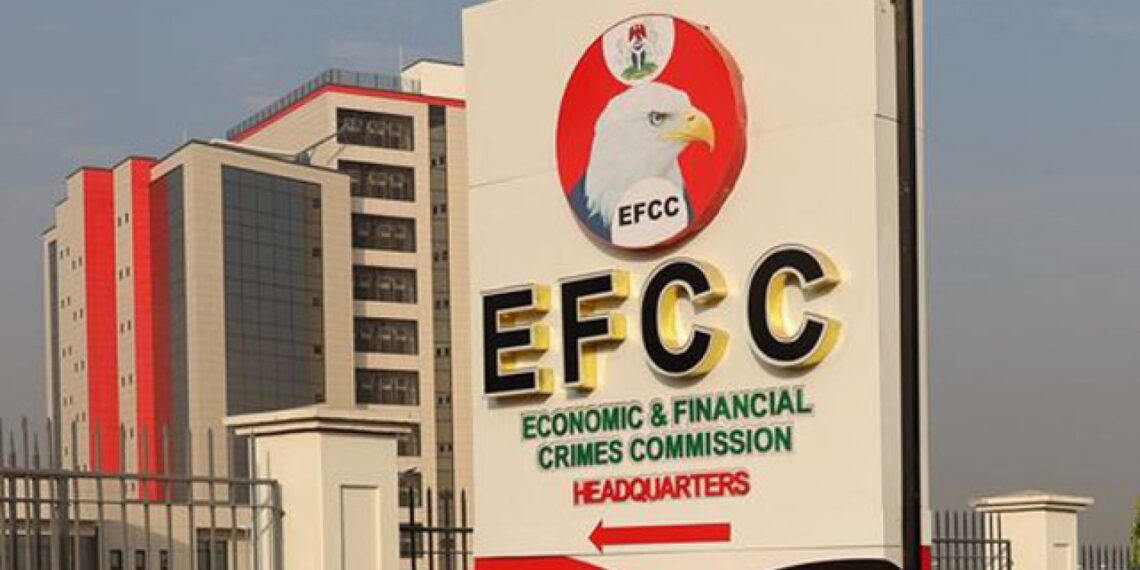
In a move aimed at curbing illicit financial activities, the Economic and Financial Crimes Commission (EFCC) announced on Tuesday the freezing of approximately 300 suspected illegal forex accounts operating on a peer-to-peer platform. 

The chairman of the EFCC, Ola Olukoyede, disclosed this during an interactive session with journalists in Abuja, revealing that the accounts were suspended following a court order issued on Monday.

The action comes amidst growing concerns that the administration of President Bola Tinubu is mirroring its predecessor by clamping down on crypto activities and foreign exchange rate aggregators. This crackdown is fueled by allegations that such activities contribute to the depreciation of the naira in the foreign exchange market.

Olukoyede said the “P to P” (peer-to-peer) financial trading scheme poses a severe threat to the stability of the naira, operating beyond the oversight of official banking channels. He further disclosed that over $15 billion had passed through one of these forex platforms within the last year, operating outside of financial regulations.

Olukoyede justified the EFCC’s intervention as a measure to safeguard the foreign exchange market and protect the economy, noting that recent efforts have helped bolster the weakened naira. He warned that failure to intervene swiftly could have led to another crash in the forex market within a week.

“Over 300 accounts in illicit forex trading would have led to another crash in the next one week if we hadn’t moved in quickly,” Olukoyede stated, highlighting the urgency of the situation. He expressed frustration at individuals who derive pleasure from seeing the country in turmoil, emphasizing the need for concerted efforts to combat economic sabotage.

“We got an order to freeze those accounts. Somebody would come and asked us ‘what is your business with forex transactions? Some people are happy; they take pleasure in seeing this country boiling and I’ve come to realise that in the course of this work, some people want to see things go bad! From bad to worse,” he added.

The move follows the recent depreciation of the naira in the forex market, dropping from N1120/$1 to N1300/$1, creating room for speculation and exacerbating concerns about the currency’s stability.

In agreement with Olukoyede’s assertion, Aminu Gwadabe, president of the Association of Bureau De Change Operators of Nigeria (ABCON), affirmed the commitment of BDC operators to prevent speculators from undermining the naira. 

“People have turned dollar to be an asset; to be a commodity of trade that is why those platforms continue to thrive. We have seen where people are buying dollars into their domiciliary accounts to finance these schemes. A lot of millions of dollars are going out from the system. It is one USD to one USDT. The market can be liquid,” he said.

He outlined measures taken by ABCON, including the establishment of state chapters for data repository and collaboration with regulatory authorities for enhanced oversight.

Gwadabe underscored the need for harmonization, centralization, and Know Your Customer (KYC) protocols in the foreign exchange market to identify and regulate all participants effectively. He likened the activities of P2P platforms to Binance, which was accused of facilitating illegal forex trading, and called for concerted action by regulatory agencies to address these threats.

Mr Gwadabe explained, “I am happy that the authorities, and even the BDCs as operators, have identified the peer-to-peer (P2P) platform. The P2P is a platform like Binance, where speculators use the dollar to buy USDT, a stablecoin that is pegged at one to the dollar.

“As long as Binance and such other platforms continue to be profitable, the naira will continue to depreciate. There are many of them in the system. Binance has been nipped in the bud, but there are still many. They are online platforms with no registration, no restrictions.”

The Central Bank of Nigeria (CBN) had previously compelled Binance, the world’s largest crypto exchange platform, to largely exit Nigeria following regulatory pressure. Following these measures, critics argue that suspending P2P accounts may not effectively address the root causes of the naira’s depreciation, citing past unsuccessful attempts by the CBN.

Economists have attributed the free falling of the naira to insufficient dollar liquidity, emphasizing the need to increase FX earnings through exports to stabilize the currency.

As Nigeria’s Banking Stocks Crash, Central Bank of Nigeria Must Review Recapitalization Policies

0

I agree – I am a village boy. But I have it on record that I am not a fan of the Central Bank of Nigeria (CBN) recent  policy where banks’ retained earnings are excluded from the recapitalization process. My position was that it would make capital utilization inefficient: “Bank Recapitalization In Nigeria Could Make Capital Inefficient Through Exclusion Of Retained Earnings”.

I have noted that markets become inefficient where capital is designed to have “tiers” based on many factors. Adam Smith in his invisible hands theory cautioned against that. So, if you structure your recapitalization to prefer people in New York, London, etc to invest in Nigerian banks (they export USD to Nigeria, but have to convert to Naira, to buy the equities which are sold in Naira), you are creating a tiered system.  That is bad.

The zenith of any efficient market is when Naira from New York, London, Umuahia, Kano, Ife, Jos, Nairobi, Moscow, etc all have equal weights.  But when fudge factors are introduced to rank capital based on source, you destroy a market. Diamond Bank which funded my doctoral program in banking and finance helped me to understand the dimensions of global finance, international market and currencies.

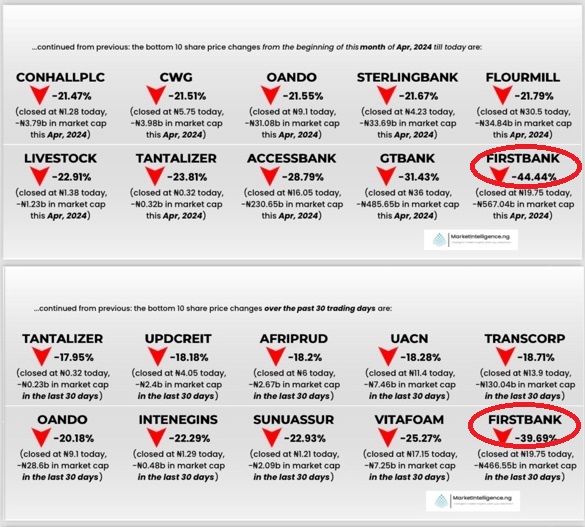
CBN’s policy which is geared to attract USD to our equity market is causing real problems because it has made the market inefficient. FirstBank of Nigeria* is down 44% in April 2024, and 39% in the  last 30 days of trading. Remember, you cannot afford to annoy those currently investing in the Nigerian stock exchange (NGX), even as you hope for the Londoners, New Yorkers, etc to come. I have spoken as a village boy; I yield to the wiser people!

Comment on Feed

Comment 1: Every asset on a banks balance sheet is funded by two broad means:

1. Debt Capital (depositors and lenders)
2. Equity Capital (shareholders)

Most bank regulators around world are primarily saddled with two broad responsibilities:

1. Stability of the financial system
2. Protect capital providers (depositors, lenders and shareholders)

Let’s focus on number #2:

Without capital providers, there’s no financial system, there’s no bank, there’s economy.

However, there’s often a divergence of interest between debt capital providers and equity capital providers.

Hence, the bank regulators needs to use a hierarchy – and in that hierarchy – Debt capital providers rank higher than Equity capital providers. What this means is that a bank regulator will first and foremost protect Debt capital providers before Equity capital providers.

Now, even amongst Debt capital providers there’s also a hierarchy and generally: Depositors rank higher than lenders. Hence, a bank regulator will protect depositors first before lenders.

Amongst lenders, there’s also a hierarchy: secured lenders ranking higher than unsecured lenders.

What is my point?

Capital is tiered in the financial system – all capital are equal but some are more equal than others (animal farm).

Case in point:

Early last year, Credit Suisse collapsed and the Coco bond holders (a capital provider tier within the debt capital tier) was wiped out; their capital was used to absorb the losses the bank had incurred. The decision to do that was taken by the Swiss bank regulator – and they did it to protect other debt capital providers and ensure financial stability.

Now to Nigeria.

Who amongst the different tiers of capital providers stand to benefit the most from the recapitalization of the banks excluding retained earnings and also benefit from the withholding of dividend payments?

The answer is the debt capital provider: raising more equity capital ensures that the banks have adequate equity capital to absorb losses and protect their debt capital providers.

And the losers are the existing Equity capital providers: dividend withheld, dilution coming, stock price tanking.

So, in doing this, the bank regulator, in this case, CBN, is simply following it’s hierarchy of capital providers and at the same time ensuring the stability of the financial system.

Banks are highly leveraged – roughly for every 1 naira of asset you see on a banks balance sheet, more than 80kobo was funded by debt capital providers. If you successfully protect Debt capital providers, you have successfully protected the bank from collapsing.

So, while Equity capital providers are bleeding at the moment (it will be short term), I strongly believe that CBN’s decision will ensure a long term stability of the banks and protect the most important source of capital for the banks.

My Response: The scenario you created is self-evident but is different from my focus. We do know that we preferred shares, ordinary shares, etc. Depositors, debtors, equity holders, etc are not within the issues being debated on bank recapitalization; so, that is totally irrelevant in the debate. Read my piece and my piece is solely focused on the funds used to buy shares, and the need for fairness.  

If I am in Kano and have N10,000 to buy GTCO Plc shares, I must be in the same tier as someone living in New York who wired N10,000 to buy the shares. And if you make policies to entice that person against me, I will not like it. That does not bring classes of shares which we know are never the same, and are tiered. In liquidation, for example, debtors go first before ordinary shareholders, etc.

Here, I am saying N10k from Kano should be respected as N10k from London! If both are not weighted at the same level, you are unfair to one person. I wrote “rank capital based on source”, making it clear where I was focusing on.

Comment 2: Ordinarily, using retained earnings for recapitalization should have been a welcome idea but looking at the banks that have released their financial statements, I see their profits coming from unusual activities which they might not be able to repeat next financial year. If about 90% of your total profit is made from foreign exchange gain, then there is need for caution. Historically, what has been the level of profit of these banks in the last 3 years? Can they sustain same feat next year and beyond?

The recent run on the shares of Nigeria banks, I can say is more as a result of existing shareholders’ perception of dilution. If the existing shareholders perceive that the bank might issue new shares and it will affect the value of their shares, it might lead to sell-off. In First bank, there has been contention about who has the controlling share at the bank so if a large shareholder decides to minimize his risk due to the fact that he is not willing to increase his/her investment in the bank, it will definitely have a huge impact on the market. Access bank just changed its leadership; I think this will likely affect its ownership and share structure and even many of these banks have been dropping shares for the past 3 months.

… the regulator, CBN, has come out to say that retained earnings of banks are not allowed to be part of the capitalization. If it was allowed then the banks can talk about scrip or bonus shares in place of dividend.

For the banks, it means more work and increased capacity to handle big ticket business. For shareholders, it’s an opportunity to scheme and for the economy, it means increased opportunity for the real sector and stronger financial industry.

My Response:  The recapitalization is a good policy. It is necessary. But consider this scenario. A bank makes N20 billion for 100 shareholders (think of units)  and the bank cannot pay dividends. The bank goes to the capital market, raises more funds, and now has 120 shareholders. Later, it pays dividends across 120 shareholders. How would you feel if you are among the 100 shareholders?

Strategically, since there would be dilution, the best thing is to sell high, and rejoin later, post recap. I think that is what is happening because there is no bottom on how far the banks could dilute!

Investors are not charities, and even though they think this is done for the economy, they do not want to carry the “cross”