DD
MM
YYYY

PAGES

DD
MM
YYYY

spot_img

PAGES

Home Blog Page 3701

What’s next for Meme coin, AI and GPT computing and Gaming Finance

0

The world of cryptocurrency is constantly evolving and innovating. New projects, platforms, and protocols emerge every day, offering new possibilities and challenges for investors, developers, and users. We will explore some of the most exciting trends and developments in the crypto space, focusing on four topics: Meme coin, AI and GPT computing, gaming finance, and Bitcoin layer 2.

Meme coin: The rise of meme culture and social media has given birth to a new phenomenon in the crypto world: meme coins. These are tokens that are created as a joke, parody, or tribute to a popular meme, such as Dogecoin, Shiba Inu, or Baby Yoda.

Meme coins often have no intrinsic value or utility, but they rely on the power of viral marketing, community support, and celebrity endorsement to gain popularity and price appreciation. Some meme coins have even surpassed the market capitalization of established cryptocurrencies, such as Ethereum or Cardano.

However, meme coins are also highly volatile and risky, as they can lose their value as quickly as they gain it. Therefore, investors should be careful and do their own research before buying any meme coin.

AI and GPT computing: Artificial intelligence (AI) and generative pre-trained transformer (GPT) computing are two of the most cutting-edge technologies in the crypto space. AI is the ability of machines to perform tasks that normally require human intelligence, such as natural language processing, computer vision, or machine learning.

GPT is a type of deep learning model that can generate coherent and diverse texts based on a given input or prompt. Both AI and GPT computing have many applications and implications for the crypto space, such as:

Creating synthetic data and content for blockchain projects and platforms. Enhancing security and privacy of transactions and smart contracts. Improving user experience and interface design. Generating new ideas and insights for innovation and research. Enabling new forms of decentralized governance and collaboration

Some examples of projects that use AI and GPT computing in the crypto space are:

OpenAI: A research organization that aims to create artificial general intelligence (AGI) that can benefit humanity. OpenAI is behind the development of GPT-3, the most advanced language model in the world. OpenAI also has its own cryptocurrency, called OpenAI Coin, which is used to incentivize and reward contributors to its platform.

Singularity NET: A decentralized network that connects AI agents and services across different domains and industries. SingularityNET allows anyone to create, share, and monetize AI services using its native token, called AGI.

Numerai: A hedge fund that uses crowdsourced machine learning models to make predictions on the stock market. Numerai pays its data scientists in its own cryptocurrency, called Numeraire (NMR), which is also used to stake on the quality of their models.

Gaming finance: Gaming finance is a term that describes the intersection of gaming and finance in the crypto space. Gaming finance involves using blockchain technology and cryptocurrencies to create new ways of playing, earning, and investing in games. Some of the benefits of gaming finance are:

Enabling true ownership and interoperability of digital assets across different games and platforms. Creating new revenue streams and business models for game developers and players.

Enhancing gameplay experience and engagement with social features and incentives. Fostering innovation and creativity in game design and development

Some examples of projects that use gaming finance in the crypto space are:

Axie Infinity: A game that allows players to collect, breed, battle, and trade cute creatures called Axies. Axies are non-fungible tokens (NFTs) that can be owned by players and used across different games and platforms. Players can also earn income by playing the game or selling their Axies in the marketplace. The game uses its own cryptocurrency, called Axie Infinity Shards (AXS), which is also used for governance and staking.

Decentraland: A virtual world that allows users to create, explore, and trade digital assets and experiences. Decentraland is built on the Ethereum blockchain and uses its own cryptocurrency, called MANA, which is used to buy land parcels (NFTs) in the world. Users can also earn income by hosting events or selling their creations in the marketplace.

Yield Guild Games: A decentralized organization that invests in gaming assets and shares the profits with its members. Yield Guild Games leverages the concept of play-to-earn, which means that players can earn income by playing games that use blockchain technology and cryptocurrencies. Yield Guild Games uses its own cryptocurrency, called YGG Token, which is used for governance and rewards.

Bitcoin layer 2: Bitcoin layer 2 is a term that refers to solutions that aim to improve the scalability, speed, and efficiency of Bitcoin transactions. Bitcoin layer 2 solutions operate on top of the Bitcoin blockchain (layer 1) and use various techniques, such as sidechains, payment channels, or rollups, to process transactions off-chain and then settle them on-chain. Some of the benefits of Bitcoin layer 2 solutions are:

Reducing transaction fees and congestion on the Bitcoin network, enabling faster and more frequent transactions, enhancing privacy and security of transactions and supporting new use cases and functionalities for Bitcoin

Some examples of projects that use Bitcoin layer 2 solutions are:

Lightning Network: A network of payment channels that allows users to send and receive instant and low-cost Bitcoin transactions. Lightning Network uses smart contracts to lock up funds in a channel and then update the balance between the parties without broadcasting to the blockchain. Users can also route payments through other channels to reach their destination, creating a network effect.

Liquid Network: A sidechain that allows users to transfer Bitcoin and other assets between exchanges and platforms. Liquid Network uses a federated model, where a group of trusted nodes validate transactions and issue Liquid Bitcoin (L-BTC), which is pegged to Bitcoin. Users can also issue their own tokens on the Liquid Network, such as stablecoins or NFTs.

RSK: A smart contract platform that is secured by the Bitcoin network. RSK uses a two-way peg, where users can lock up their Bitcoin in a smart contract and receive RSK Smart Bitcoin (RBTC), which is also pegged to Bitcoin. Users can then use RBTC to interact with smart contracts and decentralized applications (DApps) on the RSK network.

The crypto space is full of opportunities and challenges for investors, developers, and users. The four topics we discussed in this article are just some of the many trends and developments that are shaping the future of cryptocurrency. We hope you enjoyed reading this post and learned something new.
Composition of the Superior Courts in Nigeria

0

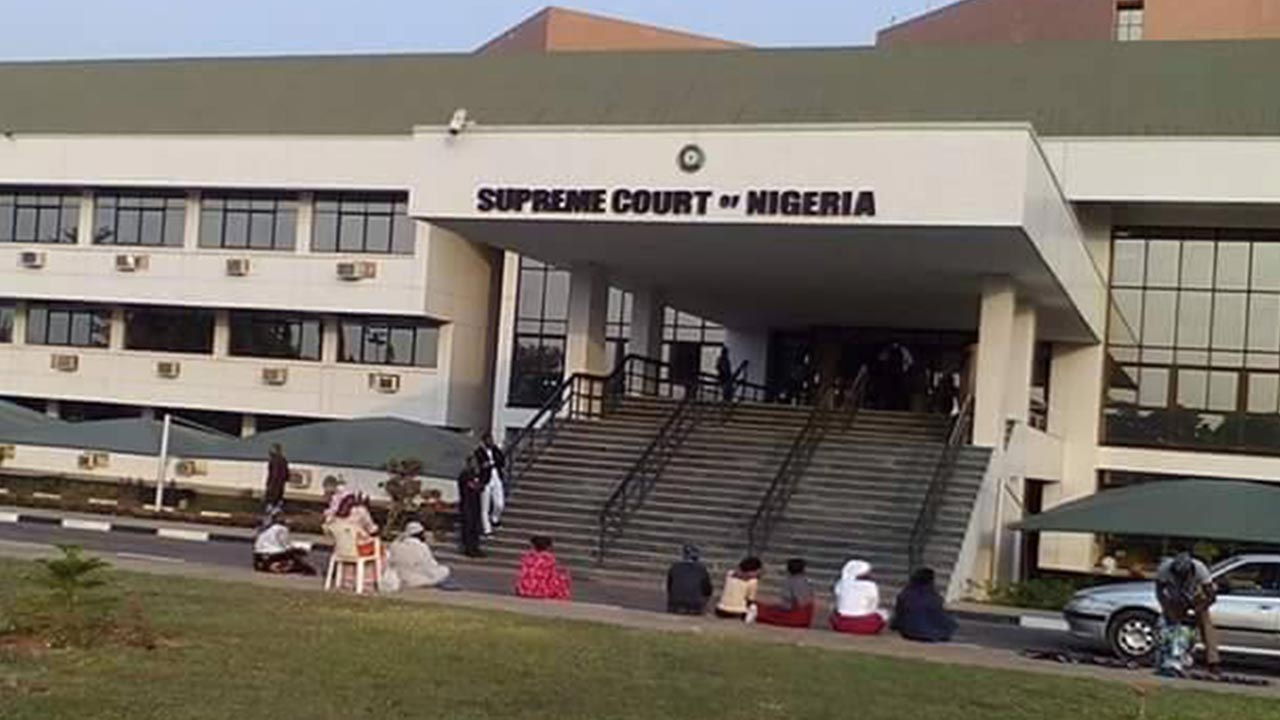
On the 26th of February 2024, exactly a week today, the Supreme of Nigeria welcomed eleven new justices adding to the existing ten justices at the Supreme Court so as to get the statutory full complement of Justices.

It is pertinent to point out that for years now, the Supreme Court has not had a complete number of justices as required by law. As statutorily provided, the Supreme Court is to have a total of twenty one justices to be headed by the Chief Justice of Nigeria (CJN) and in each case, it is expected that at least three justices preside and in some highly regarded matters, at least five to seven justices are to preside. 

It has been the custom that judges or justices are appointed and screened from the immediate preceding or the immediate lower courts. For instance, the eleven justices that were recently sworn into the Supreme Court were appointed or promoted from the Court of Appeal, the same way Court of Appeal judges are to be appointed or promoted from the high courts. 

Just as the Supreme Court is expected to have a total number of twenty-one justices, the Court of Appeal which is the immediate preceding court is statutorily expected to have the total number of forty-one judges which is to be headed by the president of the court of appeal. 

The Federal High Court has ninety-four judges spread across the thirty-eight divisions in the 36 states and the Federal Capital Territory (FCT), Abuja. You should note that there is only one federal high court in Nigeria but different judicial divisions in different states. Each state has its own judicial division and judges can be transferred, redeployed or reassigned within the 38 different judicial divisions. 

The federal high court is headed by the chief judge of the federal high court just as the one the Supreme Court is headed by the Chief Justice of Nigeria. 

As for state high courts, each state has its different judicial compositions and there are a total of 37 state high courts in Nigeria spread across the 36 states of the federation and the federal capital territory, Abuja all sharing concurrent jurisdictions. Each state high court is headed by the chief judge of the court. 

It is arguably better for courts to have more judges/justices or at least have the number of judges as statutorily required because having a lesser number of judges is the primary contributor to the delay in the dispensation of Justice as we often complain of; the lesser number of judges/justices simply translates to more work for the fewer judges available but if there are more judges presiding in different cases then justices/ judgements can be dispensed speedily. 

The Supreme Court, the appeal court and the high court (both federal and state high court) are regarded as the upper or superior courts in Nigeria with the Supreme Court at the apex whilst the customary courts, and magistrate courts are all regarded as the lower courts or the inferior courts. 


Ex President Donald Trump can appear on Presidential ballots – Supreme Court Ruling

0

The Supreme Court of the United States has issued a landmark ruling that allows former President Donald Trump to appear on the ballots for the 2024 presidential election. The decision, which was announced on Monday, overturns a lower court ruling that had barred Trump from running for office again due to his role in inciting the violent insurrection at the Capitol on January 6, 2021.

The majority opinion, written by Justice Brett Kavanaugh, argued that the Constitution does not give Congress the power to disqualify a former president from future elections, and that such a penalty would violate Trump’s First Amendment rights. The opinion also stated that the American people should have the final say on whether they want Trump to be their leader again, and that preventing him from running would undermine the democratic process.

The dissenting opinion, written by Justice Sonia Sotomayor, sharply criticized the majority for ignoring the gravity of Trump’s actions and the threat he poses to the nation’s security and stability. She wrote that Trump had “betrayed his oath of office” and “endangered the lives of millions of Americans” by spreading lies about the election results and encouraging his supporters to attack the Capitol. She also warned that allowing Trump to run again would “invite further violence and chaos” and “damage the integrity and legitimacy of our electoral system”.

The ruling has sparked mixed reactions from the public and the political parties. Trump’s loyalists celebrated the decision as a victory for democracy and freedom, and expressed their hope that Trump would reclaim the White House in 2024. Trump himself issued a statement thanking the Supreme Court for “upholding the rule of law” and “defending our great Constitution”. He also hinted that he would soon announce his candidacy for the 2024 election.

On the other hand, Trump’s opponents denounced the decision as a travesty of justice and a danger to the country. They argued that Trump had shown no remorse or accountability for his role in the Capitol riot, and that he continued to spread misinformation and conspiracy theories about the election. They also expressed their fear that Trump would use his influence and resources to undermine the current administration and interfere with the upcoming elections.

The ruling is expected to have a significant impact on the 2024 presidential race, as it opens the door for a possible rematch between Trump and President Joe Biden, who defeated Trump in 2020 by more than seven million votes. It also raises questions about how the Republican Party will handle Trump’s potential candidacy, as some GOP leaders have tried to distance themselves from Trump and his divisive rhetoric, while others have remained loyal to him and his base.

The Supreme Court’s decision is likely to be one of the most controversial and consequential rulings in its history, as it will shape the future of American politics and democracy for years to come.

Nvidia Corp has claimed another milestone by overtaking Saudi Aramco in market value

0

In a remarkable milestone, Nvidia $NVDA has overtaken Saudi Aramco, the world’s largest oil producer, to become the third most valuable company in the world by market capitalization.

Nvidia Corp has claimed another milestone by overtaking Saudi Aramco in market value, making the chipmaker the world’s third-most valuable public company after Apple Inc. and Microsoft Corp. The company ended Friday’s session at $2.06 trillion, closing above the $2 trillion mark for the first time. Only Apple $AAPL and Microsoft $MSFT are ahead of Nvidia, with market caps of $3 trillion respectively.

It took NVIDIA around nine months to attain the $2 trillion milestone from the $1 trillion market capitalization as of Jun 14, 2023. The share price momentum, which started at the beginning of 2023 with NVDA stock soaring 239% in the year, has continued in 2024. Year to date, shares of the company have surged 66.1%.

Nvidia’s meteoric rise is driven by its dominance in the fields of artificial intelligence, gaming, cloud computing, and autonomous vehicles. The company’s flagship product, the GeForce RTX series of graphics cards, has been in high demand among gamers and content creators, as well as data centers and enterprises that use them for AI applications. Nvidia’s revenue for the fiscal year 2024 was $82 billion, up 48% from the previous year.

Nvidia’s acquisition of Arm, the leading designer of chips for smartphones and IoT devices, in 2020 also boosted its position in the semiconductor industry. The deal, which was valued at $40 billion, gave Nvidia access to Arm’s vast network of customers and partners, as well as its intellectual property and R&D capabilities. Nvidia has pledged to maintain Arm’s open licensing model and neutrality, while investing in its UK headquarters and creating a new AI research center there.

Nvidia’s CEO and founder, Jensen Huang, has been widely praised for his visionary leadership and innovation. He has been named one of the world’s best CEOs by Barron’s, Forbes, Fortune, and Harvard Business Review. He has also been recognized as one of the most influential people in technology by Time, Wired, and Bloomberg.

Nvidia’s success has also benefited its shareholders, employees, and communities. The company has returned over $20 billion to its shareholders through dividends and share buybacks since 2014. It has also created over 20,000 jobs worldwide and invested in education, research, and philanthropy through its Nvidia Foundation.

Nvidia is not only a leader in the field of artificial intelligence and graphics, but also a company that rewards its stakeholders for their trust and support. In the past seven years, Nvidia has distributed more than $20 billion to its shareholders in the form of dividends and stock repurchases, demonstrating its commitment to creating value and sharing success.

Nvidia also invests in its employees, offering competitive compensation, benefits, and opportunities for growth and development. Furthermore, Nvidia contributes to the social and environmental well-being of its communities, supporting various initiatives in education, health care, diversity, and sustainability.

What is Nvidia’s edge over other AI companies?

Nvidia is a leader in GPU computing, a supercharged form of computing that enables the most demanding applications in the world, such as 3D graphics, virtual reality, high performance computing, and artificial intelligence. Nvidia has evolved the GPU into a computer brain that can process massive amounts of data and perform complex calculations at unprecedented speed and efficiency.

Nvidia’s edge over other AI companies lies in its comprehensive and innovative platform that covers every aspect of AI development and deployment. Nvidia offers:

A full-stack platform for generative AI, which is a branch of AI that can create new content or data from existing ones, such as images, videos, text, or speech. Generative AI can be used for various applications, such as drug discovery, visual design, digital avatars, and more.

Nvidia’s platform includes generative model architectures, tools, and accelerated computing for training, customizing, optimizing, and deploying generative AI models. Nvidia has foundries for language, biology, visual design, and interactive avatars.

A suite of model-making services, pretrained models, cutting-edge frameworks, and APIs that simplify the development of custom enterprise-grade models with your own data and domain expertise. Nvidia offers state-of-the-art community- and NVIDIA-built foundation models, including Stable Diffusion, Llama 2, and Nemotron-3.

A scalable AI car platform that spans the entire range of autonomous driving. Nvidia DRIVE™ is used by 225 companies around the world to develop self-driving cars that can perceive and understand the world .

An end-to-end, cloud-native software platform that accelerates data science pipelines and streamlines development and deployment of production-grade AI applications. Nvidia AI Enterprise is compatible with VMware vSphere and supports popular frameworks and tools such as TensorFlow, PyTorch, RAPIDS, NVIDIA Triton Inference Server, and NVIDIA Jarvis.

A portfolio of strategic investments in emerging AI companies that are pushing the boundaries of innovation in various domains. Nvidia has stakes in Arm, SoundHound AI, Recursion Pharmaceuticals, Nano-X Imaging, and TuSimple .

Nvidia is not only a provider of hardware and software for AI, but also a partner and enabler of AI-driven businesses and industries. By offering a comprehensive and innovative platform for generative AI, Nvidia empowers its customers to solve the world’s toughest challenges with creativity and intelligence.

EU Fines Apple €1.84 Billion for Antitrust Violations in Music Streaming Market

0

In a seismic move aimed at reining in tech behemoths, the European Union has levied a historic fine of €1.84 billion (nearly $2 billion) against Apple, accusing the company of breaching antitrust regulations within the music streaming market on its iOS mobile platform.

This substantial penalty, announced by the EU Commission, marks one of the largest fines ever imposed in an antitrust case and signals a significant escalation in efforts to curb monopolistic practices in the digital sphere.

“The fine we impose today reflects both Apple’s financial power and the harm that Apple’s conduct inflicted on millions of European users,” said Margrethe Vestager, the EU’s Competition Chief, noting that the total penalty represents 0.5% of the iPhone maker’s worldwide turnover.

From today, the Commission has also ordered Apple not to apply anti-steering provisions on music streaming apps. “From now on, Apple will have to allow music streaming developers to communicate freely with their own users — be that within the app, by email or any other ways of communicating,” said Vestager.

At the heart of the Commission’s decision lies Apple’s controversial anti-steering provisions, which have long been a point of contention among developers and competitors in the music streaming industry. These provisions effectively restrict music streaming apps, such as Spotify, from informing users about alternative subscription options outside of Apple’s App Store ecosystem. This, according to Vestager, has severely curtailed consumer choice and fostered an environment of unfair competition.

During a press conference unveiling the decision, Vestager minced no words in condemning Apple’s conduct, stating, “Apple’s rules ended up harming consumers. Critical information was withheld so that consumers could not effectively use or make informed choices.”

The Commission’s investigation was triggered by a formal complaint lodged by Spotify in March 2019, alleging that Apple’s stringent App Store policies stifled competition and innovation, thereby undermining user experience. Over the ensuing months, the Commission delved into the intricacies of Apple’s practices, honing in on the anti-steering provisions as a focal point of concern.

Despite Apple’s vigorous defense of its policies, citing a competitive marketplace and robust consumer choice, the EU Commission stood firm in its findings, underlining the need to safeguard consumer interests and foster a level playing field for all market participants.

“The Commission found that Apple’s rules result in withholding key information on prices and features of services from consumers. As such, they are neither necessary nor proportionate for the provision of the App Store on Apple’s mobile devices,” Vestager said, reiterating the Commission’s stance.

The monumental fine imposed on Apple comprises a base penalty of approximately €40 million for violating EU rules, supplemented by a substantial lump sum intended to redress the harm inflicted on consumers and serve as a deterrent against future transgressions. Notably, the fine represents a mere fraction of Apple’s global revenue, underscoring the severity of the violation.

In response to the Commission’s ruling, Apple issued a scathing rebuke, accusing EU enforcers of misconstruing the competitive landscape and failing to uphold the principles of fair competition. In a strongly worded blog post, the tech giant asserted, “What’s clear is that this decision is not grounded in existing competition law. It’s an effort by the Commission to enforce the DMA before the DMA becomes law.”

Apple further signaled its intention to challenge the decision, citing its longstanding commitment to fostering innovation and driving economic growth in the European market.

“While we respect the European Commission, the facts simply don’t support this decision. And as a result, Apple will appeal,” the company declared defiantly.

Meanwhile, the Commission wasted no time in implementing remedial measures, ordering Apple to immediately cease applying anti-steering provisions on music streaming apps. Additionally, under the Digital Markets Act (DMA), Apple will be subject to stringent regulations aimed at preventing the recurrence of anticompetitive behavior. Penalties for non-compliance under the DMA could potentially escalate to 10% of Apple’s annual turnover.

“From now on, Apple will have to allow music streaming developers to communicate freely with their own users — be that within the app, by email or any other ways of communicating,” Vestager stated.

Despite the Commission’s resolute stance, the decision has not been without its detractors. Critics argue that the case against Apple has been marred by shifting narratives and narrow interpretations of harm, with some questioning the proportionality of the remedies imposed.

Cristina Caffarra, an economics expert advising Apple, raised doubts about the coherence of the Commission’s case.

“They failed for years to craft a theory of harm that made any sense about the App Store,” she said.

Amidst the swirling controversy, the EU’s enforcement action represents a significant milestone in efforts to regulate the tech industry and safeguard competition in the digital marketplace. The impacts of this decision are likely to reverberate far beyond the confines of the music streaming market, shaping the future of digital commerce and consumer rights in the European Union and beyond.

Some Apple, car employees to be cut, many will shift to Artificial Intelligence

Meanwhile, Apple has announced that it will reduce its workforce in the car division, as part of a strategic shift to focus more on artificial intelligence and software development. The company did not disclose the exact number of employees affected, but sources familiar with the matter said that hundreds of engineers and managers will be laid off or reassigned to other projects.

The move comes as Apple faces increasing competition and challenges in the automotive industry, where rivals like Tesla, Google and Amazon are investing heavily in self-driving technology and electric vehicles. Apple has been working on its own car project, codenamed Titan, since 2014, but has struggled to define its vision and direction.

The company has also experienced several leadership changes and internal conflicts in the car division, which have hampered its progress and innovation.

Apple said that the decision to cut some car employees was not a sign of giving up on the car project, but rather a way to streamline its operations and prioritize its resources. The company said that it will continue to explore the potential of autonomous systems and software platforms for the future of mobility.

Many of the affected employees will be offered new roles in the artificial intelligence department, where Apple is developing Siri, Face ID, machine learning and other technologies that are core to its products and services.

Apple CEO Tim Cook has repeatedly expressed his interest and optimism about the car market, calling it “the mother of all AI projects”. He has also hinted that Apple has some “exciting things” in the works but has not revealed any details or timelines.

Analysts and investors have speculated that Apple could launch its own car, partner with an existing automaker, or provide software and hardware solutions for other car companies.

Apple is known for its secrecy and high standards of quality and innovation, which have made it one of the most valuable and influential companies in the world. However, some critics have argued that Apple has lost its edge and creativity in recent years and has failed to deliver breakthrough products that can match the success of the iPhone, iPad and Mac. The car project is seen by many as a test of Apple’s ability to reinvent itself and enter new markets.

Apple Inc. is reportedly winding down its electric car plans, ending a decade-long foray into the automotive industry, according to Bloomberg. The tech giant had been working on a self-driving vehicle project called Project Titan since 2014 but faced multiple challenges and leadership changes along the way. The company had scaled back its ambitions from building a full-fledged car to focusing on the software and hardware components of autonomous driving.

However, Bloomberg sources said that Apple has now decided to abandon the project altogether, as it did not see a clear path to profitability or market leadership. Apple has not officially confirmed or denied the report, but some analysts have speculated that the company may still be interested in partnering with existing carmakers or exploring other mobility services in the future.

Apple’s exit from the electric car race would leave more room for competitors like Tesla, Google’s Waymo, and Amazon’s Zoox, who have been investing heavily in the field and have made significant progress in developing and testing their vehicles. Apple’s stock price fell slightly after the news broke but recovered quickly as investors focused on the company’s core businesses of smartphones, tablets, computers, and services.