DD
MM
YYYY

PAGES

DD
MM
YYYY

spot_img

PAGES

Home Blog Page 3895

Google Announces $1B Investment in UK As Manta Network harmed by DDoS attack

0

In a significant move that underscores its commitment to meeting the growing demand for internet services in the United Kingdom, Google has unveiled plans to invest a staggering $1 billion in the construction of a cutting-edge data center just outside London.

The tech giant, owned by Alphabet Inc., made the announcement on Thursday, solidifying its position as a major player in the UK’s technology industry.

Situated on a sprawling 33-acre site in Waltham Cross, approximately 15 miles north of central London, the data center represents a substantial expansion of Google’s infrastructure. The site was acquired by the company in 2020, signaling a long-term strategic vision for its operations in the region.

The British government, which has been actively encouraging business investments to support the development of new infrastructure, especially in burgeoning sectors like technology and artificial intelligence, welcomed Google’s substantial investment. Prime Minister Rishi Sunak described the move as a “huge vote of confidence” in the UK’s technological prowess and growth potential.

“Google’s $1 billion investment is testament to the fact that the UK is a center of excellence in technology and has huge potential for growth,” Sunak stated in an official release from Google.

This announcement follows Google’s recent acquisition of a central London office building near Covent Garden in 2022, along with another site in the bustling King’s Cross neighborhood. The latter location is not only earmarked for a new office but is also home to Google’s artificial intelligence subsidiary, DeepMind.

The tech giant’s investment in the UK aligns with broader industry trends, as companies race to bolster their data center capacity to support the expanding scope of artificial intelligence services.

The move also comes on the heels of Microsoft’s announcement to inject a substantial £2.5 billion (equivalent to $3.2 billion) into the UK over the next three years, with a focus on enhancing its data center capabilities to drive future AI services.

The Waltham Cross data center is expected to play a pivotal role in strengthening Google’s infrastructure, ensuring robust and reliable services for users across the UK. As digital reliance continues to surge, fueled by advancements in cloud computing, artificial intelligence, and other technology-driven fields, investments of this magnitude underscore the critical role these data centers play in supporting the digital economy.

Google’s commitment to the UK market reflects not only its recognition of the country’s technological expertise but also its anticipation of sustained growth and innovation in the region.

The company’s strategic investments in both physical infrastructure and intellectual capital are believed to reinforce its dedication to shaping the future of technology in the UK and beyond.

Manta Network harmed by DDoS attack

Manta Network, a privacy-preserving decentralized exchange platform, suffered a severe distributed denial-of-service (DDoS) attack during its token issuance event on January 20. The attack disrupted the network’s functionality and prevented many participants from accessing the platform and claiming their tokens.

The Manta team has issued an official statement apologizing for the incident and explaining the measures they are taking to mitigate the damage and prevent future attacks.

According to the statement, the DDoS attack was launched by an unknown malicious actor who targeted the Manta Network’s website, API, and smart contracts. The attack overwhelmed the network’s resources and caused delays, errors, and failures in the token issuance process.

The Manta team said that they detected the attack shortly after it started and deployed countermeasures to restore the network’s stability and security. However, the attack lasted for several hours and affected thousands of users who were unable to claim their tokens or interact with the platform.

The Manta team assured that no funds were lost or compromised during the attack and that all users who participated in the token issuance event will receive their tokens as soon as possible. The team also said that they are working with security experts and law enforcement agencies to investigate the attack and identify the perpetrators. The team vowed to take legal action against the attackers and to implement additional security measures to protect the network from future attacks.

The Manta Network is a novel project that aims to provide privacy and anonymity for decentralized exchange users. The platform leverages zero-knowledge proofs and other cryptographic techniques to enable users to trade any pair of tokens without revealing their identities or transaction details. The platform also supports cross-chain interoperability and scalability through its own parachain on Polkadot. The Manta Network’s native token, MAT, is used for governance, staking, and paying fees on the platform.

The token issuance event was a highly anticipated event for the Manta Network community and attracted a lot of attention from investors and enthusiasts. The event was conducted through a Balancer Liquidity Bootstrapping Pool (LBP), which is a mechanism that allows projects to distribute their tokens in a fair and transparent way.

The LBP adjusts the token price dynamically based on supply and demand, creating a price discovery process that benefits both buyers and sellers. The Manta Network’s LBP was scheduled to last for 48 hours, starting from January 20 at 12:00 UTC.

The DDoS attack was a major setback for the Manta Network project and its supporters, who were looking forward to participating in the token issuance event and accessing the platform’s features. The attack also raised concerns about the security and resilience of decentralized platforms in general, especially those that deal with sensitive data and transactions.

The Manta Network team has expressed its commitment to overcome this challenge and deliver on its vision of creating a privacy-preserving decentralized exchange platform for the crypto community.

Digitally evolve your business or functional area as you join Tekedia Mini-MBA

0

Invent, innovate and drive organizational transformation, performance, and growth. Capture emerging opportunities in changing markets while optimizing for innovation and profitability.

Digitally evolve your business or functional area, turning digital disruption into a competitive capability and advantage. Master the concepts of building category-king companies, and thrive, in any business sector. At Tekedia Mini-MBA, your business and career growth is our mission.

Register today here; early registration discounts end on Wed and class begins Feb 5.

Interswitch Announces Strategic Partnership With Opay to Enhance Digital Payment Experience

0

Leading African integrated payment and digital commerce platform Interswitch has forged a strategic partnership with Opay to enhance the digital payment experience.

This partnership involves Opay incorporating into the suite of checkout payment options on the Interswitch Payment Gateway (IPG) to redefine the digital payment experience, providing users with a secure and frictionless payment solution.

It also adds a new layer of convenience for users, complementing the existing array of payment methods such as Card, Quickteller, Transfer, QR, and USSD.

Managing Director of Digital Commerce & Merchant Acquiring (Paymate) at Interswitch, Muyiwa Asagba, emphasized the significance of this partnership in advancing the growth of digital payments in the country.

In his words,

At Interswitch, our commitment is to cater to the evolving needs of consumers and merchants, fostering a more inclusive and dynamic digital payment ecosystem. Through our latest collaboration with OPay, we are excited to introduce a new dimension of payment convenience to users and merchants. This partnership reflects our dedication to introducing innovations that enhance the digital payment experience, and we are eager to witness the positive impact it will have on the entire payment ecosystem.”

Ms. Elizabeth, Vice-President of App and Cards said that OPay remains focused on its commitment to making financial services more inclusive through technology, hence the partnership with Interswitch to deliver an innovative payment solution.

The Pay with OPay product is a 2-step process that will bring an extremely convenient payment experience, a closed-loop solution that is secure, with a 100% success rate and stable network uptime. This cutting-edge solution affirms our customer-first and pure excellence in innovation with high adoption within the web payment sector.

Interswitch urges both customers and merchants to embrace this transformative feature, capitalizing on the convenience, security, and flexibility it brings. The company remains steadfast in its determination to continuously innovate cutting-edge solutions, providing customers with the latest and most secure payment options available.

The strategic partnership between Interswitch and Opay is a significant innovation in the digital payment landscape. The collaboration will elevate the digital payment experience of users by leveraging each company’s strengths.

Interswitch, a prominent player in the African payment space, brings extensive expertise in payment solutions and infrastructure. On the other hand, Opay, known for its innovative mobile payment services, contributes a dynamic approach to digital financial services.

The collaboration is expected to result in the integration of seamless payment solutions, enhancing user convenience and accessibility.

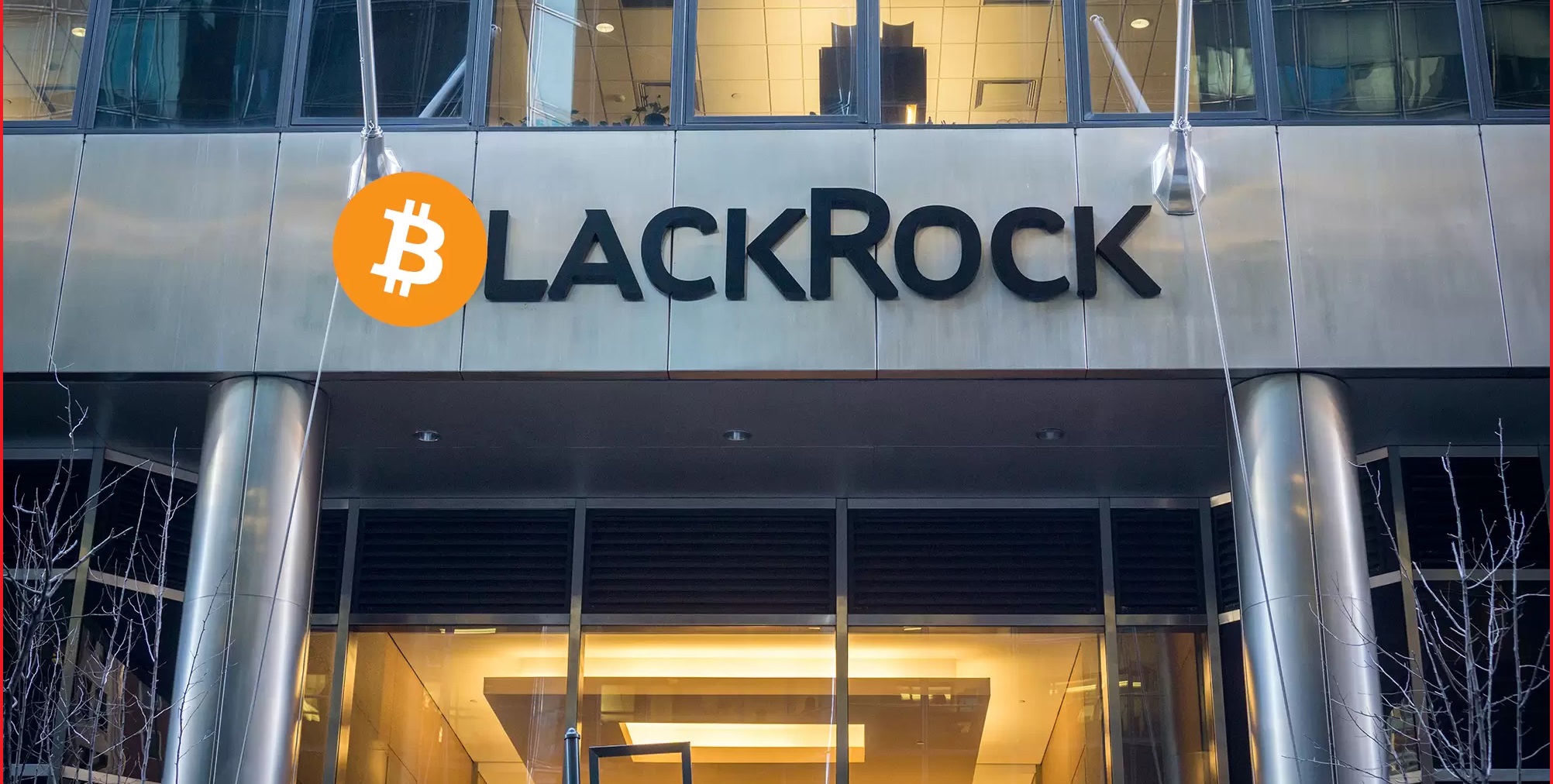
In Bitcoin ETF, The Old Guards like BlackRock Are Winning The New Sector

1

If you wait for everything to be perfect in the Nigerian market before investing, remember that Warren Buffett is not investing in Nigeria because it is not “perfect” according to his worldview. But any day things become perfect, expect investors like Buffett to come along with truckloads of cash, and if they do come, you may not have a chance.

In the Bitcoin world, the approval of the ETF by the US regulator has removed the veil on Bitcoin, and instead of the pioneers benefiting, the new heavyweights with tons of money are already ruling the ETF tribe.

“Meanwhile, BlackRock, the world’s largest asset manager, has seen a surge of inflows into its bitcoin exchange-traded fund (ETF) since its launch in October 2023. The fund, which tracks the performance of the CME bitcoin futures contracts, has amassed over $1 billion in assets under management (AUM) in less than four months, according to data from ETF.com.

“Meanwhile, the Grayscale Bitcoin Trust (GBTC), the largest and oldest bitcoin investment product, has continued to lose market share and assets. GBTC, which holds physical bitcoins in a trust and issues shares that trade on the over-the-counter market, has seen its AUM drop from $40 billion in September 2023 to $28 billion in January 2024, according to Grayscale’s website.”

Good People, when you pray, be mindful of what you pray for. Yes, when they were asking for regulation, they did not know that if the market was to be fully regulated, that some companies with $trillions under management would pay attention.  Yes, today, BlackRock , which has more money than the world (without it) has arrived, and all those “pioneers” are now imperiled.  

Lesson: never wait for things to be perfect in Nigeria and Africa before taking action, because the day things become perfect, new competitors will emerge.

After A Decade, Bitcoin is trading in the form of an exchange-traded fund

I will ban CBDCs if elected US President in November – Donald Trump

0

In a surprising move, former US president Donald Trump announced that he would ban the creation of central bank digital currencies (CBDCs) if he wins the 2024 election. Trump, who is running for a second term after losing to Joe Biden in 2020, made the statement during a campaign rally.

Trump claimed that CBDCs are a threat to the sovereignty and security of the United States, and that they would enable foreign adversaries to manipulate the global financial system. He also said that CBDCs are part of a “globalist agenda” to undermine the US dollar and its role as the world’s reserve currency.

“CBDCs are a disaster for America. They are a tool for China, Iran, and other enemies to weaken our economy and our national security. They are a Trojan horse for the radical left to impose their socialist policies on us. They are a nightmare for our freedom and our privacy. We cannot allow them to happen. If I am elected president again, I will ban them immediately and protect the American people from this danger,” Trump said.

Trump’s stance on CBDCs is in stark contrast to the current administration, which has been exploring the possibility of issuing a digital dollar in collaboration with the Federal Reserve. The Biden administration has argued that a digital dollar would enhance financial inclusion, efficiency, and innovation, and that it would help the US maintain its leadership in the digital economy.

However, Trump dismissed these arguments as “fake news” and “propaganda”. He said that a digital dollar would only benefit the “big tech” companies and the “deep state” bureaucrats, who would use it to spy on and control the American people. He also said that a digital dollar would make it easier for the government to impose negative interest rates, inflate the money supply, and confiscate people’s savings.

Trump’s comments drew mixed reactions from his supporters and opponents. Some of his loyal fans cheered his anti-CBDC stance, while others expressed confusion and skepticism. Some of his critics accused him of being ignorant and paranoid, while others warned that his proposal would isolate the US from the rest of the world and hurt its competitiveness.

CBDCs are digital versions of national currencies that are issued and regulated by central banks. They are different from cryptocurrencies, which are decentralized and operate on blockchain networks. Several countries, including China, Sweden, and the Bahamas, have already launched or piloted their own CBDCs, while others, such as the European Union, Japan, and Canada, are conducting research and experiments on them.