

The way virtual experiences land on us is different: they’re pre-packaged. They’re brighter, louder, quicker to start, and simpler to re-run. Real life, on the other hand, makes you wait. It includes the time spent traveling, the awkward silences, the poor sound quality, and the messy, unscripted friction of other people. In 2026, the surprise is not that screens are everywhere; it is that many digital moments feel more persuasive than the physical ones they imitate.
This influence does not require science fiction. It grows from familiar human wiring: attention loves novelty, memory prefers clean narratives, and emotion follows what feels immediate. Virtual experiences can be designed to press those buttons reliably, while real experiences often refuse to cooperate. The result is a subtle shift in authority. What happens on a screen can feel like the main event, and what happens offline becomes the supporting act.
Vividness beats truth
The mind is built to respond to what seems present, not to what is objectively important. A short video clip can provoke a stronger response than a long, detailed explanation because it’s experienced as immediate proof. This is the core strength of immersive media: it eliminates distance, pulls background details into sharp focus, and makes the person watching feel like they are there.
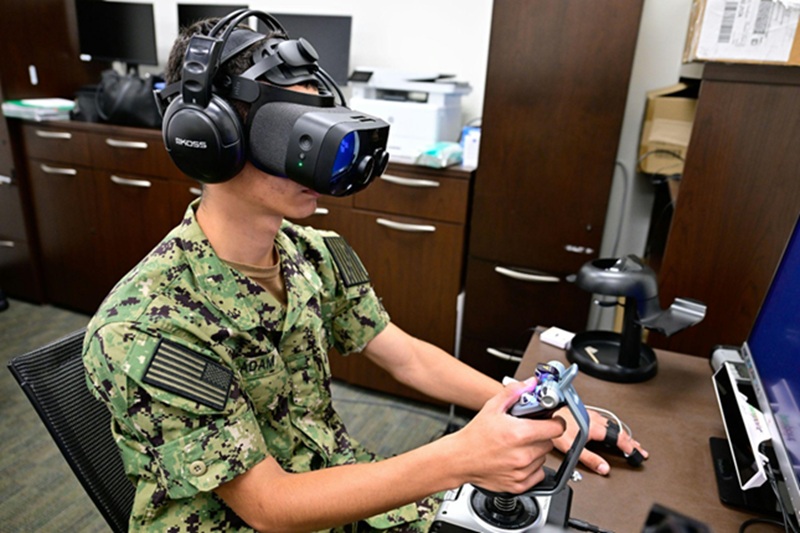
VR, in particular, is powerful because it creates a strong sense of immediacy, and that feeling of immediacy often drives our emotions and decisions more strongly than what we might call “objective reality.” When a system produces a strong sense of “being there,” people can respond realistically even when they know the environment is simulated. That gap between knowledge and reaction is not a moral failure; it is a feature of perception. Virtual experiences win influence when they create the feeling of proximity that real life cannot always deliver on demand.
Algorithms edit reality
Digital life is not a neutral window. Feeds prioritise what keeps attention, and attention shapes what becomes memorable. A small number of repeated themes can feel like a broad social consensus because the same ideas keep resurfacing.
This is where virtual influence becomes cultural influence. People don’t merely consume content; they inherit a sense of what matters, who is admired, and what counts as normal. In physical communities, variety is forced by geography and chance encounters. Online, variety must be chosen deliberately, because the system is built to remove the need to search.
Control is intoxicating
Virtual experiences offer a kind of control that everyday life rarely grants. You can pause, rewind, fast-forward, mute, leave instantly, and return without apology. Even social interaction becomes adjustable: typed messages can be revised, calls can be ignored, and presence can be simulated with reaction buttons.
Control changes emotional cost. A difficult moment in real life has consequences that linger, while an uncomfortable moment online can be erased with a swipe. That makes virtual spaces attractive not only for entertainment but for identity rehearsal. The person you are online can be polished, consistent, and protected from the randomness that tests you offline.
The match as a live narrative engine
Sport is where virtual influence becomes easiest to see, because a match now has two audiences at once: the crowd watching the pitch and the crowd watching the data. Live odds, lineup alerts, and short-form highlights create a parallel storyline that can feel more urgent than the actual game.
A tournament night is full of micro-moments that the eye can miss: a full-back collecting a second warning, a striker losing duels, a coach preparing a substitution. Fans who browse all betting programs (Arabic: ???? ????? ?????????) often discover that markets price those details immediately, and the speed itself becomes part of the entertainment. Pre-match prices shift as lineups are confirmed, and in-play lines can move after one spell of sustained pressure. A disciplined habit keeps it readable: choose markets that match what you can observe, then treat every new line as a question, not a command. When the second screen runs this smoothly, the virtual layer doesn’t accompany the match; it competes with it.
Avatars and handles
The digital self is not just a profile picture. It is a performance that can reshape mood and decision-making. People behave differently when they feel watched, when they feel anonymous, or when they adopt a stylised version of themselves.
Research on the “Proteus effect” suggests that the characteristics of an avatar can influence the user’s behaviour, even without explicit social feedback. The point is not that everyone becomes a different person online; it is that identity is more flexible than it feels. Virtual spaces provide endless cues that nudge behaviour in small steps. Over time, those nudges can feel like personality.
Convenience turns influence into identity
Virtual experiences become dominant when they are not merely engaging but effortless. Once daily life depends on the same device for messaging, payments, travel, sport, and entertainment, the boundary between “online time” and “real time” becomes blurred. ITU figures show that about 74% of the world’s population is online in 2025, which means most systems now assume connectivity as the default condition.
This matters because habit is the strongest form of persuasion. A person may not consciously prefer virtual moments, yet still spend more time in them because access is immediate and the rewards are frequent. Matchdays reveal the pattern clearly: the same thumb that checks a message checks a lineup, checks a highlight, then checks a price.
The easiest doorway is the common one
The most influential platforms are not always the most innovative. They are the ones that reduce friction: fewer steps, faster load times, and interfaces built for quick decisions. Virtual influence grows when participation feels natural, not technical.
That’s why a phrase like download MelBet (Arabic: ????? melbet) shows up in everyday search behaviour around big sporting moments. A fan wants a straightforward route to follow odds, track live markets, and keep the match in view without juggling multiple apps. Convenience becomes a kind of trust, because repetition makes the interface feel familiar even when the event is unpredictable. In that loop, the virtual layer tightens its grip: the screen becomes the place where the match is understood, not merely watched.
Real life can still win, but it has to be chosen
Virtual experiences influence us more than real ones because they are engineered to be vivid, controllable, and constant. They deliver emotion without travel, community without geography, and identity without the same level of risk. Real life remains richer, but it is slower, messier, and harder to curate.
The practical response is not nostalgia; it is strategy. Treat digital experiences as designed environments that shape behaviour, then set boundaries that protect attention. When the screen stops being the default and becomes a deliberate choice, the physical world regains its weight.