DD
MM
YYYY

PAGES

DD
MM
YYYY

spot_img

PAGES

Home Blog

Trump Administration Plans Ban on New Chinese Data Center Components to Secure U.S. AI Infrastructure

0

The Trump administration is preparing new restrictions that would prohibit imports of new Chinese-made optical transceivers used in U.S. data centers, escalating Washington’s efforts to secure critical artificial intelligence infrastructure and reduce reliance on Chinese technology in strategic sectors.

According to Reuters, the Federal Communications Commission is drafting a measure that would block imports of new models of Chinese optical transceivers, networking components that transmit data through fiber-optic cables at extremely high speeds inside data centers that power AI training and cloud computing.

The proposal, which has not been previously reported, is expected to be published later this year if approved. However, the sources cited by Reuters cautioned that the FCC could still revise or abandon the plan before implementation.

The move represents the latest step in the Trump administration’s broader efforts to prevent Chinese technology from becoming deeply embedded in America’s AI supply chain, where officials fear it could create long-term national security vulnerabilities.

Optical transceivers are essential components of modern data centers, enabling ultra-fast communication between thousands of servers and AI processors.

As investment in AI infrastructure accelerates, U.S. officials are increasingly scrutinizing every layer of the hardware stack, extending beyond advanced semiconductors to include networking equipment that keeps massive AI clusters connected.

The proposed restrictions are intended to reduce the risk that Chinese-made networking equipment could be used to steal sensitive data, introduce malicious software or disrupt the operation of facilities that host advanced AI models.

“Transceivers definitely pose a risk,” said Divyansh Kaushik, an AI policy expert at Beacon Global Strategies.

“As the data center buildout scales up, you want to make sure the data center supply chain is secure from the get-go.”

The U.S. national security policy treats AI infrastructure as critical infrastructure comparable to telecommunications networks or power grids.

China Warns of Retaliation

China criticized the reported proposal, warning that it would respond if its interests were harmed. A spokesperson for the Chinese embassy in Washington urged the United States to “heed the objective and rational voices of the business communities in both countries” and “stop smearing Chinese companies and threatening them with sanctions.”

The embassy added that “China will take all necessary measures in response to any action that causes material harm to its interests.”

The latest tensions come even as Washington and Beijing have sought to stabilize parts of their economic relationship following last year’s easing of trade tensions.

Officials involved in the proposal are reportedly determined to avoid repeating what many in Washington consider the Huawei experience.

During previous administrations, equipment from Huawei Technologies became deeply integrated into U.S. telecommunications infrastructure before national security concerns prompted extensive efforts to remove it.

Replacing Huawei equipment ultimately proved costly and time-consuming, amplifying the view among U.S. policymakers that potential security risks should be addressed before foreign technology becomes entrenched. The proposed restrictions on optical transceivers mirror that preventive approach by targeting components before they become more deeply embedded in rapidly expanding AI data centers.

Chinese Manufacturers Could Be Hardest Hit

A ban would primarily affect Zhongji Innolight, one of the world’s largest suppliers of optical transceivers. According to Counterpoint Research, Innolight controls approximately 27% of the global data center transceiver market, making it the industry’s largest supplier.

The company was added to the Pentagon’s list of alleged Chinese military-linked companies in June, a designation that often precedes broader U.S. restrictions, although it does not itself impose sanctions.

Industry research cited by Reuters indicates that roughly 90% of Innolight’s revenue is generated outside China, underscoring its importance to global cloud infrastructure providers.

Analysts expect the restrictions to increase costs for major U.S. cloud operators, including Amazon Web Services, by limiting access to one of the industry’s largest hardware suppliers. American manufacturers including Coherent and Lumentum Holdings are expected to benefit from any shift away from Chinese suppliers.

However, analysts note that neither company currently has sufficient manufacturing capacity to fully replace Chinese production.

A report by the Foundation for American Innovation concluded that while U.S. firms produce competitive technologies, scaling output quickly enough to substitute for Chinese suppliers would present a significant challenge.

The proposed action would continue the FCC’s aggressive use of its Covered List, a national security mechanism created by Congress to restrict future imports and sales of equipment produced by companies deemed to pose security risks.

In recent months, the regulator has expanded restrictions beyond telecommunications equipment to include Chinese drones, networking routers, industrial robots and power inverters.

According to Reuters, the optical transceiver proposal would follow a similar approach by prohibiting imports of new Chinese models while allowing many non-Chinese manufacturers to continue introducing new products into the U.S. market.

The initiative also reveals the FCC’s growing role in U.S. technology policy. Reuters reported earlier this year that the U.S. Department of Commerce paused several planned restrictions on Chinese technology imports after a trade détente was reached with Beijing last October, including measures affecting data center equipment.

The FCC has since emerged as one of the administration’s most active agencies in limiting Chinese technology, particularly after a Supreme Court ruling in June strengthened President Donald Trump’s authority over certain independent regulatory agencies.

That shift has enabled the commission to pursue a series of national security-related restrictions independently of broader trade negotiations.

However, the proposed restrictions signal that Washington’s technology competition with Beijing is expanding beyond semiconductors into the broader infrastructure underpinning artificial intelligence. While export controls have largely focused on limiting China’s access to advanced AI chips, the latest proposal targets the networking hardware that enables those processors to operate at scale.


OpenAI Rebuts Apple’s Trade Secrets Lawsuit, Says Internal Emails Undercut Key Allegations

0

The legal dispute between OpenAI and Apple intensified on Tuesday after OpenAI publicly rejected Apple’s trade secrets lawsuit, accusing the iPhone maker of filing a complaint riddled with factual inaccuracies and releasing email exchanges that it says undermine several of Apple’s central allegations.

In a sharply worded blog post, OpenAI described Apple’s lawsuit as a “careless, aggressive and oddly personal lawsuit,” explaining that the company has misrepresented key events surrounding its contacts with OpenAI and former Apple employees.

The latest exchange marks a significant escalation in what has become one of Silicon Valley’s most closely watched legal battles, highlighting growing tensions between two companies whose relationship has deteriorated as competition in artificial intelligence expands beyond software into hardware and consumer devices.

Apple filed suit in July, accusing OpenAI of engaging in a “coordinated pattern of misconduct at an institutional level” to obtain confidential information and trade secrets.

Among its allegations, Apple claimed that:

  • A former Apple employee exploited an authentication vulnerability before joining OpenAI.
  • OpenAI encouraged Apple engineers to bring proprietary hardware to job interviews.
  • Senior OpenAI executives fostered a culture that tolerated such conduct.
  • OpenAI ignored Apple’s attempts to raise concerns earlier this year.

OpenAI has denied each of those allegations.

In Tuesday’s response, the AI company noted that Apple had made several factual errors before filing suit and said documentary evidence contradicts portions of Apple’s complaint.

A central part of OpenAI’s rebuttal concerns Apple’s assertion that it unsuccessfully attempted to contact the company regarding its concerns.

According to OpenAI, Apple’s outside legal counsel mistakenly sent correspondence to the wrong individual after confusing two people with similar Asian surnames.

“Apple had claimed that they contacted OpenAI in February and that we didn’t respond,” the company wrote.

“They now admit that their outside lawyers emailed the wrong person after confusing two Asian last names only after we brought this to their attention.”

OpenAI also disputed Apple’s claim that its legal team had discussions with OpenAI’s general counsel.

“Apple also claimed they had a discussion with our General Counsel, which they now concede never happened,” the company said.

To support its position, OpenAI published copies of what it says are email exchanges involving Apple’s legal representatives.

The lawsuit also centers on Chang Liu, a former Apple engineer who now works at OpenAI, and former Apple executive Tang Tan. Apple alleges OpenAI improperly benefited from confidential information allegedly taken by Liu.

OpenAI counters that Apple employees themselves continued contacting Liu after he departed from the company. According to messages released by OpenAI, former Apple colleagues asked Liu to help locate files, answer technical questions, and assist with file transfers after he had already left the company.

OpenAI argued that the communications demonstrate an internal access management problem rather than any misconduct by Liu.

“This is a common issue with Apple which is caused by them failing to properly manage system access when people leave,” OpenAI said.

The company added that former employees may retain access to company files even when they neither seek nor expect such access.

The legal battle comes as competition between major technology companies increasingly extends beyond AI models into consumer hardware and integrated AI ecosystems. Relations between Apple and OpenAI have become more strained following OpenAI’s expansion into AI-powered devices and its recruitment of several prominent former Apple executives.

Among the most notable hires is Jony Ive, Apple’s longtime design chief, whose collaboration with OpenAI on next-generation AI hardware has intensified competitive pressures between the companies.

Across Silicon Valley, competition for elite AI engineering talent has led to aggressive legal battles over trade secrets, intellectual property and employee mobility.

The lawsuit represents an effort by Apple to protect proprietary technology and reinforce safeguards around confidential engineering work as AI becomes central to future consumer products. But by publicly rebutting the allegations, OpenAI appears to be aiming at defending its reputation at a time when it is expanding relationships with hardware partners, enterprise customers and government agencies.

Amazon’s Historic $3 Trillion Market Cap Reflects Investor Confidence in AI

0

Amazon has reached a historic financial milestone by surpassing a $3 trillion market capitalization for the first time, joining an exclusive group of the world’s most valuable publicly traded companies.

The achievement underscores the company’s remarkable transformation from an online bookstore into a global technology powerhouse spanning e-commerce, cloud computing, artificial intelligence, digital advertising, logistics, and entertainment.

The milestone also reflects growing investor confidence in Amazon’s long-term growth strategy and its ability to capitalize on the rapidly expanding AI economy.

Founded by Jeff Bezos in 1994, Amazon has consistently reinvented itself over the past three decades. While its e-commerce business remains a dominant force in global retail, the company’s diversification into high-margin technology services has become the primary driver of its valuation.

Amazon Web Services (AWS), the firm’s cloud computing division, has emerged as one of the most profitable businesses in the world, powering millions of applications and serving enterprises, governments, and startups across nearly every industry.

The recent surge in Amazon’s valuation has been fueled largely by optimism surrounding artificial intelligence. AWS has accelerated investments in AI infrastructure, custom chips, foundation models, and enterprise AI services, positioning itself as a leading provider of cloud-based AI solutions.

As businesses increasingly integrate generative AI into their operations, Amazon stands to benefit from higher demand for cloud computing resources, storage, and machine learning tools.

Beyond cloud computing, Amazon’s retail business has continued to improve operational efficiency. The company has streamlined its logistics network, optimized fulfillment centers, and leveraged automation to reduce delivery times and operating costs.

These improvements have strengthened profit margins while allowing Amazon to maintain its leadership in online shopping. Its advertising business has become one of the fastest-growing digital advertising platforms, generating billions of dollars in high-margin revenue by enabling brands to reach shoppers directly on Amazon’s marketplace.

The $3 trillion milestone reflects broader market enthusiasm for technology companies leading the AI revolution. Investors have increasingly rewarded firms with strong AI strategies, robust cloud infrastructure, and sustainable earnings growth.

Amazon’s combination of recurring cloud revenue, expanding advertising operations, subscription income from Prime, and continued innovation across multiple sectors has made it one of the market’s most attractive long-term investments.

Competition remains intense. Amazon continues to face strong rivals in cloud computing, including Microsoft and Google, while its retail operations compete with traditional retailers and emerging e-commerce platforms.

Regulatory scrutiny has intensified, with governments in the United States and Europe examining the company’s market power, competitive practices, and acquisitions. Despite these challenges, Amazon has demonstrated resilience through continuous innovation and strategic investment.

Amazon’s achievement is more than just a symbolic number. Crossing the $3 trillion threshold signals confidence in the company’s future earnings potential and its central role in the evolving digital economy. It also highlights the growing importance of AI infrastructure, cloud services, and data-driven business models as key drivers of corporate value.

As Amazon enters this new chapter, its ability to sustain growth will depend on continued innovation, disciplined investment, and successful execution across its diverse business segments. While market capitalizations fluctuate with stock prices.

Surpassing $3 trillion represents a defining moment in Amazon’s history and reinforces its position as one of the world’s most influential technology companies. With AI adoption accelerating globally, Amazon appears well-positioned to remain at the forefront of the next wave of technological transformation.

Nigeria Approves $4.5bn NNPC Oil-Backed Refinancing To Strengthen Reserves, Ease Debt Burden

0

Nigeria’s National Economic Council (NEC) has approved a new $4.5 billion oil-backed pre-export financing facility for Nigerian National Petroleum Company Limited (NNPC Ltd.), replacing part of an existing arrangement with a larger and more flexible structure aimed at strengthening the country’s foreign exchange reserves, easing pressure on public finances and creating additional funding for infrastructure.

The new facility, known as Project Gazelle 2, will refinance the remaining $1.5 billion outstanding under the original $3.3 billion Project Gazelle financing arranged in 2023, while unlocking an additional $3 billion in fresh liquidity, according to a statement issued by the Presidency after Monday’s NEC meeting.

The refinancing represents the latest chapter in Nigeria’s growing reliance on crude oil-backed financing, a funding model that has become increasingly prominent since the administration of former President Muhammadu Buhari, as successive governments sought alternative sources of foreign currency amid weak fiscal revenues, declining oil output, foreign exchange shortages and mounting infrastructure needs.

Over the past several years, crude-backed facilities have financed a wide range of government and NNPC priorities, including clearing foreign exchange obligations, refinancing legacy debt, rehabilitating refineries, supporting working capital, stabilizing NNPC’s balance sheet and meeting statutory revenue obligations to the Federation.

One of the most significant facilities was the original Project Gazelle, a $3.3 billion pre-export finance arrangement secured in 2023. The transaction played a key role in helping the Federal Government clear a substantial portion of the Central Bank of Nigeria’s inherited foreign exchange backlog owed to businesses, airlines and other investors, a move that formed part of broader reforms to restore confidence in Nigeria’s foreign exchange market after President Bola Tinubu assumed office.

The newly approved Project Gazelle 2 effectively extends and restructures that financing under more favorable terms while providing additional liquidity to support infrastructure spending and strengthen external reserves.

Finance Minister Taiwo Oyedele told the council that the revised financing terms reduce the amount of crude pledged as collateral by 12.5%, lowering daily committed volumes to approximately 78,750 barrels per day from 90,000 barrels per day under the previous agreement.

“The new terms of the facility are more favorable than the original facility,” Oyedele said, noting that the lower crude commitment would “free up resources for strategic national priorities while improving Nigeria’s financing structures.”

The revised structure is expected to provide greater operational flexibility for NNPC by reducing future crude delivery obligations while simultaneously expanding access to capital.

Crude-Backed Borrowing Has Expanded Over Several Years

Project Gazelle is only one of several oil-backed financing arrangements accumulated by NNPC in recent years. In 2024, the national oil company sought another $2 billion syndicated crude-backed loan, known as Project Leopard, to stabilize its finances and fund investments in new upstream infrastructure aimed at increasing crude oil production.

The company said the facility was designed to restore financial stability while supporting investment in oil production assets needed to reverse years of declining crude output.

The financing followed a series of earlier transactions.

NNPC secured a $935 million crude-backed loan in 2020, collateralized with 30,000 barrels per day, which was fully repaid by September 2023. A second $635 million facility was also completely repaid during the same period. The remaining exposure from that financing programme is the Project Eagle Export Funding Subsequent 2 Debt, a $900 million facility arranged in 2023 and secured against 21,000 barrels per day of crude production.

Repayment on the Eagle facility began in June 2024 and is scheduled to run through 2028. According to NNPC’s 2024 financial statements, the outstanding balance stood at approximately N1.1 trillion as of December 2024, making it one of the company’s largest remaining forward-sale obligations.

Beyond crude-backed loans, NNPC also carries sizeable obligations under other commodity-linked financing structures. One of these is the incremental gas supply financing agreement with Nigeria LNG Limited (NLNG), under which NLNG advanced approximately N772 billion against future gas deliveries.

By the end of 2024, gas worth N535 billion had been supplied under the arrangement, while NLNG had recovered N312 billion, leaving gas valued at roughly N460 billion yet to be delivered. Financing charges of N12 billion accumulated during the period, bringing the outstanding balance to approximately N472 billion.

The company’s refinery rehabilitation programme also relies heavily on commodity-backed financing. Under Project Yield, the financing vehicle supporting the rehabilitation of the Port Harcourt Refinery, outstanding drawdowns reached approximately N1.4 trillion at the end of 2024.

The arrangement requires NNPC to deliver refined-product-equivalent volumes of approximately 67,000 barrels per day, with repayments scheduled to begin after a two-and-a-half-year moratorium that expires in 2025.

Significant Share Of Nigeria’s Crude Committed To Debt Servicing

The expansion of commodity-backed financing has increasingly drawn attention from analysts because of the growing share of Nigeria’s crude production committed to servicing debt before revenues flow into government coffers.

Analysis of disclosures contained in NNPC’s 2024 audited financial statements, together with official production figures from the Nigerian Upstream Petroleum Regulatory Commission (NUPRC), indicates that Project Gazelle, Project Yield, Project Leopard and Project Eagle collectively require about 213,000 barrels of crude oil per day.

Assuming those commitments remained unchanged throughout 2025, approximately 77.75 million barrels of crude would have been dedicated to servicing these financing arrangements during the year.

NUPRC data show Nigeria produced 530.41 million barrels of crude oil in 2025. That means roughly 14.66% of the country’s annual crude production was effectively committed to servicing oil-backed financing obligations.

Using the average Bonny Light crude price of $72.08 per barrel in 2025, the volume pledged under those arrangements represents crude worth approximately $5.6 billion.

While oil-backed financing has provided Nigeria with quicker access to foreign currency than conventional borrowing, economists have frequently warned that increasing dependence on future oil production limits fiscal flexibility, particularly during periods of lower production or weaker crude prices.

The refinancing approved by the NEC therefore represents both an effort to improve financing efficiency and a recognition of the need to optimize a complex portfolio of commodity-backed obligations.

Franklin Templeton Joins Canton Network as Super Validator, Boosting Institutional Blockchain Adoption

0

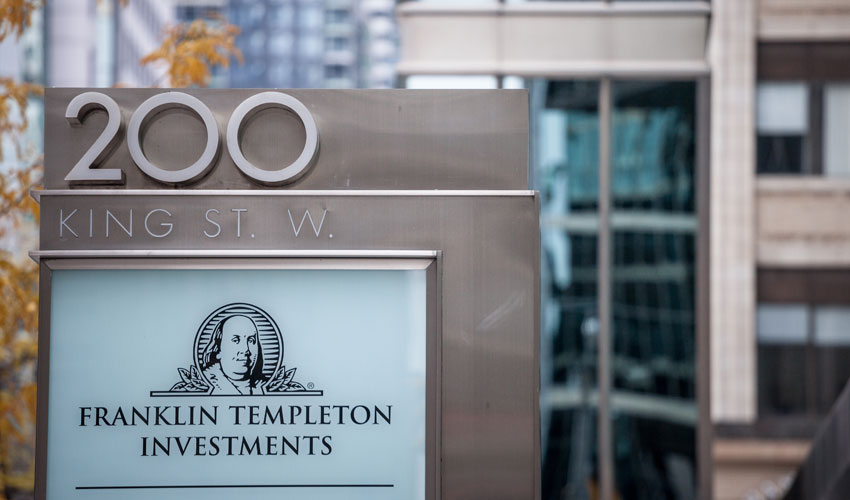
Franklin Templeton has taken a significant step in its blockchain strategy by joining the Canton Network as a super validator, reinforcing the growing convergence between traditional finance and decentralized financial infrastructure.

The move highlights the asset manager’s commitment to tokenization, blockchain-based settlement, and the modernization of capital markets.

As one of the world’s largest investment firms, Franklin Templeton’s participation adds institutional credibility to the Canton Network and signals increasing confidence in permissioned blockchain ecosystems designed for regulated financial institutions.

The Canton Network was created to address many of the challenges that have limited institutional adoption of blockchain technology. Unlike public blockchains that prioritize openness and decentralization, Canton focuses on privacy, compliance, and interoperability.

Financial institutions can transact securely while maintaining control over sensitive data, making the network particularly attractive for banks, asset managers, custodians, and other regulated entities.

The addition of Franklin Templeton as a super validator strengthens the network’s governance by bringing another globally recognized financial institution into its validation framework.

A super validator plays a crucial role in maintaining the security, integrity, and reliability of the blockchain. Validators are responsible for verifying transactions, participating in consensus, and ensuring that the ledger remains accurate and tamper-resistant.

Super validators typically carry greater responsibility in network governance and operational reliability, helping establish trust among institutional participants that rely on the blockchain for mission-critical financial operations.

Franklin Templeton has emerged as one of the most active traditional asset managers embracing blockchain technology.

Over the past several years, the firm has launched blockchain-based money market funds, experimented with tokenized securities, and invested heavily in digital asset infrastructure. Its blockchain initiatives demonstrate a belief that tokenization can improve operational efficiency, reduce settlement times, lower costs, and expand access to financial products.

Joining the Canton Network aligns naturally with these long-term objectives. As financial markets increasingly explore tokenized bonds, funds, equities, and other real-world assets, institutions require secure infrastructure capable of supporting regulated transactions at scale.

Canton was specifically designed to meet these demands by allowing multiple institutions to interact while preserving privacy and regulatory compliance.

The announcement also reflects a broader trend within global finance.

Major banks, asset managers, custodians, and financial technology providers are increasingly collaborating on shared blockchain infrastructure instead of building isolated systems.

Networks such as Canton aim to create interoperable financial ecosystems where tokenized assets can move seamlessly across institutions without sacrificing confidentiality or regulatory oversight.

Franklin Templeton’s participation demonstrates growing institutional confidence in blockchain technology beyond cryptocurrencies. Rather than focusing solely on speculative digital assets.

Many financial firms are now investing in blockchain infrastructure that can transform traditional financial operations. Tokenized assets, programmable settlement, automated compliance, and near-instant transaction processing are becoming central themes in the evolution of capital markets.

The move could accelerate institutional adoption of the Canton Network by encouraging additional financial organizations to participate. Large asset managers often influence industry standards, and Franklin Templeton’s involvement may provide reassurance to firms that have been evaluating blockchain solutions.

Franklin Templeton’s decision to become a super validator represents more than a technical milestone. It underscores the accelerating integration of blockchain technology into mainstream finance and reinforces the industry’s shift toward tokenized, programmable, and interconnected financial markets.

As more global institutions join networks like Canton, blockchain is increasingly evolving from an experimental technology into a foundational layer for the future of regulated financial services.

CASHCAT Reclaims Top Meme Position on Robinhood Chain as Rare Moonbird Card Fetches $25,000 on OpenSea

Meanwhile, the NFT and meme coin ecosystem continues to evolve at a rapid pace, with new milestones highlighting renewed investor enthusiasm for digital collectibles and community-driven assets.

Two notable events have recently captured the attention of the Web3 community: CASHCAT reclaiming the number one meme position on Robinhood Chain and a rare 1/1 Moonbird card selling for $25,000 on OpenSea.

These developments underscore the continued strength of digital ownership, speculative markets, and the growing appeal of blockchain-native culture.

CASHCAT’s return to the top spot among meme projects on Robinhood Chain reflects the resilience of community-led tokens. Meme coins have long been driven by social engagement rather than traditional fundamentals, and their success often depends on active communities, viral marketing, and sustained developer support.

By reclaiming the leading position, CASHCAT demonstrates that investor confidence can quickly return when a project maintains visibility and momentum. Robinhood Chain has emerged as an increasingly active blockchain ecosystem, attracting users interested in low-cost transactions and decentralized applications.

As more meme projects compete for user attention, ranking first is more than a symbolic achievement—it often translates into greater liquidity, increased trading volume, and wider community participation.

The milestone signals renewed optimism and could encourage further ecosystem development, including partnerships, community events, and expanded utility. The NFT market has produced another headline-worthy transaction.

A unique one-of-one Moonbird card was sold for $25,000 on OpenSea, demonstrating that demand for rare digital collectibles remains alive despite broader fluctuations in NFT trading activity.

One-of-one assets occupy a special place within NFT markets because their exclusivity creates scarcity that cannot be replicated, making them especially attractive to collectors seeking unique digital ownership.

The Moonbirds brand has established itself as one of the most recognizable NFT collections, supported by a dedicated community and an evolving ecosystem. High-value sales such as this one reinforce the perception that premium NFTs continue to command significant prices when rarity, artistic appeal, and community reputation align.

While the broader NFT market has experienced periods of declining volumes compared with its peak years, standout assets continue to attract buyers willing to pay substantial premiums.

The coexistence of these two developments illustrates the diversity of today’s blockchain economy. Meme coins and NFTs often appeal to overlapping communities, yet they represent different forms of digital participation.

Meme tokens emphasize community engagement, speculation, and rapid market movements, while NFTs focus on verifiable ownership, rarity, and creative expression. Both sectors benefit from strong online communities and the transparent nature of blockchain technology.

These milestones suggest that digital culture remains a powerful force within the crypto industry. Community enthusiasm, social media engagement, and collector demand continue to shape valuations in ways that differ from traditional financial markets.

As blockchain ecosystems mature, projects capable of maintaining active communities while delivering consistent innovation are more likely to sustain long-term relevance.

Both CASHCAT and Moonbirds will face the challenge of maintaining momentum in an increasingly competitive Web3 landscape. For meme projects, sustained engagement and ecosystem growth will be essential.

For NFT collections, continued creator support, utility, and collector confidence will remain key drivers of value. These latest achievements demonstrate that, even amid changing market conditions, compelling digital assets and passionate communities continue to define the evolving world of decentralized finance and digital collectibles.