DD
MM
YYYY

PAGES

DD
MM
YYYY

spot_img

PAGES

Home Blog

Fortune Tiger Slot Guide: Features, Symbols and Gameplay Explained

1

Fortune Tiger is a PG Soft slot with a 3×3 reel grid and five fixed paylines. Its gameplay centres on regular line wins, a Tiger Wild, random respins and an x10 multiplier for a full-screen winning combination.

The Fortune Tiger game uses a Chinese prosperity theme dominated by red, gold and traditional lucky symbols. Its compact layout makes combinations easy to track, while the random Fortune Tiger Feature adds respins without introducing a separate bonus round.

What Is Fortune Tiger?

PG Soft designed the slot around short, direct rounds rather than a complex bonus structure. Unlike formats associated with Fan Tan evolution, Fortune Tiger uses reel-based slot mechanics: three reels, three rows and five paylines determine standard wins.

The symbol set includes a tiger, gold ingots, jade ornaments, coin bags, red envelopes, firecrackers and oranges. The Tiger is both the highest-paying symbol and the Wild, giving it a direct role in standard combinations and the game’s special feature.

How Fortune Tiger Gameplay Works

Each round begins with a selected stake and one spin of the 3×3 grid. Once the reels stop, the game checks the five paylines and awards any qualifying combinations according to the paytable. The Wild substitutes for regular symbols where applicable.

How to Start a Round

The basic Fortune Tiger gameplay is straightforward, but it helps to understand what happens at each stage of a spin. The player controls the stake and starts the round, while the game determines the reel positions and checks the resulting combinations against the five fixed paylines. No additional action is required during a standard spin.

The sequence works as follows:

  1. Select the available stake.
  2. Start the spin.
  3. Wait for the three reels to stop.
  4. Check paylines and any activated special feature.

A normal round ends after the result is calculated. If the Fortune Tiger Feature activates, the game moves into its respin mechanic before determining the final payout.

Fortune Tiger Symbols and Their Values

Fortune Tiger uses six regular paying symbols and one Tiger Wild. Read more details in the game’s paytable when checking payouts, since symbol values are tied to the selected stake.

The main Fortune Tiger symbols are:

  • Tiger Wild: 250x for three and substitutes for regular symbols.
  • Gold Ingot: 100x for three.
  • Jade Ornament: 25x for three.
  • Bag of Coins: 10x for three.
  • Red Envelopes: 8x for three.
  • Firecrackers: 5x for three.
  • Orange: 3x for three.

The Tiger has the greatest influence on combinations because it combines the highest individual value with Wild functionality. Lower-value symbols appear in the same payline system and can also participate in the special mechanic.

Main Features of Fortune Tiger

The Fortune Tiger Feature can activate randomly during a spin. When it starts, the game selects one regular paying symbol. Reel positions can then contain that symbol, a Wild or an empty space.

Selected symbols and Wilds that land remain locked while the other positions respin. A new matching symbol or Wild keeps the sequence going. The feature stops when a respin adds no new qualifying symbols.

There is no conventional Free Spins round or Scatter-triggered bonus. The respin mechanic is the main special feature and operates directly on the standard 3×3 grid.

Multipliers and Special Mechanics

The Fortune Tiger multiplier reaches x10 when all nine reel positions form winning combinations. This is effectively the slot’s full-screen reward mechanic.

Wild symbols can substitute for the symbol selected by the respin feature, helping fill additional grid positions. The maximum advertised win is 2,500x the total stake.

RTP, Volatility and Betting Options

The official Fortune Tiger RTP is 96.81%, representing the game’s theoretical long-term return. Individual sessions can produce results well above or below this percentage.

PG Soft classifies Fortune Tiger volatility as medium. This places the game between low-volatility slots focused on smaller, more frequent payouts and high-volatility titles built around less frequent but potentially larger results.

The official configuration uses bet sizes of 0.05, 0.5 and 5 with bet levels from 1 to 10. PG Soft lists a default betting range of €0.25 to €250 per round. Available stakes can differ by operator, currency or jurisdiction.

What Players Should Know Before Playing

Fortune Tiger is built around random outcomes rather than patterns between previous spins. A sequence without the Fortune Tiger Feature does not increase the certainty that it will appear on the next round.

Key facts to keep in mind are:

  • the grid contains three reels and three rows;
  • standard wins use five fixed paylines;
  • the Tiger functions as the Wild;
  • the random feature uses locked symbols and respins;
  • a full-screen winning combination can receive the x10 multiplier;
  • RTP and volatility describe the game’s mathematical model, not the outcome of an individual spin.

Understanding these rules makes it easier to read each result and distinguish standard line wins from feature-driven payouts. Changing the stake affects the amount wagered, but it does not guarantee activation of the multiplier or respin feature.

Key Points to Remember

The Fortune Tiger slot keeps its mechanics concentrated around a small grid, seven main symbols and one random respin feature. The Tiger Wild is particularly important because it contributes to both ordinary paylines and feature combinations.

The 96.81% RTP, medium volatility and 2,500x maximum win describe the game’s mathematical profile. They do not provide a way to predict the next spin.

Conclusion

Fortune Tiger is a compact 3×3 slot with five paylines, a Tiger Wild, random respins and an x10 full-screen multiplier. Its special mechanics remain within the base game rather than relying on a separate Free Spins round. Understanding the symbols, respin rules and betting settings is enough to follow how each round is calculated.

Poker Hand Rankings from Highest to Lowest

0

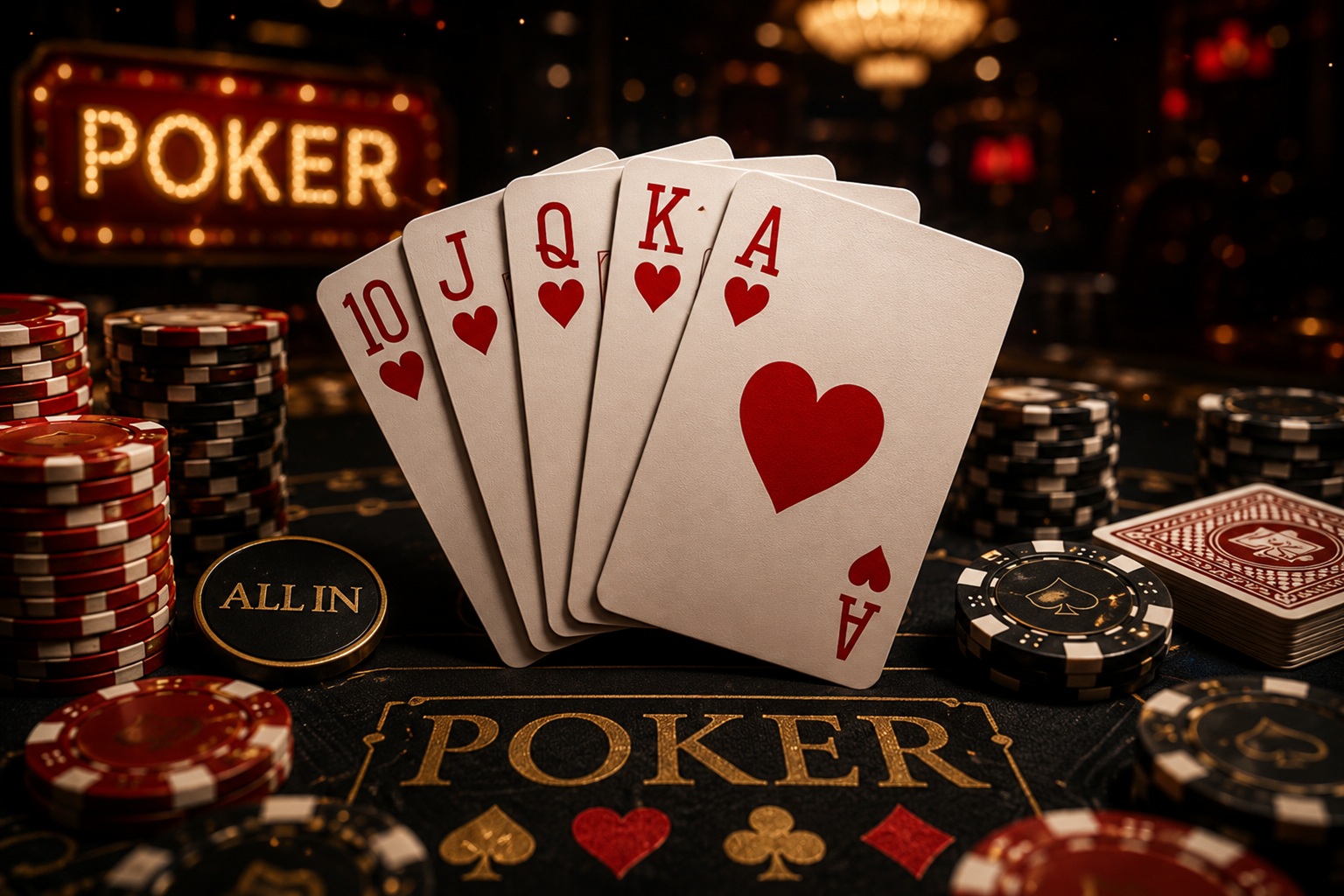
Every poker hand is ultimately decided by the same principle: the player with the strongest five-card combination wins the pot at showdown. Knowing how these combinations are ranked is therefore one of the first skills any poker player needs to master. From a simple High Card to the exceptionally rare Royal Flush, each hand occupies a fixed position in the hierarchy.

This guide explains all standard poker hands in order, shows how each combination is formed and covers the rules used to compare equal hand types. It also looks at kickers, ties, the role of the Ace and the best-five-card rule in Texas Hold’em, giving you everything you need to read poker hands correctly.

Poker Hand Rankings from Highest to Lowest

This order holds wherever the game is dealt, from a casual home game to the online rooms where players now play poker with crypto alongside standard deposits. Here is the full ranking, from strongest to weakest:

  1. Royal Flush
  2. Straight Flush
  3. Four of a Kind
  4. Full House
  5. Flush
  6. Straight
  7. Three of a Kind
  8. Two Pair
  9. One Pair
  10. High Card

Each entry on this list is a specific five-card pattern, not just a name, and the gaps between them are exactly where new players lose track of hand strength.

Reading them quickly becomes automatic with repetition, and the best poker room to build that habit offers free play-money tables where early mistakes cost nothing.

Royal Flush and Straight Flush

Four of a Kind, Full House and Flush

Straight, Three of a Kind and Two Pair

One Pair and High Card

How to Compare Poker Hands

Comparing two hands starts with hand type: a Flush always beats a Straight, no matter what cards make it up, since hand type is ranked before anything else. Once both players share the same hand type, rank decides it next, meaning the value of the cards that form the pattern itself; a Full House of Kings over a pair beats a Full House of Queens over a pair regardless of what that smaller pair holds. Between two pairs of Aces, A-A-8-6-3 beats K-K-Q-10-7 for the same reason, since Aces simply outrank Kings. If the hand type and the main rank are both identical, the kicker, meaning the unmatched side cards, settles it by comparing highest to highest until the tie breaks or genuinely holds.

Important Poker Hand Ranking Rules

A few rules around poker card rankings cause more confusion than everything else combined, so they are worth locking down early:

  • All four suits carry equal value; no suit outranks another in standard poker.
  • An Ace can play high, completing A-K-Q-J-10, or low, as the bottom card of A-2-3-4-5.
  • A-2-3-4-5, often called the wheel, is the lowest straight in the game.
  • When hand types tie, kickers, the unmatched cards, decide who wins.
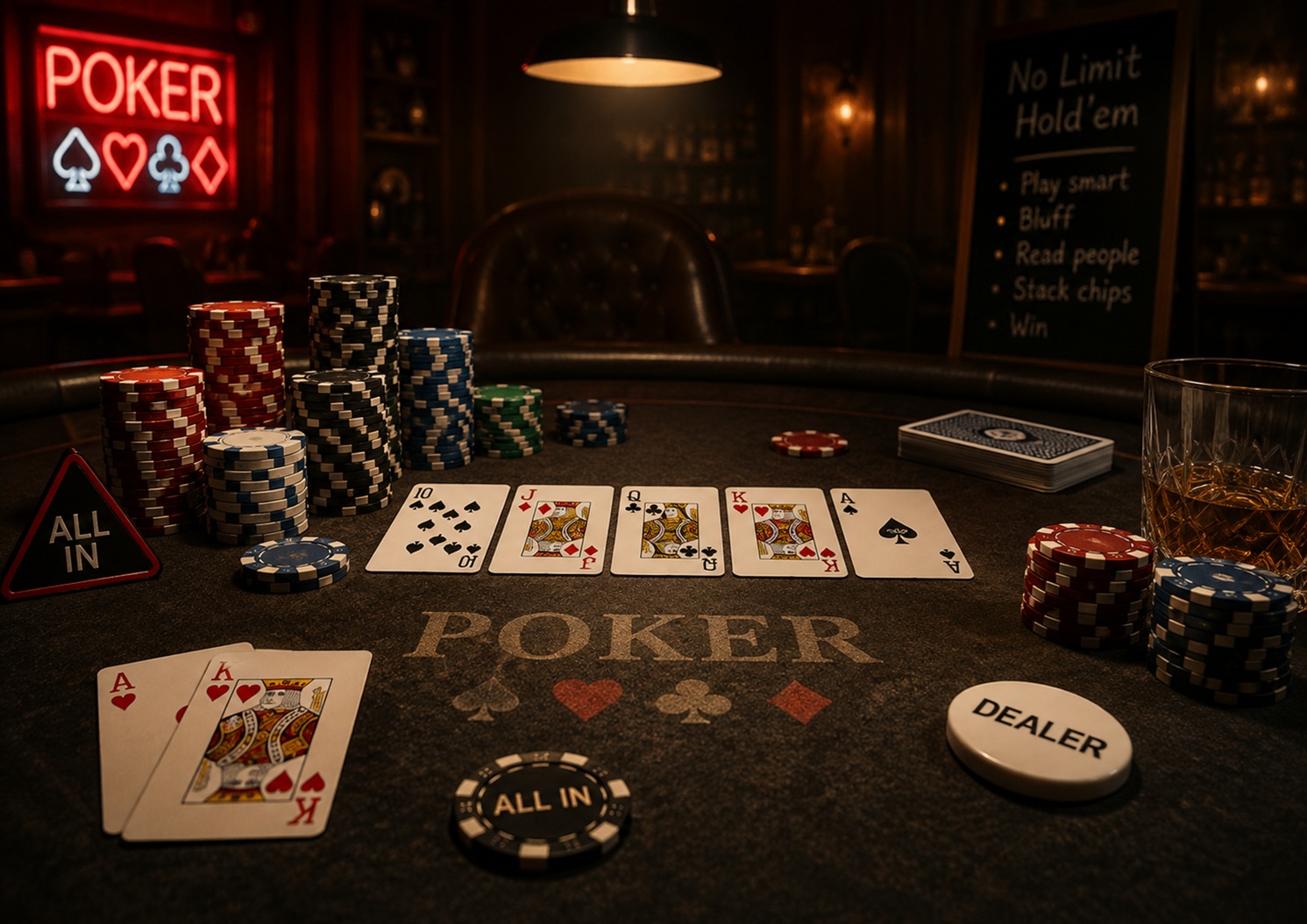
  • In Texas Hold’em, only the best five-card combination from your hole cards and the board counts as your final hand.

These rules apply consistently at showdown and can often determine the winner when two players appear to have very similar hands. Understanding them also prevents common errors when reading the board, particularly when an Ace, shared community cards or kickers are involved.

Common Mistakes When Reading Poker Hands

New players mix up a Straight and a Flush more than any other pair of hands, even though one is about sequence and the other about suit, and neither requires both at once. Misreading the Ace causes just as much trouble, whether by forgetting it can anchor the low end of A-2-3-4-5 or by trying to use it mid-sequence in something like Q-K-A-2-3, which is not a valid straight at all. Kickers get ignored constantly too, especially in Two Pair and One Pair situations, where the whole result can hinge on a single unmatched card. The last common error shows up when comparing two hands of the same type: a small pair with a strong kicker still loses to any higher pair, no matter how weak that pair’s own side cards are.

Poker Hand

Once the ranking order feels automatic, reading the board and comparing hands at showdown stops being guesswork. The hand types never change and the tie-breaking rules stay consistent every time, so the fastest way to improve is simply seeing enough real hands until the recognition becomes instinct.


FAQ

How do you determine which poker hand is stronger in a specific situation?

The strength of a poker hand is determined first by its position in the standard hand hierarchy, from High Card to Royal Flush. If two players hold the same type of hand, the relevant card ranks and, where necessary, kickers are compared. The board and opponents’ actions can also help assess how likely it is that another player holds a stronger combination.

Which poker hands are the most common, and which are the rarest?

Pairs and Two Pair are among the combinations players encounter most frequently. Three of a Kind and Straights are less common, while Flushes, Full Houses, Four of a Kind and Straight Flushes occur considerably less often. A Royal Flush is the rarest standard poker hand and sits at the very top of the ranking.

How are hole cards and community cards used to make a hand in Texas Hold’em?

In Texas Hold’em, each player forms the strongest possible five-card hand from seven available cards: two private hole cards and five community cards. A player may use both hole cards, only one of them or none at all. If the five community cards produce the strongest available combination, the player can simply “play the board.”

What mistakes do beginners commonly make when evaluating poker hands?

Beginners often overestimate hands such as One Pair without considering what stronger combinations the board makes possible. Other common mistakes include misreading Straights and Flushes, overlooking opponents’ potential hands, misunderstanding the role of kickers and incorrectly comparing two hands of the same category.

How does knowing poker hand rankings help with betting, bluffing and folding?

Knowing the rankings provides the foundation for evaluating the relative strength of a hand and deciding whether to bet, raise, call or fold. It also helps players recognise which stronger hands are possible on a particular board. However, hand rankings are only one part of decision-making: position, betting patterns, pot odds and the likely range of an opponent’s hands also matter.

Standard Chartered Expands Hedge Fund Access as Wealthy Clients Seek Protection From Market Volatility

0

Standard Chartered is encouraging wealth management clients to allocate part of their portfolios to hedge funds as investors seek greater diversification and protection from heightened market volatility, a senior executive at the Asia-focused bank told Reuters.

The strategy comes as demand for alternative investments accelerates globally and Standard Chartered seeks to capitalize on the growing pool of affluent and high-net-worth individuals across Asia.

Samir Subberwal, the bank’s global head of wealth solutions, retail products, data and analytics, said hedge funds could provide clients with returns that are less dependent on the direction of traditional equity and bond markets.

“I think this is a good product to offer to clients as something that gives them a little bit of a hedge and stable returns,” Subberwal said.

He said strategies including equity market-neutral funds and multi-strategy funds of hedge funds were particularly suited to investors looking to reduce their exposure to sharp movements in conventional asset classes.

“Hedge fund strategies, such as equity market neutral and multi-strategy fund of hedge funds, have a clear focus on generating positive, lowly correlated absolute returns and can help investors navigate choppy markets,” Subberwal said. “The performance of these hedge funds have actually been quite resilient over the last few years.”

The push comes as hedge funds are attracting larger pools of capital from investors looking beyond the traditional 60/40 portfolio of stocks and bonds.

Global hedge funds generated an average return of 7% in the first six months of 2026, substantially above their 10-year average return of 4.1%, according to a Goldman Sachs note cited by Reuters.

Industry data from Hedge Fund Research showed that hedge fund assets under management increased by a record $409 billion in the second quarter, reaching $5.6 trillion.

The growth suggests that institutional and wealthy investors are increasingly willing to pay for strategies designed to generate returns across different market conditions rather than relying primarily on rising equity markets.

For Standard Chartered, the opportunity is also closely tied to the expansion of its wealth management business. The bank reported better-than-expected first-half profit last month, helped by a 38% increase in wealth income. Demand for investment products increased by double digits, while higher client inflows and an increase in new accounts contributed to the division’s growth.

Market volatility has been an important driver of that demand. Rather than simply prompting investors to retreat to cash, periods of uncertainty have encouraged wealthy clients to seek professional advice and diversify across a broader range of products.

Subberwal said managed investments, including public funds and variable capital companies, structured products and cash equities were among the strongest-performing areas of Standard Chartered’s wealth business.

Hedge funds are now being positioned as another component of that product offering.

“Hedge fund allocations will be a key focus for us,” Subberwal said. “It is about completing the suite of products so we can help clients diversify their portfolios and be able to manage the volatility of markets much better.”

The approach emerges from a broader shift in wealth management as investors confront a combination of elevated asset valuations, geopolitical risks, uncertainty over interest rates and concerns about inflation. Alternative investments can potentially reduce portfolio dependence on conventional markets, although hedge funds also carry higher fees, complex strategies and liquidity restrictions that can make them unsuitable for some investors.

Standard Chartered’s emphasis on hedge funds also fits its geographic strategy. The bank has a significant presence across Asia and the Middle East, regions where the number of affluent investors has expanded rapidly and where demand for sophisticated investment products is increasing.

The challenge for the bank will be to convert that growing wealth pool into sustainable fee income while ensuring that alternative investments are appropriately matched to clients’ risk tolerance, liquidity requirements and investment objectives.

The expansion of private-bank distribution networks such as Standard Chartered’s provides hedge fund managers access to a much wider pool of individual wealth. For the bank, offering these strategies gives clients another way to position portfolios as markets become less predictable.

Against that backdrop, analysts see the growing allocation to hedge funds as representing more than a search for higher returns. It is believed to be a signal of an increasing willingness among wealthy investors to pay for diversification and strategies designed to reduce dependence on the direction of global stock and bond markets.

The Next Generation of Weight Loss Medications: What the Research Pipeline Holds

0

Roughly four in ten American adults were living with obesity between August 2021 and August 2023, according to the Centers for Disease Control and Prevention’s National Center for Health Statistics data brief published in 2024. That figure has reshaped how medicine, industry, and patients think about weight as a chronic condition rather than a matter of willpower. It has also turned the pharmaceutical pipeline for metabolic disease into one of the most closely watched arenas in modern drug development, with a wave of candidates now moving through late-stage trials that could look markedly different from the injectable medicines already on pharmacy shelves.

The first generation of incretin-based therapies proved that pharmacology could produce weight loss on a scale once associated only with surgery. What is emerging next is broader and more varied: molecules that engage two or three hormone systems at once, combinations that pair established mechanisms with older ones revisited, and oral formulations designed to move treatment beyond the weekly injection. Understanding where that research is heading, and why professional guidance grows more important as choices multiply, has become essential context for anyone following the field.

A Market Racing to Catch Up With Demand

The commercial stakes help explain the intensity of the research effort. Grand View Research estimated the global market for GLP-1 agonists used in weight loss at 13.84 billion dollars in 2024 and projected it to reach 48.84 billion dollars by 2030, an annual growth rate above eighteen percent. Analysts tracking the wider incretin category see even larger numbers: J.P. Morgan Global Research has forecast that the broader incretin market, spanning both diabetes and obesity, could reach 200 billion dollars by 2030, while Morgan Stanley has projected the GLP-1 market could more than double to around 190 billion dollars by 2035.

Those projections rest on an assumption that today’s supply constraints ease and that the next wave of medicines expands both the range of patients treated and the settings in which treatment happens. The growth is not simply about selling more of the same product. It reflects an expectation that the pipeline will diversify the toolkit, giving clinicians options tailored to different tolerances, coexisting conditions, and treatment goals. The investment flowing into this space is, in effect, a bet on breadth.

Triple Agonists Push the Ceiling Higher

The most striking development in the pipeline is the arrival of molecules that act on three hormone receptors simultaneously. Retatrutide, an investigational triple-hormone-receptor agonist developed by Eli Lilly, targets the GIP, GLP-1, and glucagon receptors, adding glucagon signalling to the dual mechanism that defined the previous class. In the company’s pivotal TRIUMPH-1 study, reported in 2026, participants receiving the highest study amount lost an average of about twenty-five percent of their body weight at eighty weeks, compared with a small reduction on placebo, according to trial reporting in The Pharmaceutical Journal.

An earlier readout, TRIUMPH-4, examined retatrutide in adults who also had moderate-to-severe knee osteoarthritis and reported average reductions approaching twenty-nine percent alongside relief from joint pain, per Eli Lilly’s trial announcements. The company has indicated that several additional Phase 3 studies are expected to report across obesity, type 2 diabetes, sleep apnoea, liver disease, and cardiovascular outcomes, a breadth of testing that signals how the field increasingly frames obesity as a gateway to a cluster of related conditions rather than an isolated diagnosis.

The glucagon component is what distinguishes this approach. By nudging energy expenditure in addition to curbing appetite and slowing digestion, triple agonists aim to attack weight through more than one lever. That mechanistic ambition is also why researchers stress careful monitoring, since engaging additional pathways can broaden the range of effects a clinician must watch for over the course of treatment.

Amylin Combinations Revisit an Older Hormone

A second major branch of the pipeline pairs the familiar GLP-1 mechanism with amylin, a hormone released alongside insulin that contributes to satiety. Novo Nordisk’s CagriSema combines the amylin analogue cagrilintide with semaglutide, and the company has described it as the first once-weekly combination of GLP-1 and amylin analogues to reach regulatory filing for weight management. In the REDEFINE 1 Phase 3 trial of adults with obesity, CagriSema produced an average weight reduction of roughly twenty-three percent at sixty-eight weeks, outperforming either component used alone, according to results presented and reported through 2025.

Novo Nordisk submitted a New Drug Application to the U.S. Food and Drug Administration in December 2025, with review anticipated during 2026. The company has publicly flagged its broader amylin program as a priority for the next phase of obesity research, suggesting that amylin biology, long understood but under-exploited, may anchor a family of future combinations. For patients, the appeal of pairing complementary hormones lies in the possibility of meaningful results with mechanisms that may be tolerated differently from single-target drugs, though tolerability remains an active question that only large trials can settle.

The Move Toward Oral Options

Perhaps the change most likely to reshape everyday access is the shift from injection to pill. Oral small-molecule candidates could relax the manufacturing and cold-chain constraints that have shadowed the injectable market, potentially widening supply. Eli Lilly’s orforglipron, an investigational once-daily oral GLP-1 receptor agonist, reported an average weight reduction in the range of twelve percent at seventy-two weeks in its ATTAIN-1 Phase 3 trial, with a safety profile the company described as consistent with the established injectable class and gastrointestinal effects that were generally mild to moderate.

Because a dedicated review of oral GLP-1 therapy sits alongside this article, it is enough here to note the strategic significance rather than the fine detail: an effective daily tablet would change where and how treatment is initiated, lowering practical barriers for patients uneasy with needles and simplifying distribution. Taken together with the injectable innovations, oral candidates round out a pipeline that is diversifying not just by mechanism but by format, dosing rhythm, and point of care.

Why the Gains Are Only Half the Story

Impressive trial figures can obscure a harder real-world truth: staying on treatment is difficult, and stopping tends to undo progress. Analyses of insurance and health-record data suggest that a large share of patients, by some estimates between half and roughly two-thirds, discontinue GLP-1 therapy within the first year, with cost, side effects, and coverage gaps repeatedly cited as drivers. A cohort study published in a peer-reviewed medical journal found that nearly half of patients with type 2 diabetes and close to two-thirds without it stopped within twelve months.

The consequences of stopping are well documented. A systematic review in eClinicalMedicine and real-world work from Cleveland Clinic reported that a substantial portion of the weight lost during treatment tends to return within a year of cessation, with one widely cited estimate placing regain at around sixty percent of the lost weight. These patterns reframe the newer, more potent medicines: greater efficacy raises the ceiling on what is achievable, but it does not by itself solve adherence, and it may sharpen the importance of the support structure around a prescription.

How It Works in Practice

As the menu of medicines widens, the decision about which one fits a given person, and how to sustain it, becomes more consequential than the headline efficacy of any single molecule. Matching a candidate to an individual’s medical history, coexisting conditions, tolerance for side effects, and long-term goals is a clinical judgment, not a consumer choice, and it is one that unfolds over months rather than at a single appointment. This is where telehealth platforms built around ongoing oversight have positioned themselves in the treatment landscape.

TrimRx operates as a US telehealth service that pairs eligible patients with licensed providers who evaluate candidacy, personalize a plan, and monitor progress over time, an approach it frames as clinically supervised weight loss rather than a one-time transaction. In a market where new options arrive faster than most patients can reasonably assess, that model reflects a broader industry recognition: intake, screening, and continuity of care may matter as much to real-world results as the pharmacology itself. The value of professional supervision grows precisely because the choices are proliferating, and because the newer mechanisms may carry effects that warrant attentive follow-up.

Personalization, in this framing, is less a marketing promise than an operational necessity. A licensed clinician can weigh whether a triple agonist, an amylin combination, or an oral agent aligns with a patient’s profile, adjust course when side effects emerge, and plan for the transitions that so often derail progress. As the pipeline matures, that navigational role is likely to become more central rather than less.

What Comes Next

The near-term calendar is crowded. Multiple Phase 3 readouts are expected across the leading programs, regulatory decisions on filed combinations loom during 2026, and research is spreading into adjacent conditions from sleep apnoea to liver and cardiovascular disease. Each expansion carries the potential to redefine obesity medicine as metabolic medicine, treating weight as one node in a network of related health outcomes rather than a standalone target.

Several themes are likely to define the coming years. Mechanistic diversity will give clinicians more levers to pull, with single-, dual-, and triple-target agents coexisting. Format diversity, especially the maturation of oral therapy, could broaden who can realistically start and continue treatment. And a growing evidence base on discontinuation and regain will push the field toward durability, prompting more research into how gains are maintained after the most intensive phase of treatment ends. The frontier is no longer only about how much weight a drug can remove, but about how that result can be safely reached and held.

Conclusion

The research pipeline for weight management has moved from a single breakthrough class to a genuine portfolio of approaches, each engaging the body’s metabolic signalling in a different way. Triple agonists are pushing efficacy to new levels, amylin combinations are reviving an underused hormone, and oral candidates promise to change how and where treatment begins. Yet the same evidence that showcases these advances also underscores their limits: potent medicines work best inside a structure of careful evaluation, personalization, and sustained follow-up. As the options multiply, the enduring lesson is that the medicine is only part of the answer, and that decisions of this weight are best made in partnership with a qualified healthcare provider who can tailor and monitor care over the long term.

12 Best Cryptos to Buy in 2026 – Don’t Miss Out On Apeing’s Upcoming Presale Which is Set to 100x at Listing

1

Could the next meme coin breakout be hiding in plain sight? Which digital asset could turn community attention into serious market momentum? The best cryptos to buy in 2026 conversation is becoming increasingly diverse, especially across the meme coin sector. Apeing is attracting attention as an emerging project currently in its whitelist phase. According to the project information provided for this article, its Stage 1 token sale is rumored to begin in the first week of September. That places Apeing among the more closely watched early-stage meme coin stories as the September calendar approaches.

For readers researching the best cryptos to buy in 2026, the Apeing story is particularly interesting because it combines meme culture with planned utility, community engagement, security-focused development, and an upcoming Stage 1 opportunity. The whitelist is currently open, allowing interested participants to receive email updates and instructions. Still, crypto markets are highly speculative, and projected returns should never be treated as guaranteed outcomes.

1. Apeing – Best Cryptos to Buy in 2026 With a September Countdown

Apeing is positioned as the emerging project in this best cryptos to buy in 2026 lineup, with its current narrative centered on community participation, planned utility, security, and an approaching Stage 1. According to the project details supplied for this article, $APEING remains in its whitelist phase, while the token sale is rumored to begin during the first week of September.

For investors studying the best cryptos to buy in 2026, Apeing offers an interesting case study in how a new meme coin attempts to establish a market identity before its broader availability.

The project’s stated Stage 1 price is $0.0001, while the planned listing price is $0.01. At those figures, a hypothetical $5,000 investment at $0.0001 would purchase 50 million tokens. If those tokens reached $0.01, their theoretical value would become $500,000. That would represent a gain, or a 10,000% return, before taxes, fees, slippage, or other costs.

How to Join Whitelist

The whitelist is particularly relevant because the project states that it is the route to Stage 1 eligibility. How to join the whitelist is simple: visit the official APEING website, enter an email in the whitelist section, and confirm the instructions received by email. With September approaching, readers interested in the best cryptos to buy in 2026 can monitor official updates while independently evaluating whether the risk profile suits their strategy.

2. Dogecoin – From Internet Joke to a Crypto Market Heavyweight

Dogecoin has grown far beyond its original meme-inspired identity and now holds one of the most recognizable positions in the cryptocurrency market. Designed as a peer-to-peer digital currency, it uses a proof-of-work system based on the Scrypt algorithm. The network depends on miners to validate transactions and secure the blockchain, while merged mining with Litecoin allows compatible miners to contribute computing power to both networks. This established infrastructure gives Dogecoin a different profile from newer meme tokens that are primarily driven by short-term attention.

3. Shiba Inu – From Meme Sensation to Expanding Web3 Ecosystem

Shiba Inu has undergone a notable transformation since emerging as a meme-focused Ethereum token. Its ecosystem now extends across decentralized applications, governance, decentralized finance, NFTs, gaming, and Shibarium, a Layer 2 network designed to support applications and transactions. This development gives Shiba Inu a broader technological identity than many meme coins that remain primarily dependent on social attention. Its Ethereum foundation also provides access to an established smart contract environment and a large developer ecosystem.

4. Peanut the Squirrel – The Viral Character Powering a New Meme Coin Narrative

Peanut the Squirrel, represented by the PNUT token, belongs to a newer generation of meme assets whose popularity is closely connected to internet culture and viral storytelling. The token emerged on Solana, giving it access to a blockchain ecosystem known for high transaction capacity and active decentralized trading. Unlike cryptocurrencies built primarily around payments, smart contracts, or financial infrastructure, PNUT’s identity is strongly connected to the recognizable Peanut character and the community attention surrounding the story.

5. PEPE – The Frog Meme Turning Internet Culture Into Market Momentum

PEPE has become one of the most recognizable meme coins in the digital asset market, drawing its identity from the long-standing Pepe internet character. Built on Ethereum, the token benefits from the network’s established infrastructure while maintaining a market narrative centered primarily on internet culture, community activity, and speculation. Its recognizable branding has helped it gain considerable visibility, demonstrating how a familiar digital character can translate into a cryptocurrency with substantial market attention.

6. BONK – The Solana Meme Coin That Built a Bigger Ecosystem

BONK has developed into one of the most prominent community-driven meme coins within the Solana ecosystem. Introduced in late 2022, the token gained attention through its strong connection with the Solana community and its broad distribution approach. Its growth has since extended beyond simple meme recognition, with the ecosystem incorporating decentralized trading, consumer applications, digital collectibles, and community-focused products. This combination has helped BONK develop a recognizable identity within the rapidly expanding Solana market.

7. ApeCoin – Where Web3 Governance Meets Digital Culture

ApeCoin occupies an unusual position within the broader meme and Web3 landscape because its identity extends into governance, gaming, digital culture, and community-driven initiatives. Holders can participate in ApeCoin DAO governance, where proposals can address ecosystem development, funding, partnerships, and other community matters. This governance structure gives ApeCoin a different role from meme tokens whose primary function is cultural expression and market speculation.

8. Pudgy Penguins – From Digital Collectibles to a Global Web3 Brand

Pudgy Penguins has evolved well beyond its beginnings as an NFT collection, developing into a broader Web3 brand spanning digital experiences, gaming, physical merchandise, community initiatives, and the PENGU token. Its recognizable characters have helped the project establish visibility outside traditional cryptocurrency circles, while its expansion into consumer products demonstrates an effort to connect digital ownership with mainstream entertainment and lifestyle markets.

9. Floki – A Meme Coin Building Beyond the Hype Cycle

Floki has positioned itself as more than a traditional meme coin by developing an ecosystem that includes decentralized finance, gaming, education, NFTs, and other blockchain applications. The project’s ecosystem identifies FLOKI as its utility token and highlights Valhalla, a blockchain gaming environment featuring on-chain interactions and digital assets. This approach gives Floki a broader identity while retaining the recognizable meme branding that helped establish its initial market presence.

10. Dogwifhat – The Simple Solana Meme That Became a Market Phenomenon

Dogwifhat, commonly known as WIF, emerged as one of the most recognizable meme coins associated with the Solana ecosystem. Its concept is intentionally simple: a dog wearing a hat. That uncomplicated visual identity became a major part of the project’s appeal, demonstrating how quickly a memorable image can spread through online cryptocurrency communities. Unlike projects built around complex technical infrastructure, dogwifhat relies heavily on branding, community activity, market liquidity, and cultural relevance.

11. Brett – The Base-Native Meme Coin Making Its Mark

Brett has established a recognizable presence within the Base blockchain ecosystem, drawing much of its identity from the Brett character associated with Boys’ Club meme culture. Its connection to Base gives the token a distinct ecosystem context, separating it from meme coins primarily associated with Ethereum mainnet or Solana. As Base continues to attract decentralized applications and on-chain users, meme assets operating within its ecosystem can benefit from increased activity and visibility.

12. Official Trump – Where Political Influence Meets Meme Coin Speculation

Official Trump, represented by the TRUMP token, occupies one of the most unusual positions in the meme coin market because its identity combines cryptocurrency speculation with political branding. Its association with Donald Trump generated substantial attention and created a market narrative unlike conventional meme assets. As a result, its price and visibility can be influenced not only by cryptocurrency conditions but also by political developments, public statements, social media activity, news coverage, and broader public sentiment.

Conclusion

The best cryptos to buy in 2026 discussion becomes more useful when each asset is judged according to its actual market role. Dogecoin brings longevity and recognition. Shiba Inu has developed an extensive ecosystem. Peanut the Squirrel and PEPE demonstrate viral meme culture. BONK represents Solana-based community growth. ApeCoin connects governance with Web3 culture, while Pudgy Penguins is expanding a recognizable brand across digital and physical experiences. Floki emphasizes utility, dogwifhat represents simple viral branding, Brett provides Base ecosystem exposure, and Official Trump demonstrates the unusual power of political narratives in crypto.

Apeing remains the most time-sensitive emerging story in this lineup because the project states that $APEING is still in its whitelist phase, with Stage 1 rumored to begin in the first week of September. The stated $0.0001 entry price and limited Stage 1 allocation may attract attention, but hypothetical returns should never replace independent research. For readers interested in Apeing, checking the whitelist through official channels and confirming every project announcement is the sensible next step. The market rewards attention quickly, but disciplined research tends to reward patience even more.

For More Information:

Website: Visit the Official Apeing Website

Telegram: Join the Apeing Telegram Channel

Twitter: Follow Apeing ON X (Formerly Twitter)


Frequently Asked Questions

What are the best cryptos to buy in 2026?

There is no universally best cryptocurrency because suitability depends on risk tolerance, investment horizon, liquidity needs, and research. The assets in this article represent different market categories rather than guaranteed winners.

Which meme coins could attract attention in 2026?

Dogecoin, Shiba Inu, PEPE, BONK, Floki, dogwifhat, Brett, Pudgy Penguins, and other community-driven assets could attract attention if market liquidity and social interest remain strong. However, meme coin prices can be extremely volatile.

When is Apeing Stage 1 expected to begin?

According to the project information supplied for this article, Apeing remains in its whitelist phase, and Stage 1 is rumored to begin in the first week of September. The schedule should be confirmed through official project announcements.

What is the Apeing whitelist?

The whitelist is described as the project’s early-access eligibility system. Participants can provide an email address and receive confirmation and instructions for accessing Stage 1 when it becomes available.

Can a $5,000 Apeing investment generate a 10,000% return?

At a hypothetical entry price of $0.0001 and listing price of $0.01, $5,000 would purchase 50 million tokens. At $0.01, those tokens would theoretically be worth $500,000. This equals a 900% return before costs and does not guarantee that the listing price will be achieved.

Article Summary

This article examines 12 major meme coin and Web3 narratives, including Dogecoin, Shiba Inu, Peanut the Squirrel, PEPE, BONK, ApeCoin, Pudgy Penguins, Floki, dogwifhat, Brett, Official Trump, and emerging project Apeing. Each asset is evaluated according to its market role, technology, ecosystem, cultural relevance, and potential future significance. Special attention is given to Apeing’s current whitelist phase and its rumored Stage 1 timing in the first week of September. The project’s stated $0.0001 Stage 1 price is also used for hypothetical return calculations, while emphasizing that projected prices and returns are not guarantees.