DD
MM
YYYY

PAGES

DD
MM
YYYY

spot_img

PAGES

Home Blog

Japan Signals Readiness to Step Into FX Markets as Yen Slides After BOJ Rate Hike

0

Japanese authorities on Monday intensified their warnings over renewed yen weakness, saying they were prepared to take “appropriate” action against excessive and speculative foreign exchange moves, a stance that has once again put market intervention firmly in focus.

Atsushi Mimura, Japan’s top currency diplomat, said recent movements in the yen had been “one-sided and sharp,” language that Japanese officials have historically used ahead of direct intervention.

“The recent foreign exchange moves were one-sided and sharp, and I’m concerned about them,” Mimura told reporters. “We’ll take appropriate actions against excessive moves.”

Chief Cabinet Secretary Minoru Kihara reinforced that message, stressing that currency markets should move in a stable way that reflects economic fundamentals.

“The government will take appropriate measures against excessive movements, including speculative ones,” Kihara said, adding that authorities were watching developments closely.

The renewed warnings come as Japan continues to struggle to stabilize its economy after years of volatility that have weighed heavily on the yen. The country has faced a difficult mix of weak domestic demand, rising import costs, stubbornly low productivity growth, and repeated external shocks, leaving policymakers with limited room to maneuver. These pressures have made the currency particularly sensitive to global interest-rate shifts and investor sentiment.

Although the Bank of Japan last week raised its policy rate to 0.75% from 0.5%, taking borrowing costs to their highest level in roughly three decades, the move did little to support the yen. Instead, the dollar rose to as high as 157.67 yen on Friday, its strongest level in four weeks, as markets focused on Governor Kazuo Ueda’s cautious tone and the lack of clear guidance on when the next rate increase might come.

That reaction underscored a central challenge for Japan. While the BOJ has begun a slow exit from ultra-loose monetary policy, interest rates remain far below those in the United States, where the Federal Reserve has kept borrowing costs elevated. The resulting rate differential continues to encourage capital outflows and put downward pressure on the yen.

The currency’s weakness carries real economic and political consequences for the government. A softer yen pushes up the cost of imports such as energy, food, and industrial raw materials, squeezing households already grappling with higher living expenses. While exporters benefit from a weaker currency, officials have repeatedly warned that sharp or disorderly moves risk undermining economic stability and public confidence.

Kihara said the government would “closely monitor the impact of higher interest rates while cooperating with the Bank of Japan,” highlighting the need to balance currency stability with the risk that tighter policy could further slow growth. Japan’s recovery has been uneven, and officials remain wary of tightening financial conditions too aggressively at a time when consumption and investment are still fragile.

Bond markets reflected the tension on Monday. Japanese government bonds weakened further following last week’s rate hike, with the two-year yield, the most sensitive to monetary policy, climbing to a record high, and the 10-year yield hitting its highest level in 26 years. Rising yields suggest investors are reassessing Japan’s long-standing low-rate environment, even as uncertainty remains over the pace of future policy tightening.

Japan has intervened directly in currency markets in the past when yen declines became too rapid, most notably in 2022. While officials typically stop short of confirming any immediate plans, repeated references to “excessive” and “speculative” moves are widely interpreted by markets as a warning signal.

With the yen again under pressure, global rates still high, and Japan’s economic recovery fragile, investors are watching closely to see whether the government’s verbal warnings will translate into concrete action to stem further currency volatility.
China Holds Benchmark Lending Rates Steady for Seventh Straight Month  

0

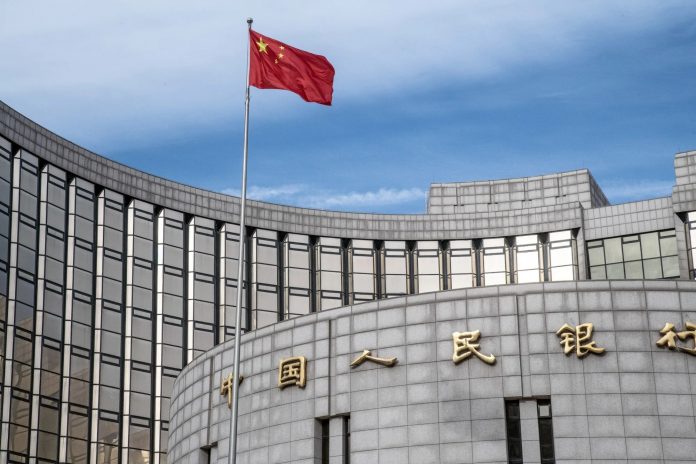
China’s central bank, the People’s Bank of China (PBOC), opted to keep its benchmark lending rates unchanged for a seventh consecutive month on Monday, maintaining the one-year Loan Prime Rate (LPR) at 3.00% and the five-year LPR at 3.50%, in line with unanimous expectations from a Reuters poll of 25 market analysts conducted last week.

This decision, the longest streak of stability since the LPR system’s inception in 2019, underlines a cautious monetary policy stance aimed at balancing growth support with financial stability, even as recent data highlights softening domestic demand and persistent property sector woes. The one-year LPR serves as the primary reference for most new corporate and household loans, while the five-year rate heavily influences mortgage pricing—a critical lever in addressing the ongoing real estate slump.

Despite the hold, effective lending rates for new loans have continued to trend lower, hovering at historic lows due to prior PBOC guidance and targeted relending facilities, with average corporate loan rates dipping to around 3.5% in Q3 2025.

The last adjustments occurred in May 2025, when both rates were trimmed by 10 basis points amid efforts to revive post-pandemic recovery.

November’s economic indicators painted a mixed picture, prompting calls for more stimulus but not immediate action. Industrial output expanded by 4.8% year-on-year, a slight deceleration from October’s 4.9% and below the 5.0% consensus forecast, reflecting weaker manufacturing amid subdued external demand.

Retail sales growth slowed sharply to 1.3% from 2.9%, the weakest since August 2024, hampered by cautious consumer spending and a lingering property crisis that has eroded household wealth.

Fixed-asset investment for January-November rose 3.3% year-on-year, steady but underscoring infrastructure’s role in propping up activity.

Property investment plunged 10.4% in the first 11 months, with new home prices falling at the fastest pace in over a decade, exacerbating deflationary pressures.

New bank loans totaled 1.09 trillion yuan ($150 billion), missing estimates due to tepid household borrowing, while the urban unemployment rate edged up to 5.1%.

Inflation remained subdued, with the Consumer Price Index (CPI) up 0.7% year-on-year, far below the 3% target.

Despite these headwinds, the economy appears on track to achieve Beijing’s “around 5%” growth target for 2025, bolstered by a record $1.08 trillion trade surplus through November—up 8.7% year-on-year—and resilient exports, which surged 12.4% in November amid front-loading ahead of potential tariffs.

Q3 GDP came in at 4.6%, with full-year projections from institutions like the World Bank and IMF revised upward to 4.8-5.0%, citing easing U.S.-China trade tensions following a November interim agreement suspending certain duties.

The PBOC’s “cross-cyclical” adjustments—focusing on long-term stability—and banks’ record-low net interest margins (around 1.5%) afford policymakers flexibility to delay broad easing, prioritizing targeted measures like the September 50-basis-point reserve requirement ratio (RRR) cut and a November reduction in the medium-term lending facility (MLF) rate to 2.0%.

The announcement echoed signals from the annual Central Economic Work Conference (CEWC) held December 8-10, where top leaders, including President Xi Jinping, pledged a shift to a “moderately loose” monetary policy for 2026—marking the first such designation since 2010—and a “more proactive” fiscal stance to boost consumption, investment, and innovation.

The conference outlined nine key priorities: stimulating domestic demand through wage hikes and social security enhancements; advancing technological self-reliance in sectors like AI and quantum computing; deepening reforms in state-owned enterprises; stabilizing the property market via affordable housing initiatives; and managing risks in local government debt, estimated at $13 trillion.

Officials hailed 2025’s “remarkable” resilience amid external shocks but acknowledged challenges like weak consumption and overcapacity, committing to a 5% GDP target for 2026 while emphasizing “high-quality development.”

Analysts broadly interpret the hold as a sign of strategic patience rather than complacency. Barclays economists highlighted the CEWC’s call for “flexible and efficient” use of tools like RRR and interest rates, forecasting a 10-basis-point policy rate cut and 50bp RRR reduction in Q1 2026 to facilitate bond issuance.

Nomura anticipates a similar easing in Q2 2026, emphasizing fiscal ramps to arrest slowdowns.

Goldman Sachs and JPMorgan echo this, projecting cumulative 20-30bp LPR cuts in 2026 if property drags persist, while Pantheon Macroeconomics notes reduced trade risks post-U.S. deal could ease external pressures.

Zichun Huang of Capital Economics attributed November’s weakness to fiscal pullbacks, urging bolder reforms.

Market responses were subdued, reflecting pre-priced expectations. The Shanghai Composite Index rose 0.36% to close at 3,890.45 points, with gains in consumer and tech stocks offsetting property declines.

The onshore yuan held steady around 7.12 per U.S. dollar, supported by PBOC midpoint guidance, while 10-year government bond yields dipped slightly to 1.95%.

As China transitions into 2026, the PBOC’s hold buys time for fiscal tools, potentially including a larger deficit and special bonds, to take center stage, but persistent deflation and external uncertainties could force earlier intervention. With global peers like the Federal Reserve pausing hikes, Beijing’s calibrated approach aims to foster sustainable growth without reigniting debt risks, setting the stage for a pivotal year ahead.

CNOOC brings new South China Sea offshore Oil project on stream, targets 18,000 bpd by 2026

0

China’s leading offshore oil producer, CNOOC Ltd, has brought a new offshore oil development into production in the South China Sea, adding incremental supply as Beijing steps up efforts to strengthen domestic crude output and reduce reliance on imports.

The company said on Monday that the Xijiang Oilfields 24 Block Development Project, located in the shallow waters of the Pearl River Mouth Basin, has commenced production. At peak levels, the field is expected to produce about 18,000 barrels of light crude oil equivalent per day by 2026.

CNOOC said the project was developed by tying into existing infrastructure at the neighboring Huixi Oilfields, with the installation of a new unmanned wellhead platform. The development plan includes 10 development wells, which will feed into nearby processing facilities. The company holds a 100% interest in the project and is its operator.

The Pearl River Mouth Basin is one of China’s most established offshore producing areas, and projects like Xijiang 24 illustrate how CNOOC is squeezing additional output from mature basins through smaller, faster-to-market developments. By relying on adjacent infrastructure rather than building a standalone production hub, the company is reducing costs and shortening development timelines, an approach it has increasingly adopted across its offshore portfolio.

While the projected output from Xijiang 24 is modest by global standards, the project fits into a much larger strategic picture. China is the world’s largest crude oil importer, and its buying patterns have a major influence on global oil flows and pricing. Any sustained success in boosting domestic production would, over time, reshape demand dynamics in the international oil market.

Beijing has repeatedly called on state-owned oil companies to raise domestic output, citing energy security concerns amid geopolitical tensions and supply disruptions. Offshore developments in the South China Sea and Bohai Bay have therefore become central to this strategy, as onshore production growth has been harder to achieve.

If China were to make meaningful progress toward meeting a larger share of its crude needs locally, the implications would extend well beyond its borders. As one of the biggest buyers of crude oil globally, China has played a critical role in absorbing barrels from sanctioned producers, particularly Russia and Venezuela, at times when access to Western markets has been constrained by U.S. sanctions.

Since the tightening of sanctions on Moscow following the Ukraine war, China has emerged as one of Russia’s most important crude customers, alongside India. Similarly, Chinese refiners have been a key outlet for Venezuelan oil, providing Caracas with a vital export channel after U.S. measures sharply restricted its ability to sell crude openly on global markets.

A sustained reduction in China’s import demand, driven by higher domestic output, would therefore pose a structural risk to these suppliers. Russia and Venezuela, already operating with limited market access, could face greater competition to place their crude, potentially at steeper discounts, if China’s appetite for imported barrels eases.

For now, China remains heavily dependent on imports, and projects like Xijiang 24 will not materially alter that balance on their own. However, taken together with dozens of similar offshore developments, they signal a long-term policy direction. Incremental gains across multiple projects could gradually chip away at import dependence, particularly for light and medium grades that are well suited to China’s refining system.

CNOOC’s focus on unmanned platforms, digital monitoring, and infrastructure-led developments also suggests that future offshore projects could be brought on stream more quickly and with lower operating costs, improving the economics of domestic production.

Nvidia Reportedly Targets Pre-Lunar New Year Shipments of H200 AI Chips to China

0

Nvidia has privately notified Chinese clients of its intention to initiate shipments of its advanced H200 AI chips before the Lunar New Year holiday, which commences on February 17, 2026, according to three sources with direct knowledge of the matter who spoke to Reuters.

The initial batches would be fulfilled from existing inventory, comprising 5,000 to 10,000 chip modules—translating to roughly 40,000 to 80,000 individual H200 processors—potentially valued in the hundreds of millions given current market pricing.

In parallel, the U.S. semiconductor leader has outlined plans to ramp up H200 production capacity, with new order slots expected to open in the second quarter of 2026 to accommodate sustained demand.

However, substantial uncertainties loom large: Beijing has yet to grant import approvals for the H200, and the proposed timeline could slip based on regulatory decisions from Chinese authorities.

“The whole plan is contingent on government approval,” one source emphasized. “Nothing is certain until we get the official go-ahead.”

Nvidia and China’s Ministry of Industry and Information Technology (MIIT), which oversees semiconductor imports, did not immediately respond to requests for comment.

The prospective shipments represent a pivotal milestone, marking the first legal deliveries of the H200 to China since President Donald Trump’s early December announcement permitting such sales under a revamped U.S. export framework.

Trump’s policy imposes a 25% fee on transactions, collected by the U.S. government, while mandating Commerce Department vetting of “approved customers” to mitigate national security risks.

This stands in stark contrast to the Biden administration’s stringent bans on advanced AI chips to China, enacted in October 2022 and expanded thereafter, which prohibited exports of any processors matching or exceeding the Nvidia A100’s capabilities, citing fears of bolstering Beijing’s military AI advancements.

The Trump administration’s rationale posits that controlled sales will keep Chinese entities “addicted” to U.S. technology, diminishing incentives for domestic rivals like Huawei to accelerate their own developments, thereby preserving American leadership in AI.

An inter-agency review of license applications, involving the Commerce, State, Energy, and Defense Departments, was initiated last week to evaluate these sales, with a 30-day window for agency input before a final presidential decision.

U.S. lawmakers have demanded transparency in this process, urging disclosure of license reviews to ensure accountability.

The H200, a cornerstone of Nvidia’s previous-generation Hopper architecture, boasts 141 GB of high-bandwidth HBM3e memory, 4.8 TB/s bandwidth, and superior tensor performance, making it ideal for large-scale AI training and inference.

It significantly outperforms the H20, Nvidia’s export-compliant variant for China, by an estimated six times in key metrics, offering a vital boost for applications in generative AI and data centers.

Although eclipsed by the newer Blackwell and upcoming Rubin lines—Nvidia’s production priorities—the H200’s scarcity has not diminished its appeal in global markets.

Major Chinese firms, including Alibaba Group, ByteDance (parent of TikTok), Tencent, and Baidu, have voiced keen interest, positioning the H200 as a game-changer for their AI ambitions amid a domestic market projected to exceed $100 billion in AI spending by 2027.

Beijing’s response, however, remains guarded: Emergency internal meetings this month have explored countermeasures, such as mandating bundled purchases where each H200 must be paired with a specified ratio of indigenous chips to foster local innovation.

China’s drive for semiconductor self-sufficiency is intensifying, with Huawei’s Ascend 910C—boasting 12,032 TPP (tensor processing power) and 3.2 TB/s memory bandwidth—falling short of the H200’s 15,840 TPP and 4.8 TB/s, per industry benchmarks.

Upcoming models like the Ascend 960, slated for 2027, aim to bridge this gap, supported by state subsidies exceeding $50 billion in 2025 alone.

In the interim, grey-market smuggling has provided limited access to restricted Nvidia hardware, with U.S. enforcers recently dismantling networks involving over $160 million in illicit shipments.

Critics in Washington, including former officials and bipartisan lawmakers, decry the policy as a “disastrous” concession that could erode U.S. advantages, potentially fueling China’s military AI programs.

Market sentiment has been buoyed, with Nvidia shares rising intermittently on the news, though capped by lingering uncertainties.

The resolution will depend on swift bilateral approvals, challenging Trump’s approach of monetizing U.S. tech exports while managing the escalating U.S.-China AI rivalry.

Ellison steps in with $40.4bn guarantee as Paramount battles Netflix for Warner Bros assets

0

Oracle co-founder Larry Ellison has moved to personally shore up Paramount Skydance’s bid for Warner Bros Discovery, offering a $40.4 billion personal guarantee in an effort to revive confidence in the deal and pull the Hollywood studio away from a rival offer by Netflix.

The guarantee, disclosed in a filing on Monday, is aimed squarely at addressing concerns raised by the Warner Bros board over Paramount’s financing and the absence of full backing from the Ellison family. Those doubts had pushed Warner Bros closer to accepting a competing cash-and-stock proposal from Netflix for its prized film and television assets.

News of the revised terms lifted shares across the sector. Warner Bros stock rose about 3%, while Paramount climbed more than 7%.

Paramount said the amended structure does not alter its headline offer of $30 per share in cash, even as the contest for control of one of Hollywood’s most valuable content libraries intensifies. Control of Warner Bros’ film franchises, television catalogue, and production capabilities is widely seen as a decisive advantage in the increasingly crowded streaming market.

Under the revised terms, Ellison has also agreed not to revoke the family trust or transfer its assets while the transaction remains pending, a concession designed to further reassure shareholders about the durability of the funding package. Paramount also raised its regulatory reverse termination fee to $5.8 billion from $5 billion, matching the protection offered under the Netflix deal, and extended the expiration date of its tender offer to January 21, 2026.

Despite the added assurances, some analysts remain skeptical that the changes will materially shift shareholder sentiment.

“I doubt many Warner Bros shareholders that are on the fence or planning to vote no were holding out due to issues the revised bid addresses such as a guarantee from Larry Ellison on the funding front,” said Seth Shafer, a principal analyst at S&P Global.

The revised bid follows Warner Bros’ earlier move to urge shareholders to reject Paramount’s $108.4 billion proposal for the entire company, including its cable television assets. At the time, Warner Bros cited uncertainty around financing and the lack of a comprehensive Ellison family guarantee as key weaknesses in the offer.

Still, the door has not been fully closed. Some Warner Bros investors, including Harris Associates, the company’s fifth-largest shareholder, have said they would consider a revised Paramount bid if it offered superior terms and resolved concerns around deal structure and execution.

Under the Netflix agreement, Warner Bros would owe Netflix a $2.8 billion breakup fee if it were to abandon that deal in favor of Paramount. For Netflix, acquiring Warner Bros would significantly deepen its content library and extend its dominance in streaming, creating a combined platform with an estimated 428 million subscribers worldwide.

Paramount, for its part, is positioning the deal as a strategic counterweight to Netflix’s scale, arguing that a combined Paramount–Warner Bros studio would be better placed to compete with industry leaders and extract more value from theatrical releases, television distribution, and streaming.

Beyond shareholder approval, regulatory scrutiny looms as the most formidable obstacle. Any transaction would face close examination by antitrust authorities in the United States and Europe, amid growing political resistance to consolidation in the media industry.

Lawmakers from both major U.S. parties have already raised concerns, and President Donald Trump has said he plans to weigh in on the proposed deals. A merger between Paramount and Warner Bros would create a studio larger than Disney and unite two major television operators, prompting some Democratic senators to warn that such a combination could give a single company control over “almost everything Americans watch on TV.”

A Netflix–Warner Bros tie-up would raise a different set of alarms. While Netflix has argued that the deal would benefit consumers through bundled offerings and lower costs, critics say it would further entrench Netflix’s market power at a time when competition in streaming is already under strain. Netflix co-CEO Ted Sarandos has said he is confident regulators would approve the deal, adding that it would avoid job cuts in an industry grappling with uneven box-office performance.

As the battle plays out, Ellison’s personal guarantee has added a fresh twist to the deal. However, it remains unclear whether the move is enough to tilt shareholders and regulators away from Netflix.