When people ask me how I started investing, I usually tell them that my journey began in places most newcomers ignore – server rooms buzzing with mining rigs, cheap electricity contracts, and endless nights monitoring hash rate fluctuations. Over the years I have also built a traditional investment portfolio consisting of shares, ETFs, and a few carefully selected long-term blue-chip companies. Because of this mix of experience, I often meet beginners who ask a simple but important question: “Should I focus on crypto or stocks?”
Both paths can be profitable. Both can also punish impatience and misinformed decisions. The key is understanding what you are getting into, so that you can match your investment strategy to your personality, your financial goals, and your tolerance for risk. This article breaks everything down in a clear, beginner-friendly way, while giving you the perspective of someone who has been mining Bitcoin through professional hosting facilities for years and has also been buying shares long before I ever plugged in my first ASIC machine.
What Is Cryptocurrency?
Cryptocurrency is a form of digital money secured by cryptography and supported by a decentralized network of computers around the world. Instead of depending on a central authority like a bank or government, most cryptocurrencies rely on a technology called blockchain – an open, distributed ledger that records every transaction and makes tampering nearly impossible.
When I bought my first Bitcoin many years ago, what fascinated me was not the price but the idea that value could be transferred globally without asking anyone for permission. Crypto operates 24 hours a day, seven days a week. There are no weekends, no market holidays, no closing bells. With that freedom comes volatility. A single day in crypto can see price swings that traditional stock investors would consider unimaginable. Still, it is this volatility that attracts traders seeking opportunity.
Crypto can serve multiple purposes: as a speculative asset, a store of value, a means of payment, or even as a tool to access decentralized financial services. Whether you mine it or trade it, understanding the technology behind it helps you stay grounded during turbulent price movements.
Crypto Mining – How It Works in the Real World
Mining is the backbone of certain cryptocurrencies such as Bitcoin. Miners validate transactions, secure the network, and in return receive newly issued coins. In the early days, people mined Bitcoin on their laptops. Today, mining has evolved into a highly competitive industry dominated by specialized equipment known as ASICs.
My own mining experience started at home, but it did not take long before I realized the truth: profitable mining requires scale, cheap electricity, proper ventilation, and reliable maintenance. That was when I switched to professional hosting services. These facilities operate thousands of ASICs and manage everything from electricity optimization to hardware replacement. You simply rent the hardware or purchase your own machine and pay a hosting fee.
From a technical standpoint, mining is straightforward. Your machines run continuously, performing trillions of calculations per second, attempting to solve cryptographic puzzles. Each solved block earns the miner a block reward plus the transaction fees contained in that block. The higher your hash rate relative to the network, the larger your share of rewards. But there are caveats that beginners often underestimate.
First, the upfront costs can be significant – ASIC miners are expensive, and the market price of machines fluctuates heavily with Bitcoin’s cycles. Second, operational costs such as electricity, cooling, and maintenance can erode profits if not managed well. Third, network difficulty increases over time, meaning your hardware produces fewer coins unless you expand or upgrade. Mining is not a “set and forget” activity; it requires monitoring, planning, and a long-term perspective.
Still, mining offers something unique: a predictable, steady inflow of cryptocurrency. Even when the market dips, miners continue accumulating coins, which can serve as a dollar-cost-averaging strategy. In my experience, miners often outperform pure traders over longer periods simply because they maintain discipline and accumulate regardless of market sentiment.
I’d definitely recommend reading https://gomining.com/blog/how-to-mine-bitcoin-a-beginners-guide. It’s a great article that explains the topic in detail from a beginner’s perspective.
Buying and Selling Cryptocurrencies
For most beginners, trading or investing in cryptocurrencies through an exchange is a simpler entry point than mining. You create an account, verify your identity if required, deposit funds, and buy the crypto you want. Anyone with an internet connection and some spare capital can do it.
There are two types of platforms: centralized exchanges and decentralized exchanges. Centralized platforms are easier to use, but require trust. They hold your funds unless you withdraw them. Decentralized exchanges allow peer-to-peer transactions directly from your wallet, but the interface may feel intimidating to newcomers.
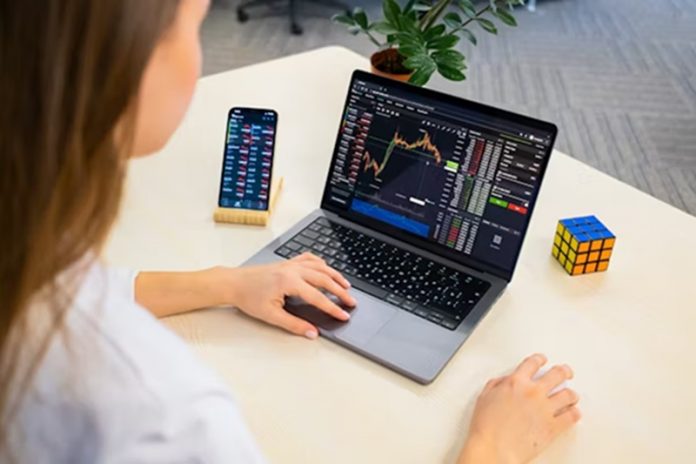
Trading itself is deceptively simple. Placing an order takes seconds, but understanding market psychology, risk management, liquidity, and timing takes years. Many traders start with popular pairs like BTC USDT to familiarize themselves with market dynamics. I have seen beginners make the same mistake repeatedly – chasing pumps, panic selling during dips, and ignoring proper position sizing. Crypto does not forgive impulsive behavior. Volatility can multiply profits, but it can also wipe out accounts overnight.
If you choose to trade, consider treating it like a skill that must be learned. Use small amounts, understand market orders versus limit orders, learn to read charts, and above all: do not let emotions dictate your decisions. The best traders I know focus more on risk management than on predicting price direction.
Mining vs. Trading: A Practical Comparison
| Aspect | Crypto Mining | Crypto Trading |
| Startup Cost | High – specialized hardware and installation | Low – exchange account and initial capital |
| Technical Difficulty | Medium to high – hardware, software, and maintenance | Low to medium – platform use and market knowledge |
| Potential Profit | Steady long-term income if costs are controlled | Potentially fast profits but high volatility |
| Main Risks | Hardware failures, rising electricity costs, regulatory changes | Market volatility, emotional decisions, exchange counterparty risk |
| Time Required | Long-term commitment; continuous monitoring | Flexible – day trading to long-term holding |
Mining and trading may both fall under the “crypto” umbrella, but they feel entirely different in practice. Mining is closer to running a small business – you invest in hardware, manage expenses, monitor performance, and collect revenue. Trading, on the other hand, requires no hardware and no operational skills. It is flexible, fast, and accessible, but much more exposed to emotional and psychological stress.
In my experience, miners tend to think long term, while traders often chase short-term movements. Mining can produce consistent returns if electricity is cheap and hardware is efficient. Trading can produce spectacular wins, but also equally spectacular losses. Both paths can be profitable, but your temperament plays a critical role. If you prefer stable, predictable accumulation, mining may fit you. If you enjoy analyzing charts and reacting quickly to market changes, trading may be more suitable.
Shares: What They Are and Why They Still Matter
Before I got involved in crypto, I invested primarily in shares. Stocks represent ownership in a company – real businesses with employees, products, earnings, and financial history. When you buy a share, you are buying a piece of that business and its future potential. Compared to crypto, shares operates in a highly regulated environment. Companies must report their financial results, disclose risks, and adhere to laws designed to protect investors.
Many beginners underestimate how powerful long-term stock investing can be. Well-chosen shares can grow steadily for decades. Some companies distribute dividends, allowing investors to earn passive income while still benefiting from price appreciation. Stocks are also less volatile than cryptocurrencies, meaning you can sleep better at night knowing your portfolio will not swing wildly based on a single tweet or market rumor.
That said, stock investing is not risk-free. Markets move in cycles, and factors such as economic downturns, corporate scandals, or poor management can significantly affect a company’s performance. That’s why many beginners – and even experienced investors – reduce risk through broad diversification, often using ETFs or mutual funds rather than relying on single-stock picks. Most financial advisors recommend stocks primarily for long-term goals. A horizon of five, ten, or even twenty years allows market volatility to smooth out, giving your portfolio time to recover from temporary declines.
When choosing a broker for long-term investing, it is worth knowing that some platforms occasionally offer attractive incentives. One such broker is XTB, a well-established and regulated European investment platform known for commission-free trading on shares and ETFs (up to 100 000 € monthly limit), a user-friendly mobile app, and strong educational resources. During registration, you may also encounter a referral offer – for example the XTB referral code, which sometimes grants new users benefits such as a free share or other promotional rewards. These bonuses can be a pleasant extra, especially if you are just getting started, but they should never overshadow proper research or your long-term investment strategy. Always review the current promotion details, as conditions can change from time to time.
Investing in Shares vs. Crypto Mining vs. Crypto Trading
Each of these three approaches has a distinct personality. Shares are the steady, reliable worker in your portfolio. Mining is the operational long-term project that produces consistent output if managed properly. Trading is the fast-moving, adrenaline-filled arena where timing and discipline matter more than anything else.
If you want long-term wealth building with lower daily volatility, shares should form the foundation of your strategy. If you enjoy hands-on involvement and are comfortable with hardware and operational costs, mining can offer unique benefits. If you prefer liquidity, flexibility, and fast execution, trading might be your entry point. Many experienced investors combine all three, using shares for stability, mining for long-term crypto accumulation, and trading for tactical opportunities.
In which currency can I invest in crypto or shares?
Most retail investors buy cryptocurrencies and shares in a handful of major currencies because they are widely supported, liquid, and easy to convert. The most common base currencies you’ll encounter are the US Dollar (USD), Euro (EUR), British Pound (GBP), Japanese Yen (JPY), Swiss Franc (CHF), Australian Dollar (AUD), Canadian Dollar (CAD), and increasingly the Chinese Yuan (CNY). Exchanges, brokerages, and custody platforms typically price assets and settle trades in one (or several) of these currencies, so if your bank account or card is denominated in one of them you’ll usually face fewer conversion fees and simpler tax reporting.
When you buy crypto, many centralized exchanges let you deposit fiat in one of the major currencies and then buy the cryptocurrency directly. For stocks and ETFs, brokerage accounts are normally offered in major currency hubs – e.g., US shares in USD, European shares in EUR, and UK shares in GBP – though multi-currency brokerages will let you hold cash balances and trade across several currencies inside the same account. As a practical matter, choosing the currency with the deepest liquidity (often USD or EUR) reduces slippage, widens your choice of instruments, and simplifies moving money between platforms.
Exotic currencies: can you invest there?
Investing in assets priced in exotic or less-liquid currencies is possible but comes with trade-offs. “Exotic” currencies – such as the Nigerian Naira (NGN), some African, Latin American, and smaller Asian currencies – often suffer from limited broker support, wider bid-ask spreads, lower on- and off-ramp liquidity for crypto, and greater vulnerability to sudden policy changes or capital controls. That means higher transaction costs and sometimes challenges when converting profits back into a major currency. Regulatory and banking restrictions in the asset’s home country can also affect whether you can open a local brokerage or bank account that supports direct settlement in the local currency.
If you specifically want exposure to assets denominated in an exotic currency, your practical routes are: 1) use an international broker that offers multi-currency accounts and cross-listing access; 2) trade derivative products (CFDs, futures) that mirror local markets but settle in a major currency; or 3) open a local bank/broker account where available – which may require local residency or additional documentation. Always weigh the extra cost and regulatory complexity against the potential diversification benefit.
Naira (NGN)
The Nigerian Naira is a commonly cited example of an exotic currency where retail access can be limited. Some international brokers and fintechs offer ways to hold Nigerian-denominated accounts or provide access to Nigerian markets, but availability changes quickly and often depends on KYC rules, local banking partnerships, and currency controls. If you’re exploring this route, look for brokers that explicitly support Naira settlement or offer NGN-denominated accounts.
In short: stick to major currencies if you want simplicity and liquidity; pursue exotic-currency exposure only if you understand the additional costs, operational hurdles, and regulatory risks – and ideally after testing with a small position first.
Conclusion
No single investment method is perfect for everyone. Stocks remain one of the most proven ways to grow wealth steadily over time. Trading cryptocurrencies offers excitement and potential high returns, but requires discipline and emotional resilience. Mining cryptocurrencies provides a more stable, long-term way to accumulate coins, especially if you use professional hosting solutions that eliminate the need to run hardware at home.
If you consider mining but do not want to deal with noise, heat, or maintenance, remote hosting options are worth exploring. These services give you access to fully managed infrastructure and can make mining more accessible to beginners. Just remember: always read the fine print, understand fee structures, and never invest money you cannot afford to lose.
Start small. Learn continuously. Diversify wisely. And above all, choose the investment path that matches your personality and financial goals. With patience and proper understanding, both crypto and shares can play a valuable role in building your financial future.