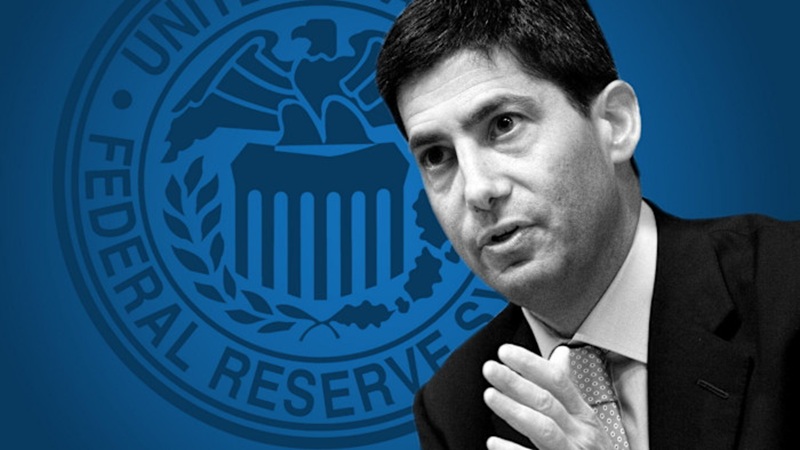
President Donald Trump has nominated Kevin Warsh to succeed Jerome Powell as chair of the Federal Reserve, a move that signals a possible shift in U.S. monetary policy as the administration presses for lower interest rates to support growth and ease borrowing costs.
The decision is already reshaping expectations around U.S. monetary policy, even before the Senate weighs in. The pick comes at a delicate moment for the economy, with inflation easing from its peak but borrowing costs still high, financial markets jittery over growth prospects, and political pressure mounting on the central bank to deliver rate cuts.
Trump framed the nomination as a vote of confidence in Warsh’s judgment and leadership, writing on Truth Social that he had “no doubt” Warsh would be among the greatest Fed chairs in history. The endorsement reflects more than personal admiration. It underscores the president’s broader economic agenda, which has increasingly focused on pushing interest rates lower to stimulate investment, support asset prices, and ease the financial strain on households and businesses.
If confirmed, Warsh will replace Jerome Powell in May, marking the first leadership change at the Fed during Trump’s second term. That transition alone carries weight. Powell’s tenure has been defined by extraordinary events, from the pandemic-era collapse and recovery to the sharpest inflation surge in four decades and the aggressive rate-hiking cycle that followed. Warsh would inherit a Fed that has largely completed its fight against inflation but remains cautious about declaring victory too early.
Warsh is not an unknown quantity. He served as a Fed governor from 2006 to 2011, a period that included the global financial crisis, giving him firsthand experience with market stress and emergency policy responses. Since leaving the Fed, he has built a career in finance and policy circles, maintaining close ties to Wall Street while positioning himself as a critic of what he sees as central bank overreach and credibility gaps.
That record complicates the assumption that Warsh will simply rubber-stamp rapid rate cuts. While he has recently criticized the Fed for being too slow to ease policy, he was widely viewed as hawkish during his earlier tenure, particularly on inflation and the risks of prolonged monetary accommodation. Brett House of Columbia Business School noted that, based on past statements and actions, Warsh was the most hawkish of the final candidates considered for the role. That history suggests his support for lower rates may be conditional rather than unconditional.
Trump’s economic message has been consistent: high interest rates, in his view, are choking off growth and leaving the United States at a disadvantage compared with economies where borrowing is cheaper. The Fed’s decision this week to hold rates steady after a two-day policy meeting only reinforced that tension. For consumers facing elevated credit card balances and for businesses weighing investment decisions, the lack of near-term relief has become a political as well as an economic issue.
Market reaction to Warsh’s nomination has reflected that backdrop. Investors appear to be interpreting the move less as a radical break and more as a signal that the White House expects the Fed to pivot more decisively toward easing later in the year. David Bahnsen of The Bahnsen Group captured that sentiment, saying that any plausible Fed chair pick at this stage would likely oversee rate cuts in the short term. In that sense, Warsh’s nomination may formalize expectations already embedded in markets rather than overturn them.
The deeper question is how Warsh would balance near-term growth concerns against longer-term inflation risks.
Mark Higgins of Index Fund Advisors warned that history offers little comfort when political pressure pushes central banks to prioritize short-term gains. He pointed to the 1970s, when then-President Richard Nixon leaned on Fed Chair Arthur Burns to keep rates low ahead of the 1972 election. The immediate boost was followed by years of entrenched inflation, culminating in a peak near 15% in 1980 and forcing the Fed, under new leadership, to impose punishing rate hikes in the early 1980s to restore price stability.
That episode remains central to debates about Fed independence. While the president nominates Fed governors and the chair, the institution’s credibility rests on its ability to resist short-term political demands in favor of long-term economic stability. Warsh’s critics will likely scrutinize whether his views align too closely with Trump’s rate agenda, while supporters will argue that his experience equips him to navigate those pressures without repeating past mistakes.
The stakes extend beyond interest rates. The Fed’s benchmark influences not only consumer borrowing but also asset valuations, capital flows, and the federal government’s own financing costs. With the U.S. carrying a large and growing debt burden, lower rates would ease pressure on the Treasury, a reality not lost on policymakers. At the same time, cutting too aggressively could reignite inflation or inflate asset bubbles, risks that Warsh has previously highlighted in other contexts.
As the nomination heads to the Senate, confirmation hearings are likely to focus on these tensions. Lawmakers will probe Warsh’s views on inflation, financial stability, regulatory policy, and, crucially, the independence of the central bank. His answers will shape perceptions of whether his leadership would mark continuity with Powell’s cautious approach or a more explicit alignment with the White House’s economic priorities.
While a leadership change at the Fed raises the prospect of a policy pivot, history suggests that the consequences of getting that balance wrong can be severe. Warsh’s challenge, if confirmed, will be to manage the transition from a restrictive policy stance without undermining the hard-won progress against inflation.