DD
MM
YYYY

PAGES

DD
MM
YYYY

spot_img

PAGES

Home Blog

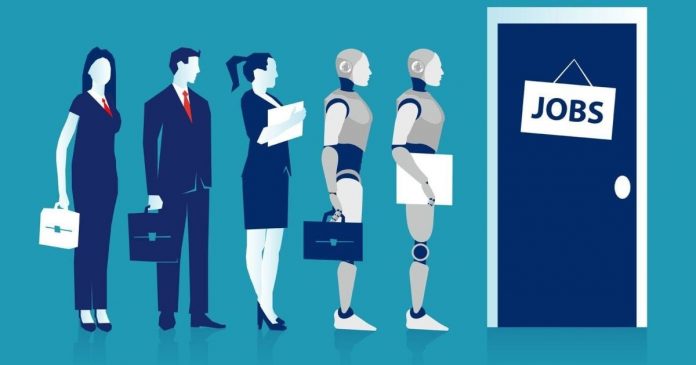
AI-Fueled Layoffs Deepen in 2025 as 1.17m Job Cuts Mark Automation Acceleration

0

Layoffs have become one of the most defining and unsettling features of the U.S. labor market in 2025, with artificial intelligence now sitting at the center of corporate explanations for sweeping job cuts.

Across technology, finance, enterprise software, and cybersecurity, companies are increasingly framing workforce reductions as a necessary consequence of rapid AI adoption, even as questions grow over whether automation is the sole or even primary driver.

Figures from consulting firm Challenger, Gray & Christmas, published by CNBC, show that AI-linked layoffs reached nearly 55,000 jobs in the United States this year. In total, employers announced about 1.17 million job cuts through 2025, the highest annual level since the height of the Covid-19 pandemic in 2020, when layoffs surged to 2.2 million. The scale and persistence of the cuts suggest a structural reset rather than a temporary correction.

The pace of job losses has remained elevated into the final quarter of the year. Employers announced roughly 153,000 job cuts in October, followed by more than 71,000 in November. AI was explicitly cited in over 6,000 of the November cuts alone, according to Challenger, underscoring how frequently the technology now features in restructuring announcements.

These layoffs are unfolding against a challenging economic backdrop. Inflation continues to erode purchasing power, tariffs have added to input costs, and borrowing remains expensive after years of aggressive interest rate hikes. For many firms, especially large multinationals under pressure to protect margins, AI has emerged as an appealing lever. Automation promises immediate efficiency gains, lower payroll costs, and faster execution, particularly in roles involving repetitive cognitive tasks.

Academic research is reinforcing those incentives. CNBC cited a study released by the Massachusetts Institute of Technology in November, which found that AI systems can already perform tasks equivalent to about 11.7% of jobs across the U.S. labor market. The researchers estimated potential wage savings of up to $1.2 trillion, with the largest exposure in finance, healthcare, legal services, and other professional sectors where routine analysis, documentation, and customer interaction are common.

Yet not everyone agrees that AI alone explains the scale of the layoffs. Fabian Stephany, assistant professor of AI and work at the Oxford Internet Institute, has argued that many companies are overstating the role of automation. He has said that firms that expanded aggressively during the pandemic-era boom are now reversing course, using AI as a convenient narrative.

“Many companies significantly overhired during Covid,” Stephany previously told CNBC. “Instead of saying ‘we miscalculated two or three years ago,’ they can now point to AI as the reason.”

In his view, a portion of the layoffs represents a delayed market correction rather than a sudden technological displacement.

Even so, corporate leaders have been unusually candid about AI’s role in reshaping their organizations.

Amazon announced in October the largest round of layoffs in its history, cutting 14,000 corporate roles as it redirects spending toward what it describes as its “biggest bets,” with AI at the top of the list. In a blog post, Beth Galetti, the company’s senior vice president of people experience and technology, said the shift was necessary to reduce layers, speed up decision-making, and give teams more ownership.

CEO Andy Jassy had earlier warned employees that AI would fundamentally change Amazon’s workforce. He said the company would need “fewer people doing some of the jobs that are being done today, and more people doing other types of jobs,” signaling a long-term rebalancing rather than a short-term cutback.

Microsoft has taken a similar path. The company has cut around 15,000 jobs in 2025, including 9,000 announced in July. CEO Satya Nadella framed the layoffs as part of a broader effort to reposition Microsoft around AI, describing a transition from a traditional software model to what he called an “intelligence engine.”

In an internal memo, Nadella emphasized that AI was not just another product line but a foundational shift.

“It’s about building tools that empower everyone to create their own tools,” he wrote, arguing that this approach required a different organizational structure and skill mix.

At Salesforce, the impact has been particularly visible in customer support. CEO Marc Benioff confirmed in September that about 4,000 customer support roles had been eliminated, reducing headcount in that division from roughly 9,000 to 5,000. Benioff has said AI is already handling up to half of the company’s workload, allowing it to operate with far fewer staff than before.

IBM’s experience highlights the uneven nature of the transition. CEO Arvind Krishna said in May that AI chatbots had replaced a few hundred human resources roles, but he stressed that the company was simultaneously hiring in areas that demand higher-level judgment, including software engineering, sales, and marketing. Still, IBM announced a 1% global workforce reduction in November, potentially affecting nearly 3,000 employees.

Cybersecurity firm CrowdStrike was among the most explicit in linking layoffs to AI. In May, it said it would cut about 500 jobs, or 5% of its workforce. CEO George Kurtz described AI as a “force multiplier” that flattens hiring needs and accelerates everything from product development to customer engagement, reducing the number of people required to scale the business.

Workday, an HR software company, moved early in the year. In February, it announced plans to cut about 8.5% of its workforce, or roughly 1,750 jobs, to free up resources for AI investment. CEO Carl Eschenbach said the decision was about prioritization, signaling that AI spending had become more important than maintaining existing headcount.

Collectively, these moves point to a deeper shift in how companies value labor. While executives insist that AI will create new roles over time, particularly for engineers, data scientists, and AI specialists, the near-term effect has been a sharp contraction in white-collar and support roles that were once considered relatively insulated from automation.

The result has been growing anxiety about job security and reskilling for workers. For policymakers, it raises difficult questions about how quickly labor markets can adapt and whether existing safety nets are adequate. As 2025 draws to a close, AI’s promise of productivity and innovation is becoming inseparable from its social cost, with layoffs serving as the most visible sign of a labor market being reshaped in real time.


AI Boom Keeps Memory Markets Tight as Micron CEO Warns RAM and Storage Shortages Will Last Beyond 2026

0

One of the world’s largest memory chipmakers is signaling that the global shortage of RAM and storage is no longer a cyclical blip but a prolonged structural challenge, as the explosive growth of artificial intelligence continues to outstrip supply across the semiconductor industry.

Micron Technology CEO Sanjay Mehrotra delivered the warning during the company’s latest earnings call, telling investors that tight conditions across memory markets are likely to persist for years rather than quarters. The imbalance, he said, reflects a sharp acceleration in AI-related demand colliding with the hard physical limits of semiconductor manufacturing.

“Sustained and strong industry demand, along with supply constraints, are contributing to tight market conditions and we expect these conditions to persist beyond calendar 2026,” Mehrotra said, tempering expectations that new capacity will quickly ease shortages.

At the heart of the supply crunch is the scale of AI data center expansion. Mehrotra said customers have significantly upgraded their buildout plans in recent months, forcing Micron and its peers to revise demand forecasts sharply upward.

“Over the last few months, our customers’ AI data center buildout plans have driven a sharp increase in demand forecast for memory and storage,” he said. “We believe that the aggregate industry supply will remain substantially short of the demand for the foreseeable future.”

AI workloads consume vastly more memory than traditional computing. Training and running large language models requires high-bandwidth memory, advanced DRAM, and large volumes of NAND storage, often deployed in dense, power-hungry server configurations. As AI adoption spreads from hyperscalers to enterprises and governments, memory intensity per server continues to rise, compounding pressure on supply.

Mehrotra said these dynamics are affecting both major memory segments. “Together, these demand and supply factors are driving tight industry conditions across DRAM and NAND and we expect tightness to persist through and beyond calendar 2026,” he noted.

Supply growth constrained by long lead times

While demand has surged, the industry’s ability to respond remains limited. Building new semiconductor fabs or expanding existing ones is a multiyear process that requires massive capital investment, access to advanced lithography tools, and a highly specialized workforce.

Even with aggressive spending, new facilities can take several years before reaching meaningful output. Advanced memory products such as high-bandwidth memory add another layer of complexity, with lower yields and more intricate manufacturing steps than conventional DRAM.

Mehrotra acknowledged that Micron is already operating under strain.

“Despite significant efforts, we are disappointed to be unable to meet demand from our customers across all market segments,” he said, underscoring that shortages are not confined to AI alone but are spilling into other end markets.

Industry discipline reinforces tightness

Micron’s outlook aligns with recent signals from its main competitors, Samsung Electronics and SK Hynix, both of which have cautioned that memory constraints are likely to linger. Rather than rushing to add capacity, leading manufacturers are exercising restraint, shaped by hard lessons from past boom-and-bust cycles.

Samsung has previously said it prefers maintaining long-term profitability and balance sheet strength over aggressive expansion that could trigger another oversupply crash. SK Hynix has similarly highlighted the risks of overbuilding, particularly given the capital intensity and technical difficulty of scaling advanced memory for AI accelerators.

This discipline means that even as prices rise, supply growth will remain measured, reinforcing Mehrotra’s view that shortages are structural rather than temporary.

Broader implications for tech and pricing

For customers, prolonged tightness in memory markets is likely to keep prices elevated, raising the cost of AI infrastructure and pressuring margins for cloud providers, hardware makers, and enterprise IT budgets. Consumer electronics manufacturers could also face higher component costs, especially as devices increasingly rely on larger memory configurations to support AI features.

For memory producers, however, the environment supports stronger pricing power and improved profitability, provided they can execute on advanced products and manage capacity carefully.

Mehrotra’s comments point to a broader shift underway in the semiconductor industry. The AI boom has fundamentally altered demand patterns for memory, and the supply side is structurally constrained from responding at the same pace. Rather than a short-lived shortage, Micron is warning of a new normal in which tight memory markets extend deep into the second half of the decade.

Gadget Habits of Pokies Bonus Finder Fans

0

The rise of smart accessories has changed not just how people pay in casinos, but also how they interact with games. On stay tune with pokiesbonusfinder.com, Australian casino platforms now offer more than just fast banking, as players expect enhanced experiences and services.They demand seamless, responsive, and optimised play across devices. With gadgets now an extension of the gambling environment, serious pokies users invest in performance-enhancing setups as deliberately as they choose their game providers.

Optimising Online Pokies for Real Money

Many Australians now access online Free Pokies Australia real money games from home setups that resemble a content creator’s studio more than a typical gamer’s nook. Multi-screen rigs allow for tracking jackpots, wagering conditions, and live promotions simultaneously. Meanwhile, mechanical keyboards and precision mice deliver the tactile control required for customisable slots interfaces and enhanced autoplay functionality.

Even players who prefer mobile pokies that use PayID payments are looking beyond the basics. Rugged devices with cooling pads, extra battery packs, or wireless charging pads help maintain session longevity during tournaments or streak-heavy games.

Tech Toolkit of a PayID Pokies Fan

When it comes to pokies that use Free Bonus, convenience starts with fast deposits—but the gear used to enjoy these pokies can greatly shape outcomes and enjoyment. Below is a breakdown of the most-used tech tools among real money gamblers.

Device or Accessory Purpose in Pokies Play Popular Models
Gaming Tablet Large screen pokies play, multi-tab navigation iPad Pro, Samsung Galaxy Tab S9
Smartphone Grip Improved mobile hold, prevents accidental taps Backbone One, Razer Kishi
Bluetooth Headphones Immersive sound effects and notification cues Sony XM5, AirPods Pro
Screen Magnifier Enhances visual clarity for older players MoKo 12-inch, Fanlory 3D Screen Enlarger
Wearable Payment Band Hands-free instant Real Money Casino withdrawal pokies access PayWear by Westpac, Fitbit Pay

Many of these accessories double as lifestyle tech, making them a worthwhile investment even for casual players. The goal is simple: eliminate distractions and create a stable, responsive environment for pokies interaction—especially when real money is at stake.

Mobile Accessories for PayID-Based Pokies

As PayID online pokies continue to dominate the Australian landscape, players seek more agility. Here’s a look at key mobile add-ons that elevate performance without breaking the bank.

  • Snap-on cooling fans to avoid device overheating during long autoplay sessions.
  • Clip-on macro triggers to replicate slot spins with higher precision.
  • Battery cases or power banks for uninterrupted access during tournaments.
  • Dedicated poker gloves with touchscreen sensitivity for grip comfort.

These enhancements cater to high-volume players who expect flawless gameplay even in casual environments like commutes or holidays. The demand for tech that keeps pace with gaming sessions continues to push accessory makers into niche designs tailored to gamblers.

Free Credit Tech and Responsible Play

With free credit pokies PayID offers often used to attract new users, there’s a growing conversation around smart limits and play tracking. Some players are turning to screen time tracking apps, gaming analytics platforms, or even integrated device-level limits that encourage balance. These tools offer transparency about playing patterns and are especially valuable in the best online pokies Australia PayID space where credit deals can become frequent temptations.

New wearables like the Oura Ring or Samsung Galaxy Watch 6 now offer stress level detection and alert players when physiological strain builds up—another layer of tech-enabled responsible play for those engaging with pokie PayID platforms.

Smart Gambling is Smart Tech

While some still see pokies as chance-driven, today’s real-money gaming ecosystem reflects calculated setup, intuitive gear, and rapid payment frameworks. As online casino Australia pokies options grow, so does the expectation that the tech surrounding them keeps pace—not just for convenience but for peak gaming enjoyment.

Dangote Blames Taxes, Levies for Nigeria’s Expensive Cement as Export Prices Undercut Local Market

0

Nigerian billionaire industrialist Aliko Dangote has offered a detailed explanation for why cement produced in Nigeria often sells for less abroad than it does at home, explaining that the country’s heavy tax burden and regulatory structure, rather than production inefficiencies, are the primary drivers of high domestic prices.

In an exclusive interview with Business Insider Africa, Dangote said Nigeria’s fiscal framework places multiple layers of taxes and levies on locally sold cement, sharply inflating prices for domestic consumers. By contrast, cement exported from Nigeria enjoys extensive exemptions, allowing it to compete favorably with products from global manufacturing hubs such as Turkey, Russia, and China.

The issue has become increasingly contentious as Nigerians struggle with rising construction costs and the government pushes large-scale infrastructure and housing projects. Public debate has intensified around why a commodity produced locally, using largely domestic raw materials, remains priced beyond the reach of many Nigerians while being sold more cheaply overseas.

Dangote said the discrepancy becomes clear when one looks at the cost structure behind each bag of cement.

“When you look at my invoice, the cement I export is cheaper than the one I’m selling domestically, because that’s how exports work,” he said. “In export I’m saving a lot of money. I’m not paying 30% income tax, I’m not paying 2% education, I’m not paying 1% health, I’m not paying 7.5% VAT, and I’m not paying 10% withholding tax.”

According to him, these exemptions significantly reduce production costs for export markets, while domestic sales must absorb income tax, value-added tax, sector-specific levies, and other statutory charges. The cumulative effect, he said, is that Nigerian consumers end up paying more to compensate for structural inefficiencies embedded in the tax system.

Dangote stressed that expanding local manufacturing capacity alone is not enough to bring down prices if the operating environment remains unchanged. He noted that without reforms to taxation and regulation, manufacturers have limited room to reduce prices sustainably, regardless of scale or efficiency gains.

His comments come amid mounting pressure from policymakers who have repeatedly called on cement producers to lower prices, citing improved macroeconomic conditions. In February 2025, Nigeria’s Minister of Works, Senator Dave Umahi, urged manufacturers to cut prices to about N7,000 per 50kg bag. Umahi pointed to a stabilizing naira, trading around N1,400 to the dollar at the time, and falling petrol prices as evidence that cost pressures had eased.

Umahi criticized cement prices that were hovering around N9,500, noting that manufacturers had raised prices sharply when the naira weakened to nearly N2,000 per dollar but had not adjusted them downward as the currency recovered. He warned that persistently high cement prices were undermining the government’s infrastructure plans, particularly road construction projects that rely on concrete pavements for durability.

He also cautioned that some contractors were already considering reverting to asphalt, which is cheaper upfront but less durable over time, because of the high cost of cement. Such a shift, he said, could increase long-term maintenance costs for the government.
Umahi isn’t the only government official to publicly criticize cement manufacturers. In February 2024, the Minister of Housing and Urban Development, Musa Dangiwa, accused cement manufacturers of exploiting foreign exchange volatility to justify steep price increases. At the time, cement prices had jumped from about N5,500 to nearly N10,000 per bag, raising alarms about affordability and the viability of government-backed housing programmes.

Dangiwa warned that rising cement costs threatened the ministry’s housing delivery targets, particularly for low- and middle-income earners, and urged manufacturers to innovate and cut inefficiencies instead of passing rising costs directly to consumers.

Despite these calls, cement prices have remained elevated. Market surveys show that a 50kg bag currently sells for between N9,500 and N10,200, depending on location. The high prices have had ripple effects across the economy, pushing up the cost of housing, private construction, and public infrastructure projects.

Dangote’s intervention reframes the debate by shifting focus from manufacturers’ pricing decisions to Nigeria’s broader policy environment. While critics continue to argue that dominant players in the cement market wield significant pricing power, his remarks highlight a deeper challenge facing Nigeria’s industrial sector: how overlapping taxes, levies, and regulatory costs often erode the benefits of local production, leaving consumers to bear the burden.

Amid the government’s need for revenue and its goal to boost industrial output and affordability, Dangote’s comments add urgency to calls for a review of fiscal policies that may be undermining domestic competitiveness and worsening the cost-of-living pressures faced by Nigerians.

Google Pushes Back Timeline to Fully Replace Assistant With Gemini on Android

0

Google has pushed back its plan to fully replace Google Assistant with its Gemini AI across most Android devices, signaling that the company is taking a more cautious approach to one of the most consequential platform shifts in Android’s history.

The company said it is adjusting its previously announced timeline, which had targeted the end of 2025 for making Gemini the default digital assistant on most Android phones. Instead, Google now expects the transition to continue into 2026, saying it wants to ensure a “seamless transition” for users. Further details on the revised roadmap will be shared in the coming months, suggesting that the final switchover could extend beyond early 2026.

The delay is attributed to the technical and strategic complexity of replacing Google Assistant, a service that has been deeply embedded in Android for nearly a decade, with a far more advanced and resource-intensive AI system.

Google Assistant’s retirement became all but inevitable once Gemini was unveiled and began inheriting Assistant’s core functions, including voice commands, app control, and smart home management. That shift became tangible in 2024, when Google launched the Pixel 9 series with Gemini set as the default assistant, effectively positioning Assistant as legacy software on Google’s flagship hardware.

Since then, Google has been steadily integrating Gemini across its product ecosystem, spanning Search, Gmail, Docs, Chrome, and Android. The company has also said Gemini will power experiences beyond smartphones, including tablets, in-car systems, and accessories such as smartwatches and wireless earbuds that connect to Android phones.

However, moving from a dual-assistant phase to a complete handover has proven more difficult than expected.

A key constraint is hardware compatibility. Google has confirmed that only devices running Android 10 or later with at least 2GB of RAM will be eligible for the Gemini upgrade. While modest by flagship standards, that threshold excludes a significant number of older and low-end Android devices, particularly in emerging markets where Android’s global dominance is strongest.

Google Assistant was designed to operate efficiently on a wide range of hardware, including entry-level phones. Gemini, by contrast, relies more heavily on on-device processing and cloud-based AI inference, placing greater demands on memory, processing power, and network reliability. Ensuring consistent performance across millions of devices with vastly different capabilities remains a major challenge.

Beyond hardware, Google appears wary of disrupting everyday user habits. Assistant handles a wide range of routine tasks, from alarms and reminders to navigation, dictation, and home automation. Any degradation in speed, accuracy, or reliability during the transition could undermine user trust, especially among those who rely heavily on voice interactions.

By extending the timeline, Google is effectively buying itself room to close feature gaps, improve latency, and ensure Gemini can handle edge cases that Assistant has refined over years of real-world use.

The delay also comes amid intensifying competition in AI assistants. Apple is rolling out deeper AI integration across iOS, Microsoft continues to embed Copilot across Windows and enterprise software, and Amazon is rebuilding Alexa around generative AI. In that context, Google faces pressure not just to replace Assistant, but to deliver a clearly superior experience that justifies the shift.

Internally, Gemini is central to Google’s broader AI strategy, positioning the company to defend its dominance in search, mobile software and advertising as user behavior evolves toward conversational and AI-driven interfaces.

For now, Google Assistant will continue to coexist with Gemini on many Android devices, with Gemini gradually assuming more responsibilities as updates roll out. The extended timeline suggests Google is prioritizing stability and user confidence over speed, even as it pushes aggressively to make Gemini the connective tissue across its products.

While Assistant’s days are clearly numbered, Google’s revised plan signals that the company would rather arrive late with a fully formed AI assistant than rush a transition that risks alienating its massive Android user base.