

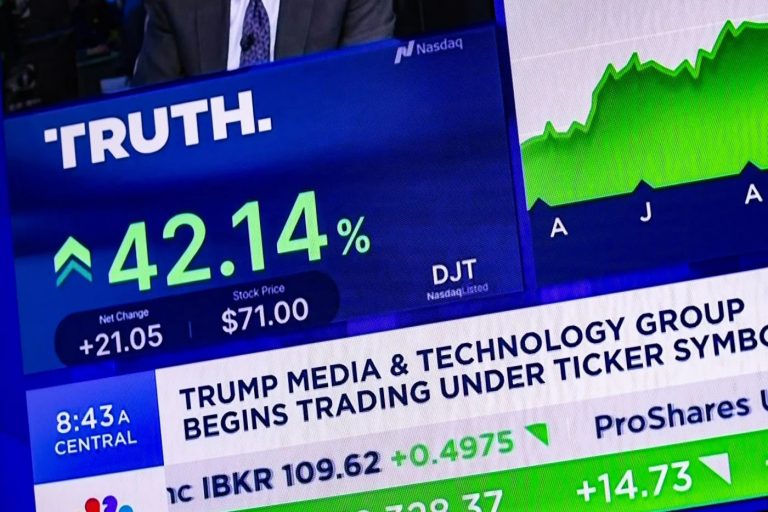
Trump Media & Technology Group, the company behind Truth Social, announced that it has acquired approximately $2 billion in Bitcoin and Bitcoin-related securities as part of its crypto treasury strategy. This move, which accounts for about two-thirds of the company’s $3 billion in liquid assets, includes an additional $300 million allocated to an options acquisition strategy for Bitcoin-related securities. The company plans to continue acquiring Bitcoin and may convert these options into spot Bitcoin based on market conditions.
CEO Devin Nunes stated that these assets aim to ensure financial freedom, protect against discrimination by financial institutions, and create synergies with a planned utility token for the Truth Social ecosystem. The announcement follows a $2.5 billion fundraising plan disclosed in May 2025, involving stock sales and convertible bonds. Shares of Trump Media (DJT) rose as much as 9% in early trading after the news.
By allocating two-thirds of its $3 billion in liquid assets to Bitcoin and Bitcoin-related securities, TMTG is heavily betting on cryptocurrency as a hedge against inflation, currency devaluation, or financial censorship. Bitcoin’s volatility, however, introduces significant risk, as its price can fluctuate dramatically (e.g., Bitcoin’s price has ranged from $30,000 to over $100,000 in recent years). A sharp decline could erode TMTG’s financial position, while a surge could bolster its balance sheet.
The move signals confidence in Bitcoin’s long-term value and aligns TMTG with the growing trend of corporate Bitcoin adoption (e.g., MicroStrategy, Tesla in the past). The 9% stock price surge for DJT post-announcement suggests investor enthusiasm, but sustained market confidence will depend on Bitcoin’s performance and TMTG’s execution of its crypto strategy. The $300 million options strategy for Bitcoin-related securities provides flexibility to pivot based on market conditions, potentially mitigating risk. However, converting options to spot Bitcoin could amplify exposure to volatility.
Register for Tekedia Mini-MBA edition 20 (June 8 – Sept 5, 2026).
Register for Tekedia AI in Business Masterclass.
Join Tekedia Capital Syndicate and co-invest in great global startups.
Register for Tekedia AI Lab.
TMTG’s stated goal of protecting against “discrimination by financial institutions” aligns with a narrative of resisting centralized financial systems, often associated with “Big Tech” or “Big Finance.” This resonates with Bitcoin’s ethos of decentralization and censorship resistance, appealing to supporters skeptical of traditional institutions. By embracing Bitcoin, TMTG positions itself within the pro-crypto movement, which has gained traction among conservative and libertarian groups.
The planned utility token for the Truth Social ecosystem suggests an ambition to integrate blockchain technology into its platform, potentially for payments, rewards, or decentralized features. This could differentiate Truth Social from competitors but risks regulatory scrutiny, especially given the SEC’s strict stance on crypto tokens. The U.S. regulatory environment for cryptocurrencies remains uncertain, with potential crackdowns on unregistered securities or tax evasion.
TMTG’s Bitcoin holdings and planned token could attract attention from the SEC, IRS, or other agencies, especially given the company’s high-profile political associations. The announcement could fuel speculation in Bitcoin markets, particularly if perceived as a politically motivated move. Critics may argue it inflates Bitcoin’s price artificially, drawing scrutiny from regulators or market watchdogs.

Bitcoin’s accessibility is limited to those with technical knowledge or financial resources, potentially alienating TMTG’s broader user base. If the utility token becomes central to Truth Social, it could create barriers for non-crypto-savvy users, limiting platform adoption. The move aligns TMTG with pro-crypto conservatives and libertarians who view Bitcoin as a tool for financial sovereignty. Conversely, it may alienate critics who associate crypto with speculation, fraud, or environmental concerns (e.g., Bitcoin mining’s energy consumption).
By framing the acquisition as a defense against financial discrimination, TMTG reinforces a narrative of distrust in banks and government institutions. This resonates with its base but risks further polarizing those who support traditional financial systems or regulatory oversight. Bitcoin’s high entry cost and the technical complexity of crypto markets exclude many lower-income individuals, including some of TMTG’s target audience. This could exacerbate perceptions of economic elitism, even among supporters, if the benefits of TMTG’s crypto strategy.
TMTG’s heavy Bitcoin allocation contrasts with traditional corporate treasury strategies (e.g., holding cash or bonds). If successful, it could validate crypto as a mainstream asset, but a crash could fuel criticism that TMTG prioritizes speculative bets over stability, deepening divides between crypto advocates and skeptics. Integrating a utility token into Truth Social may appeal to crypto enthusiasts but could alienate less tech-savvy users, particularly older demographics who form a significant portion of TMTG’s base.

By doubling down on crypto, TMTG further differentiates itself from mainstream platforms like X or Meta, which have not heavily embraced blockchain. This could solidify Truth Social’s niche as a platform for a specific ideological and technological subculture but limit its broader appeal. The stock surge and media attention boost TMTG’s visibility, potentially attracting new investors and users to Truth Social. However, Bitcoin’s volatility and regulatory risks could lead to financial instability if not managed carefully.
If successful, TMTG’s crypto strategy could position it as a leader in the convergence of social media and blockchain, potentially influencing other platforms to follow suit. However, failure (e.g., a Bitcoin crash or regulatory crackdown) could damage TMTG’s credibility and financial health, reinforcing critics’ skepticism. The move entrenches TMTG in a polarizing space, aligning it with crypto’s anti-establishment ethos while risking alienation of those wary of speculative or unregulated markets.
TMTG’s $2 billion Bitcoin acquisition is a bold, high-risk move that strengthens its anti-establishment brand and aligns it with the pro-crypto movement. While it may enhance financial flexibility and appeal to a niche audience, it risks exacerbating divides between crypto advocates and skeptics, tech-savvy and traditional users, and those who trust versus distrust centralized institutions. The success of this strategy hinges on Bitcoin’s performance, regulatory developments, and TMTG’s ability to integrate crypto into Truth Social without alienating its core user base.