

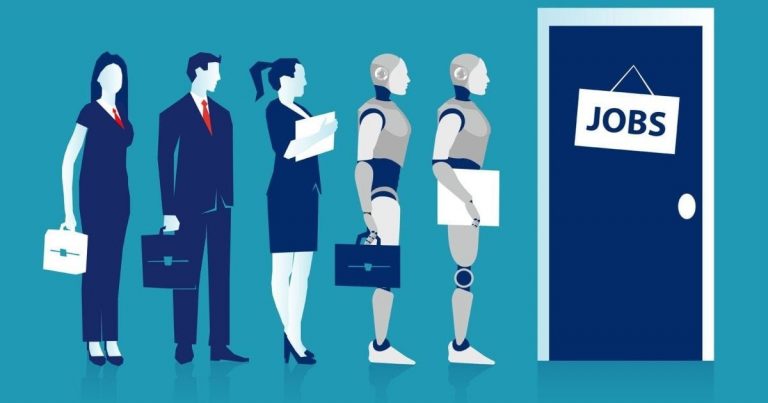
A recent MIT study has revealed that artificial intelligence (AI) could replace 11.7% of U.S. jobs, equivalent to roughly $1.2 trillion in wages.
Using the Iceberg Index, developed by Oak Ridge National Laboratory, the research simulates interactions among 151 million workers to assess AI’s impact. The findings highlight potential disruptions across sectors, including finance, health care, and professional services.
The researchers discovered that the obvious effects of AI such as layoffs and role changes in tech, computing, and IT account for only the “tip of the iceberg,” representing just 2.2% of total wage exposure, or about $211 billion. Hidden beneath the surface is the true scale of potential disruption; $1.2 trillion in wages tied to routine tasks in fields like human resources, logistics, finance, and office administration. These areas, often underestimated in automation predictions, make up the bulk of the risk.
Register for Tekedia Mini-MBA edition 20 (June 8 – Sept 5, 2026).
Register for Tekedia AI in Business Masterclass.
Join Tekedia Capital Syndicate and co-invest in great global startups.
Register for Tekedia AI Lab.
The researchers emphasized that the index is not designed to forecast the exact timing or location of job losses. Instead, it provides a skills-focused snapshot of what current AI systems are capable of and offers policymakers a structured framework to test various what-if scenarios before committing to major funding decisions or legislative action.
The study’s findings align with the World Economic Forum’s Future of Jobs Report 2025, which forecasts that 92 million jobs could be displaced by AI by 2030. Research also suggests that Black and Latino/Hispanic workers face disproportionate risks because they are more likely to occupy roles vulnerable to automation, raising concerns that AI could deepen existing racial and economic inequalities if not properly managed.
Despite the risks, the outlook is not entirely negative. The same global projections indicate that AI will help create 170 million new jobs by 2030, resulting in a net gain of 78 million roles an overall 7% increase. Roles expected to grow include construction workers, delivery drivers, salespeople, and food processing workers. Conversely, occupations such as cashiers, ticket clerks, administrative assistants, cleaners, and housekeepers face the highest risk of displacement.

A 2023 McKinsey report focusing on Black communities further underscores how generative AI could affect underrepresented groups, stressing the need for proactive workforce development strategies.
Major corporations are announcing large layoffs before the end of the year, and this could extend into 2026. On the other hand, typical blue-collar roles in construction, healthcare, and hospitality are experiencing shortages because of a decrease in job applications.
Although there is high demand for employees with advanced AI skills, other factors, such as the current political climate, economic conditions, and the supply of workers, also influence the job market.

As the job market evolves, employers are responding, 77% of businesses plan to retrain employees with AI-related skills. The report emphasizes that workers who acquire competencies in AI, machine learning, and data analytics through certifications or micro-credentials will be better positioned to thrive. By learning to work alongside AI, individuals can boost productivity and future-proof their careers.
The study concludes that adaptability and lifelong learning are essential in a rapidly shifting labor landscape. Staying informed on AI developments, participating in training opportunities, and embracing continuous upskilling will help workers navigate a tech-driven future with confidence.