

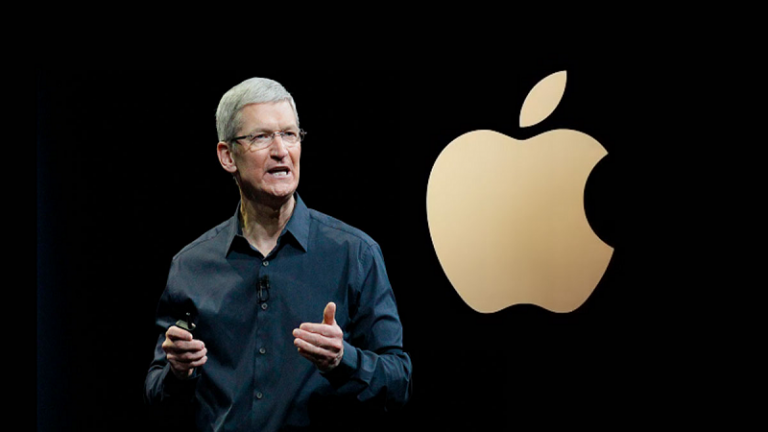
Apple Inc. CEO Tim Cook is set to meet with President Donald Trump at the White House on Thursday, as the tech giant faces growing uncertainty over U.S.-China trade tensions and privacy disputes with the U.S. government.
The meeting, first reported by Bloomberg, comes at a time when business leaders across industries are scrambling to mitigate the impact of Trump’s proposed tariffs, which could disrupt supply chains and drive up costs for American consumers.
A source familiar with the meeting said Cook and Trump will discuss a range of issues, but the agenda was not disclosed. However, analysts expect the conversation to revolve around two critical challenges for Apple: Trump’s tariffs on Chinese-made goods and Apple’s continued resistance to government demands for backdoor access to encrypted iPhones.
Register for Tekedia Mini-MBA edition 20 (June 8 – Sept 5, 2026).
Register for Tekedia AI in Business Masterclass.
Join Tekedia Capital Syndicate and co-invest in great global startups.
Register for Tekedia AI Lab.
Since Trump’s reelection, Cook has made a concerted effort to maintain a working relationship with the administration, attending Trump’s inauguration last month and visiting his Mar-a-Lago estate during the presidential transition. However, the growing threat of sweeping tariffs on tech products has prompted Apple and other U.S. companies to seek clarity on how they will be affected—and what they can do to protect their businesses.
Apple, the most valuable company in the world, is particularly vulnerable to Trump’s aggressive trade policies, given its heavy reliance on China for manufacturing and the U.S. for sales. The president has repeatedly vowed to impose tariffs on a broad range of imports, arguing that higher duties will force U.S. companies to shift production back home.
Apple relies on Chinese manufacturers like Foxconn and Pegatron to assemble its flagship devices, including the iPhone. With a 10% tariff on Chinese-made goods already in place and the possibility of even steeper duties in the coming months, Apple could face higher production costs, forcing the company to either raise prices for consumers or absorb the financial hit.

During Trump’s first term, Cook was able to negotiate tariff carve-outs for some Apple products, ensuring that key devices like the iPhone and MacBooks remained exempt from new duties. However, this time around, Trump has suggested that those special exemptions may not be granted.
Adding to Apple’s troubles, China is reportedly considering launching an antitrust probe into the company’s App Store fees, a move that could jeopardize Apple’s dominance in one of its largest markets.
U.S. Companies Scramble to Limit Tariff Fallout
Apple is not alone in its concerns. Business leaders across multiple industries have been scrambling to assess the potential impact of Trump’s tariffs and devise strategies to limit the damage.

Since Trump’s reelection, CEOs of major corporations—including automakers, tech firms, and retail giants—have been holding internal meetings and strategy sessions to determine how to curtail the financial burden of new tariffs. Some companies are considering diversifying supply chains, shifting production to other countries, or pushing price increases onto consumers.
Walmart CFO John David Rainey recently warned that while two-thirds of Walmart’s products are sourced domestically, tariffs on imported goods from Canada, Mexico, and China would still have a ripple effect, raising costs for businesses and consumers.
“We’ve lived in a tariff environment for the last seven or eight years, and we’ll do what we know how to do,” Rainey told CNBC. “We’ll work with suppliers, lean into our private brand, and shift supply where necessary.”
Many companies fear that steep new tariffs could reignite inflation, which had begun to ease after a period of rapid price increases during the post-pandemic economic recovery. The Federal Reserve has already factored the tariff debate into its calculations, recently warning that potential new trade restrictions could push inflation higher, forcing the central bank to delay interest rate cuts.
The Federal Reserve noted in its recent report that business contacts in a number of districts indicated that firms would attempt to pass on to consumers higher input costs arising from potential tariffs.
Privacy Battle: Trump vs. Apple on Encrypted Phones
Beyond trade concerns, Apple and Trump’s administration have clashed over data privacy, particularly regarding encrypted iPhones. Trump has long pressured Apple to help law enforcement unlock devices linked to criminal investigations. However, Apple has repeatedly refused to build a backdoor into its iOS system, citing user security risks.
Trump has criticized Apple’s stance on encryption, arguing that the company should cooperate more with federal law enforcement.
Apple, on the other hand, has defended its privacy policies, arguing that creating a backdoor for one case would weaken security for all users.
With Trump pushing for tougher regulations on tech companies, privacy advocates worry that Apple may come under renewed pressure to compromise its encryption policies.
What’s at Stake for Apple?
Analysts expect that Cook’s meeting with Trump could have significant implications for Apple’s future, particularly in three key areas:
- Trade and Tariffs – If Apple fails to secure exemptions, it risks higher production costs, potential supply chain disruptions, and higher prices for consumers.
- China’s Regulatory Threats – An antitrust investigation in China could undermine Apple’s App Store revenue and threaten its market position in Asia.
- Privacy and Government Access – Trump may push Apple to weaken its encryption policies, setting a dangerous precedent for digital privacy.
While Cook has successfully navigated political challenges in the past, analysts warn that Apple’s current situation may be different.
Bank of America estimates that whatever Apple does with manufacturing, and wherever it does it, the company will face a minimum of a 10% tariff. In its calculation, the Bank of America added that Apple would face a loss of 26 cents in earnings per share. That amounts to a drop of around 3% across calendar year 2026.