

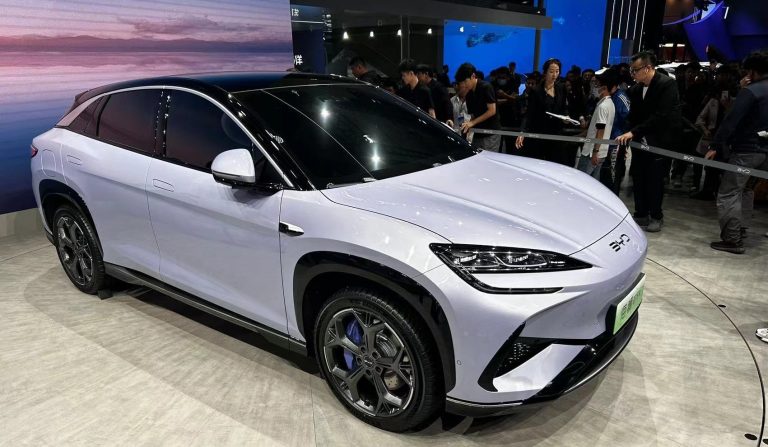
On the grounds of a former Ford stronghold in Brazil’s Bahia state, Chinese electric vehicle giant BYD is attempting something few foreign automakers have managed in recent years: rebuilding large-scale car manufacturing in the country while fending off political, labor, and industry backlash.
BYD is targeting 50% local production and sourcing of vehicle components at its new Camaçari factory by the end of 2026, a move the company says is essential to its ambition of becoming Brazil’s top-selling automaker by 2030. The push toward localization comes as critics accuse the EV maker of undercutting domestic manufacturers through heavy reliance on imports and temporary tariff exemptions.
“We got here at a very fast speed — the pace that we need to maintain to reach this goal,” Alexandre Baldy, BYD’s senior vice president in Brazil, told Reuters during a visit to the sprawling industrial complex.
Register for Tekedia Mini-MBA edition 20 (June 8 – Sept 5, 2026).
Register for Tekedia AI in Business Masterclass.
Join Tekedia Capital Syndicate and co-invest in great global startups.
Register for Tekedia AI Lab.
The internal deadline for meeting the 50% local-content threshold is January 1, 2027, he said, covering both components produced in-house and parts supplied by Brazilian firms, including tires and other key inputs.
The factory, located near Salvador, has already produced about 25,000 electric and hybrid vehicles since operations began in October, making Brazil BYD’s largest market outside China. The site spans more than 4 million square meters and occupies land vacated by Ford Motor Co when the U.S. automaker shut its Brazilian manufacturing operations in 2021, a decision that sent shockwaves through the local economy.
The symbolism of BYD’s arrival has been underscored by the city of Camaçari renaming a nearby avenue from Henry Ford to BYD, marking a sharp transition from American to Chinese industrial influence. For Brazilian policymakers eager to revive manufacturing and attract foreign investment, the project represents both opportunity and risk.

At present, BYD assembles vehicles using semi-knocked-down (SKD) kits imported from abroad, a model that benefited from an import tax exemption that recently expired. Baldy said the company will seek an additional quota to extend the exemption through the middle of this year, but stressed that SKD assembly is only a bridge to full-scale local production.
“Cars must be produced with local components to be economically and financially viable,” he said, adding that stamping, welding, and painting facilities at the plant are nearing completion.
Those upgrades are part of BYD’s first investment phase in Brazil, valued at 5.5 billion reais ($1.1 billion). The company plans to lift annual capacity to 300,000 vehicles, up from an estimated 150,000 units by the end of 2026. Meeting local-content requirements will also unlock a new strategic goal: exporting vehicles from Brazil to neighboring Mercosur countries, potentially as soon as this year.

That prospect has heightened concerns among regional automakers and labor unions, who argue that BYD’s rapid expansion, aided by lower-cost Chinese imports and favorable tariff treatment, threatens domestic producers. Brazil has already begun phasing tariffs back in on imported electric vehicles, a move widely seen as an attempt to force companies like BYD to invest more deeply in local manufacturing.
Baldy said BYD is responding by accelerating production lines that will eventually generate up to 20,000 jobs in Brazil. The Camaçari complex currently employs about 5,000 workers, including roughly 2,300 BYD staff and around 2,500 contractors and service providers.
For some employees, the return of car production to the site carries emotional weight. Adson Santana, a BYD assembly manager, said he was overcome when he returned to the same factory grounds where he once worked for Ford before its closure. The American automaker’s exit left thousands unemployed and symbolized the decline of Brazil’s auto manufacturing base.
BYD’s expansion has also faced scrutiny beyond trade and industrial policy. Last year, prosecutors launched a labor investigation into conditions during the construction of the plant. The case was settled late in the year, with contractors agreeing to pay 40 million reais in damages. Baldy said the compliance agreement was signed by the contractors, not BYD, though the episode highlighted the reputational and regulatory risks surrounding the project.
As BYD presses ahead, its Brazilian strategy is increasingly viewed as a test case for how Chinese manufacturers can adapt to political and economic realities outside their home market. Success in Camaçari would give BYD not just a dominant foothold in Brazil, but a regional export hub and a powerful counter to claims that its global rise is built solely on imports.
Now, Brazil must weigh the benefits of jobs, investment, and cheaper electric vehicles against the long-term health of its domestic auto industry.