

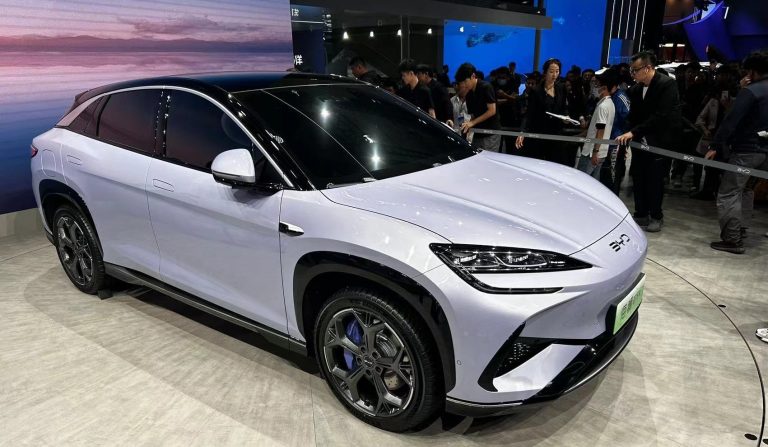
China’s electric vehicle giant BYD is set to begin assembling vehicles at its new factory in Brazil as early as this month, marking its boldest overseas expansion move yet.
The push into Brazil, BYD’s largest foreign market, comes amid a global acceleration of its footprint—at a time when rival Tesla is grappling with declining deliveries and growing investor fatigue, partly fueled by CEO Elon Musk’s deepening political entanglements.
BYD’s senior vice president in Brazil, Alexandre Baldy, told reporters that the plant in Camaçari, Bahia state—acquired from Ford in 2023—will begin assembling 50,000 vehicles this year using imported “Complete Knock Down” (CKD) kits. While full production is scheduled for July 2026, Baldy confirmed the company has already completed this year’s vehicle imports ahead of Brazil’s new EV import tariffs, which kicked in on July 1.
Register for Tekedia Mini-MBA edition 20 (June 8 – Sept 5, 2026).
Register for Tekedia AI in Business Masterclass.
Join Tekedia Capital Syndicate and co-invest in great global startups.
Register for Tekedia AI Lab.
“We should inaugurate in the coming days,” Baldy said. “We’ve already completed this year’s imports, taking advantage of the period before the import tax increase.” He added that BYD is also negotiating reduced tax rates on locally assembled vehicles.
The move positions BYD to significantly reduce its dependence on imports and better compete under Brazil’s new protectionist measures aimed at strengthening domestic manufacturing.
A Strategic Push Beyond China
BYD’s Brazil assembly plant is being hailed as its most ambitious global investment to date, capping a string of recent expansions that are rapidly turning the Shenzhen-based firm into the world’s top EV powerhouse.

In 2023, BYD overtook Tesla in global EV deliveries, shipping 3.02 million electric vehicles compared to Tesla’s 1.81 million, according to company filings. BYD has since broadened its international footprint with factories in Thailand and plans in Hungary, where it will build its first passenger EV plant in Europe. In Uzbekistan, the company announced plans to build electric buses and hybrids. The company also entered Japan and India in 2022, where it’s been aggressively rolling out its popular Atto 3 SUV.
The Brazil venture marks its first car assembly facility in the Americas, and BYD is positioning the move as a springboard into Latin America’s growing EV market. Once fully operational, the Camaçari complex is expected to create up to 20,000 direct and indirect jobs, adding political and economic weight to its presence in the region.
Labor and Regulatory Hurdles
However, the move has come with some challenges. In December 2024, local labor inspectors accused Chinese contractors building the Bahia plant of subjecting workers to slavery-like conditions. Brazilian prosecutors filed a lawsuit in May 2025, citing allegations of human trafficking, following failed settlement talks.

Baldy said BYD has “always sought to respect Brazilian law and human dignity in all operations” and is working to reach a resolution, but offered no explanation for why negotiations with labor authorities broke down.
In the meantime, BYD took advantage of Brazil’s pre-tariff window, flooding the market with over 22,000 finished vehicles from China in the first five months of the year. The surge drew backlash from local automakers who accused BYD of delaying its production ramp-up while benefiting from a temporary trade advantage.
Tesla on the Back Foot
While BYD’s dominance grows, Tesla is showing signs of stress. The company recently reported a 14% year-on-year drop in vehicle deliveries for Q2 2025, missing Wall Street expectations and signaling deepening concerns about slowing demand, rising competition—especially in China—and a brand that’s losing its shine in key international markets.
Much of the concern among investors is tied to Elon Musk’s polarizing political activities. His recent announcement of a new political party, the “America Party”, has triggered fresh unease on Wall Street, contributing to a $68 billion drop in Tesla’s market capitalization in a single day. Analysts warn that Musk’s political activism, especially his alignment with far-right U.S. politics, is alienating large swaths of Tesla’s traditional customer base—notably in Europe, where environmental consciousness and brand image are crucial.
“Very simply, Musk diving deeper into politics and now trying to take on the Beltway establishment is exactly the opposite direction that Tesla investors/shareholders want him to take during this crucial period for the Tesla story,” said Dan Ives, global head of tech research at Wedbush Securities.
In contrast, BYD has remained largely apolitical, focusing instead on product development, price competitiveness, and strategic global alliances. Its dual strategy of selling both full EVs and plug-in hybrids has also helped it weather markets where charging infrastructure remains limited.
BYD’s aggressive expansion—underpinned by price undercutting, vertical integration, and government support—has become a case study in how to beat Western automakers at their own game. With the Brazil assembly plant, BYD is not just entering a new geography—it’s sending a message: the Chinese EV leader is no longer playing catch-up. It’s setting the pace.
Meanwhile, with Tesla stumbling and competitors like Volkswagen and GM still recalibrating their EV roadmaps, BYD’s calculated bets abroad—from São Paulo to Budapest to Bangkok—could firmly entrench it as the dominant global force in electric mobility.