

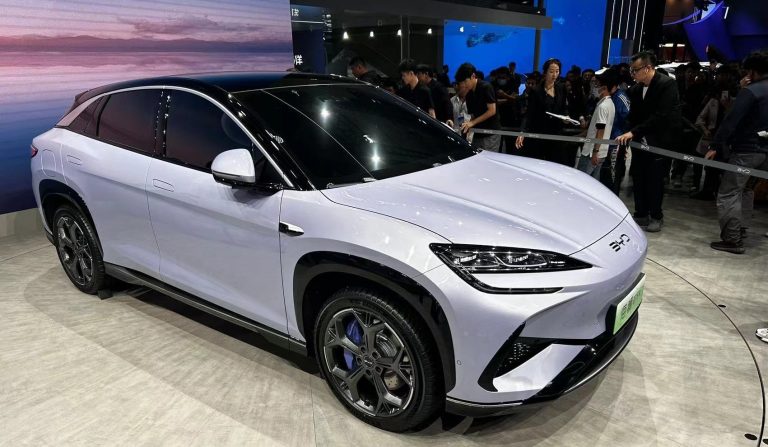
Chinese electric vehicle manufacturer BYD recorded a massive surge in U.K. sales last month, selling 11,271 cars — an 880% year-on-year increase, the company announced on Monday.
The jump solidifies the United Kingdom as BYD’s largest market outside China, underscoring the company’s accelerating global footprint despite intensifying scrutiny of Chinese EV makers in Europe.
The automaker said total sales in the U.K. so far this year have crossed 35,000 units, giving it a 2.2% market share year-to-date. The performance marks a milestone for BYD, which started as a mobile phone battery manufacturer before transforming into the world’s largest EV producer by volume.
Register for Tekedia Mini-MBA edition 20 (June 8 – Sept 5, 2026).
Register for Tekedia AI in Business Masterclass.
Join Tekedia Capital Syndicate and co-invest in great global startups.
Register for Tekedia AI Lab.
Affordable EVs Drive Growth
BYD’s success in the U.K. has been fueled by the company’s strategy of offering lower-priced electric vehicles compared to Western competitors. Its Dolphin compact EV, which starts at just over £26,000 ($34,900), undercuts Tesla’s Model 3, priced at around £40,000, by nearly one-third. The company’s hybrid SEAL U DM-i and fully electric SEALION 7 were among its best-selling models in September, appealing to cost-conscious consumers seeking performance and value.
In addition to its growing retail presence, BYD recently opened a battery service facility in the U.K., primarily to support its electric bus operations, reflecting its commitment to deeper local integration.
Policy Boost and Market Trends
The U.K.’s broader EV market also experienced a strong month. According to the Society of Motor Manufacturers and Traders (SMMT), battery electric vehicle (BEV) sales rose 29.1% year-on-year to 72,779 units in September, following the reintroduction of an EV purchase grant in July aimed at boosting adoption.

However, the incentive excluded Chinese EV brands, a move widely interpreted as a protectionist measure amid growing trade and security tensions between London and Beijing.
European Expansion Gains Pace
Beyond the U.K., BYD’s success in Europe has been equally striking. The European Automobile Manufacturers Association (ACEA) reported that BYD’s sales across Europe rose more than 200% year-on-year as of August, while Tesla’s European deliveries dropped by 36% over the same period.
The surge places BYD among the most formidable challengers to established Western automakers, particularly as it expands its network across key European markets, including Germany, France, and Norway. The company has also announced plans to build a major manufacturing plant in Hungary, further embedding itself within the continent’s auto supply chain.

Domestic Slowdown and Stock Movement
Despite its global gains, BYD recently reported its first year-on-year decline in deliveries in China in 2025, with volumes falling nearly 6%. Analysts attribute the dip to intensifying domestic competition from rivals such as Li Auto, Nio, and Xpeng, along with price wars triggered by Tesla’s continued markdowns in the Chinese market.
Even so, BYD remains China’s best-selling car brand overall, a position it achieved last year by overtaking Volkswagen in total vehicle sales.
Following Monday’s announcement, BYD’s shares slipped 1.3% in Hong Kong trading, as investors weighed the company’s slowing domestic growth against its expanding global market dominance.
Industry observers say BYD’s performance in the U.K. and Europe highlights how Chinese automakers are redefining the global EV industry, leveraging scale, affordability, and strong battery technology to capture markets once dominated by Western firms.
While China’s EV sector faces trade barriers and potential tariffs from the European Union’s ongoing anti-subsidy probe, BYD’s surge in U.K. sales underlines a growing appetite among European consumers for cheaper, high-quality electric cars — even amid geopolitical headwinds.
BYD’s international push and its success in the U.K. signal a broader shift in the balance of power in the global auto industry — one in which Chinese automakers are no longer niche players but central competitors shaping the future of mobility.