

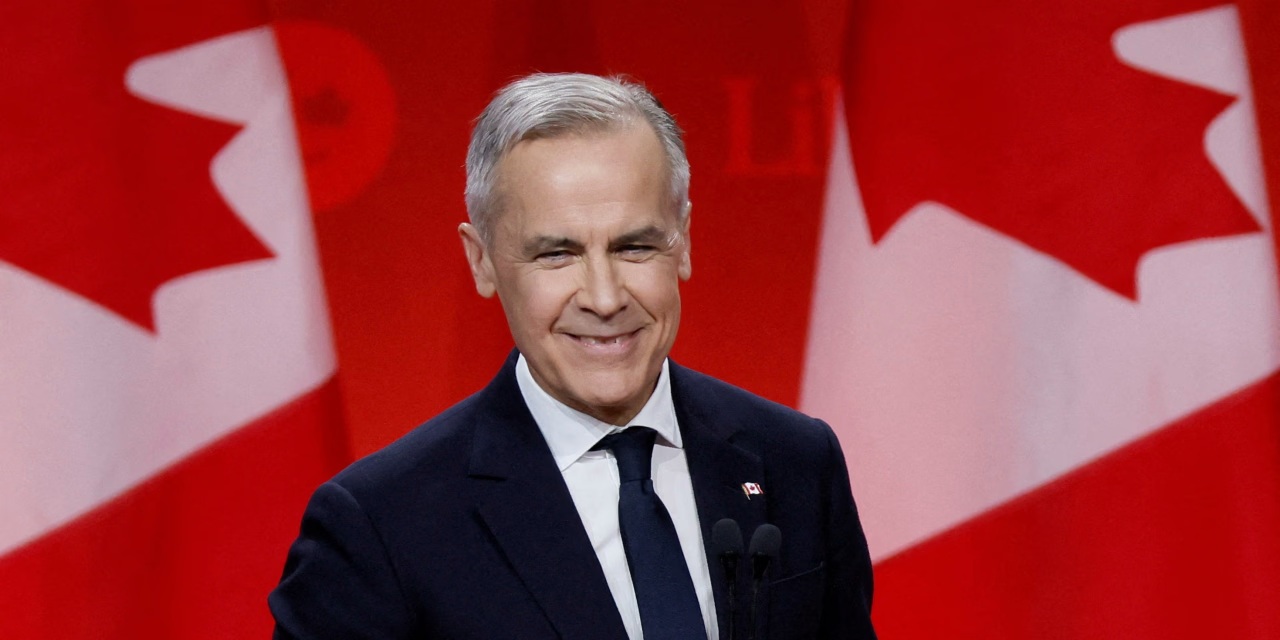
Canada’s Prime Minister Mark Carney has sealed a sweeping agreement with Alberta that strips away two major federal climate rules, clears the path for a West Coast oil pipeline, and underlines what many see as hypocrisy in the country’s energy politics.
The move is echoing far beyond Ottawa and Edmonton as it is also being read internationally as another example of how Western governments push tough climate measures on developing nations while choosing flexibility for themselves when economic pressure rises.
Carney and Alberta Premier Danielle Smith signed the deal on Thursday, scrapping Ottawa’s planned emissions cap on the oil and gas sector and dropping nationwide clean electricity rules. Alberta, in exchange, will strengthen industrial carbon pricing and endorse the massive Pathways Plus carbon capture-and-storage project, which aims to capture emissions from the oil sands and funnel them into a shared storage network.
Register for Tekedia Mini-MBA edition 20 (June 8 – Sept 5, 2026).
Register for Tekedia AI in Business Masterclass.
Join Tekedia Capital Syndicate and co-invest in great global startups.
Register for Tekedia AI Lab.
The agreement instantly triggered political ripples inside Carney’s minority government. Steven Guilbeault, who served as environment minister under Justin Trudeau, resigned from cabinet hours after the announcement, arguing that key parts of Canada’s climate architecture were being taken apart.
For Carney, the shift is tied to economic survival. Speaking at an industry event in Calgary, he said President Donald Trump’s tariffs and the uncertainty around them will remove about $50 billion from Canada’s economy, an amount he likened to $1,300 per Canadian. With ninety percent of the country’s oil exports heading to the United States, Carney said it is no longer feasible to let one market determine the fate of such a central industry. He reaffirmed Canada’s goal of net-zero emissions by 2050 while acknowledging the need to adjust Trudeau-era environmental restrictions.
Industry players welcomed the deal, calling it overdue. The Canadian Association of Petroleum Producers said the end of the emissions cap, the planned changes to the Competition Act, and the commitment to open new markets amount to an important policy reset. Environmental organizations expressed alarm, warning that the move weakens national standards at a time when climate action requires stronger coordination, not fragmentation.

A Pipeline Alberta Has Wanted For Years
Alberta is exploring a new crude oil pipeline to British Columbia’s northwest coast that would finally offer direct access to Asian markets. No private company has taken on the project, largely due to federal rules that operators say made approvals nearly impossible. Companies and the Alberta government have said repeatedly that Ottawa would need to remove the emissions cap and reconsider the Oil Tanker Moratorium Act before anyone in the private sector would take on such a high-risk infrastructure plan.
Carney has now stepped in, promising a “clear and efficient” approval pathway and confirming that the marquee piece of the project — a pipeline carrying one million barrels of low-emission Alberta bitumen a day — would be financed and built by private operators. The federal government will amend tanker legislation so that Canadian crude can reach Asian buyers.
That promise lands in a province where opposition is already entrenched. British Columbia Premier David Eby said the tanker law should remain untouched. Several Indigenous groups along the northwest coast issued their own statement saying they will not accept oil tankers in their waters and that the proposed pipeline “will never happen.”

Even with the C$34 billion expansion of the federally owned Trans Mountain pipeline, which tripled its capacity last year, analysts expect existing routes to hit their limit by the end of the decade, especially as Alberta increases output.
What This Means for the West’s Climate Posture
In global energy circles, the Carney-Alberta deal is being watched closely for what it says about Western climate diplomacy. For years, wealthy governments in Europe and North America have pushed African nations to move rapidly toward clean energy and scale back fossil fuels, often tying funding and international support to those commitments.
Canada, the United States, and the European Union have repeatedly urged African oil-producing nations such as Nigeria, Angola, and Mozambique to drop new oil and gas projects and pivot toward renewables, arguing that the world cannot meet its climate goals without such transitions. At the same time, African leaders have countered that Western economies continue to rely heavily on fossil fuels, build new LNG projects, and relax emissions rules whenever national interests are at risk.
This new Canadian deal is now being cited as a fresh example of that imbalance. It shows how Western governments can lean toward energy security during moments of economic risk while expecting developing nations to move faster and with fewer options. Carney’s decision to roll back domestic climate restrictions illustrates the kind of concessions major economies are willing to make when their own industries face pressure.
African officials and analysts who follow global climate negotiations have long argued that Western expectations should not shape the continent’s economic future. Carney’s agreement with Alberta reinforces that view, making it harder for Western countries to demand strict fossil-fuel cuts abroad when they are publicly loosening their own rules at home.
Carbon Pricing, Power Infrastructure, and a New National Electricity Strategy
Along with the major reversals, the federal government and Alberta plan to finalize a new industrial carbon pricing deal by April 1 next year. They will also collaborate on building the Pathways Plus carbon capture system, promoted as the world’s largest planned CCS project.
Ottawa will support Alberta’s push into nuclear power, help strengthen its electricity grid to accommodate the needs of AI data centers, and back the construction of transmission lines linking the province with neighboring regions. Carney said the federal government will unveil a new electricity strategy aimed at doubling Canada’s clean-grid capacity.