

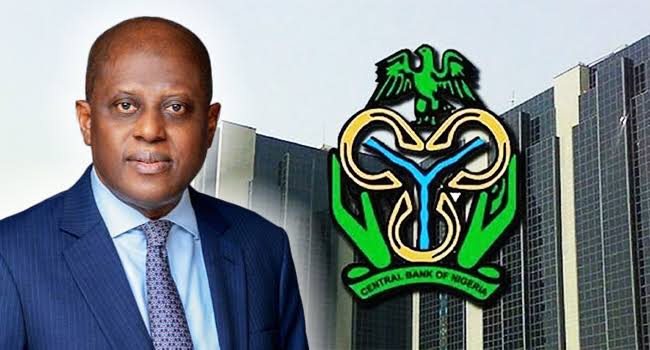
Governor of the Central Bank of Nigeria, Yemi Cardoso, has urged African countries to align more deliberately in pursuit of a unified economic future, as the African Export-Import Bank (Afreximbank) continues to grow into a continental economic force.
Cardoso issued the call for “strategic cohesion” on Wednesday while speaking at the ongoing Afreximbank 2025 Annual Meetings, themed “Building the Future on Decades of Resilience,” where he also praised the bank’s expansive transformation.
Held in the presence of heads of state, trade ministers, central bankers, private sector leaders, and development experts, the annual gathering offered a platform for evaluating the bank’s progress and assessing the next phase of economic integration and financial self-reliance in Africa.
Register for Tekedia Mini-MBA edition 20 (June 8 – Sept 5, 2026).
Register for Tekedia AI in Business Masterclass.
Join Tekedia Capital Syndicate and co-invest in great global startups.
Register for Tekedia AI Lab.
Cardoso applauded Afreximbank’s exponential growth from a modest initial capital base of $750 million to over $40 billion in total capital assets as of 2024. He described this leap as evidence of the bank’s prudent financial management and the increasing confidence African states and global investors place in the continent’s institutions.
“This remarkable trajectory reflects not only prudent financial stewardship but also the continent’s growing confidence in its capabilities,” Cardoso said. “It is also a testament to the expanding coalition of stakeholders, spanning 51 African countries and a mix of public and private investors who have placed their trust in Afreximbank.”
He described the bank as more than a lender—”a convener of ambition and a catalyst for change”—playing a vital role in designing and implementing strategies that are elevating African economic agency on the global stage.

Challenges Amid Progress
While recognizing the bank’s successes, Cardoso cautioned against complacency, stressing that Africa remains exposed to formidable threats: rising global protectionism, shifting geopolitical tensions, and a fragmented world economy. These trends, he warned, could obstruct Africa’s path to sustainable development unless mitigated by more unified policies and regional coordination.
He explained that these challenges threaten not only the developmental prospects of individual countries but also the integrity of Africa’s broader growth agenda. Afreximbank’s role, therefore, becomes even more critical in stabilizing the region’s financial architecture and defending its economic sovereignty.
AfCFTA, Diaspora Engagement, and Institutional Resilience
To fortify the continent’s economic future, Cardoso called for a concerted push to deepen regional integration, accelerate the implementation of the African Continental Free Trade Area (AfCFTA), and build stronger links with the African diaspora. These efforts, he said, will position African economies to better respond to crises, harness capital, and build transnational supply chains.

He added that institutions must embrace long-term thinking and crisis preparedness, underpinned by sound infrastructure, data integrity, and adaptive governance frameworks.
“First, it takes strategic foresight—the ability to look beyond the noise of the present and invest in solutions for the next decade, not just the next quarter. Resilient institutions are always thinking ahead. Second, it requires crisis preparedness,” he added.
Nigeria remains a cornerstone of Afreximbank’s operations and is one of its largest shareholders. The country is also a major recipient of the bank’s financing efforts. As of 2024, Nigeria accounted for nearly 60% of the bank’s $30 billion investment in Africa’s energy sector, according to internal figures.
These investments include substantial funding for Nigeria’s Dangote Refinery, the rehabilitation of the Port Harcourt Refinery, and the establishment of the Africa Energy Bank, headquartered in Abuja. These projects form part of a broader vision to make the Gulf of Guinea the heart of Africa’s energy independence, reducing the continent’s historic reliance on refined fuel imports.
Afreximbank is also instrumental in Nigeria’s emergence as Africa’s largest fertilizer producer, backing the sector to achieve an annual production capacity of 7.5 million metric tons. Additionally, the bank is expanding into the creative economy, offering credit lines, skill-building programs, and market development tools to support Nigeria’s growing cultural export industry.
Restoring Trust in Monetary Policy
Cardoso also used his platform to highlight the Central Bank of Nigeria’s current reform drive. He noted that the CBN is focused on restoring trust in the country’s monetary system through institutional transparency, credible policy signals, and the rebuilding of investor confidence.
He emphasized that strong monetary governance is essential not just for domestic stability but for Nigeria’s ability to function as a regional economic anchor.