

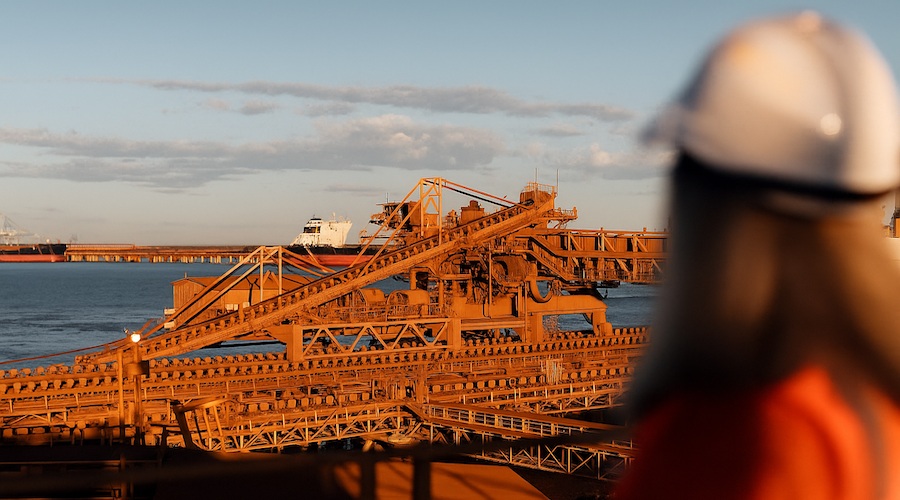
China’s state-backed iron ore buyer has instructed the country’s top steelmakers and traders to temporarily halt all purchases of dollar-denominated seaborne iron ore cargoes from BHP, Bloomberg reported on Tuesday, citing people familiar with the matter.
The directive is the latest escalation in Beijing’s effort to wield its market power. China consumes around 75% of global seaborne iron ore and has long sought to loosen the grip of the “Big Three” producers — BHP, Rio Tinto, and Vale — whose pricing influence has dominated the industry for years.
At the center of this campaign is China Mineral Resources Group (CMRG), a state-owned company established in 2022 to centralize iron ore procurement and bolster Beijing’s hand in price negotiations.
Register for Tekedia Mini-MBA edition 20 (June 8 – Sept 5, 2026).
Register for Tekedia AI in Business Masterclass.
Join Tekedia Capital Syndicate and co-invest in great global startups.
Register for Tekedia AI Lab.
Pressure Mounts on BHP
The timing is particularly challenging for BHP as the world’s largest listed miner, last month, reported its lowest annual profit in five years, blaming sluggish Chinese demand for dragging down iron ore prices. The company also announced cuts to capital and exploration spending, underscoring how market weakness is already reshaping its strategy.
Earlier this month, Bloomberg reported that CMRG had urged mills to suspend purchases of BHP’s Jimblebar blend fines after long-term contract talks broke down. Tuesday’s directive extends the restrictions to all dollar-denominated seaborne shipments, tightening pressure on the Australian miner.
Beijing’s Pricing Power Play
For Beijing, the move is both economic and political. Some experts believe that by pausing purchases in dollars, CMRG is reinforcing China’s push to shift more commodity trade into yuan-denominated contracts, reducing exposure to currency swings while promoting the yuan’s international role. The effort is part of a broader strategy to reduce reliance on foreign pricing mechanisms dominated by Australian and Brazilian suppliers.

The curbs are expected to reverberate beyond the iron ore pits. In financial markets, BHP’s shares are highly sensitive to Chinese demand signals, and traders will be watching closely for early signs of selling pressure on the Australian Securities Exchange and in London, where the miner has its dual listing. A prolonged pause in Chinese buying could weigh heavily on BHP’s stock valuation, especially given iron ore’s outsized role in its earnings mix.
Currency markets may also feel the strain. The Australian dollar, often viewed as a proxy for Chinese commodity demand, has historically reacted sharply to iron ore market disruptions. Analysts say further escalation of restrictions could add renewed volatility, particularly if traders view the move as a long-term shift in Chinese buying behavior.
Global commodity investors, meanwhile, may interpret Beijing’s directive as a test case for how far China is willing to go in reshaping trade terms with major suppliers. Hedge funds and institutional investors are already grappling with softer iron ore futures, and the pause risks reinforcing bearish sentiment across the sector.

While the strategy underscores China’s determination to leverage its purchasing power, it carries uncertainties. For BHP, losing access — even temporarily — to its largest customer could complicate cash flow forecasts and long-term planning. For China, reducing reliance on a key supplier risks short-term supply chain disruptions if mills struggle to secure alternative cargoes.
Still, Beijing’s directive marks a clear signal that China is no longer content to be a price taker in the global iron ore market. The financial and commodity markets now face the task of deciphering just how far that shift will go.