

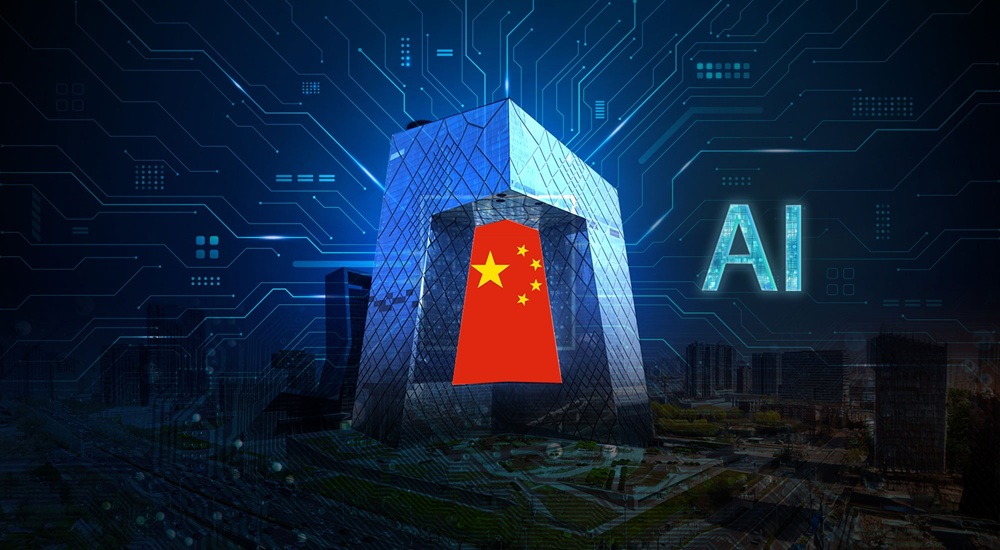
China can narrow its technological gap with the United States by leaning into greater risk-taking and homegrown innovation, according to leading artificial intelligence researchers, though restrictions on access to advanced semiconductor manufacturing tools continue to weigh heavily on the sector.
Speaking at an AI conference in Beijing on Saturday, senior figures from China’s fast-rising AI ecosystem said recent momentum in capital markets and research breakthroughs point to growing confidence in the country’s ability to challenge U.S. dominance in artificial intelligence, even as structural bottlenecks persist.
The comments come after China’s so-called “AI tiger” startups MiniMax and Zhipu AI posted strong debuts on the Hong Kong Stock Exchange this week, a milestone for Beijing’s push to accelerate AI and chip-related listings as it seeks domestic alternatives to advanced U.S. technology amid intensifying geopolitical rivalry.
Register for Tekedia Mini-MBA edition 20 (June 8 – Sept 5, 2026).
Register for Tekedia AI in Business Masterclass.
Join Tekedia Capital Syndicate and co-invest in great global startups.
Register for Tekedia AI Lab.
Yao Shunyu, a former senior researcher at ChatGPT maker OpenAI who was appointed Tencent’s chief AI scientist in December, said there was a high likelihood that a Chinese company could emerge as the world’s leading AI firm within the next three to five years. However, he cautioned that the lack of advanced chipmaking equipment remains the sector’s biggest technical hurdle.
“Currently, we have a significant advantage in electricity and infrastructure,” Yao said at the conference. “The main bottlenecks are production capacity, including lithography machines, and the software ecosystem.”
U.S. export controls have severely limited China’s access to cutting-edge semiconductor manufacturing tools, particularly extreme-ultraviolet lithography machines, which are essential for producing the most advanced chips used to train and deploy large AI models. While China has made progress toward developing its own alternatives, those efforts remain years away from commercial maturity.

Reuters reported last month that China has completed a working prototype of an extreme-ultraviolet lithography machine that could, in theory, produce chips rivaling Western technology. However, the machine has yet to manufacture functional chips. It may not do so until around 2030, according to people familiar with the matter, underscoring the long runway China still faces in closing the hardware gap.
Investment and Infrastructure Divide
Conference participants also acknowledged that the U.S. retains a significant lead in computing power, driven by massive capital spending by American technology giants and deep pools of private investment.
“The U.S. computer infrastructure is likely one to two orders of magnitude larger than ours,” said Lin Junyang, technical lead for Alibaba’s flagship Qwen large language model. “But I see that whether it’s OpenAI or other platforms, they’re investing heavily in next-generation research.”

By contrast, Lin said Chinese AI developers face tighter financial constraints, which shape how resources are allocated.
“We, on the other hand, are relatively strapped for cash; delivery alone likely consumes the majority of our computer infrastructure,” he said during a panel discussion at the AGI-Next Frontier Summit, hosted by the Beijing Key Laboratory of Foundational Models at Tsinghua University.
That funding gap has forced Chinese firms to prioritize efficiency over brute-force scaling, a dynamic that some researchers see as a competitive advantage rather than a weakness. Lin said limited resources have pushed Chinese engineers to pursue algorithm-hardware co-design, an approach that optimizes software to run large AI models on smaller, less expensive hardware.
Such techniques have helped Chinese companies deploy competitive models despite restrictions on access to the most advanced chips from U.S. suppliers like Nvidia, whose top products are subject to export bans.
A Shift in Risk Culture
Beyond technology and capital, industry leaders pointed to a cultural shift within China’s AI sector, particularly among younger entrepreneurs, as a critical factor in narrowing the gap with Silicon Valley.
Tang Jie, founder of Zhipu AI, which raised HK$4.35 billion in its Hong Kong initial public offering, said a growing willingness to embrace high-risk ventures is changing the innovation landscape.
“I think if we can improve this environment, allowing more time for these risk-taking, intelligent individuals to engage in innovative endeavors,” Tang said, “this is something our government and the country can help improve.”
That mindset represents a notable evolution in China’s technology sector, which has traditionally favored incremental improvement and commercial certainty over high-risk experimentation. Beijing’s recent moves to fast-track AI listings, support domestic chipmakers, and shield strategic industries from external shocks suggest policymakers are increasingly aligned with that shift.
Still, analysts say China’s path to global AI leadership will depend on whether it can translate innovation and efficiency into sustained breakthroughs while overcoming hardware constraints that remain largely outside its control.
In sum, Beijing’s AI elite is currently saying that the gap with the U.S. is real, but it is not insurmountable—and the next phase of the competition may be shaped as much by ingenuity and risk appetite as by raw computing power.