

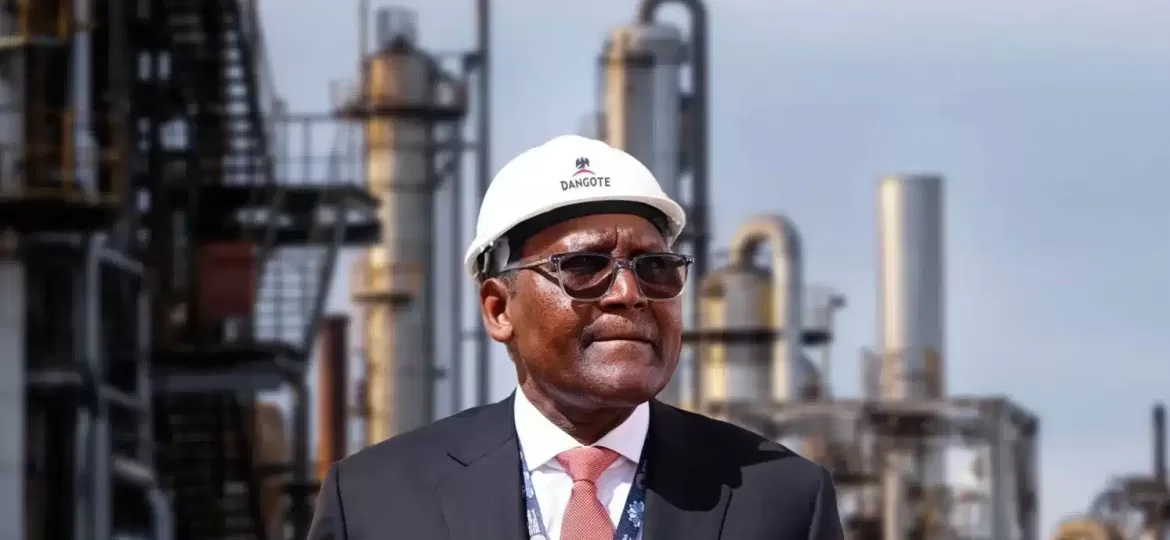
Dangote Industries Limited has signed a $4.2 billion natural gas supply agreement with GCL Group, locking in a 25-year energy stream for a planned fertilizer complex in Ethiopia in what is shaping up to be one of the most ambitious industrial projects on the continent.
The deal, signed in Lagos by Aliko Dangote, underpins a broader joint venture with Ethiopian Investment Holdings to build a $2.5 billion urea fertilizer plant in Gode, located in Ethiopia’s Somali Region.
At the core of the agreement is a strategic attempt to secure end-to-end control of the fertilizer value chain—from gas supply to production and export.
Register for Tekedia Mini-MBA edition 20 (June 8 – Sept 5, 2026).
Register for Tekedia AI in Business Masterclass.
Join Tekedia Capital Syndicate and co-invest in great global startups.
Register for Tekedia AI Lab.
According to Business Insider, the Gode plant, expected to be completed by 2029, will produce 3 million metric tons of urea annually, placing it among the largest single-site fertilizer facilities globally. Dangote holds a 60% stake in the project, with Ethiopian Investment Holdings owning the remaining 40%.
The gas supply will be sourced from Ethiopia’s Hilal and Calub reserves, with GCL responsible not just for supply but also for pipeline infrastructure, reflecting a bundled model that integrates upstream energy logistics with downstream industrial production.
Zhu Gongshan, chairman of GCL Group, described the arrangement as a new template for China–Africa collaboration—one that combines resource development, infrastructure, and manufacturing within a single framework.

Strategic Timing Amid Global Supply Shocks
The deal comes at a time of heightened volatility in global fertilizer markets, where supply chains have been strained by geopolitical tensions, particularly in the Middle East.
Roughly one-third of the global fertilizer trade is linked to routes passing through the Strait of Hormuz, which has faced disruptions in recent weeks. That has pushed buyers to diversify sourcing and seek more reliable suppliers. Executives at Dangote say the company has already seen a surge in demand for its products as global buyers hedge against supply uncertainty.
Devakumar Edwin, a senior executive at the firm, linked the demand spike to rising natural gas prices and logistical bottlenecks, both of which have constrained output from traditional exporters.

For Dangote, the Ethiopia project is part of a broader push to reduce Africa’s dependence on imported finished goods, particularly in agriculture, where fertilizer shortages have long undermined productivity.
“Africa’s largest industrial conglomerate… has secured a $4.2 billion, 25-year natural gas supply deal… highlighting one of the most ambitious China–Africa industrial partnerships in recent years,” the Business Insider report noted.
The Gode complex is expected to serve both domestic and export markets, positioning Ethiopia as a regional fertilizer hub for East Africa while supporting food security and agricultural output.
The expansion complements the company’s existing fertilizer operations in Nigeria. Dangote Fertilizer Limited operates a facility in Lagos with an annual capacity of 3 million tons, exporting about 37% of its output to markets including the United States.
Dangote has set an ambitious target to overtake Qatar as the world’s largest urea exporter within four years, a goal that would significantly elevate Africa’s role in global fertilizer supply chains. The Ethiopia plant, once operational, would effectively double the group’s production footprint and deepen its export reach.
Beyond production, the project includes storage facilities, logistics corridors, and export infrastructure, critical components in ensuring cost competitiveness in global markets.
The 25-year gas agreement is particularly significant in this context. Fertilizer production is highly energy-intensive, with natural gas accounting for a large share of input costs. Securing long-term supply at predictable terms reduces exposure to price volatility, a major risk factor for producers.
It also enhances the project’s bankability, making it more attractive to investors and lenders. Dangote has indicated that the project will incorporate new technology partnerships aimed at increasing efficiency and reducing environmental impact.
Modern fertilizer plants are increasingly designed to optimize gas usage and limit emissions, a factor that is becoming more important as global buyers and regulators push for lower-carbon industrial processes.
Ethiopian Investment Holdings has said the project will generate thousands of direct and indirect jobs, while improving access to affordable fertilizer for local farmers. The broader economic implications extend beyond Ethiopia. By anchoring production within the region, the project could help stabilize fertilizer supply across East Africa, reducing vulnerability to external shocks.
It also signals a shift toward intra-African industrialization, where large-scale projects are designed not just for domestic consumption but for regional and global markets.
The involvement of GCL Group highlights the growing role of Chinese firms in Africa’s industrial development, particularly in sectors that require heavy capital investment and technical expertise. Unlike earlier models focused primarily on infrastructure, the Dangote-GCL partnership integrates energy, manufacturing, and export logistics, pointing to a more complex phase of economic engagement.
The success of the Gode fertilizer project will depend on execution across multiple fronts—construction timelines, gas infrastructure delivery, and global market conditions. But if completed as planned, it could reshape Africa’s position in the global fertilizer market, offering a rare example of a fully integrated industrial value chain on the continent.
For Dangote, the deal is both a hedge against global supply volatility and a strategic bet that Africa can move from being a consumer of industrial goods to a major exporter.