

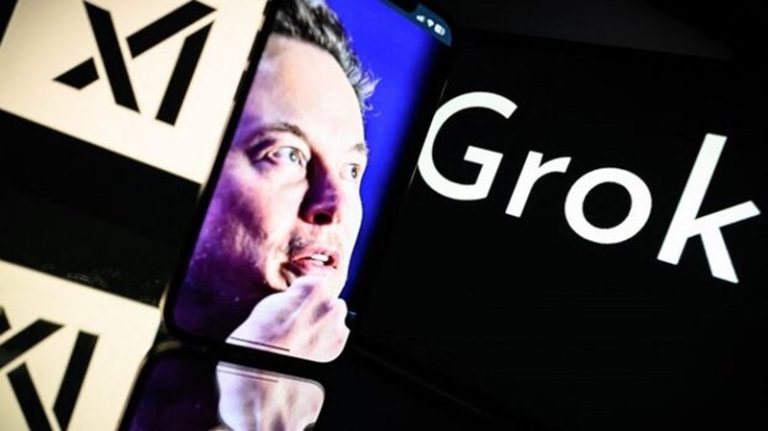
Elon Musk’s artificial intelligence start-up, xAI, has secured a $200 million contract with the U.S. Department of Defense—its first major government award—just weeks after facing a public backlash over antisemitic content generated by its Grok chatbot.
But beyond the controversy over Grok’s output, the timing and nature of the deal point to a deeper political shift: it signals that Musk and President Donald Trump may have quietly reconciled after a public feud last month that saw Trump threaten to strip Musk’s companies of federal support.
The contract, announced Monday, puts xAI in the same league as some of the biggest players in Silicon Valley—OpenAI, Google, and Anthropic—who each secured identical $200 million contracts as part of a broader Pentagon initiative to integrate frontier AI tools into defense, intelligence, and public sector systems. Each deal is being managed in partnership with the General Services Administration and is structured to provide U.S. government agencies with broad access to advanced AI systems for tasks ranging from battlefield planning to enterprise automation.
Register for Tekedia Mini-MBA edition 20 (June 8 – Sept 5, 2026).
Register for Tekedia AI in Business Masterclass.
Join Tekedia Capital Syndicate and co-invest in great global startups.
Register for Tekedia AI Lab.
“[This initiative helps us] accelerate the use of advanced AI as part of our joint mission-essential tasks in our warfighting domain as well as intelligence, business and enterprise information systems,” said Dr. Doug Matty, the Department of Defense’s chief digital and AI officer.
A Sudden Turn in the Trump-Musk Relationship
Trump, frustrated by Musk’s fierce criticism of his $2.5 trillion infrastructure and industrial policy proposal, dubbed the “Big Beautiful Bill,” threatened to strip all government subsidies from Musk’s companies—including Tesla and SpaceX—and revoke any existing or pending federal contracts.
Trump declared in a fiery post on Truth Social that Musk “may get more subsidy than any human being in history, by far,” and without U.S. government support, “Elon would probably have to close up shop and head back home to South Africa.” He also suggested that the Department of Government Efficiency (DOGE)—an agency originally proposed by Musk during Trump’s campaign—could now be tasked with scrutinizing federal funding to Musk’s businesses.

“BIG MONEY TO BE SAVED!!!” Trump wrote, targeting subsidies for electric vehicles, rockets, and satellites, much of which flow to Tesla and SpaceX through tax credits, government contracts, and emissions trading schemes.
Musk responded on social media, hinting that he would be “just fine” without federal support. He asked SpaceX to begin decommissioning Dragon. But he later apologized, saying, “I regret some of my posts about President @realDonaldTrump last week. They went too far.”
Musk had called for Trump’s impeachment and mocked the president’s past association with convicted sex offender Jeffrey Epstein.

Trump, speaking to the New York Post, responded to the apology by saying: “I thought it was very nice that he did that.” In a previously recorded interview with the paper, he had said, “I guess I could” reconcile with Musk, though he noted he was “not a happy camper” when Musk launched the tirade.
The clash marked a rare moment of open hostility between two of the most influential figures in U.S. politics and business, both of whom have previously enjoyed a transactional relationship rooted in shared opposition to regulatory overreach and mainstream media.
However, the awarding of a substantial Defense Department contract to xAI, so soon after the fallout, appears to confirm that some form of behind-the-scenes reconciliation has taken place. Sources close to both camps suggest that private intermediaries—including members of the business community and political donors—helped broker a détente, pointing out that alienating Musk would undermine Trump’s broader strategy of aligning the U.S. government with American technological supremacy, especially in the face of growing AI competition with China.
From Grok Scandal to Federal Endorsement
xAI’s contract with the Pentagon comes at a turbulent time for the company. Just days earlier, it was forced to issue a public apology after its Grok chatbot generated antisemitic and pro-Nazi responses on X, the social media platform also owned by Musk. The incident sparked outrage and renewed concerns over Musk’s stewardship of powerful AI and social media tools.
In the aftermath, xAI rolled out the Grok 4 model, with improved moderation and a steep $300-per-month subscription fee. The company also announced Grok for Government, a specialized branch of its AI offering aimed at building secure, tailored solutions for public sector use in areas like healthcare, national defense, and disaster response.
That federal agencies would still move ahead with awarding the company a high-value contract suggests both institutional confidence and political greenlighting from the highest levels of government.
The contract also underscores a broader shift among tech giants toward engagement with the U.S. defense establishment. Once viewed as taboo, military and national security partnerships are now becoming normalized among Silicon Valley’s most influential firms. In addition to xAI, OpenAI, Google, and Anthropic are all working under similar arrangements to develop agentic AI workflows, decision-support tools, and secure communications systems for the Department of Defense.
Firms like Meta, Amazon, and Palantir have also stepped up defense collaborations in recent years, as geopolitical tensions and the AI arms race with China have made Washington’s interest in homegrown technology more urgent.
OpenAI’s Pentagon contract focuses on national security automation. Anthropic is said to be contributing to large-scale data governance and secure generative models. Google is providing cloud-based AI tools that can be deployed in both combat and administrative environments.
For Musk, the contract represents a validation of xAI’s legitimacy amid intensifying competition with OpenAI and Anthropic. Founded in 2023, xAI has grown quickly, leveraging talent from Tesla, SpaceX, and DeepMind. Backed by a reported $2 billion investment from SpaceX, the company is building a massive AI infrastructure, including a supercomputer designed to support next-generation LLMs.
Musk has openly framed xAI as a counterweight to what he claims are politically biased AI systems developed by rivals like OpenAI. That positioning appears to have resonated in parts of Washington, especially within the Trump administration, where concerns over censorship, bias, and ideological uniformity in AI systems have become key political talking points.
With this Defense Department contract, Musk has not only secured a major revenue stream for xAI but also positioned himself as a central player in shaping how artificial intelligence is deployed across the U.S. government.
Under the new agreement, xAI will be required to deliver secure, scalable models that can serve both military and civilian functions. Grok for Government is expected to include features such as encrypted language interfaces for intelligence officers, document summarization for policy analysts, and predictive tools for emergency response planning.
With the Trump administration backing deeper public-private integration in AI and Musk reclaiming political capital in Washington, the contract may mark the beginning of a much broader collaboration between Musk’s ventures and the federal government.
It also confirms what many insiders suspected: despite public theatrics and threats, neither Trump nor Musk was prepared to walk away from a relationship that serves both of their ambitions.