

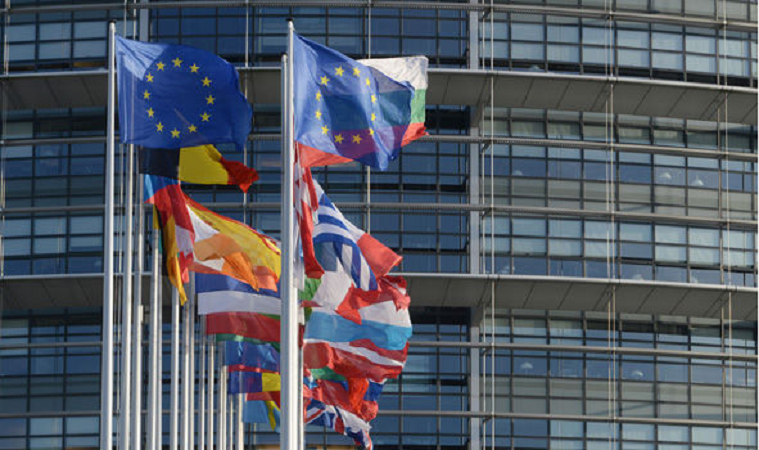
European officials and business leaders expressed deep alarm and uncertainty on Monday, after President Donald Trump imposed a new universal 15% tariff on all imports over the weekend, according to a CNBC report.
The move came just days after the U.S. Supreme Court struck down his earlier IEEPA-based tariff regime.
The rapid escalation has raised serious questions about the viability of trade agreements signed with the United States last year, prompting calls for emergency consultations and warnings of potential retaliatory measures. The Supreme Court’s 6-3 ruling on Friday invalidated Trump’s use of the International Emergency Economic Powers Act (IEEPA) to impose broad “reciprocal” and fentanyl-related tariffs ranging from 10% to 50%.
Register for Tekedia Mini-MBA edition 20 (June 8 – Sept 5, 2026).
Register for Tekedia AI in Business Masterclass.
Join Tekedia Capital Syndicate and co-invest in great global startups.
Register for Tekedia AI Lab.
Chief Justice John Roberts, writing for the majority, held that IEEPA does not authorize unilateral import taxes absent a direct, imminent foreign threat — effectively dismantling the legal pillar of Trump’s spring 2025 global tariff policy. Trump responded swiftly. On Saturday, he first announced a temporary 10% global levy under alternative legal authority, then raised it to 15% — the maximum rate permissible for 150 days without congressional approval.
“Effective immediately,” the president declared in a Truth Social post, framing the action as a necessary response to the court ruling and continued “unfair” trade practices by partners.
European Reaction: Chaos, Uncertainty, and Calls for Clarity
European Parliament International Trade Committee Chair Bernd Lange described the situation as “pure tariff chaos from the U.S. administration.”

“No one can make sense of it anymore — only open questions and growing uncertainty for the EU and other U.S. trading partners,” Lange wrote on X.
He announced an emergency meeting of the trade committee on Monday to assess the implications and proposed suspending implementation of the U.S.-EU trade deal until Brussels obtains “a comprehensive legal assessment and clear commitments from the U.S.” regarding the new tariffs.
German Chancellor Friedrich Merz told ARD that Europe would formulate “a very clear position” ahead of his planned early-March visit to the White House, deferring specifics to the European Commission. French Trade Minister Nicolas Forissier urged EU members not to be “naive” and to adopt a united response, telling the Financial Times that Brussels should prepare countermeasures if necessary.

The U.K. government expressed concern over potential erosion of its competitive advantage under last year’s bilateral deal, which set a baseline 10% tariff rate — lower than the EU’s 15%. A spokesperson said London would “work with the administration to understand how the ruling will affect tariffs for the U.K. and the rest of the world,” while insisting the “privileged trading position” would continue.
European Central Bank President Christine Lagarde warned Sunday on CBS’ Face the Nation that the trans-Atlantic business relationship could suffer: “It’s critically important that all people in the trade… have clarity about the future of the relationships. It’s a bit like driving. You want to know the rules of the road before you get in the car.”
USTR Greer Defends Continuity of Existing Deals
U.S. Trade Representative Jamieson Greer pushed back against claims that recent agreements are at risk. Speaking Sunday on CBS’ Face the Nation, Greer insisted: “The president’s policy was going to continue. That’s why they signed these deals, even while the litigation was pending. So we’re having active conversations with them. We want them to understand that these deals are going to be good deals. We expect to stand by them. We expect our partners to stand by them.”
Greer clarified that the Supreme Court ruling affected only IEEPA-based tariffs, leaving intact duties imposed under other statutes (Section 232, Section 301, antidumping/countervailing measures). He confirmed the administration would launch several new Section 301 investigations covering major trading partners, focusing on pharmaceutical pricing, industrial overcapacity, forced labor, digital services taxes, and discrimination against U.S. tech and digital goods.
Trade-Weighted Impact and Uneven Effects
Analysis from Swiss-based Global Trade Alert shows the new 15% tariff creates uneven pressure: the U.K. faces a 2.1 percentage point increase in its trade-weighted average tariff rate.
EU sees a 0.8 point rise.
Brazil and China benefit from sharp reductions (13.6 and 7.1 points, respectively) due to prior punitive measures being rolled back.
Tina Fordham of Fordham Global Insight told CNBC that the U.S.’s closest allies appear hardest hit.
“This is an administration that doesn’t think too much about second or third-order effects, and so what we’re seeing is that those countries that tried to get in early and do an advantageous deal… are being penalized,” she said.
The EU and the UK are expected to demand formal clarification on whether existing trade deals remain intact or if the new 15% rate overrides prior concessions. Failure to secure assurances could prompt retaliatory tariffs, potentially reigniting trans-Atlantic trade tensions just as both sides had begun stabilizing relations.