

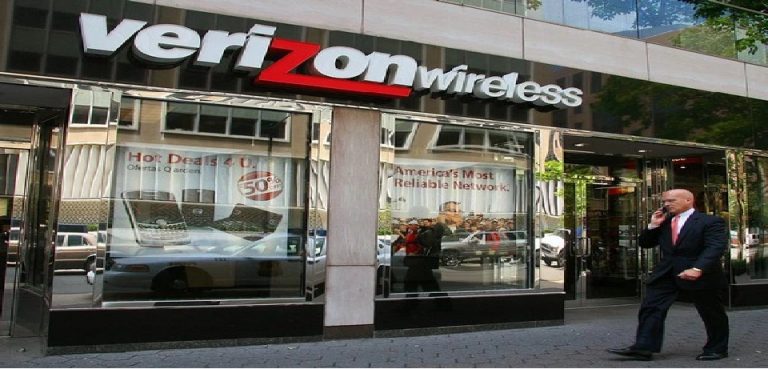
In a decision with wide implications for consumers, competition, and the secondary phone market, the Federal Communications Commission has granted Verizon a waiver that allows it to lock phones to its network for longer periods.
The move scraps a long-standing requirement that forced the carrier to unlock handsets 60 days after activation, a rule that had made Verizon phones among the easiest to take to a competing network.
The FCC’s decision is being framed as a blow against fraud. But beneath that rationale sits a more consequential shift: one that quietly strengthens the largest U.S. wireless carrier’s ability to hold onto customers at a moment when competition in the mobile market is intensifying.
Register for Tekedia Mini-MBA edition 20 (June 8 – Sept 5, 2026).
Register for Tekedia AI in Business Masterclass.
Join Tekedia Capital Syndicate and co-invest in great global startups.
Register for Tekedia AI Lab.
For years, Verizon operated under stricter unlocking rules than its rivals. Phones sold on its network had to be unlocked automatically after 60 days, a requirement rooted in concessions the company made to secure valuable spectrum licenses and regulatory approvals for past deals. That obligation made Verizon an outlier in an industry where carriers generally unlock devices later and only upon request.
With the FCC now granting Verizon a waiver, that distinction disappears.
Going forward, Verizon will follow the CTIA trade group’s voluntary unlocking code, aligning its practices with the rest of the industry. In practical terms, this means prepaid phones can stay locked for up to a year, while postpaid devices may remain tied to Verizon until customers fully pay off contracts, financing plans, or early termination fees. Automatic unlocking is no longer guaranteed.

While the FCC emphasized fraud prevention and law enforcement concerns, the ruling also reshapes the economics of switching carriers, resale markets, and competition from smaller wireless players.
Switching just got harder
Unlocked phones are one of the primary tools consumers use to switch between carriers without purchasing a new device. When phones unlock quickly, customers can shop around for cheaper plans, promotions, or better coverage with minimal friction. When they stay locked longer, switching becomes slower, more expensive, and less predictable.
That matters in a market where growth increasingly depends on stealing customers from rivals rather than adding new subscribers. Verizon, AT&T, and T-Mobile are all fighting for share, while cable companies such as Comcast and Charter have pushed aggressively into wireless by offering low-cost mobile plans bundled with broadband.

Those cable operators rely heavily on unlocked devices to attract customers. Longer lock periods, even if applied uniformly, raise barriers for people considering a move away from the big carriers.
The cable industry was quick to criticize the FCC’s decision. Its lobby group, NCTA, warned that delayed unlocking reduces consumer choice and affordability, arguing that faster unlocking saves billions across the mobile ecosystem by encouraging competition and device reuse. The group has urged the FCC to impose a clear, uniform unlocking deadline, rather than relying on a voluntary code.
Verizon has long argued that its unique unlocking obligations put it at a disadvantage. The company said being forced to unlock phones faster than competitors made its devices a preferred target for theft and international trafficking, particularly as 4G LTE and 5G handsets can be resold easily overseas.
The FCC accepted that argument, citing input from law enforcement groups that said stolen phones drain investigative resources and fuel black-market activity in countries that do not participate in global device-blocking systems.
But the waiver does more than address crime. It removes a regulatory constraint that limited Verizon’s leverage over customers. Locking phones longer keeps users tied to Verizon’s network, at least until financial obligations are settled, reducing churn at a time when carriers are spending heavily to retain subscribers.
That shift is especially notable given Verizon’s history. The company once sold phones unlocked by default, before seeking permission in 2019 to lock devices for 60 days. That initial waiver was justified as a narrow anti-fraud measure. The new decision goes further, eliminating the automatic unlocking rule entirely for new activations.
Consumer advocates sidelined
Consumer groups pushed back hard against Verizon’s petition, arguing that the company failed to show that extending lock periods would meaningfully reduce fraud. They said carriers already have tools to detect suspicious purchases, flag trafficked devices, and deny unlock requests without penalizing legitimate customers.
Those groups also highlighted broader effects. Automatic unlocking supports secondary phone markets, reduces electronic waste, and helps low-cost carriers compete. Removing it, they argued, primarily benefits large incumbents by making it harder for customers to leave.
The FCC rejected those concerns, saying the existing 60-day rule had not kept pace with the globalization of device resale markets and that law enforcement arguments tipped the balance in favor of a waiver.
A temporary fix or a lasting shift?
The FCC has described the waiver as an interim measure, saying it will remain in effect until the agency settles on an industry-wide approach to handset unlocking. That leaves open the possibility of future rules that could impose uniform timelines on all carriers.
Until then, Verizon emerges with greater control over when and how its customers can take their phones elsewhere. The company says this levels the playing field and undercuts criminal exploitation. Critics say it entrenches carrier power and weakens one of the simplest tools consumers have to vote with their feet.
Either way, the decision signals a recalibration in U.S. telecom policy. The emphasis is shifting away from fast, automatic portability and toward carrier discretion, with competition and consumer mobility taking a back seat to security and enforcement concerns.