

38 Arrested as Nationwide Protests in Israel Demand Hostage Deal and Ceasefire

Quote from Alex Bobby on August 18, 2025, 2:59 AM
38 Arrested as Strikes and Protests Demanding Ceasefire and Hostage Deal Sweep Israel
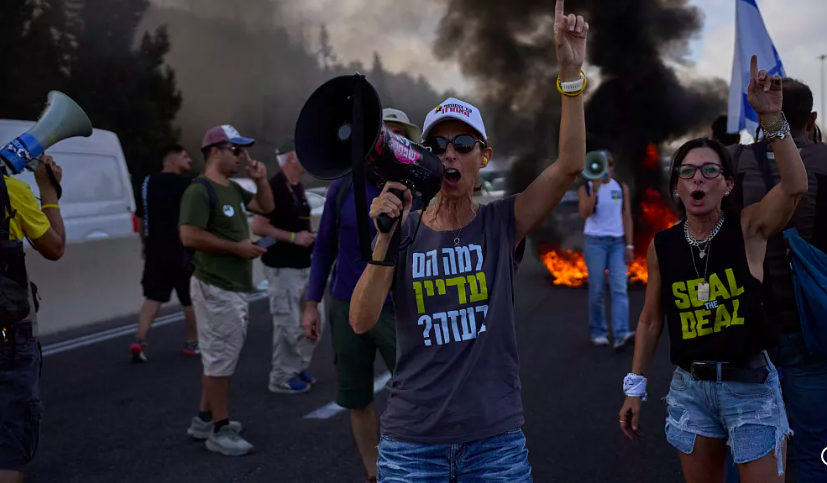
Israel witnessed one of its most widespread protest days in recent months on Sunday, as thousands of demonstrators poured onto the streets demanding that their government strike a ceasefire and hostage-release deal with Hamas. The nationwide action, which was marked by road blockades, rallies outside politicians’ homes, and solidarity closures by businesses, culminated in the arrest of at least 38 protesters by Israeli police.
The demonstrations, organised by groups representing hostage families and bereaved relatives, underscore the mounting pressure on Prime Minister Benjamin Netanyahu’s government to prioritise a deal that could bring home the estimated 50 hostages still held in Gaza. For many of the families involved, time is running out. Only about 20 of the captives are believed to be alive, according to officials familiar with the ongoing crisis.
A “Day of Stoppage”
Protests broke out at dozens of locations across Israel, including outside the homes of top government ministers, outside military headquarters, and on major highways connecting Tel Aviv and Jerusalem. Demonstrators carried placards bearing the names and faces of the hostages, chanting slogans demanding their release and denouncing government policies they believe are jeopardising lives.
Police deployed water cannons in an effort to disperse crowds blocking major roads, while traffic across central Israel ground to a halt for hours. Despite the heavy police presence, the demonstrations remained largely peaceful. Several restaurants, theatres, and small businesses closed for the day in solidarity with hostage families, amplifying the impact of what organisers dubbed a “day of stoppage.”
“Military pressure doesn’t bring hostages back—it only kills them,” former hostage Arbel Yehoud told a crowd gathered in Tel Aviv’s Habima Square. “The only way to bring them back is through a deal, all at once, without games.” Yehoud’s words struck a chord with protesters, many of whom fear that Israel’s planned escalation of its Gaza offensive will make it impossible to secure the hostages’ safe return.
Netanyahu’s Balancing Act
The protests add to the political challenges facing Prime Minister Netanyahu, who has long walked a fine line between appeasing hostage families and maintaining the support of his far-right coalition partners. While Netanyahu has repeatedly demanded the release of all hostages, he has tied any potential ceasefire to Israel’s long-term “security control” over the Gaza Strip—an idea firmly rejected by Palestinians and criticised by much of the international community.
The memory of the last ceasefire agreement looms large. During that temporary pause in fighting, dozens of hostages were released, but Netanyahu’s far-right allies threatened to collapse his government if he pursued any further concessions that left Hamas in power. Once again, the prime minister finds himself caught between the immediate humanitarian demand to save lives and the political calculus of keeping his fragile coalition intact.
The Situation in Gaza
While Israelis protested in Tel Aviv, Jerusalem, and Haifa, the humanitarian crisis in Gaza continued to deteriorate at alarming speed. Israel is preparing to move civilians away from combat zones as it gears up for a new offensive in some of Gaza’s most heavily populated areas.
For over two weeks, international aid has been airdropped into the enclave, but humanitarian groups insist the measures are nowhere near sufficient. The UN has warned that much of the aid fails to reach those most in need—falling into the sea, landing in red zones, or even crashing down into overcrowded tent camps, where people desperate for food sometimes risk their lives to retrieve it.
On Sunday, Gaza hospitals reported that Israeli forces killed at least 17 Palestinians waiting for aid deliveries, including nine people who had gathered near the Morag corridor in the southern part of the Strip. These killings add to a staggering death toll: tens of thousands have already lost their lives since the war began, while the vast majority of Gaza’s 2.2 million residents have been displaced.
Starvation and malnutrition have reached their highest levels since the outbreak of fighting, according to UN officials. Parents describe watching their children waste away, with aid agencies warning that famine could soon become inevitable if sustained access to food and medicine is not secured.
Hostage Families Take the Lead
The growing grassroots movement inside Israel is being fuelled largely by hostage families who refuse to let their loved ones fade into the background of the ongoing war. Their message is clear: only a negotiated agreement can save the remaining hostages.
Sunday’s protests represented one of the largest coordinated actions yet. Families of hostages stood side by side with bereaved parents who had lost children in the conflict, presenting a united front against what they see as government inaction.
The sense of urgency was palpable. “We cannot wait any longer,” said one protester, holding a poster with the image of her kidnapped nephew. “Every day that passes, another life is lost. If our government refuses to make a deal, then it is condemning our loved ones to death.”
Mounting International Pressure
The domestic unrest coincides with intensifying international criticism of Israel’s Gaza campaign. Calls for a ceasefire have come from the United Nations, European leaders, and even Israel’s closest allies. Yet Netanyahu has signalled he intends to press ahead with military operations until Israel achieves “total victory.”
This uncompromising stance places Israel at odds with a global community that increasingly sees negotiation as the only viable path forward. For hostage families, however, the political rhetoric is meaningless compared to the urgency of saving lives.
Looking Forward
As the protests gain momentum, the coming weeks will test whether Netanyahu can withstand pressure from both inside and outside Israel. Hostage families vow to continue their campaign until a deal is struck, while international voices grow louder in calling for a ceasefire. The situation remains fluid, but one thing is clear: public patience is running out, and the demand for decisive action is only intensifying.Conclusion
The arrests of 38 protesters on Sunday highlight the growing disconnect between the Israeli government’s war aims and the demands of its own people. What began as scattered demonstrations by hostage families has now transformed into a nationwide movement calling for an immediate deal, regardless of the political risks it poses to Netanyahu’s fragile coalition.
At the same time, the humanitarian catastrophe unfolding in Gaza underscores the stakes of every decision made in Jerusalem. With tens of thousands dead, millions displaced, and hostages’ lives hanging in the balance, the demand for a ceasefire is no longer just a moral question—it is a matter of survival on both sides of the conflict.
For now, the voices of hostage families continue to echo across Israel’s streets: “Bring them home—before it’s too late.”
Meta Description:
Israeli police arrested 38 protesters during nationwide strikes and rallies calling for a ceasefire and hostage release deal. Families of hostages warn that military escalation in Gaza endangers lives as humanitarian conditions worsen.
38 Arrested as Strikes and Protests Demanding Ceasefire and Hostage Deal Sweep Israel
Israel witnessed one of its most widespread protest days in recent months on Sunday, as thousands of demonstrators poured onto the streets demanding that their government strike a ceasefire and hostage-release deal with Hamas. The nationwide action, which was marked by road blockades, rallies outside politicians’ homes, and solidarity closures by businesses, culminated in the arrest of at least 38 protesters by Israeli police.
The demonstrations, organised by groups representing hostage families and bereaved relatives, underscore the mounting pressure on Prime Minister Benjamin Netanyahu’s government to prioritise a deal that could bring home the estimated 50 hostages still held in Gaza. For many of the families involved, time is running out. Only about 20 of the captives are believed to be alive, according to officials familiar with the ongoing crisis.
A “Day of Stoppage”
Register for Tekedia Mini-MBA edition 20 (June 8 – Sept 5, 2026).
Register for Tekedia AI in Business Masterclass.
Join Tekedia Capital Syndicate and co-invest in great global startups.
Register for Tekedia AI Lab.
Protests broke out at dozens of locations across Israel, including outside the homes of top government ministers, outside military headquarters, and on major highways connecting Tel Aviv and Jerusalem. Demonstrators carried placards bearing the names and faces of the hostages, chanting slogans demanding their release and denouncing government policies they believe are jeopardising lives.
Police deployed water cannons in an effort to disperse crowds blocking major roads, while traffic across central Israel ground to a halt for hours. Despite the heavy police presence, the demonstrations remained largely peaceful. Several restaurants, theatres, and small businesses closed for the day in solidarity with hostage families, amplifying the impact of what organisers dubbed a “day of stoppage.”
“Military pressure doesn’t bring hostages back—it only kills them,” former hostage Arbel Yehoud told a crowd gathered in Tel Aviv’s Habima Square. “The only way to bring them back is through a deal, all at once, without games.” Yehoud’s words struck a chord with protesters, many of whom fear that Israel’s planned escalation of its Gaza offensive will make it impossible to secure the hostages’ safe return.

Netanyahu’s Balancing Act
The protests add to the political challenges facing Prime Minister Netanyahu, who has long walked a fine line between appeasing hostage families and maintaining the support of his far-right coalition partners. While Netanyahu has repeatedly demanded the release of all hostages, he has tied any potential ceasefire to Israel’s long-term “security control” over the Gaza Strip—an idea firmly rejected by Palestinians and criticised by much of the international community.
The memory of the last ceasefire agreement looms large. During that temporary pause in fighting, dozens of hostages were released, but Netanyahu’s far-right allies threatened to collapse his government if he pursued any further concessions that left Hamas in power. Once again, the prime minister finds himself caught between the immediate humanitarian demand to save lives and the political calculus of keeping his fragile coalition intact.

The Situation in Gaza
While Israelis protested in Tel Aviv, Jerusalem, and Haifa, the humanitarian crisis in Gaza continued to deteriorate at alarming speed. Israel is preparing to move civilians away from combat zones as it gears up for a new offensive in some of Gaza’s most heavily populated areas.
For over two weeks, international aid has been airdropped into the enclave, but humanitarian groups insist the measures are nowhere near sufficient. The UN has warned that much of the aid fails to reach those most in need—falling into the sea, landing in red zones, or even crashing down into overcrowded tent camps, where people desperate for food sometimes risk their lives to retrieve it.
On Sunday, Gaza hospitals reported that Israeli forces killed at least 17 Palestinians waiting for aid deliveries, including nine people who had gathered near the Morag corridor in the southern part of the Strip. These killings add to a staggering death toll: tens of thousands have already lost their lives since the war began, while the vast majority of Gaza’s 2.2 million residents have been displaced.
Starvation and malnutrition have reached their highest levels since the outbreak of fighting, according to UN officials. Parents describe watching their children waste away, with aid agencies warning that famine could soon become inevitable if sustained access to food and medicine is not secured.
Hostage Families Take the Lead
The growing grassroots movement inside Israel is being fuelled largely by hostage families who refuse to let their loved ones fade into the background of the ongoing war. Their message is clear: only a negotiated agreement can save the remaining hostages.
Sunday’s protests represented one of the largest coordinated actions yet. Families of hostages stood side by side with bereaved parents who had lost children in the conflict, presenting a united front against what they see as government inaction.
The sense of urgency was palpable. “We cannot wait any longer,” said one protester, holding a poster with the image of her kidnapped nephew. “Every day that passes, another life is lost. If our government refuses to make a deal, then it is condemning our loved ones to death.”
Mounting International Pressure
The domestic unrest coincides with intensifying international criticism of Israel’s Gaza campaign. Calls for a ceasefire have come from the United Nations, European leaders, and even Israel’s closest allies. Yet Netanyahu has signalled he intends to press ahead with military operations until Israel achieves “total victory.”
This uncompromising stance places Israel at odds with a global community that increasingly sees negotiation as the only viable path forward. For hostage families, however, the political rhetoric is meaningless compared to the urgency of saving lives.
Looking Forward
As the protests gain momentum, the coming weeks will test whether Netanyahu can withstand pressure from both inside and outside Israel. Hostage families vow to continue their campaign until a deal is struck, while international voices grow louder in calling for a ceasefire. The situation remains fluid, but one thing is clear: public patience is running out, and the demand for decisive action is only intensifying.
Conclusion
The arrests of 38 protesters on Sunday highlight the growing disconnect between the Israeli government’s war aims and the demands of its own people. What began as scattered demonstrations by hostage families has now transformed into a nationwide movement calling for an immediate deal, regardless of the political risks it poses to Netanyahu’s fragile coalition.
At the same time, the humanitarian catastrophe unfolding in Gaza underscores the stakes of every decision made in Jerusalem. With tens of thousands dead, millions displaced, and hostages’ lives hanging in the balance, the demand for a ceasefire is no longer just a moral question—it is a matter of survival on both sides of the conflict.
For now, the voices of hostage families continue to echo across Israel’s streets: “Bring them home—before it’s too late.”
Meta Description:
Israeli police arrested 38 protesters during nationwide strikes and rallies calling for a ceasefire and hostage release deal. Families of hostages warn that military escalation in Gaza endangers lives as humanitarian conditions worsen.
Uploaded files:
Share this:
- Click to share on Facebook (Opens in new window) Facebook
- Click to share on X (Opens in new window) X
- Click to share on WhatsApp (Opens in new window) WhatsApp
- Click to share on LinkedIn (Opens in new window) LinkedIn
- Click to email a link to a friend (Opens in new window) Email
- Click to print (Opens in new window) Print