

Al-Shabab Claims Suicide Bombing at Somalia Military Academy in Mogadishu

Quote from Alex Bobby on July 10, 2025, 8:21 AM
Al-Shaba Claims Responsibility for Explosion at Somalia Military Academy
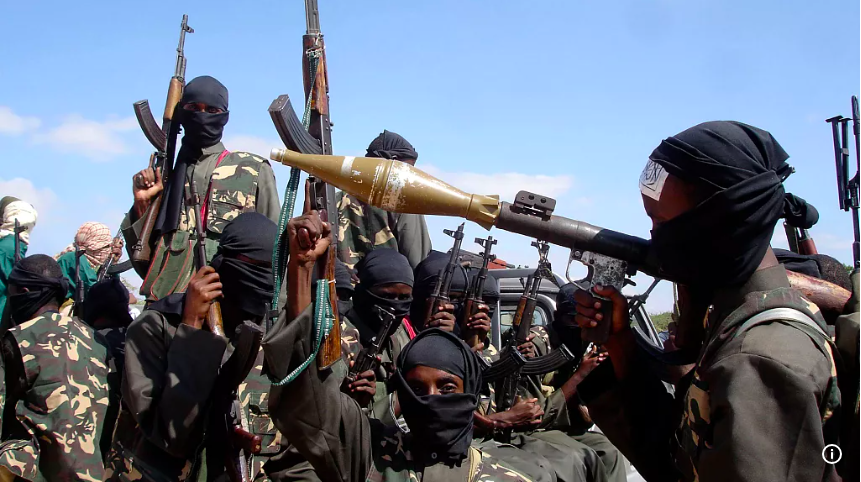
Somalia’s long-standing battle against the al-Qaeda-linked extremist group al-Shabab continues to take a deadly toll, as the group on Wednesday claimed responsibility for an explosion at a major military training facility in the capital, Mogadishu.
According to Somalia’s Ministry of Defence, an explosion occurred at the Jaalle Siyaad Military Academy, one of the country’s premier training centres for army recruits. While full details are still emerging, al-Shabab has asserted that it was behind the blast, claiming it was the result of a suicide bombing aimed at a “Western delegation” overseeing military training operations.
What We Know So Far
The Somali government confirmed it is actively investigating the incident, which occurred during daylight hours within the compound of the military school. Witness accounts and early official statements suggest the attacker was wearing a suicide vest and was stopped by security personnel before reaching his target.
“The suicide bomber was wearing a suicide vest and was intercepted before reaching his target. He blew himself up, causing minimal casualties,” said Adan Hassan, a military recruit who witnessed the incident.
At this time, it remains unclear whether there were any fatalities or serious injuries aside from the bomber. The Somali authorities have not yet released an official casualty count, and the identity of the alleged "Western delegation" mentioned in al-Shabab's statement has also not been verified. Several international actors, including the United States, European Union, and Turkey, have long been involved in providing military training and support to Somali forces, but none have commented on whether their personnel were present.
A Familiar Target
This is not the first time the Jaalle Siyaad Military Academy has come under attack. In July 2023, a suicide bomber disguised in military uniform managed to infiltrate the academy and detonate an explosive device, killing at least 25 soldiers and injuring more than 70 others. That attack drew widespread condemnation and triggered a series of reviews around the facility’s security protocols.
The recurrence of violence at such a critical military hub underscores the continued threat posed by al-Shabab and the group’s deep infiltration capabilities, despite being under pressure from Somali and international military campaigns.
Al-Shabab’s Strategy: Hitting the Heart of Military Infrastructure
Al-Shabab has long prioritised military and government installations as primary targets in its effort to topple the Somali government and establish a hardline Islamic state governed by their strict interpretation of Sharia law. By attacking military academies and recruitment centres, the group seeks to demoralise government forces, disrupt training efforts, and intimidate both local and foreign supporters of Somalia’s fragile security apparatus.
The group’s tactics often involve suicide bombers, IEDs, and coordinated ambushes, especially in urban centres like Mogadishu, where the potential for international visibility and media attention is high. These attacks also serve as propaganda victories for al-Shabab, reaffirming their reach and resolve in the face of intensified crackdowns.
Government Response and Recent Operations
The Somali government, under the leadership of President Hassan Sheikh Mohamud, has significantly ramped up security operations in recent months in an effort to reclaim control over militant-held territories and secure urban areas.
Just last week, Somali national forces launched a series of operations in the Hiran region—a central area frequently targeted by militants. The campaign resulted in the recapture of several key towns and villages previously under al-Shabab’s influence. Officials have hailed the operation as a strategic victory, but they have also acknowledged the difficulty of rooting out a group with such deep and diffuse networks.
International partners have played a critical role in Somalia’s fight against terrorism. The African Union Transition Mission in Somalia (ATMIS) continues to support local forces in military operations. Meanwhile, the U.S. Africa Command (AFRICOM) regularly carries out airstrikes against al-Shabab leaders and training camps.
A Nation on Edge
The latest attack serves as a grim reminder that despite recent military successes, Somalia remains highly vulnerable to insurgent violence. Civilian and military casualties continue to mount, and instability in rural regions often spills into urban centres like Mogadishu.
While the government’s multi-pronged approach—involving military pressure, intelligence gathering, and international support—has yielded some progress, experts warn that sustainable peace in Somalia will depend on much more than battlefield victories. Addressing economic hardship, clan tensions, and youth radicalisation remains critical to breaking the cycle of violence that groups like al-Shabab exploit.
Looking Forward:
As Somalia continues its uphill battle against al-Shabab, the need for a unified national and international response becomes ever more urgent. Strengthening military infrastructure, improving intelligence capabilities, and fostering community resilience will be key in pushing back against extremist influence. In the coming months, the Somali government’s ability to maintain pressure on al-Shabab—while also protecting civilians and rebuilding trust—will shape the trajectory of the country’s stability. The world will be watching closely, hoping for progress in a region that has seen far too much bloodshed and instability.
Conclusion
The explosion at Jaalle Siyaad Military Academy is a stark reminder that Somalia’s war against extremism is far from over. Al-Shabab’s continued ability to stage attacks on high-value military targets—even in heavily secured areas—underscores the complexity of the security challenges facing the Somali state.
As investigations continue and details emerge, what’s clear is that the country’s defence forces, with the support of international partners, must remain vigilant. The path to lasting peace in Somalia is long, but with perseverance, coordination, and community engagement, it is not beyond reach.
Meta Description:
Al-Shabab militants claim responsibility for an explosion at Somalia’s Jaalle Siyaad Military Academy in Mogadishu. The suicide attack, targeting a Western delegation, highlights ongoing security threats.
Al-Shaba Claims Responsibility for Explosion at Somalia Military Academy
Somalia’s long-standing battle against the al-Qaeda-linked extremist group al-Shabab continues to take a deadly toll, as the group on Wednesday claimed responsibility for an explosion at a major military training facility in the capital, Mogadishu.
According to Somalia’s Ministry of Defence, an explosion occurred at the Jaalle Siyaad Military Academy, one of the country’s premier training centres for army recruits. While full details are still emerging, al-Shabab has asserted that it was behind the blast, claiming it was the result of a suicide bombing aimed at a “Western delegation” overseeing military training operations.
Register for Tekedia Mini-MBA edition 20 (June 8 – Sept 5, 2026).
Register for Tekedia AI in Business Masterclass.
Join Tekedia Capital Syndicate and co-invest in great global startups.
Register for Tekedia AI Lab.
What We Know So Far
The Somali government confirmed it is actively investigating the incident, which occurred during daylight hours within the compound of the military school. Witness accounts and early official statements suggest the attacker was wearing a suicide vest and was stopped by security personnel before reaching his target.
“The suicide bomber was wearing a suicide vest and was intercepted before reaching his target. He blew himself up, causing minimal casualties,” said Adan Hassan, a military recruit who witnessed the incident.

At this time, it remains unclear whether there were any fatalities or serious injuries aside from the bomber. The Somali authorities have not yet released an official casualty count, and the identity of the alleged "Western delegation" mentioned in al-Shabab's statement has also not been verified. Several international actors, including the United States, European Union, and Turkey, have long been involved in providing military training and support to Somali forces, but none have commented on whether their personnel were present.
A Familiar Target
This is not the first time the Jaalle Siyaad Military Academy has come under attack. In July 2023, a suicide bomber disguised in military uniform managed to infiltrate the academy and detonate an explosive device, killing at least 25 soldiers and injuring more than 70 others. That attack drew widespread condemnation and triggered a series of reviews around the facility’s security protocols.

The recurrence of violence at such a critical military hub underscores the continued threat posed by al-Shabab and the group’s deep infiltration capabilities, despite being under pressure from Somali and international military campaigns.
Al-Shabab’s Strategy: Hitting the Heart of Military Infrastructure
Al-Shabab has long prioritised military and government installations as primary targets in its effort to topple the Somali government and establish a hardline Islamic state governed by their strict interpretation of Sharia law. By attacking military academies and recruitment centres, the group seeks to demoralise government forces, disrupt training efforts, and intimidate both local and foreign supporters of Somalia’s fragile security apparatus.
The group’s tactics often involve suicide bombers, IEDs, and coordinated ambushes, especially in urban centres like Mogadishu, where the potential for international visibility and media attention is high. These attacks also serve as propaganda victories for al-Shabab, reaffirming their reach and resolve in the face of intensified crackdowns.
Government Response and Recent Operations
The Somali government, under the leadership of President Hassan Sheikh Mohamud, has significantly ramped up security operations in recent months in an effort to reclaim control over militant-held territories and secure urban areas.
Just last week, Somali national forces launched a series of operations in the Hiran region—a central area frequently targeted by militants. The campaign resulted in the recapture of several key towns and villages previously under al-Shabab’s influence. Officials have hailed the operation as a strategic victory, but they have also acknowledged the difficulty of rooting out a group with such deep and diffuse networks.
International partners have played a critical role in Somalia’s fight against terrorism. The African Union Transition Mission in Somalia (ATMIS) continues to support local forces in military operations. Meanwhile, the U.S. Africa Command (AFRICOM) regularly carries out airstrikes against al-Shabab leaders and training camps.
A Nation on Edge
The latest attack serves as a grim reminder that despite recent military successes, Somalia remains highly vulnerable to insurgent violence. Civilian and military casualties continue to mount, and instability in rural regions often spills into urban centres like Mogadishu.
While the government’s multi-pronged approach—involving military pressure, intelligence gathering, and international support—has yielded some progress, experts warn that sustainable peace in Somalia will depend on much more than battlefield victories. Addressing economic hardship, clan tensions, and youth radicalisation remains critical to breaking the cycle of violence that groups like al-Shabab exploit.
Looking Forward:
As Somalia continues its uphill battle against al-Shabab, the need for a unified national and international response becomes ever more urgent. Strengthening military infrastructure, improving intelligence capabilities, and fostering community resilience will be key in pushing back against extremist influence. In the coming months, the Somali government’s ability to maintain pressure on al-Shabab—while also protecting civilians and rebuilding trust—will shape the trajectory of the country’s stability. The world will be watching closely, hoping for progress in a region that has seen far too much bloodshed and instability.
Conclusion
The explosion at Jaalle Siyaad Military Academy is a stark reminder that Somalia’s war against extremism is far from over. Al-Shabab’s continued ability to stage attacks on high-value military targets—even in heavily secured areas—underscores the complexity of the security challenges facing the Somali state.
As investigations continue and details emerge, what’s clear is that the country’s defence forces, with the support of international partners, must remain vigilant. The path to lasting peace in Somalia is long, but with perseverance, coordination, and community engagement, it is not beyond reach.
Meta Description:
Al-Shabab militants claim responsibility for an explosion at Somalia’s Jaalle Siyaad Military Academy in Mogadishu. The suicide attack, targeting a Western delegation, highlights ongoing security threats.
Share this:
- Click to share on Facebook (Opens in new window) Facebook
- Click to share on X (Opens in new window) X
- Click to share on WhatsApp (Opens in new window) WhatsApp
- Click to share on LinkedIn (Opens in new window) LinkedIn
- Click to email a link to a friend (Opens in new window) Email
- Click to print (Opens in new window) Print