

Americans Celebrate Juneteenth with Festivities and Reflection on the End of Slavery and Ongoing Racial Inequality

Quote from Alex Bobby on June 20, 2025, 7:46 AM
Americans Mark Juneteenth with Celebration, Reflection, and Renewed Calls for Justice
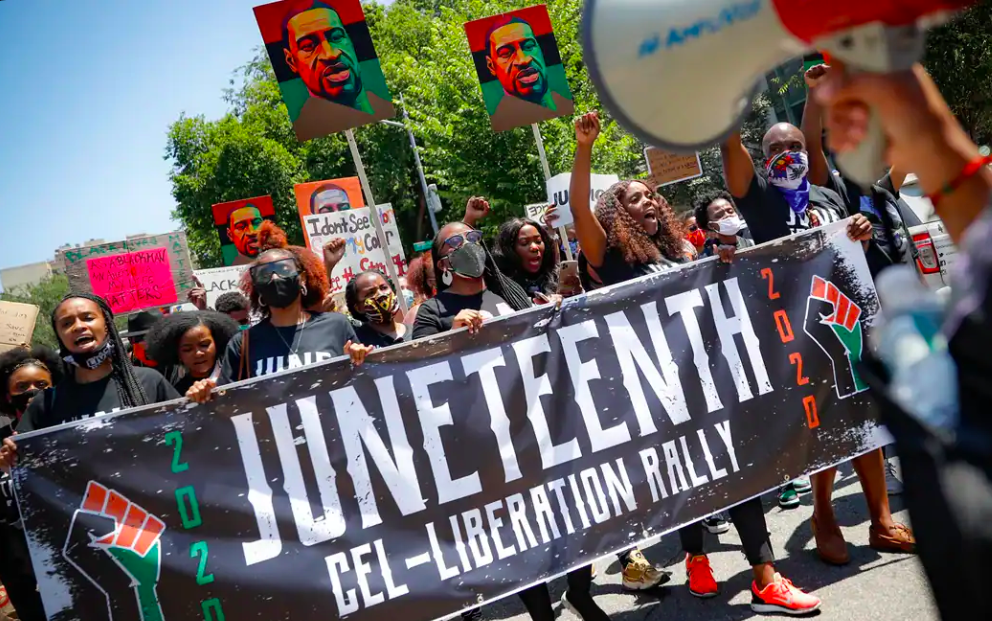
This weekend, Americans across the country gathered to celebrate Juneteenth, commemorating the day in 1865 when enslaved African Americans in Galveston, Texas, finally learned of their freedom—more than two years after the Emancipation Proclamation had been signed. The national holiday, officially recognised in 2021, has quickly evolved into a blend of celebration and reflection, as communities honour the end of slavery while acknowledging the continued struggle for racial equality.
From festive cookouts, music events, and parades to somber church services and historical exhibitions, Juneteenth has become a day to reflect on the painful legacy of slavery in the United States, as well as to celebrate Black culture, resilience, and progress.
Joy and Reflection Intertwine
While many used the long holiday weekend to throw parties, host family barbecues, and gather for cultural events, others called for a deeper reckoning with the complex and often violent history of Black Americans in the U.S.
"Is #Juneteenth the only federal holiday that some states have banned the teaching of its history and significance?" asked author Michelle Duster on social media, referencing states like Florida, Oklahoma, and Alabama, where laws have restricted the teaching of African American history and concepts of systemic racism.
That tension—between celebration and censorship—highlights the current crossroads in America’s racial dialogue. While Juneteenth is officially honoured, the broader story it tells is still being contested in classrooms and legislatures across the country.
Church Services and Cultural Messages
In Detroit, a Roman Catholic church turned its Sunday Mass into a message of peace and justice rooted in the legacy of Juneteenth. Speaking to his congregation at Gesu Catholic Church, John Thorne, executive director of the Detroit Catholic Pastoral Alliance, said, “In order to have justice we must work for peace. And in order to have peace we must work for justice.”
The Rev. Lorn Snow echoed that sentiment. “The struggle’s still not over with. There’s a lot of work to be done,” he told local media after the service.
For many Black Americans, that ongoing struggle remains tangible. A recent AP-NORC poll found that 70% of Black adults believe “a lot” more needs to be done to achieve equal treatment in policing. Health disparities also persist: African Americans experience higher rates of maternal mortality, asthma, high blood pressure, and Alzheimer’s than their white counterparts.
Longstanding Traditions in the South
Though Juneteenth celebrations are relatively new in many states, in cities like Memphis, the holiday has deep roots. Known for its central role in civil rights history and once a hub of the slave trade, the city has marked Juneteenth long before it gained federal status. The Tennessee Legislature even passed a bill this year making it a state holiday.
Festivities in Memphis include a multi-day festival featuring food, music, cultural exhibitions, and more. These are held in a park that was once the resting place of Confederate general and slave trader Nathan Bedford Forrest—whose statue and remains were removed in recent years.
The city is also home to the National Civil Rights Museum, housed in the former Lorraine Motel, where Rev. Dr. Martin Luther King Jr. was assassinated in 1968. The museum offered free admission on Monday, allowing visitors to immerse themselves in speeches and stories from civil rights icons like King, Fannie Lou Hamer, and Medgar Evers.
“Juneteenth should be celebrated with the same reverence as July 4th,” said Ryan Jones, the museum’s associate curator. “It is the independence of a people that we’re forced to endure oppression and discrimination based on the colour of their skin.”
The Holiday Amid Violence and Tragedy
Despite its message of hope and justice, Juneteenth was not without tragedy. In Willowbrook, Illinois, a suburb of Chicago, a late-night shooting at a Juneteenth party left one person dead and 22 others injured. Authorities are still investigating the incident, which took place in the parking lot of a strip mall.
In response, the White House issued a statement expressing condolences. “The President and First Lady are thinking of those killed and injured in the shooting in Illinois last night,” the statement read. “We have reached out to offer assistance to state and local leaders in the wake of this tragedy at a community Juneteenth celebration.”
Looking Ahead
Vice President Kamala Harris is set to appear Monday on a CNN Juneteenth special, alongside artists Miguel and Charlie Wilson, continuing the federal observance with messages of unity and culture. Schools and federal buildings across the country remained closed for the day.
As Juneteenth grows in national recognition, its meaning continues to evolve. For some, it's a chance to celebrate Black excellence. For others, it’s a call to keep fighting against injustice. And for many, it’s both—a moment to remember the past while pushing forward toward a more equal future.
Conclusion: Honouring the Past, Confronting the Present
As Juneteenth continues to take root as a national holiday, it stands as both a celebration of freedom and a reminder of unfinished work. While Americans gather with food, music, and fellowship, the day also challenges the nation to confront its history honestly and to strive toward a future where equality is not just an ideal, but a lived reality.
From solemn church services to spirited parades, Juneteenth is a reflection of Black resilience, culture, and community. Yet, amid ongoing debates about how that history is taught and felt in everyday life, the holiday also urges the country to reckon with systemic inequalities that still persist.
In the words of civil rights leaders past and present, Juneteenth is not just a moment to look back—it is a call to keep moving forward.
Meta Description:
Americans across the country celebrated Juneteenth with cookouts, parades, church services, and reflection, commemorating the end of slavery while recognising the ongoing fight for racial justice.
Americans Mark Juneteenth with Celebration, Reflection, and Renewed Calls for Justice
This weekend, Americans across the country gathered to celebrate Juneteenth, commemorating the day in 1865 when enslaved African Americans in Galveston, Texas, finally learned of their freedom—more than two years after the Emancipation Proclamation had been signed. The national holiday, officially recognised in 2021, has quickly evolved into a blend of celebration and reflection, as communities honour the end of slavery while acknowledging the continued struggle for racial equality.
From festive cookouts, music events, and parades to somber church services and historical exhibitions, Juneteenth has become a day to reflect on the painful legacy of slavery in the United States, as well as to celebrate Black culture, resilience, and progress.
Register for Tekedia Mini-MBA edition 20 (June 8 – Sept 5, 2026).
Register for Tekedia AI in Business Masterclass.
Join Tekedia Capital Syndicate and co-invest in great global startups.
Register for Tekedia AI Lab.
Joy and Reflection Intertwine
While many used the long holiday weekend to throw parties, host family barbecues, and gather for cultural events, others called for a deeper reckoning with the complex and often violent history of Black Americans in the U.S.
"Is #Juneteenth the only federal holiday that some states have banned the teaching of its history and significance?" asked author Michelle Duster on social media, referencing states like Florida, Oklahoma, and Alabama, where laws have restricted the teaching of African American history and concepts of systemic racism.

That tension—between celebration and censorship—highlights the current crossroads in America’s racial dialogue. While Juneteenth is officially honoured, the broader story it tells is still being contested in classrooms and legislatures across the country.
Church Services and Cultural Messages
In Detroit, a Roman Catholic church turned its Sunday Mass into a message of peace and justice rooted in the legacy of Juneteenth. Speaking to his congregation at Gesu Catholic Church, John Thorne, executive director of the Detroit Catholic Pastoral Alliance, said, “In order to have justice we must work for peace. And in order to have peace we must work for justice.”

The Rev. Lorn Snow echoed that sentiment. “The struggle’s still not over with. There’s a lot of work to be done,” he told local media after the service.
For many Black Americans, that ongoing struggle remains tangible. A recent AP-NORC poll found that 70% of Black adults believe “a lot” more needs to be done to achieve equal treatment in policing. Health disparities also persist: African Americans experience higher rates of maternal mortality, asthma, high blood pressure, and Alzheimer’s than their white counterparts.
Longstanding Traditions in the South
Though Juneteenth celebrations are relatively new in many states, in cities like Memphis, the holiday has deep roots. Known for its central role in civil rights history and once a hub of the slave trade, the city has marked Juneteenth long before it gained federal status. The Tennessee Legislature even passed a bill this year making it a state holiday.
Festivities in Memphis include a multi-day festival featuring food, music, cultural exhibitions, and more. These are held in a park that was once the resting place of Confederate general and slave trader Nathan Bedford Forrest—whose statue and remains were removed in recent years.
The city is also home to the National Civil Rights Museum, housed in the former Lorraine Motel, where Rev. Dr. Martin Luther King Jr. was assassinated in 1968. The museum offered free admission on Monday, allowing visitors to immerse themselves in speeches and stories from civil rights icons like King, Fannie Lou Hamer, and Medgar Evers.
“Juneteenth should be celebrated with the same reverence as July 4th,” said Ryan Jones, the museum’s associate curator. “It is the independence of a people that we’re forced to endure oppression and discrimination based on the colour of their skin.”
The Holiday Amid Violence and Tragedy
Despite its message of hope and justice, Juneteenth was not without tragedy. In Willowbrook, Illinois, a suburb of Chicago, a late-night shooting at a Juneteenth party left one person dead and 22 others injured. Authorities are still investigating the incident, which took place in the parking lot of a strip mall.
In response, the White House issued a statement expressing condolences. “The President and First Lady are thinking of those killed and injured in the shooting in Illinois last night,” the statement read. “We have reached out to offer assistance to state and local leaders in the wake of this tragedy at a community Juneteenth celebration.”
Looking Ahead
Vice President Kamala Harris is set to appear Monday on a CNN Juneteenth special, alongside artists Miguel and Charlie Wilson, continuing the federal observance with messages of unity and culture. Schools and federal buildings across the country remained closed for the day.
As Juneteenth grows in national recognition, its meaning continues to evolve. For some, it's a chance to celebrate Black excellence. For others, it’s a call to keep fighting against injustice. And for many, it’s both—a moment to remember the past while pushing forward toward a more equal future.
Conclusion: Honouring the Past, Confronting the Present
As Juneteenth continues to take root as a national holiday, it stands as both a celebration of freedom and a reminder of unfinished work. While Americans gather with food, music, and fellowship, the day also challenges the nation to confront its history honestly and to strive toward a future where equality is not just an ideal, but a lived reality.
From solemn church services to spirited parades, Juneteenth is a reflection of Black resilience, culture, and community. Yet, amid ongoing debates about how that history is taught and felt in everyday life, the holiday also urges the country to reckon with systemic inequalities that still persist.
In the words of civil rights leaders past and present, Juneteenth is not just a moment to look back—it is a call to keep moving forward.
Meta Description:
Americans across the country celebrated Juneteenth with cookouts, parades, church services, and reflection, commemorating the end of slavery while recognising the ongoing fight for racial justice.
Share this:
- Click to share on Facebook (Opens in new window) Facebook
- Click to share on X (Opens in new window) X
- Click to share on WhatsApp (Opens in new window) WhatsApp
- Click to share on LinkedIn (Opens in new window) LinkedIn
- Click to email a link to a friend (Opens in new window) Email
- Click to print (Opens in new window) Print