

At Least 54 Killed in 24 Hours as Monsoon Rains Devastate Eastern Pakistan

Quote from Alex Bobby on July 18, 2025, 7:18 AM
At Least 54 Dead in 24 Hours as Monsoon Rains Devastate Eastern Pakistan
Pakistan is facing yet another climate disaster as powerful monsoon rains continue to batter the country, leaving a trail of destruction in their wake. In the past 24 hours alone, at least 54 people have died in eastern Pakistan, with Punjab province bearing the brunt of the devastation. This brings the total number of rain-related deaths to 178 across the country since June 26, according to official sources.
The extreme weather, described by meteorologists as significantly above seasonal norms, has triggered flash floods, landslides, and widespread urban inundation, wreaking havoc across both rural and urban communities.
Punjab Suffers the Most
Punjab, Pakistan’s most populous province, has emerged as the epicentre of the current crisis. The province has recorded a staggering 124% increase in rainfall between July 1–15 compared to the same period in 2024. The Jhelum district was hit particularly hard, with a cloudburst unleashing a surge of water that caused flash flooding and forced emergency evacuations using boats.
The provincial disaster management authority confirmed that the majority of the 54 fatalities reported over the past day occurred in areas already struggling to cope with overflowing rivers and broken infrastructure.
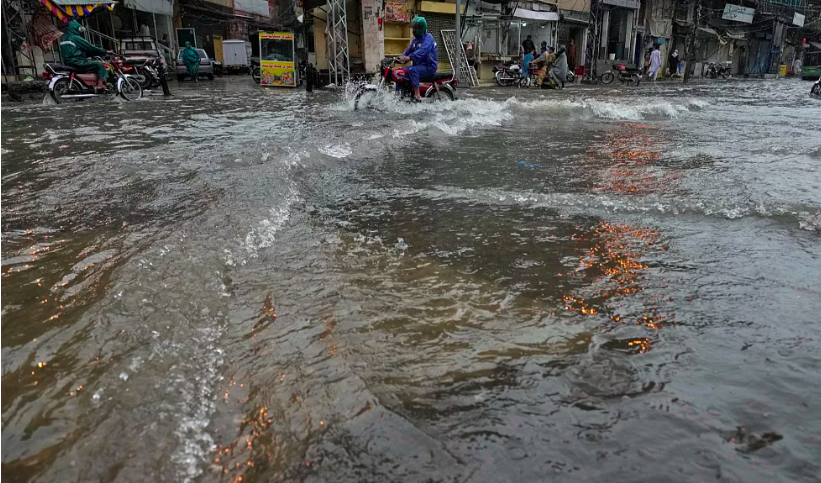
Major cities like Lahore and Rawalpindi saw their streets submerged under knee-deep water, disrupting traffic, damaging property, and cutting off access to entire neighbourhoods.
National Emergency Response Intensifies
In response to the escalating crisis, the National Disaster Management Authority (NDMA) issued an updated flood alert on Thursday, placing local governments on high alert and urging residents to stay away from vulnerable areas.
Television footage aired nationally showed dramatic scenes of rescue efforts, including an army helicopter lifting a family of three from the roof of their home after they became trapped by rising waters on the outskirts of Rawalpindi.
Emergency services have been stretched thin, with many rural areas reporting delays in rescue and relief operations due to blocked roads and washed-out bridges.
Broader Impact Across the Country
The deadly rains are not confined to Punjab. Other provinces—Khyber Pakhtunkhwa in the northwest, Sindh in the south, and Balochistan in the southwest—have all suffered significant casualties and damage over the last three weeks.
The Pakistan Meteorological Department reported that nationwide rainfall this month has been 82% higher than the average for July, raising fears of a repeat of the catastrophic 2022 floods, which killed over 1,700 people and submerged a third of the country.
Authorities are especially concerned about regions like Pakistan-administered Kashmir and the capital Islamabad, where further heavy rain is forecast in the coming days. Warnings have been issued for possible landslides, river overflows, and highway closures, especially in mountainous areas.
Tourists and Residents Urged to Stay Away
As the rains continue to pour, authorities have advised tourists and residents to avoid travel to affected areas. The NDMA and local governments have jointly urged people to postpone non-essential trips, warning that road blockages and sudden landslides could trap travellers and complicate rescue efforts.
Many schools and public offices in high-risk districts have also been temporarily closed, and emergency shelters have been set up for displaced families.
In several flood-prone villages, local mosques have been transformed into temporary housing centres, offering food, water, and basic medical aid to those forced out of their homes.
Climate Change and Future Preparedness
Experts warn that climate change is driving more intense and frequent monsoon seasons in Pakistan. The country has long been ranked among the most climate-vulnerable nations in the world, with fragile infrastructure and limited emergency preparedness compounding the risks of natural disasters.
Despite increased awareness since the 2022 floods, many rural communities still lack proper drainage systems, flood defences, and early warning networks. The latest disaster has once again exposed gaps in Pakistan’s climate resilience strategy.
International aid agencies have begun assessing the situation, with calls growing for increased funding for climate adaptation, infrastructure upgrades, and community-based preparedness.
Looking Forward
As Pakistan braces for continued rainfall in the coming days, the focus must shift from emergency response to long-term resilience. Authorities at both the national and provincial levels will need to prioritise investment in flood defences, early warning systems, and climate-resilient infrastructure, particularly in vulnerable regions like Punjab, Sindh, and Balochistan.
With further monsoon activity forecast, rapid deployment of relief supplies and medical aid is critical to prevent a secondary crisis of disease outbreaks and food shortages in flood-hit communities. Coordination between civilian agencies, the military, and international humanitarian partners will be essential to reach remote areas where infrastructure has been destroyed.
Pakistan's experience in 2022 showed that climate-induced disasters are no longer rare—they are becoming the new normal. Looking ahead, the government must develop a comprehensive disaster preparedness and climate adaptation strategy that includes local community training, robust urban planning, and integration of climate science into development policy.
Ultimately, as the death toll continues to rise and more families are displaced, the disaster unfolding in Pakistan should serve as a wake-up call—not just for the country, but for the global community—to act decisively against the growing threat of climate change.
Conclusion
As monsoon rains continue to pound Pakistan, the tragic toll of 178 lives lost—and potentially rising—is a stark reminder of the country’s vulnerability to extreme weather events. With major urban centres underwater, rural communities isolated, and emergency services pushed to the brink, the need for coordinated action has never been more urgent.
Unless concrete steps are taken to bolster infrastructure, improve disaster response, and combat the underlying threat of climate change, Pakistan could face even more devastating outcomes in the future. For now, the nation braces for more rainfall—hoping to weather yet another storm.
Meta Description:
Torrential monsoon rains have killed at least 54 people in eastern Pakistan within 24 hours, bringing the nationwide death toll to 178 since late June. Officials warn of worsening floods and urge citizens to remain vigilant.
At Least 54 Dead in 24 Hours as Monsoon Rains Devastate Eastern Pakistan
Pakistan is facing yet another climate disaster as powerful monsoon rains continue to batter the country, leaving a trail of destruction in their wake. In the past 24 hours alone, at least 54 people have died in eastern Pakistan, with Punjab province bearing the brunt of the devastation. This brings the total number of rain-related deaths to 178 across the country since June 26, according to official sources.
The extreme weather, described by meteorologists as significantly above seasonal norms, has triggered flash floods, landslides, and widespread urban inundation, wreaking havoc across both rural and urban communities.
Register for Tekedia Mini-MBA edition 20 (June 8 – Sept 5, 2026).
Register for Tekedia AI in Business Masterclass.
Join Tekedia Capital Syndicate and co-invest in great global startups.
Register for Tekedia AI Lab.
Punjab Suffers the Most
Punjab, Pakistan’s most populous province, has emerged as the epicentre of the current crisis. The province has recorded a staggering 124% increase in rainfall between July 1–15 compared to the same period in 2024. The Jhelum district was hit particularly hard, with a cloudburst unleashing a surge of water that caused flash flooding and forced emergency evacuations using boats.
The provincial disaster management authority confirmed that the majority of the 54 fatalities reported over the past day occurred in areas already struggling to cope with overflowing rivers and broken infrastructure.

Major cities like Lahore and Rawalpindi saw their streets submerged under knee-deep water, disrupting traffic, damaging property, and cutting off access to entire neighbourhoods.
National Emergency Response Intensifies
In response to the escalating crisis, the National Disaster Management Authority (NDMA) issued an updated flood alert on Thursday, placing local governments on high alert and urging residents to stay away from vulnerable areas.

Television footage aired nationally showed dramatic scenes of rescue efforts, including an army helicopter lifting a family of three from the roof of their home after they became trapped by rising waters on the outskirts of Rawalpindi.
Emergency services have been stretched thin, with many rural areas reporting delays in rescue and relief operations due to blocked roads and washed-out bridges.
Broader Impact Across the Country
The deadly rains are not confined to Punjab. Other provinces—Khyber Pakhtunkhwa in the northwest, Sindh in the south, and Balochistan in the southwest—have all suffered significant casualties and damage over the last three weeks.
The Pakistan Meteorological Department reported that nationwide rainfall this month has been 82% higher than the average for July, raising fears of a repeat of the catastrophic 2022 floods, which killed over 1,700 people and submerged a third of the country.
Authorities are especially concerned about regions like Pakistan-administered Kashmir and the capital Islamabad, where further heavy rain is forecast in the coming days. Warnings have been issued for possible landslides, river overflows, and highway closures, especially in mountainous areas.
Tourists and Residents Urged to Stay Away
As the rains continue to pour, authorities have advised tourists and residents to avoid travel to affected areas. The NDMA and local governments have jointly urged people to postpone non-essential trips, warning that road blockages and sudden landslides could trap travellers and complicate rescue efforts.
Many schools and public offices in high-risk districts have also been temporarily closed, and emergency shelters have been set up for displaced families.
In several flood-prone villages, local mosques have been transformed into temporary housing centres, offering food, water, and basic medical aid to those forced out of their homes.
Climate Change and Future Preparedness
Experts warn that climate change is driving more intense and frequent monsoon seasons in Pakistan. The country has long been ranked among the most climate-vulnerable nations in the world, with fragile infrastructure and limited emergency preparedness compounding the risks of natural disasters.
Despite increased awareness since the 2022 floods, many rural communities still lack proper drainage systems, flood defences, and early warning networks. The latest disaster has once again exposed gaps in Pakistan’s climate resilience strategy.
International aid agencies have begun assessing the situation, with calls growing for increased funding for climate adaptation, infrastructure upgrades, and community-based preparedness.
Looking Forward
As Pakistan braces for continued rainfall in the coming days, the focus must shift from emergency response to long-term resilience. Authorities at both the national and provincial levels will need to prioritise investment in flood defences, early warning systems, and climate-resilient infrastructure, particularly in vulnerable regions like Punjab, Sindh, and Balochistan.
With further monsoon activity forecast, rapid deployment of relief supplies and medical aid is critical to prevent a secondary crisis of disease outbreaks and food shortages in flood-hit communities. Coordination between civilian agencies, the military, and international humanitarian partners will be essential to reach remote areas where infrastructure has been destroyed.
Pakistan's experience in 2022 showed that climate-induced disasters are no longer rare—they are becoming the new normal. Looking ahead, the government must develop a comprehensive disaster preparedness and climate adaptation strategy that includes local community training, robust urban planning, and integration of climate science into development policy.
Ultimately, as the death toll continues to rise and more families are displaced, the disaster unfolding in Pakistan should serve as a wake-up call—not just for the country, but for the global community—to act decisively against the growing threat of climate change.
Conclusion
As monsoon rains continue to pound Pakistan, the tragic toll of 178 lives lost—and potentially rising—is a stark reminder of the country’s vulnerability to extreme weather events. With major urban centres underwater, rural communities isolated, and emergency services pushed to the brink, the need for coordinated action has never been more urgent.
Unless concrete steps are taken to bolster infrastructure, improve disaster response, and combat the underlying threat of climate change, Pakistan could face even more devastating outcomes in the future. For now, the nation braces for more rainfall—hoping to weather yet another storm.
Meta Description:
Torrential monsoon rains have killed at least 54 people in eastern Pakistan within 24 hours, bringing the nationwide death toll to 178 since late June. Officials warn of worsening floods and urge citizens to remain vigilant.
Share this:
- Click to share on Facebook (Opens in new window) Facebook
- Click to share on X (Opens in new window) X
- Click to share on WhatsApp (Opens in new window) WhatsApp
- Click to share on LinkedIn (Opens in new window) LinkedIn
- Click to email a link to a friend (Opens in new window) Email
- Click to print (Opens in new window) Print