

China’s 2025 Car Sales Surge as NEVs Near Half of Market and BEVs Lead Growth

Quote from Alex Bobby on August 15, 2025, 5:15 AM
Chinese New Car Sales on Track to Match 2023 Growth Levels as NEV Market Surges
China’s auto market is showing strong signs of recovery in 2025, with total vehicle sales and the rapidly expanding new energy vehicle (NEV) sector putting the industry back on a growth trajectory comparable to the highs of 2023.
According to the China Association of Automobile Manufacturers (CAAM), the first seven months of 2025 have seen total vehicle sales rise 12% compared with the same period last year. Much of this momentum has been fuelled by surging NEV sales, which now make up nearly half of all new cars sold in the country.
This resurgence comes after a disappointing 2024, when vehicle sales grew by only 4.5%, totalling 31.44 million units—a sharp slowdown from the 12% growth recorded in 2023. Industry analysts now believe that if current trends continue, 2025 could match or even surpass the strong performance seen two years ago.
July 2025: Strong Year-on-Year Gains, But Monthly Dip
In July, total car sales in China jumped 14.7% year-on-year to 2.59 million units, marking the second consecutive month of double-digit annual growth after June’s 13.8% rise. This sustained improvement highlights robust demand in the world’s largest automotive market, even in the face of economic uncertainty and fluctuating consumer sentiment.
However, the monthly figures tell a slightly different story. Compared with June, sales fell 10.7% in July, reversing the 8.1% month-on-month growth recorded in the previous month. Industry experts attribute this dip to seasonal factors, potential purchase delays ahead of upcoming model releases, and shifting consumer interest toward specific vehicle segments—most notably NEVs.
NEVs Continue to Steal the Spotlight
The clear standout in China’s auto market remains the new energy vehicle sector, which includes battery electric vehicles (BEVs), plug-in hybrid electric vehicles (PHEVs), and fuel cell electric vehicles (FCEVs).
In July, NEV sales surged 27.4% year-on-year to 1.26 million units, extending a remarkable streak of five consecutive months of growth. NEVs accounted for 48.7% of all new car sales, underlining just how central they have become to China’s automotive future.
Breaking down the figures:
- BEVs led the charge with a 41.7% year-on-year increase, reaching 811,000 units sold in July. This rapid growth suggests that pure electric models are increasingly favoured by consumers, thanks to wider model availability, improved charging infrastructure, and competitive pricing.
- PHEVs experienced only a modest 2.8% year-on-year increase to 440,000 units, and saw a 4% monthly decline compared to June. This marks a noticeable shift from 2024, when PHEVs often outperformed BEVs in growth rates. The reversal could indicate that more buyers are skipping transitional hybrid technologies in favour of going fully electric.
- FCEVs remain a niche market segment with minimal sales volume but are seeing ongoing pilot deployments in commercial fleets.
BYD Remains the Leader, But Sees a Monthly Decline
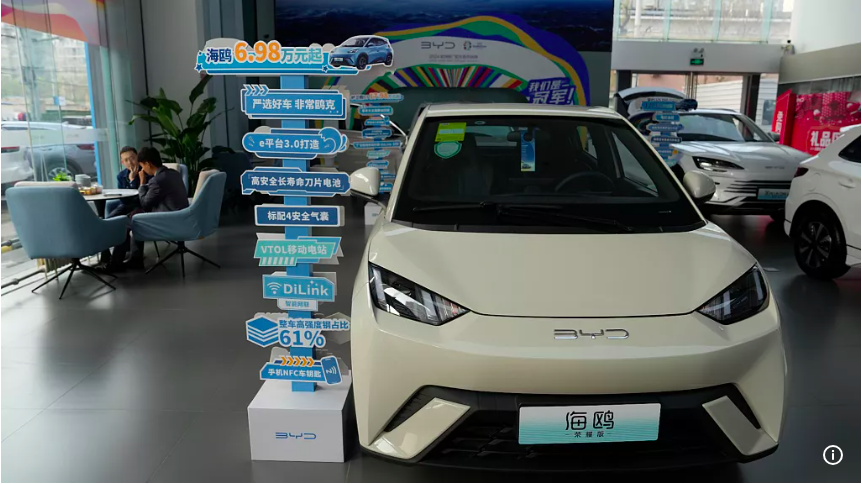
BYD, China’s NEV giant and a global leader in electric vehicle manufacturing, maintained its position as the country’s top-selling NEV brand in July, recording 344,296 units sold. However, this figure represents a 10% drop compared with June, suggesting either short-term production adjustments, seasonal demand fluctuations, or increased competition from rivals such as Tesla, NIO, and Geely.
Despite the monthly decline, BYD’s diverse product lineup—from affordable city EVs to premium electric SUVs—continues to dominate in multiple market segments, reinforcing its stronghold in China’s rapidly evolving automotive sector.
January–July 2025: A Promising Seven-Month Performance
From January to July, total vehicle sales climbed 12% compared with the same period in 2024. Within that, NEV sales have been the undisputed growth driver:
- NEVs made up 45% of all vehicle sales.
- NEV sales volumes jumped 38.5% year-on-year, totalling 8.22 million units in the first seven months alone.
This sharp rise in NEV adoption reflects a combination of government policy support, improved charging networks, lower battery costs, and increasing consumer awareness of long-term cost savings from EV ownership.
Why 2025 Could Rival 2023’s Boom
China’s auto market has had a history of dramatic shifts, from pandemic-era slumps to policy-driven surges. The strong start to 2025, particularly in NEV sales, is reminiscent of the industry’s 2023 boom year when total vehicle sales jumped 12%.
Several factors could help 2025 achieve a similar full-year result:
- Policy Incentives – Government subsidies for NEV purchases remain in place, along with tax breaks and incentives for both manufacturers and consumers.
- Rapid Infrastructure Expansion – Charging stations are being rolled out at unprecedented speed, reducing “range anxiety” for EV buyers.
- Model Diversification – Automakers are offering a broader range of NEVs at varying price points, from budget-friendly compacts to luxury models.
- Export Growth – China’s growing role as an EV exporter is boosting production volumes and economies of scale for domestic sales.
Challenges Ahead
While the numbers are promising, there are still risks that could slow momentum:
- Economic Headwinds – Slower GDP growth, rising youth unemployment, and fluctuating consumer confidence could weigh on car purchases.
- Intensifying Competition – Price wars in the EV market, driven by both domestic brands and foreign entrants, may pressure profit margins.
- Global Trade Tensions – Potential tariffs on Chinese EV exports could affect production volumes and indirectly impact domestic sales.
Nonetheless, industry insiders believe that the underlying demand for NEVs in China remains solid, supported by long-term structural trends and strong government backing for electrification.
Conclusion: A Market in High Gear
The first seven months of 2025 have put China’s auto market back in the fast lane. With NEVs accounting for nearly half of all sales and BEVs posting explosive growth, the sector is poised to drive the country’s car sales to levels not seen since the post-pandemic boom of 2023.
If the pace continues, 2025 could mark a return to double-digit full-year growth—something industry watchers have been hoping for since last year’s slowdown. As consumer preferences evolve and technology advances, China’s position as the world’s largest and most dynamic auto market shows no signs of changing.
Meta Description:
China’s car sales rose 12% in the first seven months of 2025, driven by surging NEV demand as BEVs outpace PHEVs. July figures show strong year-on-year growth despite a monthly dip.
Chinese New Car Sales on Track to Match 2023 Growth Levels as NEV Market Surges
China’s auto market is showing strong signs of recovery in 2025, with total vehicle sales and the rapidly expanding new energy vehicle (NEV) sector putting the industry back on a growth trajectory comparable to the highs of 2023.
According to the China Association of Automobile Manufacturers (CAAM), the first seven months of 2025 have seen total vehicle sales rise 12% compared with the same period last year. Much of this momentum has been fuelled by surging NEV sales, which now make up nearly half of all new cars sold in the country.
Register for Tekedia Mini-MBA edition 20 (June 8 – Sept 5, 2026).
Register for Tekedia AI in Business Masterclass.
Join Tekedia Capital Syndicate and co-invest in great global startups.
Register for Tekedia AI Lab.
This resurgence comes after a disappointing 2024, when vehicle sales grew by only 4.5%, totalling 31.44 million units—a sharp slowdown from the 12% growth recorded in 2023. Industry analysts now believe that if current trends continue, 2025 could match or even surpass the strong performance seen two years ago.
July 2025: Strong Year-on-Year Gains, But Monthly Dip
In July, total car sales in China jumped 14.7% year-on-year to 2.59 million units, marking the second consecutive month of double-digit annual growth after June’s 13.8% rise. This sustained improvement highlights robust demand in the world’s largest automotive market, even in the face of economic uncertainty and fluctuating consumer sentiment.

However, the monthly figures tell a slightly different story. Compared with June, sales fell 10.7% in July, reversing the 8.1% month-on-month growth recorded in the previous month. Industry experts attribute this dip to seasonal factors, potential purchase delays ahead of upcoming model releases, and shifting consumer interest toward specific vehicle segments—most notably NEVs.
NEVs Continue to Steal the Spotlight
The clear standout in China’s auto market remains the new energy vehicle sector, which includes battery electric vehicles (BEVs), plug-in hybrid electric vehicles (PHEVs), and fuel cell electric vehicles (FCEVs).

In July, NEV sales surged 27.4% year-on-year to 1.26 million units, extending a remarkable streak of five consecutive months of growth. NEVs accounted for 48.7% of all new car sales, underlining just how central they have become to China’s automotive future.
Breaking down the figures:
- BEVs led the charge with a 41.7% year-on-year increase, reaching 811,000 units sold in July. This rapid growth suggests that pure electric models are increasingly favoured by consumers, thanks to wider model availability, improved charging infrastructure, and competitive pricing.
- PHEVs experienced only a modest 2.8% year-on-year increase to 440,000 units, and saw a 4% monthly decline compared to June. This marks a noticeable shift from 2024, when PHEVs often outperformed BEVs in growth rates. The reversal could indicate that more buyers are skipping transitional hybrid technologies in favour of going fully electric.
- FCEVs remain a niche market segment with minimal sales volume but are seeing ongoing pilot deployments in commercial fleets.
BYD Remains the Leader, But Sees a Monthly Decline
BYD, China’s NEV giant and a global leader in electric vehicle manufacturing, maintained its position as the country’s top-selling NEV brand in July, recording 344,296 units sold. However, this figure represents a 10% drop compared with June, suggesting either short-term production adjustments, seasonal demand fluctuations, or increased competition from rivals such as Tesla, NIO, and Geely.
Despite the monthly decline, BYD’s diverse product lineup—from affordable city EVs to premium electric SUVs—continues to dominate in multiple market segments, reinforcing its stronghold in China’s rapidly evolving automotive sector.
January–July 2025: A Promising Seven-Month Performance
From January to July, total vehicle sales climbed 12% compared with the same period in 2024. Within that, NEV sales have been the undisputed growth driver:
- NEVs made up 45% of all vehicle sales.
- NEV sales volumes jumped 38.5% year-on-year, totalling 8.22 million units in the first seven months alone.
This sharp rise in NEV adoption reflects a combination of government policy support, improved charging networks, lower battery costs, and increasing consumer awareness of long-term cost savings from EV ownership.
Why 2025 Could Rival 2023’s Boom
China’s auto market has had a history of dramatic shifts, from pandemic-era slumps to policy-driven surges. The strong start to 2025, particularly in NEV sales, is reminiscent of the industry’s 2023 boom year when total vehicle sales jumped 12%.
Several factors could help 2025 achieve a similar full-year result:
- Policy Incentives – Government subsidies for NEV purchases remain in place, along with tax breaks and incentives for both manufacturers and consumers.
- Rapid Infrastructure Expansion – Charging stations are being rolled out at unprecedented speed, reducing “range anxiety” for EV buyers.
- Model Diversification – Automakers are offering a broader range of NEVs at varying price points, from budget-friendly compacts to luxury models.
- Export Growth – China’s growing role as an EV exporter is boosting production volumes and economies of scale for domestic sales.
Challenges Ahead
While the numbers are promising, there are still risks that could slow momentum:
- Economic Headwinds – Slower GDP growth, rising youth unemployment, and fluctuating consumer confidence could weigh on car purchases.
- Intensifying Competition – Price wars in the EV market, driven by both domestic brands and foreign entrants, may pressure profit margins.
- Global Trade Tensions – Potential tariffs on Chinese EV exports could affect production volumes and indirectly impact domestic sales.
Nonetheless, industry insiders believe that the underlying demand for NEVs in China remains solid, supported by long-term structural trends and strong government backing for electrification.
Conclusion: A Market in High Gear
The first seven months of 2025 have put China’s auto market back in the fast lane. With NEVs accounting for nearly half of all sales and BEVs posting explosive growth, the sector is poised to drive the country’s car sales to levels not seen since the post-pandemic boom of 2023.
If the pace continues, 2025 could mark a return to double-digit full-year growth—something industry watchers have been hoping for since last year’s slowdown. As consumer preferences evolve and technology advances, China’s position as the world’s largest and most dynamic auto market shows no signs of changing.
Meta Description:
China’s car sales rose 12% in the first seven months of 2025, driven by surging NEV demand as BEVs outpace PHEVs. July figures show strong year-on-year growth despite a monthly dip.
Share this:
- Click to share on Facebook (Opens in new window) Facebook
- Click to share on X (Opens in new window) X
- Click to share on WhatsApp (Opens in new window) WhatsApp
- Click to share on LinkedIn (Opens in new window) LinkedIn
- Click to email a link to a friend (Opens in new window) Email
- Click to print (Opens in new window) Print