

China’s Land-Based ‘Suez Canal’: How Chongqing is Redefining Global Trade

Quote from Alex Bobby on September 3, 2025, 3:03 AM
China’s Land-Based ‘Suez Canal’: A New Trade Route to Connect Europe and Asia
China is reshaping the geography of global trade. Far from the stormy waters of the South China Sea and the congested lanes of the Suez Canal, a new overland route is taking form. Anchored in the mountainous city of Chongqing, this project is being hailed as a potential land-based “Suez Canal”—a trade artery that promises to connect Asia to Europe at unprecedented speed, while bypassing maritime choke points long dominated by Western influence.
Chongqing: A Rising Trade Fulcrum
Nestled deep in China’s southwest, Chongqing has rapidly transformed into one of the country’s most important logistics hubs. What makes the city particularly strategic is not just its geography, but also its economic weight. Chongqing is a global manufacturing powerhouse, producing around one-third of the world’s laptops, serving as a key hub for electric vehicle production, and exporting nearly a quarter of China’s cars.
From here, hundreds of shipments leave every day, linking Southeast Asia to the heart of Europe. High-speed freight trains departing Chongqing carry goods to countries including Germany and Poland, offering exporters an alternative to traditional sea shipping that cuts both time and complexity.
The South China Morning Post reports that Chongqing’s rise as a logistics hub is being closely watched by policymakers. If the model proves successful in the long term, Beijing is expected to replicate it in other western provinces, strengthening China’s grip over transcontinental trade.
Speed and Efficiency: The Core Advantage
One of the most compelling features of the Chongqing corridor is its efficiency. Traditional sea routes from Asia to Europe, which pass through the South China Sea, the Malacca Strait, and the Suez Canal, take between 35 and 45 days. In contrast, the land-based route reduces delivery times by 10–20 days.
The 2023 launch of the ASEAN bullet train further supercharged this network. The rail link slashed transport time between Hanoi and Chongqing to just five days, after which freight can be sent to Europe in under two weeks. Compared with the unpredictability of maritime shipping, plagued by port congestion, piracy risks, and weather delays, this streamlined land route is increasingly attractive for exporters seeking reliability.
In addition, overland transport simplifies customs procedures, which often slow down maritime trade. For time-sensitive goods like electronics, pharmaceuticals, and automotive components, the advantage is significant.
Beyond Logistics: The Geopolitical Calculus
While the economic rationale is clear, the project is equally driven by geopolitics. For decades, global shipping has relied heavily on a few strategic choke points: the Suez Canal, the Strait of Hormuz, and the Strait of Malacca. These routes are not only congested but are also under the watchful eye of the United States and its allies. For Beijing, dependence on them represents a serious vulnerability.
The trade war initiated under former U.S. President Donald Trump highlighted the fragility of China’s export-driven economy. The COVID-19 pandemic further revealed the risks of over-reliance on maritime supply chains, as port closures and shipping disruptions sent shockwaves across global markets.
Moreover, the ongoing war in Ukraine has complicated China’s northern rail routes through Russia. Though bilateral trade between Moscow and Beijing surged to €240 billion in 2024, the risk of shipment seizures and Western sanctions has made the Russian corridor less secure.
In response, Beijing is pushing for the development of the so-called “Middle Corridor.” This route passes through Kazakhstan, crosses the Caspian Sea, and continues westward through the Caucasus before linking with European rail networks. By diversifying trade corridors, China aims to hedge against geopolitical uncertainty and secure its long-term trade ambitions.
The Challenges Ahead
Despite its promise, the land-based “Suez Canal” faces formidable challenges.
- Customs Delays: Although faster than sea routes, overland trade still grapples with bureaucratic hurdles. Differing regulations across multiple countries mean customs clearance can be inconsistent and time-consuming.
- High Costs: Transporting goods by rail is more expensive than by sea. Many exporters rely on subsidies under China’s Belt and Road Initiative (BRI) to make the routes viable. Whether these routes can remain financially sustainable without heavy government support remains uncertain.
- Infrastructure Gaps: Rail links, logistics centres, and port facilities along the Middle Corridor are still underdeveloped compared to maritime infrastructure. Building and upgrading these connections will require massive investments and international cooperation.
- Geopolitical Risks: The Middle Corridor passes through politically sensitive regions such as Central Asia and the Caucasus, where instability could disrupt trade. Furthermore, rival powers may resist China’s growing influence over global supply chains.
Implications for Global Trade
If China succeeds in fully developing this land-based trade artery, the consequences for global commerce could be transformative. Exporters in Southeast Asia and inland China would gain a faster, more predictable route to Europe. At the same time, countries along the Middle Corridor—Kazakhstan, Azerbaijan, and Georgia—stand to benefit economically as transit hubs.
For Europe, the land-based route could ease reliance on the Suez Canal, which has become increasingly vulnerable. The 2021 blockage of the canal by the container ship Ever Given cost global trade an estimated $9.6 billion per day. A functioning overland alternative would reduce the risks of such disruptions.
Yet the rise of this corridor may also deepen geopolitical competition. The U.S. and its allies are likely to view China’s control over new trade arteries with suspicion, interpreting it as an attempt to circumvent Western influence. In this light, Chongqing’s rise as a logistics hub is not just a story of commerce, but one of strategic rivalry shaping the 21st century.
Final Thought / Looking Forward:
As China accelerates its efforts to secure overland trade routes, the global balance of logistics is shifting. The Chongqing corridor may still face financial, infrastructural, and political hurdles, but its potential to reduce dependence on maritime chokepoints is undeniable. Looking forward, the success or failure of this land-based “Suez Canal” will not only shape China’s economic future but could also redraw the map of international commerce for decades to come.Conclusion: A Bold Experiment in Connectivity
China’s ambition to build a land-based “Suez Canal” reflects both necessity and vision. Driven by the need to secure supply chains, bypass maritime chokepoints, and strengthen its export machine, Beijing is pouring resources into transforming Chongqing into a global logistics hub.
But the road ahead is far from smooth. High costs, infrastructure deficits, and geopolitical uncertainty threaten to slow progress. Still, if China can overcome these obstacles, the Chongqing corridor could redefine the very architecture of global trade—rebalancing it away from the seas and onto the rails.
For now, the world is watching closely. Whether this bold experiment in connectivity becomes a lasting pillar of the global economy, or merely an ambitious detour, will depend on how China navigates the challenges that lie ahead.
Meta Description:
China is building a land-based “Suez Canal” through Chongqing, linking Asia and Europe via rail. Faster, cheaper, and geopolitically strategic—could it reshape global trade?
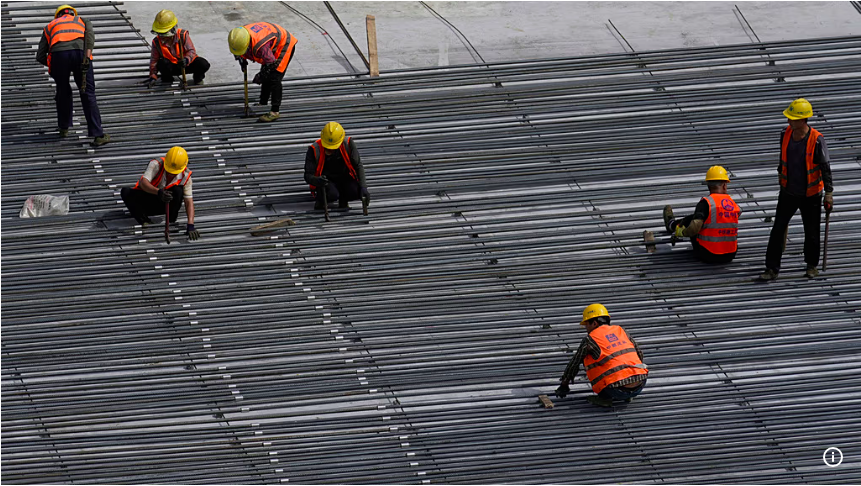
China’s Land-Based ‘Suez Canal’: A New Trade Route to Connect Europe and Asia
China is reshaping the geography of global trade. Far from the stormy waters of the South China Sea and the congested lanes of the Suez Canal, a new overland route is taking form. Anchored in the mountainous city of Chongqing, this project is being hailed as a potential land-based “Suez Canal”—a trade artery that promises to connect Asia to Europe at unprecedented speed, while bypassing maritime choke points long dominated by Western influence.
Chongqing: A Rising Trade Fulcrum
Register for Tekedia Mini-MBA edition 20 (June 8 – Sept 5, 2026).
Register for Tekedia AI in Business Masterclass.
Join Tekedia Capital Syndicate and co-invest in great global startups.
Register for Tekedia AI Lab.
Nestled deep in China’s southwest, Chongqing has rapidly transformed into one of the country’s most important logistics hubs. What makes the city particularly strategic is not just its geography, but also its economic weight. Chongqing is a global manufacturing powerhouse, producing around one-third of the world’s laptops, serving as a key hub for electric vehicle production, and exporting nearly a quarter of China’s cars.
From here, hundreds of shipments leave every day, linking Southeast Asia to the heart of Europe. High-speed freight trains departing Chongqing carry goods to countries including Germany and Poland, offering exporters an alternative to traditional sea shipping that cuts both time and complexity.
The South China Morning Post reports that Chongqing’s rise as a logistics hub is being closely watched by policymakers. If the model proves successful in the long term, Beijing is expected to replicate it in other western provinces, strengthening China’s grip over transcontinental trade.

Speed and Efficiency: The Core Advantage
One of the most compelling features of the Chongqing corridor is its efficiency. Traditional sea routes from Asia to Europe, which pass through the South China Sea, the Malacca Strait, and the Suez Canal, take between 35 and 45 days. In contrast, the land-based route reduces delivery times by 10–20 days.
The 2023 launch of the ASEAN bullet train further supercharged this network. The rail link slashed transport time between Hanoi and Chongqing to just five days, after which freight can be sent to Europe in under two weeks. Compared with the unpredictability of maritime shipping, plagued by port congestion, piracy risks, and weather delays, this streamlined land route is increasingly attractive for exporters seeking reliability.

In addition, overland transport simplifies customs procedures, which often slow down maritime trade. For time-sensitive goods like electronics, pharmaceuticals, and automotive components, the advantage is significant.
Beyond Logistics: The Geopolitical Calculus
While the economic rationale is clear, the project is equally driven by geopolitics. For decades, global shipping has relied heavily on a few strategic choke points: the Suez Canal, the Strait of Hormuz, and the Strait of Malacca. These routes are not only congested but are also under the watchful eye of the United States and its allies. For Beijing, dependence on them represents a serious vulnerability.
The trade war initiated under former U.S. President Donald Trump highlighted the fragility of China’s export-driven economy. The COVID-19 pandemic further revealed the risks of over-reliance on maritime supply chains, as port closures and shipping disruptions sent shockwaves across global markets.
Moreover, the ongoing war in Ukraine has complicated China’s northern rail routes through Russia. Though bilateral trade between Moscow and Beijing surged to €240 billion in 2024, the risk of shipment seizures and Western sanctions has made the Russian corridor less secure.
In response, Beijing is pushing for the development of the so-called “Middle Corridor.” This route passes through Kazakhstan, crosses the Caspian Sea, and continues westward through the Caucasus before linking with European rail networks. By diversifying trade corridors, China aims to hedge against geopolitical uncertainty and secure its long-term trade ambitions.
The Challenges Ahead
Despite its promise, the land-based “Suez Canal” faces formidable challenges.
- Customs Delays: Although faster than sea routes, overland trade still grapples with bureaucratic hurdles. Differing regulations across multiple countries mean customs clearance can be inconsistent and time-consuming.
- High Costs: Transporting goods by rail is more expensive than by sea. Many exporters rely on subsidies under China’s Belt and Road Initiative (BRI) to make the routes viable. Whether these routes can remain financially sustainable without heavy government support remains uncertain.
- Infrastructure Gaps: Rail links, logistics centres, and port facilities along the Middle Corridor are still underdeveloped compared to maritime infrastructure. Building and upgrading these connections will require massive investments and international cooperation.
- Geopolitical Risks: The Middle Corridor passes through politically sensitive regions such as Central Asia and the Caucasus, where instability could disrupt trade. Furthermore, rival powers may resist China’s growing influence over global supply chains.
Implications for Global Trade
If China succeeds in fully developing this land-based trade artery, the consequences for global commerce could be transformative. Exporters in Southeast Asia and inland China would gain a faster, more predictable route to Europe. At the same time, countries along the Middle Corridor—Kazakhstan, Azerbaijan, and Georgia—stand to benefit economically as transit hubs.
For Europe, the land-based route could ease reliance on the Suez Canal, which has become increasingly vulnerable. The 2021 blockage of the canal by the container ship Ever Given cost global trade an estimated $9.6 billion per day. A functioning overland alternative would reduce the risks of such disruptions.
Yet the rise of this corridor may also deepen geopolitical competition. The U.S. and its allies are likely to view China’s control over new trade arteries with suspicion, interpreting it as an attempt to circumvent Western influence. In this light, Chongqing’s rise as a logistics hub is not just a story of commerce, but one of strategic rivalry shaping the 21st century.
Final Thought / Looking Forward:
As China accelerates its efforts to secure overland trade routes, the global balance of logistics is shifting. The Chongqing corridor may still face financial, infrastructural, and political hurdles, but its potential to reduce dependence on maritime chokepoints is undeniable. Looking forward, the success or failure of this land-based “Suez Canal” will not only shape China’s economic future but could also redraw the map of international commerce for decades to come.
Conclusion: A Bold Experiment in Connectivity
China’s ambition to build a land-based “Suez Canal” reflects both necessity and vision. Driven by the need to secure supply chains, bypass maritime chokepoints, and strengthen its export machine, Beijing is pouring resources into transforming Chongqing into a global logistics hub.
But the road ahead is far from smooth. High costs, infrastructure deficits, and geopolitical uncertainty threaten to slow progress. Still, if China can overcome these obstacles, the Chongqing corridor could redefine the very architecture of global trade—rebalancing it away from the seas and onto the rails.
For now, the world is watching closely. Whether this bold experiment in connectivity becomes a lasting pillar of the global economy, or merely an ambitious detour, will depend on how China navigates the challenges that lie ahead.
Meta Description:
China is building a land-based “Suez Canal” through Chongqing, linking Asia and Europe via rail. Faster, cheaper, and geopolitically strategic—could it reshape global trade?
Share this:
- Click to share on Facebook (Opens in new window) Facebook
- Click to share on X (Opens in new window) X
- Click to share on WhatsApp (Opens in new window) WhatsApp
- Click to share on LinkedIn (Opens in new window) LinkedIn
- Click to email a link to a friend (Opens in new window) Email
- Click to print (Opens in new window) Print