

French Navy Seizes Nearly 10 Tonnes of Cocaine Worth €519M Off West Africa

Quote from Alex Bobby on September 26, 2025, 7:49 AM
French Navy Seizes Almost 10 Tonnes of Cocaine Off Coast of West Africa
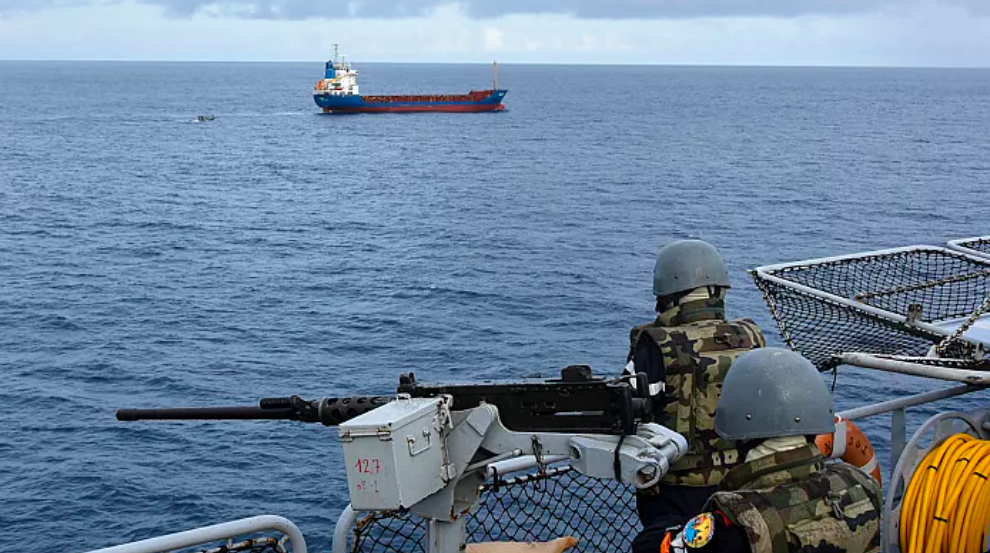
The French navy has carried out one of the largest drug busts in recent maritime history, seizing almost 10 tonnes of cocaine from an unflagged fishing vessel in the Gulf of Guinea. Authorities said the haul, with an estimated street value of €519 million underscores both the scale of international drug trafficking and the importance of global cooperation in fighting organised crime.
The operation, which took place on Monday, was announced on Thursday by France’s Atlantic Maritime Prefecture It is being hailed as a “remarkable seizure” and a powerful demonstration of how intelligence-sharing and multinational collaboration can deliver results against sophisticated trafficking networks.
A Vast Cocaine Haul
The French navy discovered 9.6 tonnes of cocaine packed aboard an unflagged fishing vessel that was intercepted off the West African coast. The Gulf of Guinea, stretching along several West African nations including Nigeria, Ghana, and Côte d’Ivoire, is known as a key transit corridor for drugs smuggled from Latin America to Europe.
The cocaine seized is estimated to be worth over half a billion euros, making it one of the most significant drug interceptions in the region in recent years. The French authorities confirmed that two navy ships were involved in the seizure, boarding the vessel after receiving credible intelligence of its illicit cargo.
Intelligence-Led Operation
According to the statement, the operation was made possible through the “seamless cooperation” of multiple agencies and governments. Key intelligence came from France’s Anti-Narcotics Office (OFAST, as well as the UK’s National Crime Agency (NCA).
Additional support came from the Maritime Analysis and Operations Centre – Narcotics (MAOC-N), a Lisbon-based initiative that pools resources and intelligence from several European countries, including Belgium, Britain, France, Germany, Ireland, Italy, Spain, the Netherlands, and Portugal.
The centre specialises in tracking transatlantic narcotics trafficking, particularly shipments leaving Latin America by sea. With international drug networks increasingly relying on maritime routes, MAOC-N has become a critical tool in Europe’s fight against organised crime.
West Africa’s Role in Global Trafficking
The seizure highlights the Gulf of Guinea’s role as a major gateway for narcotics destined for European markets. Traffickers often exploit weak maritime governance, porous coastlines, and limited enforcement capacity in some West African states to move large shipments undetected.
Cocaine produced in South America—primarily in Colombia, Peru, and Bolivia—is often transported across the Atlantic by “mother ships.” These larger vessels than transfer their cargo onto smaller fishing boats or other inconspicuous vessels off the coast of Africa. The drugs are later moved through West African ports, smuggled overland, or shipped onward to Europe.
In recent years, West Africa has become both a transit hub and, increasingly, a consumption market for narcotics. Regional governments, supported by international partners, are under growing pressure to address the destabilising effects of the drug trade, which can fuel corruption, undermine governance, and empower criminal organisations.
A Demonstration of Naval Power
The French navy’s involvement reflects Paris’s longstanding commitment to security in West Africa. France maintains a significant naval presence in the region, both to protect shipping lanes and to support local partners in combating piracy and trafficking.
The seizure demonstrates the capacity of naval forces not only to deter piracy—a recurring problem in the Gulf of Guinea—but also to act as a frontline defence against international smuggling. By deploying warships with advanced surveillance, boarding teams, and intelligence coordination, France has shown the impact of hard power combined with information-sharing.
Regional and Global Implications
This operation carries broader implications beyond the sheer quantity of drugs intercepted. It highlights the growing effectiveness of international task forces like MAOC-N, which blend law enforcement and military resources across borders. By cutting off a major shipment, authorities may have disrupted the finances of one or more powerful trafficking networks.
At the same time, experts warn that the sheer scale of the bust suggests there are still many shipments slipping through undetected. Interceptions often represent only a fraction of the total traffic, and organised crime groups are quick to adapt. This means continued cooperation and investment in maritime security are essential.
For Europe, the interception is a reminder of the relentless demand for cocaine. The drug remains one of the most widely consumed illicit substances on the continent, with consumption rising steadily over the past two decades. Major busts may dent supply chains, but they also underline the profitability that drives traffickers to take enormous risks.
France’s Message to Traffickers
In its official statement, the Atlantic Maritime Prefecture stressed the importance of international teamwork in achieving the seizure. By publicly highlighting the role of British, French, and other European agencies, France is sending a clear message: Europe is united in its fight against drug trafficking.
The operation also reaffirms France’s strategic interest in West Africa, a region where Paris maintains not only security commitments but also deep political and economic ties. Counter-narcotics work thus becomes part of a wider effort to project stability and maintain influence in a part of the world increasingly contested by other global powers.
Looking Forward
The seizure of nearly 10 tonnes of cocaine is a significant win for France and its international partners, but it also highlights the persistence of powerful trafficking networks that continue to exploit the Gulf of Guinea. Moving forward, the challenge will be sustaining and expanding cooperation between European agencies, West African governments, and international organisations. Greater investment in regional maritime capacity, intelligence-sharing, and law enforcement training will be key to preventing similar shipments from reaching European shores. If the lessons of this operation are carried forward, it could serve as a blueprint for more robust global efforts to disrupt transatlantic drug routes.
Final Thoughts
The French navy’s interception of nearly 10 tonnes of cocaine in the Gulf of Guinea is a landmark victory in the ongoing battle against international drug trafficking. Valued at more than €500 million, the haul underscores both the scale of the trade and the determination of European and West African partners to combat it.
Yet the bust also raises tough questions: how many shipments make it through undetected, and how can vulnerable coastal states be better supported to strengthen their own enforcement capabilities? For now, however, this operation stands as a reminder that coordinated action—combining intelligence, naval power, and international cooperation—remains the strongest weapon against organised crime on the high seas.
conclusion
The French navy’s seizure of nearly 10 tonnes of cocaine off West Africa is both a landmark victory and a stark reminder of the scale of the global narcotics trade. While the bust underscores the power of coordinated intelligence and naval action, it also exposes the ongoing vulnerabilities of maritime routes in the Gulf of Guinea. For Europe, West Africa, and their partners, the task ahead will be not only to replicate such successes but also to build long-term resilience against trafficking networks that thrive on weak enforcement and high demand. Ultimately, this operation proves that when nations work together, organised crime can be confronted—but the fight is far from over.
Meta Description:
The French navy intercepted 9.6 tonnes of cocaine on an unflagged fishing vessel in the Gulf of Guinea, highlighting international cooperation in the fight against global drug trafficking.
French Navy Seizes Almost 10 Tonnes of Cocaine Off Coast of West Africa
The French navy has carried out one of the largest drug busts in recent maritime history, seizing almost 10 tonnes of cocaine from an unflagged fishing vessel in the Gulf of Guinea. Authorities said the haul, with an estimated street value of €519 million underscores both the scale of international drug trafficking and the importance of global cooperation in fighting organised crime.
The operation, which took place on Monday, was announced on Thursday by France’s Atlantic Maritime Prefecture It is being hailed as a “remarkable seizure” and a powerful demonstration of how intelligence-sharing and multinational collaboration can deliver results against sophisticated trafficking networks.
Register for Tekedia Mini-MBA edition 20 (June 8 – Sept 5, 2026).
Register for Tekedia AI in Business Masterclass.
Join Tekedia Capital Syndicate and co-invest in great global startups.
Register for Tekedia AI Lab.
A Vast Cocaine Haul
The French navy discovered 9.6 tonnes of cocaine packed aboard an unflagged fishing vessel that was intercepted off the West African coast. The Gulf of Guinea, stretching along several West African nations including Nigeria, Ghana, and Côte d’Ivoire, is known as a key transit corridor for drugs smuggled from Latin America to Europe.
The cocaine seized is estimated to be worth over half a billion euros, making it one of the most significant drug interceptions in the region in recent years. The French authorities confirmed that two navy ships were involved in the seizure, boarding the vessel after receiving credible intelligence of its illicit cargo.

Intelligence-Led Operation
According to the statement, the operation was made possible through the “seamless cooperation” of multiple agencies and governments. Key intelligence came from France’s Anti-Narcotics Office (OFAST, as well as the UK’s National Crime Agency (NCA).
Additional support came from the Maritime Analysis and Operations Centre – Narcotics (MAOC-N), a Lisbon-based initiative that pools resources and intelligence from several European countries, including Belgium, Britain, France, Germany, Ireland, Italy, Spain, the Netherlands, and Portugal.

The centre specialises in tracking transatlantic narcotics trafficking, particularly shipments leaving Latin America by sea. With international drug networks increasingly relying on maritime routes, MAOC-N has become a critical tool in Europe’s fight against organised crime.
West Africa’s Role in Global Trafficking
The seizure highlights the Gulf of Guinea’s role as a major gateway for narcotics destined for European markets. Traffickers often exploit weak maritime governance, porous coastlines, and limited enforcement capacity in some West African states to move large shipments undetected.
Cocaine produced in South America—primarily in Colombia, Peru, and Bolivia—is often transported across the Atlantic by “mother ships.” These larger vessels than transfer their cargo onto smaller fishing boats or other inconspicuous vessels off the coast of Africa. The drugs are later moved through West African ports, smuggled overland, or shipped onward to Europe.
In recent years, West Africa has become both a transit hub and, increasingly, a consumption market for narcotics. Regional governments, supported by international partners, are under growing pressure to address the destabilising effects of the drug trade, which can fuel corruption, undermine governance, and empower criminal organisations.
A Demonstration of Naval Power
The French navy’s involvement reflects Paris’s longstanding commitment to security in West Africa. France maintains a significant naval presence in the region, both to protect shipping lanes and to support local partners in combating piracy and trafficking.
The seizure demonstrates the capacity of naval forces not only to deter piracy—a recurring problem in the Gulf of Guinea—but also to act as a frontline defence against international smuggling. By deploying warships with advanced surveillance, boarding teams, and intelligence coordination, France has shown the impact of hard power combined with information-sharing.
Regional and Global Implications
This operation carries broader implications beyond the sheer quantity of drugs intercepted. It highlights the growing effectiveness of international task forces like MAOC-N, which blend law enforcement and military resources across borders. By cutting off a major shipment, authorities may have disrupted the finances of one or more powerful trafficking networks.
At the same time, experts warn that the sheer scale of the bust suggests there are still many shipments slipping through undetected. Interceptions often represent only a fraction of the total traffic, and organised crime groups are quick to adapt. This means continued cooperation and investment in maritime security are essential.
For Europe, the interception is a reminder of the relentless demand for cocaine. The drug remains one of the most widely consumed illicit substances on the continent, with consumption rising steadily over the past two decades. Major busts may dent supply chains, but they also underline the profitability that drives traffickers to take enormous risks.
France’s Message to Traffickers
In its official statement, the Atlantic Maritime Prefecture stressed the importance of international teamwork in achieving the seizure. By publicly highlighting the role of British, French, and other European agencies, France is sending a clear message: Europe is united in its fight against drug trafficking.
The operation also reaffirms France’s strategic interest in West Africa, a region where Paris maintains not only security commitments but also deep political and economic ties. Counter-narcotics work thus becomes part of a wider effort to project stability and maintain influence in a part of the world increasingly contested by other global powers.
Looking Forward
The seizure of nearly 10 tonnes of cocaine is a significant win for France and its international partners, but it also highlights the persistence of powerful trafficking networks that continue to exploit the Gulf of Guinea. Moving forward, the challenge will be sustaining and expanding cooperation between European agencies, West African governments, and international organisations. Greater investment in regional maritime capacity, intelligence-sharing, and law enforcement training will be key to preventing similar shipments from reaching European shores. If the lessons of this operation are carried forward, it could serve as a blueprint for more robust global efforts to disrupt transatlantic drug routes.
Final Thoughts
The French navy’s interception of nearly 10 tonnes of cocaine in the Gulf of Guinea is a landmark victory in the ongoing battle against international drug trafficking. Valued at more than €500 million, the haul underscores both the scale of the trade and the determination of European and West African partners to combat it.
Yet the bust also raises tough questions: how many shipments make it through undetected, and how can vulnerable coastal states be better supported to strengthen their own enforcement capabilities? For now, however, this operation stands as a reminder that coordinated action—combining intelligence, naval power, and international cooperation—remains the strongest weapon against organised crime on the high seas.
conclusion
The French navy’s seizure of nearly 10 tonnes of cocaine off West Africa is both a landmark victory and a stark reminder of the scale of the global narcotics trade. While the bust underscores the power of coordinated intelligence and naval action, it also exposes the ongoing vulnerabilities of maritime routes in the Gulf of Guinea. For Europe, West Africa, and their partners, the task ahead will be not only to replicate such successes but also to build long-term resilience against trafficking networks that thrive on weak enforcement and high demand. Ultimately, this operation proves that when nations work together, organised crime can be confronted—but the fight is far from over.
Meta Description:
The French navy intercepted 9.6 tonnes of cocaine on an unflagged fishing vessel in the Gulf of Guinea, highlighting international cooperation in the fight against global drug trafficking.
Share this:
- Click to share on Facebook (Opens in new window) Facebook
- Click to share on X (Opens in new window) X
- Click to share on WhatsApp (Opens in new window) WhatsApp
- Click to share on LinkedIn (Opens in new window) LinkedIn
- Click to email a link to a friend (Opens in new window) Email
- Click to print (Opens in new window) Print