

“From Hit to “Worst Song Ever”: Why Edward Sharpe’s Home Defines the Stomp-Clap-Hey Backlash”

Quote from Alex Bobby on August 17, 2025, 7:33 AM
From Beloved Anthem to “Worst Song Ever”: The Curious Case of Edward Sharpe’s Home
In 2009, a scrappy collective of musicians in thrift-store clothes, calling themselves Edward Sharpe and the Magnetic Zeros, released a song that would soon become inescapable. Home — with its whistling intro, stomping percussion, and campfire-call choruses — quickly established itself as the defining anthem of a micro-era in indie music. The track’s earnest declaration that “home isn’t a place, but a person” resonated across festivals, commercials, and even television shows.
But in August 2025, that same song has found itself at the center of ridicule. A clip of Edward Sharpe’s NPR Tiny Desk performance went viral on X (formerly Twitter), where one user dubbed Home “the worst song ever made.” That comment has sparked a flurry of debate online, with many piling on not only to disparage the track, but also the entire genre it represents — so-called “stomp-clap-hey” music.
The Rise of Stomp-Clap-Hey
The late 2000s and early 2010s were fertile ground for indie-folk optimism. Bands like Mumford & Sons, the Lumineers, and Of Monsters and Men scored hits with jangly instrumentation, booming choruses, and lyrics designed for sing-alongs. This sound — dubbed “stomp-clap-hey” for its rhythmic reliance on foot-stomping and communal clapping — offered an antidote to the heavily produced pop and hip-hop dominating mainstream radio.
For a while, the formula worked. The Lumineers’ Ho Hey stormed charts. Mumford & Sons’ Babel won the Grammy for Album of the Year in 2013. Festivals across the U.S. and Europe were filled with banjos, tambourines, and bands dressed like extras from a sepia-toned folk tale.
Edward Sharpe and the Magnetic Zeros weren’t just part of this wave — they were its archetype. Home became the ultimate anthem of stomp-clap-hey’s peak. Yet, as with many cultural trends, ubiquity soon soured into overexposure.
From Anthem to Ad Jingle
Over-saturation is one reason for Home’s current backlash. Even though it was never a Top 40 staple, the song appeared in a staggering number of commercials and TV soundtracks. The message — that love is all you need — was easily repurposed to sell everything from cars to insurance.
“Home never really went away,” notes music industry executive Nikki Camilleri. “Even in recent years, it has been licensed over and over again. That relentless exposure meant we couldn’t truly escape it, and that’s partly why people are mocking it now.”
For many, the song’s wide-eyed sincerity now feels more like a marketing tool than an authentic artistic expression. When social media thrives on irony and cynicism, that earnestness is easy to target.
The Band’s Response
Bandleader Alex Ebert has taken the criticism in stride. In a recent Instagram post, he rejected the label of “worst song ever made” and instead credited Home with inspiring a genre. Speaking to Stereogum, he described his approach as “transforming counterculture into culture” — something that will inevitably attract derision.
“I was expecting blowback,” Ebert said, “but not this level of real anger. Still, I love that people are talking about it. Maybe we’ll have to ironically reclaim the term ‘stomp-clap-hey.’ It’s a good cathartic moment.”
Ebert’s comments underscore an important truth: music that is joyful and communal can often become the easiest to parody.
The “Cool Factor” Problem
Jason Lipshutz, executive director of music at Billboard, explains the backlash more bluntly: stomp-clap-hey never had a “cool factor.”
“These bands were perceived as dorky at the time,” he says. “They were popular, but there was always a sense of inauthenticity compared to artists like Bon Iver or Fleet Foxes, who were seen as more serious folk musicians.”
Even in its prime, stomp-clap-hey music was a guilty pleasure, something fans embraced but critics were quick to lampoon. The communal joy that defined it made it vulnerable to mockery, especially in retrospect.
A Clash of Eras
There’s also a cultural shift at play. The upbeat, communal optimism of stomp-clap-hey is a relic of the Obama-era 2010s, often remembered now as overly earnest and naive. Today’s music scene, shaped by TikTok virality and algorithm-driven feeds, rewards melancholia and introspection. Artists like Noah Kahan and Hozier, who carry elements of folk revival, are celebrated for their lyrical sharpness and darker tones — a far cry from the jubilant shouts of Home.
“Today’s listeners want yearning, not yelping,” music writer Grace Robins-Somerville notes. “We’re in a pessimistic time, and stomp-clap-hey feels like it belongs to a different cultural moment that now feels cringeworthy.”
Millennial Cringe and the TikTok Effect
What we’re witnessing is part of a broader trend of “millennial cringe.” Just as skinny jeans, side parts, and quirky Tumblr aesthetics are being reevaluated — often mockingly — so too are the soundtracks of that era.
TikTok accelerates this cycle. Instead of waiting 20 years for nostalgia to set in, social media dredges up past trends within a decade, sometimes before audiences are ready to embrace them again. The result: ridicule instead of warm reminiscence.
“Negative content spreads faster,” says Camilleri. “Calling Home the worst song ever gets more clicks than saying it’s one of the best.”
From Love to Loathing — and Maybe Back Again
The viral backlash against Home is part irony, part genuine exhaustion, and part cultural mismatch. But the truth is, for all the mockery, the song still has staying power. It’s still licensed. It’s still sung at weddings. It’s still instantly recognisable.
And perhaps, as cycles of nostalgia continue to spin, Home will be rehabilitated. If millennials once danced to it unironically, and Gen Z now laughs at it, maybe the next wave of listeners will rediscover it with affection.
After all, if Home really is the “worst song ever made,” why are we still talking about it 16 years later?
conclusion
In the end, the backlash against Edward Sharpe and the Magnetic Zeros’ “Home” and the broader stomp-clap-hey era says more about us than the music itself. What once embodied communal joy, optimism, and indie charm is now reinterpreted through today’s lens of irony, cynicism, and cultural fatigue. Whether people genuinely dislike the sound or are simply reacting against the nostalgia of a particular millennial moment, the debate proves that these songs still hold cultural weight more than a decade later. Love it or loathe it, stomp-clap-hey remains a defining snapshot of its time — a reminder of an era when music dared to be unabashedly earnest, even if that earnestness now feels out of sync with today’s mood.
meta description
Edward Sharpe and the Magnetic Zeros’ 2009 hit “Home” is going viral again—this time as the “worst song ever made.” Here’s why the stomp-clap-hey era is being mocked, and what it says about nostalgia and changing music trends.
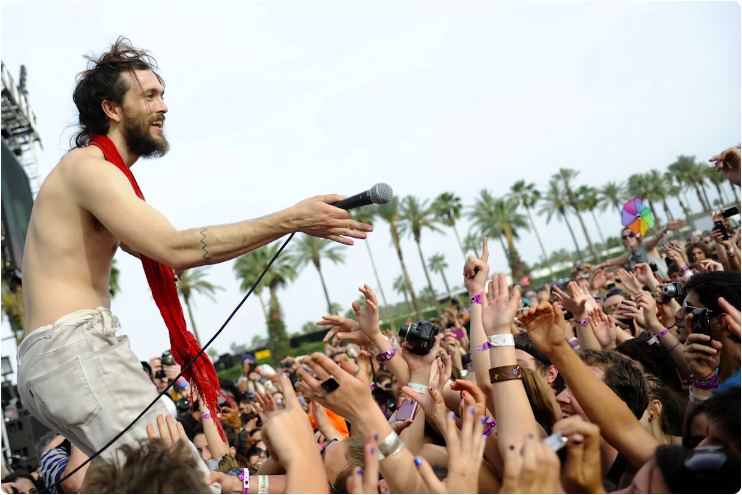
From Beloved Anthem to “Worst Song Ever”: The Curious Case of Edward Sharpe’s Home
In 2009, a scrappy collective of musicians in thrift-store clothes, calling themselves Edward Sharpe and the Magnetic Zeros, released a song that would soon become inescapable. Home — with its whistling intro, stomping percussion, and campfire-call choruses — quickly established itself as the defining anthem of a micro-era in indie music. The track’s earnest declaration that “home isn’t a place, but a person” resonated across festivals, commercials, and even television shows.
But in August 2025, that same song has found itself at the center of ridicule. A clip of Edward Sharpe’s NPR Tiny Desk performance went viral on X (formerly Twitter), where one user dubbed Home “the worst song ever made.” That comment has sparked a flurry of debate online, with many piling on not only to disparage the track, but also the entire genre it represents — so-called “stomp-clap-hey” music.
The Rise of Stomp-Clap-Hey
Register for Tekedia Mini-MBA edition 20 (June 8 – Sept 5, 2026).
Register for Tekedia AI in Business Masterclass.
Join Tekedia Capital Syndicate and co-invest in great global startups.
Register for Tekedia AI Lab.
The late 2000s and early 2010s were fertile ground for indie-folk optimism. Bands like Mumford & Sons, the Lumineers, and Of Monsters and Men scored hits with jangly instrumentation, booming choruses, and lyrics designed for sing-alongs. This sound — dubbed “stomp-clap-hey” for its rhythmic reliance on foot-stomping and communal clapping — offered an antidote to the heavily produced pop and hip-hop dominating mainstream radio.
For a while, the formula worked. The Lumineers’ Ho Hey stormed charts. Mumford & Sons’ Babel won the Grammy for Album of the Year in 2013. Festivals across the U.S. and Europe were filled with banjos, tambourines, and bands dressed like extras from a sepia-toned folk tale.
Edward Sharpe and the Magnetic Zeros weren’t just part of this wave — they were its archetype. Home became the ultimate anthem of stomp-clap-hey’s peak. Yet, as with many cultural trends, ubiquity soon soured into overexposure.

From Anthem to Ad Jingle
Over-saturation is one reason for Home’s current backlash. Even though it was never a Top 40 staple, the song appeared in a staggering number of commercials and TV soundtracks. The message — that love is all you need — was easily repurposed to sell everything from cars to insurance.
“Home never really went away,” notes music industry executive Nikki Camilleri. “Even in recent years, it has been licensed over and over again. That relentless exposure meant we couldn’t truly escape it, and that’s partly why people are mocking it now.”

For many, the song’s wide-eyed sincerity now feels more like a marketing tool than an authentic artistic expression. When social media thrives on irony and cynicism, that earnestness is easy to target.
The Band’s Response
Bandleader Alex Ebert has taken the criticism in stride. In a recent Instagram post, he rejected the label of “worst song ever made” and instead credited Home with inspiring a genre. Speaking to Stereogum, he described his approach as “transforming counterculture into culture” — something that will inevitably attract derision.
“I was expecting blowback,” Ebert said, “but not this level of real anger. Still, I love that people are talking about it. Maybe we’ll have to ironically reclaim the term ‘stomp-clap-hey.’ It’s a good cathartic moment.”
Ebert’s comments underscore an important truth: music that is joyful and communal can often become the easiest to parody.
The “Cool Factor” Problem
Jason Lipshutz, executive director of music at Billboard, explains the backlash more bluntly: stomp-clap-hey never had a “cool factor.”
“These bands were perceived as dorky at the time,” he says. “They were popular, but there was always a sense of inauthenticity compared to artists like Bon Iver or Fleet Foxes, who were seen as more serious folk musicians.”
Even in its prime, stomp-clap-hey music was a guilty pleasure, something fans embraced but critics were quick to lampoon. The communal joy that defined it made it vulnerable to mockery, especially in retrospect.
A Clash of Eras
There’s also a cultural shift at play. The upbeat, communal optimism of stomp-clap-hey is a relic of the Obama-era 2010s, often remembered now as overly earnest and naive. Today’s music scene, shaped by TikTok virality and algorithm-driven feeds, rewards melancholia and introspection. Artists like Noah Kahan and Hozier, who carry elements of folk revival, are celebrated for their lyrical sharpness and darker tones — a far cry from the jubilant shouts of Home.
“Today’s listeners want yearning, not yelping,” music writer Grace Robins-Somerville notes. “We’re in a pessimistic time, and stomp-clap-hey feels like it belongs to a different cultural moment that now feels cringeworthy.”
Millennial Cringe and the TikTok Effect
What we’re witnessing is part of a broader trend of “millennial cringe.” Just as skinny jeans, side parts, and quirky Tumblr aesthetics are being reevaluated — often mockingly — so too are the soundtracks of that era.
TikTok accelerates this cycle. Instead of waiting 20 years for nostalgia to set in, social media dredges up past trends within a decade, sometimes before audiences are ready to embrace them again. The result: ridicule instead of warm reminiscence.
“Negative content spreads faster,” says Camilleri. “Calling Home the worst song ever gets more clicks than saying it’s one of the best.”
From Love to Loathing — and Maybe Back Again
The viral backlash against Home is part irony, part genuine exhaustion, and part cultural mismatch. But the truth is, for all the mockery, the song still has staying power. It’s still licensed. It’s still sung at weddings. It’s still instantly recognisable.
And perhaps, as cycles of nostalgia continue to spin, Home will be rehabilitated. If millennials once danced to it unironically, and Gen Z now laughs at it, maybe the next wave of listeners will rediscover it with affection.
After all, if Home really is the “worst song ever made,” why are we still talking about it 16 years later?
conclusion
In the end, the backlash against Edward Sharpe and the Magnetic Zeros’ “Home” and the broader stomp-clap-hey era says more about us than the music itself. What once embodied communal joy, optimism, and indie charm is now reinterpreted through today’s lens of irony, cynicism, and cultural fatigue. Whether people genuinely dislike the sound or are simply reacting against the nostalgia of a particular millennial moment, the debate proves that these songs still hold cultural weight more than a decade later. Love it or loathe it, stomp-clap-hey remains a defining snapshot of its time — a reminder of an era when music dared to be unabashedly earnest, even if that earnestness now feels out of sync with today’s mood.
meta description
Edward Sharpe and the Magnetic Zeros’ 2009 hit “Home” is going viral again—this time as the “worst song ever made.” Here’s why the stomp-clap-hey era is being mocked, and what it says about nostalgia and changing music trends.
Uploaded files:
Share this:
- Click to share on Facebook (Opens in new window) Facebook
- Click to share on X (Opens in new window) X
- Click to share on WhatsApp (Opens in new window) WhatsApp
- Click to share on LinkedIn (Opens in new window) LinkedIn
- Click to email a link to a friend (Opens in new window) Email
- Click to print (Opens in new window) Print