

How Russia’s Orthodox Churches Abroad Are Being Used for Espionage, Sweden Investigation Reveals

Quote from Alex Bobby on July 8, 2025, 4:58 AM
(Un)Orthodox Intelligence Operations: How Russia Is Using Its Churches Abroad
As suspicion grows across Europe, a new investigation links Russian Orthodox churches to covert intelligence activities, with Sweden in the spotlight.Sweden, a country known for its neutrality during the Cold War, has found itself at the centre of an emerging controversy involving espionage, geopolitics, and religion. A Russian Orthodox church located in the Swedish town of Västerås is under investigation for allegedly serving as a front for Russian intelligence operations. According to an explosive investigation by France24, Swedish security services believe the church could be playing a key role in Russia’s hybrid warfare strategies.
A Church Too Close for Comfort
The Church of the Kazan Icon of the Mother of God in Västerås is located just 300 meters from Stockholm-Västerås Airport, a site of growing strategic significance since Sweden joined NATO in 2024. Once a Swedish Air Force base, the airport now serves as a critical military hub for NATO, hosting regular exercises and deployments. That proximity has raised red flags.
Andreas Nyqvist, head of the airport control tower, voiced concerns to France24, saying: “Nothing is normal about a church that close to the airport.”
Västerås is also strategically placed along Lake Mälaren, a vital inland waterway connecting central Sweden to the Baltic Sea. Several key bridges and transport corridors run through the region, adding to its significance—and making the placement of a Russian Orthodox church in the area even more suspicious.
SAPO, Sweden’s domestic security agency, had earlier attempted to halt construction of the church citing national security concerns. Despite this, the church was built—with a spire reaching 22 meters high, far above the 10-meter height limit set by local zoning laws due to the church’s proximity to sensitive infrastructure.
Clerical Fronts and Shadowy Figures
The church was consecrated in November 2023 in a ceremony attended by Russian and Belarusian diplomats, including Vladimir Lyapin, who has since been exposed as a Russian spy. Days later, SAPO publicly warned that the Moscow Patriarchate—the governing body of the Russian Orthodox Church in Sweden—was supporting Kremlin intelligence efforts.
One figure at the heart of the controversy is Father Pavel Makarenko, the church’s parish priest. While his role may appear purely spiritual, investigations reveal a more complex past. Makarenko once served as CEO of a Russian-owned import-export firm, NC Nordic Control AB. In 2021, he was convicted of aggravated accounting fraud, accused of submitting fake invoices linked to companies in Russia and Belarus. He received a suspended six-month sentence, 160 hours of community service, and a three-year ban from managing businesses in Sweden.
Local authorities are now contemplating an unprecedented step: expropriating the church building entirely, citing its proximity to military installations and its suspected role in espionage.
Churches as Strategic Assets
The case in Västerås is not an isolated incident. A broader investigation by the Molfar Institute, a Ukrainian open-source intelligence (OSINT) company, highlights a disturbing trend. Molfar’s report mapped Russian Orthodox churches across 11 European countries, including Norway, Finland, the Netherlands, and the Czech Republic. It found that many of these churches are located unusually close to critical infrastructure, including military academies, airports, and even nuclear facilities.
The Västerås church, for example, was reportedly financed in part by Rosatom, Russia’s state-owned nuclear energy company. Just five kilometres from the church is a Westinghouse Electric factory that produces nuclear fuel assemblies for Europe—raising further national security concerns.
In Norway, churches in Bryne, Oslo, and Kirkenes also appear strategically positioned. The Russian church in Trondheim is within a kilometre of both the Air Force Academy and a submarine bunker—raising serious questions about intent.
Across the continent, governments are beginning to act. In Finland, a Russian Orthodox church in Turku was shut down in August 2022 due to its proximity to the Finnish Coastal Fleet, shortly after Russia’s invasion of Ukraine. In Bulgaria, authorities expelled Archimandrite Vasian, the head of the Russian Orthodox Church in the country, in 2023. He was accused of espionage and deemed a threat to national security.
Faith, Politics, and Hybrid Warfare
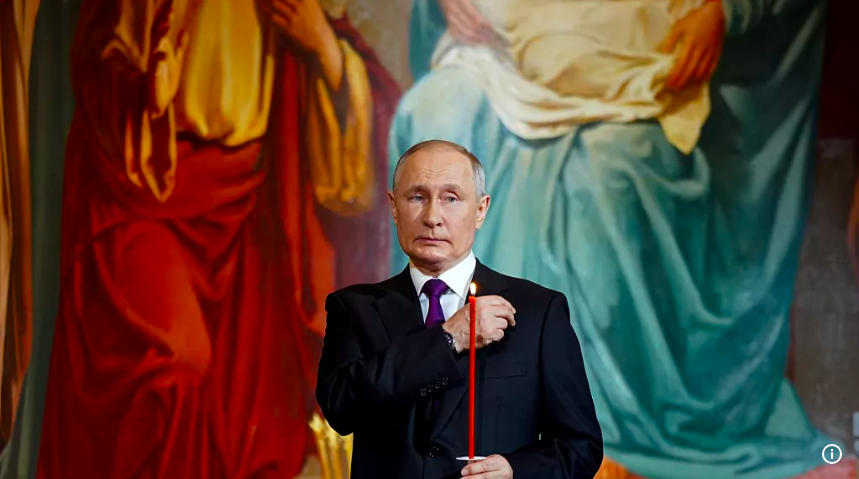
Russia’s use of its religious institutions as instruments of influence and intelligence is not new. Historically, the Russian Orthodox Church has been closely linked to the state—especially under the rule of Vladimir Putin, where the church plays both a spiritual and ideological role in promoting Russian interests abroad.
Today, in the age of hybrid warfare—where disinformation, cyber-attacks, and soft power tools are as critical as tanks and missiles—churches may offer a covert yet effective platform for operations. They’re locations near sensitive infrastructure, diplomatic protection, and perceived neutrality make them ideal fronts for intelligence gathering and influence campaigns.
Final Thought
What appears on the surface as an expression of religious freedom may, in some cases, serve as a strategic instrument of espionage. The case of the Russian Orthodox church in Västerås illustrates the complexities of modern hybrid warfare, where faith, infrastructure, and intelligence intersect. As European nations reassess their security posture in the face of evolving threats, scrutiny of soft power tools like religious institutions will likely intensify. For Sweden—and for Europe as a whole—the time has come to look beyond the spires and into the shadows they may cast.
Conclusion
The unfolding investigation into the Russian Orthodox Church in Västerås is more than a local zoning dispute—it’s a stark warning about the evolving nature of hybrid warfare. As Russia adapts its intelligence strategies to exploit religious, cultural, and civilian institutions, countries like Sweden are being forced to confront uncomfortable truths. The line between spiritual mission and state-sponsored espionage is becoming increasingly blurred. For Europe, ensuring national security now means examining not only military assets and cyber infrastructure but also the quiet corners of society where influence can be subtly, yet powerfully, exerted.
Meta Description:
Sweden investigates a Russian Orthodox church near a strategic NATO hub for alleged ties to Kremlin intelligence. Experts warn churches across Europe may serve as tools of Russian hybrid warfare.
(Un)Orthodox Intelligence Operations: How Russia Is Using Its Churches Abroad
As suspicion grows across Europe, a new investigation links Russian Orthodox churches to covert intelligence activities, with Sweden in the spotlight.
Sweden, a country known for its neutrality during the Cold War, has found itself at the centre of an emerging controversy involving espionage, geopolitics, and religion. A Russian Orthodox church located in the Swedish town of Västerås is under investigation for allegedly serving as a front for Russian intelligence operations. According to an explosive investigation by France24, Swedish security services believe the church could be playing a key role in Russia’s hybrid warfare strategies.
A Church Too Close for Comfort
Register for Tekedia Mini-MBA edition 20 (June 8 – Sept 5, 2026).
Register for Tekedia AI in Business Masterclass.
Join Tekedia Capital Syndicate and co-invest in great global startups.
Register for Tekedia AI Lab.
The Church of the Kazan Icon of the Mother of God in Västerås is located just 300 meters from Stockholm-Västerås Airport, a site of growing strategic significance since Sweden joined NATO in 2024. Once a Swedish Air Force base, the airport now serves as a critical military hub for NATO, hosting regular exercises and deployments. That proximity has raised red flags.
Andreas Nyqvist, head of the airport control tower, voiced concerns to France24, saying: “Nothing is normal about a church that close to the airport.”
Västerås is also strategically placed along Lake Mälaren, a vital inland waterway connecting central Sweden to the Baltic Sea. Several key bridges and transport corridors run through the region, adding to its significance—and making the placement of a Russian Orthodox church in the area even more suspicious.

SAPO, Sweden’s domestic security agency, had earlier attempted to halt construction of the church citing national security concerns. Despite this, the church was built—with a spire reaching 22 meters high, far above the 10-meter height limit set by local zoning laws due to the church’s proximity to sensitive infrastructure.
Clerical Fronts and Shadowy Figures
The church was consecrated in November 2023 in a ceremony attended by Russian and Belarusian diplomats, including Vladimir Lyapin, who has since been exposed as a Russian spy. Days later, SAPO publicly warned that the Moscow Patriarchate—the governing body of the Russian Orthodox Church in Sweden—was supporting Kremlin intelligence efforts.

One figure at the heart of the controversy is Father Pavel Makarenko, the church’s parish priest. While his role may appear purely spiritual, investigations reveal a more complex past. Makarenko once served as CEO of a Russian-owned import-export firm, NC Nordic Control AB. In 2021, he was convicted of aggravated accounting fraud, accused of submitting fake invoices linked to companies in Russia and Belarus. He received a suspended six-month sentence, 160 hours of community service, and a three-year ban from managing businesses in Sweden.
Local authorities are now contemplating an unprecedented step: expropriating the church building entirely, citing its proximity to military installations and its suspected role in espionage.
Churches as Strategic Assets
The case in Västerås is not an isolated incident. A broader investigation by the Molfar Institute, a Ukrainian open-source intelligence (OSINT) company, highlights a disturbing trend. Molfar’s report mapped Russian Orthodox churches across 11 European countries, including Norway, Finland, the Netherlands, and the Czech Republic. It found that many of these churches are located unusually close to critical infrastructure, including military academies, airports, and even nuclear facilities.
The Västerås church, for example, was reportedly financed in part by Rosatom, Russia’s state-owned nuclear energy company. Just five kilometres from the church is a Westinghouse Electric factory that produces nuclear fuel assemblies for Europe—raising further national security concerns.
In Norway, churches in Bryne, Oslo, and Kirkenes also appear strategically positioned. The Russian church in Trondheim is within a kilometre of both the Air Force Academy and a submarine bunker—raising serious questions about intent.
Across the continent, governments are beginning to act. In Finland, a Russian Orthodox church in Turku was shut down in August 2022 due to its proximity to the Finnish Coastal Fleet, shortly after Russia’s invasion of Ukraine. In Bulgaria, authorities expelled Archimandrite Vasian, the head of the Russian Orthodox Church in the country, in 2023. He was accused of espionage and deemed a threat to national security.
Faith, Politics, and Hybrid Warfare
Russia’s use of its religious institutions as instruments of influence and intelligence is not new. Historically, the Russian Orthodox Church has been closely linked to the state—especially under the rule of Vladimir Putin, where the church plays both a spiritual and ideological role in promoting Russian interests abroad.
Today, in the age of hybrid warfare—where disinformation, cyber-attacks, and soft power tools are as critical as tanks and missiles—churches may offer a covert yet effective platform for operations. They’re locations near sensitive infrastructure, diplomatic protection, and perceived neutrality make them ideal fronts for intelligence gathering and influence campaigns.
Final Thought
What appears on the surface as an expression of religious freedom may, in some cases, serve as a strategic instrument of espionage. The case of the Russian Orthodox church in Västerås illustrates the complexities of modern hybrid warfare, where faith, infrastructure, and intelligence intersect. As European nations reassess their security posture in the face of evolving threats, scrutiny of soft power tools like religious institutions will likely intensify. For Sweden—and for Europe as a whole—the time has come to look beyond the spires and into the shadows they may cast.
Conclusion
The unfolding investigation into the Russian Orthodox Church in Västerås is more than a local zoning dispute—it’s a stark warning about the evolving nature of hybrid warfare. As Russia adapts its intelligence strategies to exploit religious, cultural, and civilian institutions, countries like Sweden are being forced to confront uncomfortable truths. The line between spiritual mission and state-sponsored espionage is becoming increasingly blurred. For Europe, ensuring national security now means examining not only military assets and cyber infrastructure but also the quiet corners of society where influence can be subtly, yet powerfully, exerted.
Meta Description:
Sweden investigates a Russian Orthodox church near a strategic NATO hub for alleged ties to Kremlin intelligence. Experts warn churches across Europe may serve as tools of Russian hybrid warfare.
Share this:
- Click to share on Facebook (Opens in new window) Facebook
- Click to share on X (Opens in new window) X
- Click to share on WhatsApp (Opens in new window) WhatsApp
- Click to share on LinkedIn (Opens in new window) LinkedIn
- Click to email a link to a friend (Opens in new window) Email
- Click to print (Opens in new window) Print