

IAEA Chief Rafael Grossi Gets Austrian Cobra Police Protection Amid Iran Threats

Quote from Alex Bobby on August 28, 2025, 3:04 AM
IAEA Chief Rafael Grossi Placed Under Austrian Cobra Police Protection Amid Rising Iran Tensions
The International Atomic Energy Agency (IAEA) confirmed on Wednesday that its Director General, Rafael Grossi, has been placed under the protection of Austria’s elite Cobra police unit following an unspecified threat. The development underscores the increasingly fraught global environment surrounding nuclear oversight, Iran’s disputed nuclear programme, and Grossi’s own elevated international profile.
Austria Deploys Cobra Unit to Protect Grossi
The Cobra unit, a specialised arm of Austria’s Interior Ministry, is best known for handling counter-terrorism operations, hostage rescues, and responses to mass shootings. Its operatives also provide personal protection to top Austrian leaders including the president and chancellor, as well as to sensitive foreign diplomats such as the US and Israeli ambassadors.
In a rare move, Cobra officers have now been assigned to Grossi, the Argentinian diplomat who has led the Vienna-based IAEA since 2019. “We can confirm that Austria provided a Cobra unit but we cannot confirm where the specific threat came from,” IAEA spokesman Fredrik Dahl told reporters. The Wall Street Journal first revealed details of the additional protection, sparking speculation about the sources of the threat.
The announcement comes at a time when Grossi is reportedly weighing a bid for the position of United Nations Secretary-General. His candidacy, combined with his outspoken role in monitoring both Ukraine and Iran, has made him a highly visible figure on the world stage—one whose work has increasingly drawn ire from Tehran.
Iran’s Nuclear Dispute and Accusations Against the IAEA
Relations between Iran and the IAEA have sharply deteriorated in recent months. Earlier this summer, the IAEA Board of Governors censured Tehran for its lack of cooperation, the first such move against the country in two decades. The vote, backed by Western powers, inflamed tensions just as concerns grew over Iran’s stockpile of highly enriched uranium.
Iran has long insisted its nuclear programme is for peaceful, civilian purposes. However, international monitors warn that the scale and enrichment levels of Iran’s uranium could provide enough material for several nuclear weapons if diverted. Israel, which views a nuclear-armed Iran as an existential threat, launched air strikes on Iranian facilities in June following the IAEA censure.
In response, Iranian officials accused the IAEA—without providing evidence—of secretly aiding Israel and later the United States in planning the strikes. This accusation was amplified by state-run media outlets and political leaders, with some even demanding that Grossi be arrested and tried if he ever returned to Iran.
Such rhetoric may help explain the threats that have now triggered Austria’s extraordinary security response. While the IAEA has not directly linked Iran to the threat, the timing aligns with escalating hostility from Tehran.
Europe Moves Toward "Snapback" Sanctions
The backdrop to these developments is a fast-moving diplomatic crisis. France, Germany, and the United Kingdom have signalled plans to reimpose “snapback” sanctions on Iran. These sanctions, which were originally lifted under the 2015 nuclear agreement (the Joint Comprehensive Plan of Action, or JCPOA), could be reinstated unilaterally if Iran is deemed to be in breach of its commitments.
Iran has until 31 August to address Western concerns and comply with inspection demands from the IAEA. Failure to do so could lead to a broader re-isolation of Tehran from the global economy at a time when the country is already struggling with internal dissent and sanctions-induced hardship.
Grossi, as the face of the IAEA, has found himself at the centre of this showdown. His repeated efforts to gain access to restricted Iranian sites, combined with his willingness to speak openly about non-compliance, have made him a polarising figure.
A Career Defined by High-Stakes Diplomacy
Rafael Grossi, who hails from Argentina, has sought to modernise and expand the IAEA’s influence since assuming leadership. His visits into war-torn Ukraine after Russia’s 2022 invasion highlighted the dangers nuclear facilities face in conflict zones, particularly at Zaporizhzhia, Europe’s largest nuclear power plant. By personally travelling into active war zones, Grossi significantly raised both his own profile and that of the agency.
That same determination is evident in his dealings with Iran. The IAEA continues to press Tehran for full access to its nuclear sites and to clarify the extent of its uranium enrichment. On Wednesday, Iranian state media reported that IAEA inspectors were present at the Bushehr nuclear power plant overseeing a fuel replacement operation. The IAEA itself, however, has not confirmed their presence—reflecting the opaque nature of its current relationship with Tehran.
Security Implications Beyond Vienna
Austria’s decision to deploy Cobra forces highlights not only the seriousness of the threat but also the symbolic weight of protecting Grossi. Vienna, as host city to the IAEA and numerous other international organisations, is a critical hub of global diplomacy. Any attack on Grossi or the IAEA’s headquarters would reverberate far beyond Austria’s borders.
It also raises questions about how international institutions safeguard their leaders in an era of growing geopolitical hostility. If Grossi, a diplomat whose mission is to monitor compliance and promote non-proliferation, requires counter-terror protection, what does that signal about the erosion of trust between states and multilateral organisations?
Looking Forward
The coming weeks will be decisive not just for Iran’s nuclear programme but also for the credibility of international nuclear oversight. If Tehran fails to meet the 31 August deadline, Europe is likely to move forward with snapback sanctions, potentially plunging Iran into deeper isolation. For Grossi and the IAEA, the challenge will be maintaining impartiality and authority while under immense political pressure.
How Iran responds—through cooperation or defiance—will shape the next chapter of Middle Eastern security, as well as the future of global non-proliferation efforts. With Grossi’s own safety now under direct threat, the situation underscores how high the stakes have become, both personally and geopolitically.
Final Thought / Looking Forward:
As the deadline for Iran’s compliance nears, the international community faces a critical juncture. Whether diplomacy prevails or confrontation deepens, Rafael Grossi and the IAEA will remain at the heart of this unfolding nuclear standoff. His security detail may be a stark reminder that nuclear oversight is no longer just about science and policy—it is about personal safety in an increasingly volatile world.Conclusion
The placement of IAEA chief Rafael Grossi under Cobra police protection may be rooted in an “unspecified threat,” but the wider context makes clear that escalating tensions with Iran are a major factor. With Europe preparing to reimpose sanctions, Israel on high alert, and Tehran openly hostile toward Grossi, the situation is increasingly precarious.
As the 31 August deadline for Iran approaches, the world will be watching not only Tehran’s decisions but also how much protection international institutions can provide for their leaders. Grossi, once seen as a technocratic diplomat, has become a central figure in one of the most dangerous geopolitical standoffs of the decade—a role that now comes with both global visibility and very real personal risk.
Meta Description:
IAEA chief Rafael Grossi is under Austrian Cobra police protection after an unspecified threat, as tensions rise over Iran’s nuclear programme and looming sanctions.
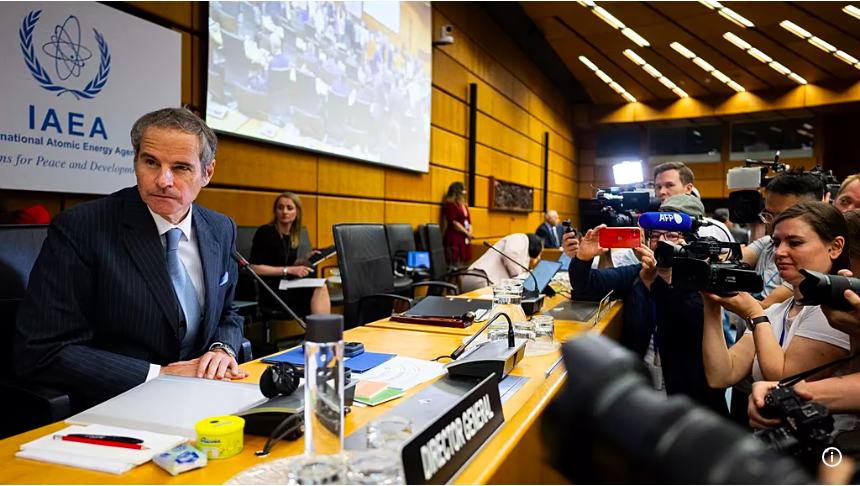
IAEA Chief Rafael Grossi Placed Under Austrian Cobra Police Protection Amid Rising Iran Tensions
The International Atomic Energy Agency (IAEA) confirmed on Wednesday that its Director General, Rafael Grossi, has been placed under the protection of Austria’s elite Cobra police unit following an unspecified threat. The development underscores the increasingly fraught global environment surrounding nuclear oversight, Iran’s disputed nuclear programme, and Grossi’s own elevated international profile.
Austria Deploys Cobra Unit to Protect Grossi
Register for Tekedia Mini-MBA edition 20 (June 8 – Sept 5, 2026).
Register for Tekedia AI in Business Masterclass.
Join Tekedia Capital Syndicate and co-invest in great global startups.
Register for Tekedia AI Lab.
The Cobra unit, a specialised arm of Austria’s Interior Ministry, is best known for handling counter-terrorism operations, hostage rescues, and responses to mass shootings. Its operatives also provide personal protection to top Austrian leaders including the president and chancellor, as well as to sensitive foreign diplomats such as the US and Israeli ambassadors.
In a rare move, Cobra officers have now been assigned to Grossi, the Argentinian diplomat who has led the Vienna-based IAEA since 2019. “We can confirm that Austria provided a Cobra unit but we cannot confirm where the specific threat came from,” IAEA spokesman Fredrik Dahl told reporters. The Wall Street Journal first revealed details of the additional protection, sparking speculation about the sources of the threat.
The announcement comes at a time when Grossi is reportedly weighing a bid for the position of United Nations Secretary-General. His candidacy, combined with his outspoken role in monitoring both Ukraine and Iran, has made him a highly visible figure on the world stage—one whose work has increasingly drawn ire from Tehran.

Iran’s Nuclear Dispute and Accusations Against the IAEA
Relations between Iran and the IAEA have sharply deteriorated in recent months. Earlier this summer, the IAEA Board of Governors censured Tehran for its lack of cooperation, the first such move against the country in two decades. The vote, backed by Western powers, inflamed tensions just as concerns grew over Iran’s stockpile of highly enriched uranium.
Iran has long insisted its nuclear programme is for peaceful, civilian purposes. However, international monitors warn that the scale and enrichment levels of Iran’s uranium could provide enough material for several nuclear weapons if diverted. Israel, which views a nuclear-armed Iran as an existential threat, launched air strikes on Iranian facilities in June following the IAEA censure.

In response, Iranian officials accused the IAEA—without providing evidence—of secretly aiding Israel and later the United States in planning the strikes. This accusation was amplified by state-run media outlets and political leaders, with some even demanding that Grossi be arrested and tried if he ever returned to Iran.
Such rhetoric may help explain the threats that have now triggered Austria’s extraordinary security response. While the IAEA has not directly linked Iran to the threat, the timing aligns with escalating hostility from Tehran.
Europe Moves Toward "Snapback" Sanctions
The backdrop to these developments is a fast-moving diplomatic crisis. France, Germany, and the United Kingdom have signalled plans to reimpose “snapback” sanctions on Iran. These sanctions, which were originally lifted under the 2015 nuclear agreement (the Joint Comprehensive Plan of Action, or JCPOA), could be reinstated unilaterally if Iran is deemed to be in breach of its commitments.
Iran has until 31 August to address Western concerns and comply with inspection demands from the IAEA. Failure to do so could lead to a broader re-isolation of Tehran from the global economy at a time when the country is already struggling with internal dissent and sanctions-induced hardship.
Grossi, as the face of the IAEA, has found himself at the centre of this showdown. His repeated efforts to gain access to restricted Iranian sites, combined with his willingness to speak openly about non-compliance, have made him a polarising figure.
A Career Defined by High-Stakes Diplomacy
Rafael Grossi, who hails from Argentina, has sought to modernise and expand the IAEA’s influence since assuming leadership. His visits into war-torn Ukraine after Russia’s 2022 invasion highlighted the dangers nuclear facilities face in conflict zones, particularly at Zaporizhzhia, Europe’s largest nuclear power plant. By personally travelling into active war zones, Grossi significantly raised both his own profile and that of the agency.
That same determination is evident in his dealings with Iran. The IAEA continues to press Tehran for full access to its nuclear sites and to clarify the extent of its uranium enrichment. On Wednesday, Iranian state media reported that IAEA inspectors were present at the Bushehr nuclear power plant overseeing a fuel replacement operation. The IAEA itself, however, has not confirmed their presence—reflecting the opaque nature of its current relationship with Tehran.
Security Implications Beyond Vienna
Austria’s decision to deploy Cobra forces highlights not only the seriousness of the threat but also the symbolic weight of protecting Grossi. Vienna, as host city to the IAEA and numerous other international organisations, is a critical hub of global diplomacy. Any attack on Grossi or the IAEA’s headquarters would reverberate far beyond Austria’s borders.
It also raises questions about how international institutions safeguard their leaders in an era of growing geopolitical hostility. If Grossi, a diplomat whose mission is to monitor compliance and promote non-proliferation, requires counter-terror protection, what does that signal about the erosion of trust between states and multilateral organisations?
Looking Forward
The coming weeks will be decisive not just for Iran’s nuclear programme but also for the credibility of international nuclear oversight. If Tehran fails to meet the 31 August deadline, Europe is likely to move forward with snapback sanctions, potentially plunging Iran into deeper isolation. For Grossi and the IAEA, the challenge will be maintaining impartiality and authority while under immense political pressure.
How Iran responds—through cooperation or defiance—will shape the next chapter of Middle Eastern security, as well as the future of global non-proliferation efforts. With Grossi’s own safety now under direct threat, the situation underscores how high the stakes have become, both personally and geopolitically.
Final Thought / Looking Forward:
As the deadline for Iran’s compliance nears, the international community faces a critical juncture. Whether diplomacy prevails or confrontation deepens, Rafael Grossi and the IAEA will remain at the heart of this unfolding nuclear standoff. His security detail may be a stark reminder that nuclear oversight is no longer just about science and policy—it is about personal safety in an increasingly volatile world.
Conclusion
The placement of IAEA chief Rafael Grossi under Cobra police protection may be rooted in an “unspecified threat,” but the wider context makes clear that escalating tensions with Iran are a major factor. With Europe preparing to reimpose sanctions, Israel on high alert, and Tehran openly hostile toward Grossi, the situation is increasingly precarious.
As the 31 August deadline for Iran approaches, the world will be watching not only Tehran’s decisions but also how much protection international institutions can provide for their leaders. Grossi, once seen as a technocratic diplomat, has become a central figure in one of the most dangerous geopolitical standoffs of the decade—a role that now comes with both global visibility and very real personal risk.
Meta Description:
IAEA chief Rafael Grossi is under Austrian Cobra police protection after an unspecified threat, as tensions rise over Iran’s nuclear programme and looming sanctions.
Share this:
- Click to share on Facebook (Opens in new window) Facebook
- Click to share on X (Opens in new window) X
- Click to share on WhatsApp (Opens in new window) WhatsApp
- Click to share on LinkedIn (Opens in new window) LinkedIn
- Click to email a link to a friend (Opens in new window) Email
- Click to print (Opens in new window) Print