

Israeli Air Strikes on Yemen Kill Nine as Houthis Vow Retaliation

Quote from Alex Bobby on September 11, 2025, 6:04 AM
Israeli Air Strikes on Yemen Kill Nine as Regional Tensions Escalate
The war in Gaza continues to reverberate across the Middle East, dragging in new fronts and deepening instability. On Wednesday, Israeli air strikes on Yemen’s capital Sanaa killed at least nine people and wounded 118 others, according to the Houthi-run health ministry. The strikes came just days after Yemen’s Houthi rebels claimed responsibility for a drone attack that penetrated Israel’s defences and struck an airport in the country’s south.
The escalation highlights how the conflict, now nearly a year old, is widening well beyond Gaza and threatening to destabilise an already fragile region.
Heavy Strikes on Sanaa
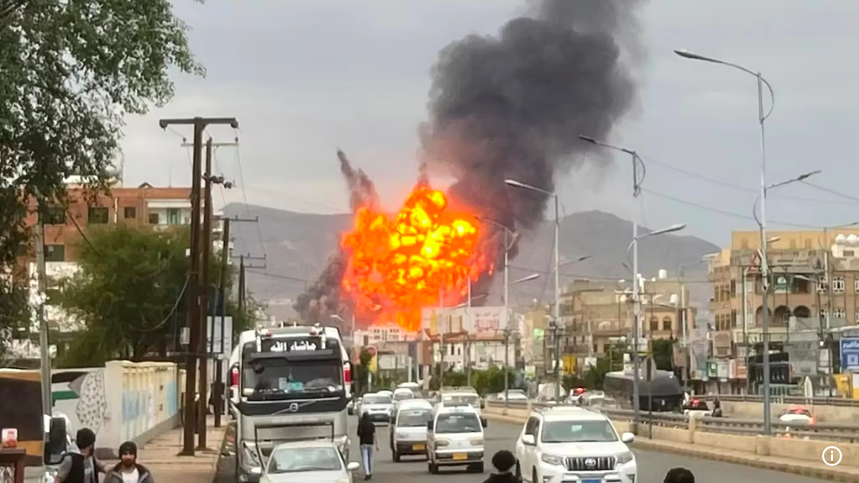
Residents of Sanaa reported violent explosions and columns of smoke after Israeli warplanes struck multiple sites across the capital. According to Al-Masirah TV, a Houthi-controlled channel, one of the bombs hit a military headquarters in central Sanaa, leaving multiple casualties. Another strike damaged nearby houses, while fire and panic spread through residential neighbourhoods.
In addition, Israel targeted a station that provides fuel to hospitals, according to Essam al-Mutawakel, a spokesperson for the Houthi-run Yemen Petroleum Company. Humanitarian groups warn that such damage could further cripple Yemen’s already overstretched health system.
Beyond Sanaa, strikes were also reported in Hazm, the capital of northern Jawf province, where a government facility was hit. The Houthi military claimed it fired surface-to-air missiles at Israeli fighter jets, though there was no independent confirmation of any aircraft being downed.
Houthi Response: Defiance and Warnings
The Houthi leadership quickly responded with vows of retaliation. Mahdi al-Mashat, the movement’s president, declared that attacks on Israel would continue, warning Israelis to “stay alarmed since the response is coming without fail.”
Yahya Saree, the Houthis’ military spokesperson, said that the group had engaged Israeli jets and reaffirmed its commitment to supporting Hamas in its war against Israel. The Houthis, who are backed by Iran, have long positioned themselves as part of a broader axis resisting Israel and the United States.
For months, they have regularly targeted commercial shipping in the Red Sea, claiming that vessels linked to Israel are legitimate targets. Their drone and missile attacks on Israel have increased in both range and frequency, culminating in Sunday’s strike on an Israeli airport — a dramatic breach of Israel’s multi-layered air defence systems.
A Regional Powder Keg
The strikes in Yemen came just a day after Israel stunned the region with a surprise aerial assault on Doha, the capital of Qatar. Israel said it was attempting to eliminate senior Hamas negotiators whom it accused of masterminding the October 2023 incursion into Israel that triggered the Gaza war.
Though the Hamas leadership reportedly survived, the strike killed two lower-ranking members and three bodyguards. The attack on the territory of a close U.S. ally drew sharp condemnation across the Middle East and beyond, with many warning that it risked upending fragile ceasefire negotiations.
For Hamas, the Doha strike was both a symbolic and operational blow, though the group insisted that its negotiating team remained intact and continued to weigh a new U.S.-backed ceasefire proposal.
European Response: Calls for Sanctions
The widening war is also straining Israel’s relations with Europe. European Commission President Ursula von der Leyen, in her annual state of the union address in Strasbourg, said she would seek sanctions and the suspension of free trade agreements with Israel over the humanitarian disaster in Gaza.
While von der Leyen did not explicitly mention the strikes on Doha or Sanaa, she lamented Europe’s “painful inability to respond to the humanitarian crisis” and warned of an “endless spiral of events” in what she described as an “unforgiving world.”
Her remarks signal a potential shift in European policy, which has until now largely avoided punitive economic measures against Israel despite mounting pressure from humanitarian groups and some member states.
Yemen’s Fragile Context
The air strikes also risk plunging Yemen deeper into turmoil. The country has endured nearly a decade of civil war, famine, and humanitarian disaster. Though a fragile truce between the Houthis and the Saudi-backed Yemeni government has largely held since 2022, Israel’s direct involvement could reignite conflict lines and further complicate peace efforts.
Aid organisations fear that further air strikes on fuel facilities and civilian infrastructure could worsen conditions in a country where over 20 million people already rely on humanitarian assistance.
The Broader War
Israel has framed its widening strikes as a defensive response to hostile forces aligned with Hamas and Iran. In addition to targeting Gaza, Israeli operations have extended to Lebanon, Syria, Iraq, Yemen, and now even Qatar, underscoring how the war has become a regional confrontation.
For the Houthis, attacks on Israel and its allies allow them to showcase military capability, strengthen ties with Iran, and position themselves as defenders of the Palestinian cause. For Israel, the strategy is one of deterrence — striking hard at any group that threatens its territory or citizens.
Yet the danger is that each strike invites further retaliation, feeding an escalating cycle of violence that risks spiralling beyond control.
Looking Forward
The strikes on Sanaa and Doha underscore how the Gaza war is no longer confined to Gaza — it is steadily transforming into a regional confrontation. With Houthis vowing further attacks, Hamas leadership still intact, and Israel determined to strike wherever it sees threats, the cycle of retaliation is far from over.
In the coming weeks, much will depend on whether diplomatic channels can reopen. A U.S.-backed ceasefire proposal remains on the table, but each new escalation makes agreement harder to reach. Meanwhile, the EU’s talk of sanctions signals growing international impatience with Israel’s military strategy.
If diplomacy fails, the Middle East could face a dangerous widening of the war — one that stretches from the Red Sea to the Gulf and beyond. The question now is whether global powers will act quickly enough to contain the fire before it engulfs the region.
Final thoughts
The deadly Israeli strikes on Yemen’s capital and the shocking attack on Doha mark a dangerous turn in a conflict already destabilising the Middle East. What began as a war in Gaza is now rippling outward, pulling in regional actors and testing global alliances.
For civilians in places like Sanaa, Gaza, and beyond, the cost is measured in shattered homes, lives lost, and futures cut short. For the international community, the challenge lies in breaking the cycle of retaliation before it sparks a wider war.
Peace remains elusive, but without urgent diplomacy and restraint, the region risks sliding into an era of perpetual escalation — with no winners, only victims.
Conclusion
The Israeli strikes on Yemen, killing at least nine and injuring more than a hundred, mark another alarming escalation in a conflict that is already stretching across multiple countries. With the Houthis vowing revenge, Hamas leadership surviving an attempted strike in Doha, and Europe inching toward sanctions, the war is entering a new and unpredictable phase.
Far from being contained, the Gaza war is steadily becoming a regional crisis, drawing in new actors and destabilising fragile states. The death toll in Sanaa is a stark reminder that civilians continue to pay the highest price as regional powers settle scores from the skies.
Unless diplomacy regains momentum, the cycle of strikes and counterstrikes risks igniting a wider war — one that could engulf the Middle East in ways unseen for decades.
Meta Description:
At least nine killed and over 100 wounded in Israeli strikes on Yemen’s capital Sanaa, Houthi officials say. The attack follows a Houthi drone strike on Israel and adds to regional tensions after Israel’s strike on Doha.
Israeli Air Strikes on Yemen Kill Nine as Regional Tensions Escalate
The war in Gaza continues to reverberate across the Middle East, dragging in new fronts and deepening instability. On Wednesday, Israeli air strikes on Yemen’s capital Sanaa killed at least nine people and wounded 118 others, according to the Houthi-run health ministry. The strikes came just days after Yemen’s Houthi rebels claimed responsibility for a drone attack that penetrated Israel’s defences and struck an airport in the country’s south.
The escalation highlights how the conflict, now nearly a year old, is widening well beyond Gaza and threatening to destabilise an already fragile region.
Register for Tekedia Mini-MBA edition 20 (June 8 – Sept 5, 2026).
Register for Tekedia AI in Business Masterclass.
Join Tekedia Capital Syndicate and co-invest in great global startups.
Register for Tekedia AI Lab.
Heavy Strikes on Sanaa
Residents of Sanaa reported violent explosions and columns of smoke after Israeli warplanes struck multiple sites across the capital. According to Al-Masirah TV, a Houthi-controlled channel, one of the bombs hit a military headquarters in central Sanaa, leaving multiple casualties. Another strike damaged nearby houses, while fire and panic spread through residential neighbourhoods.
In addition, Israel targeted a station that provides fuel to hospitals, according to Essam al-Mutawakel, a spokesperson for the Houthi-run Yemen Petroleum Company. Humanitarian groups warn that such damage could further cripple Yemen’s already overstretched health system.

Beyond Sanaa, strikes were also reported in Hazm, the capital of northern Jawf province, where a government facility was hit. The Houthi military claimed it fired surface-to-air missiles at Israeli fighter jets, though there was no independent confirmation of any aircraft being downed.
Houthi Response: Defiance and Warnings
The Houthi leadership quickly responded with vows of retaliation. Mahdi al-Mashat, the movement’s president, declared that attacks on Israel would continue, warning Israelis to “stay alarmed since the response is coming without fail.”

Yahya Saree, the Houthis’ military spokesperson, said that the group had engaged Israeli jets and reaffirmed its commitment to supporting Hamas in its war against Israel. The Houthis, who are backed by Iran, have long positioned themselves as part of a broader axis resisting Israel and the United States.
For months, they have regularly targeted commercial shipping in the Red Sea, claiming that vessels linked to Israel are legitimate targets. Their drone and missile attacks on Israel have increased in both range and frequency, culminating in Sunday’s strike on an Israeli airport — a dramatic breach of Israel’s multi-layered air defence systems.
A Regional Powder Keg
The strikes in Yemen came just a day after Israel stunned the region with a surprise aerial assault on Doha, the capital of Qatar. Israel said it was attempting to eliminate senior Hamas negotiators whom it accused of masterminding the October 2023 incursion into Israel that triggered the Gaza war.
Though the Hamas leadership reportedly survived, the strike killed two lower-ranking members and three bodyguards. The attack on the territory of a close U.S. ally drew sharp condemnation across the Middle East and beyond, with many warning that it risked upending fragile ceasefire negotiations.
For Hamas, the Doha strike was both a symbolic and operational blow, though the group insisted that its negotiating team remained intact and continued to weigh a new U.S.-backed ceasefire proposal.
European Response: Calls for Sanctions
The widening war is also straining Israel’s relations with Europe. European Commission President Ursula von der Leyen, in her annual state of the union address in Strasbourg, said she would seek sanctions and the suspension of free trade agreements with Israel over the humanitarian disaster in Gaza.
While von der Leyen did not explicitly mention the strikes on Doha or Sanaa, she lamented Europe’s “painful inability to respond to the humanitarian crisis” and warned of an “endless spiral of events” in what she described as an “unforgiving world.”
Her remarks signal a potential shift in European policy, which has until now largely avoided punitive economic measures against Israel despite mounting pressure from humanitarian groups and some member states.
Yemen’s Fragile Context
The air strikes also risk plunging Yemen deeper into turmoil. The country has endured nearly a decade of civil war, famine, and humanitarian disaster. Though a fragile truce between the Houthis and the Saudi-backed Yemeni government has largely held since 2022, Israel’s direct involvement could reignite conflict lines and further complicate peace efforts.
Aid organisations fear that further air strikes on fuel facilities and civilian infrastructure could worsen conditions in a country where over 20 million people already rely on humanitarian assistance.
The Broader War
Israel has framed its widening strikes as a defensive response to hostile forces aligned with Hamas and Iran. In addition to targeting Gaza, Israeli operations have extended to Lebanon, Syria, Iraq, Yemen, and now even Qatar, underscoring how the war has become a regional confrontation.
For the Houthis, attacks on Israel and its allies allow them to showcase military capability, strengthen ties with Iran, and position themselves as defenders of the Palestinian cause. For Israel, the strategy is one of deterrence — striking hard at any group that threatens its territory or citizens.
Yet the danger is that each strike invites further retaliation, feeding an escalating cycle of violence that risks spiralling beyond control.
Looking Forward
The strikes on Sanaa and Doha underscore how the Gaza war is no longer confined to Gaza — it is steadily transforming into a regional confrontation. With Houthis vowing further attacks, Hamas leadership still intact, and Israel determined to strike wherever it sees threats, the cycle of retaliation is far from over.
In the coming weeks, much will depend on whether diplomatic channels can reopen. A U.S.-backed ceasefire proposal remains on the table, but each new escalation makes agreement harder to reach. Meanwhile, the EU’s talk of sanctions signals growing international impatience with Israel’s military strategy.
If diplomacy fails, the Middle East could face a dangerous widening of the war — one that stretches from the Red Sea to the Gulf and beyond. The question now is whether global powers will act quickly enough to contain the fire before it engulfs the region.
Final thoughts
The deadly Israeli strikes on Yemen’s capital and the shocking attack on Doha mark a dangerous turn in a conflict already destabilising the Middle East. What began as a war in Gaza is now rippling outward, pulling in regional actors and testing global alliances.
For civilians in places like Sanaa, Gaza, and beyond, the cost is measured in shattered homes, lives lost, and futures cut short. For the international community, the challenge lies in breaking the cycle of retaliation before it sparks a wider war.
Peace remains elusive, but without urgent diplomacy and restraint, the region risks sliding into an era of perpetual escalation — with no winners, only victims.
Conclusion
The Israeli strikes on Yemen, killing at least nine and injuring more than a hundred, mark another alarming escalation in a conflict that is already stretching across multiple countries. With the Houthis vowing revenge, Hamas leadership surviving an attempted strike in Doha, and Europe inching toward sanctions, the war is entering a new and unpredictable phase.
Far from being contained, the Gaza war is steadily becoming a regional crisis, drawing in new actors and destabilising fragile states. The death toll in Sanaa is a stark reminder that civilians continue to pay the highest price as regional powers settle scores from the skies.
Unless diplomacy regains momentum, the cycle of strikes and counterstrikes risks igniting a wider war — one that could engulf the Middle East in ways unseen for decades.
Meta Description:
At least nine killed and over 100 wounded in Israeli strikes on Yemen’s capital Sanaa, Houthi officials say. The attack follows a Houthi drone strike on Israel and adds to regional tensions after Israel’s strike on Doha.
Share this:
- Click to share on Facebook (Opens in new window) Facebook
- Click to share on X (Opens in new window) X
- Click to share on WhatsApp (Opens in new window) WhatsApp
- Click to share on LinkedIn (Opens in new window) LinkedIn
- Click to email a link to a friend (Opens in new window) Email
- Click to print (Opens in new window) Print