

Japan and Ghana strengthen long-term collaboration at the Noguchi Institute, boosting research and training to fight infectious diseases across West Africa.

Quote from Alex Bobby on August 22, 2025, 6:05 AM
Japan and Ghana Step Up Long-Term Collaboration in Fighting Disease in West Africa
The fight against infectious diseases has always been a global undertaking, requiring cooperation, shared expertise, and sustained commitment. Nowhere is this more evident than in West Africa, where the Ghana-based Noguchi Memorial Institute for Medical Research (NMIMR) continues to play a vital role. With its origins deeply tied to Japanese scientific history, the Institute represents not only a symbol of international partnership but also an ongoing force in the region’s public health resilience.
A Legacy Rooted in Sacrifice
The NMIMR was established in 1979 in Accra, Ghana’s capital, in memory of Japanese bacteriologist Dr. Hideyo Noguchi, who tragically died in 1928 from yellow fever while conducting research in the region. His death became both a personal sacrifice and a legacy that inspired cross-continental collaboration. More than four decades later, the Institute remains a beacon of international cooperation, carrying forward Noguchi’s mission of combating deadly diseases in Africa.
Since its inception, the Institute has evolved into one of the leading centres for biomedical research in West Africa, providing both diagnostic services and cutting-edge scientific inquiry in virology, bacteriology, immunology, and epidemiology. Its relevance has only grown as new health threats continue to emerge across the region.
Expanding Capacity with Advanced Research Facilities
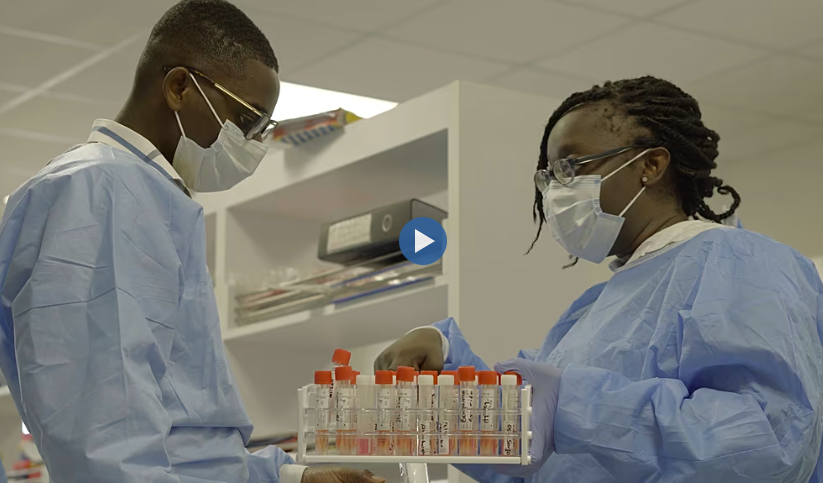
In recent years, the Institute has scaled up its operations by adding a state-of-the-art Advanced Research Laboratory, significantly boosting its capacity. This facility has enabled the Institute to broaden its research scope and strengthen its role in combating infectious diseases that threaten millions across West Africa.
Professor Abraham Anang, the Director of the Institute, explains the significance of the expansion:
“Now we have the third-country training, which is training laboratory scientists in West Africa post-Ebola, to prepare the region to respond with early detection.”
This forward-looking approach underscores how critical early detection and preparedness are in regions vulnerable to outbreaks. The Ebola epidemic highlighted the devastating impact of delayed responses, and institutions like NMIMR are determined to ensure that history does not repeat itself.
Japanese Management Methods: Kaizen and 5S
Beyond medical science, the Institute has also benefited from Japanese management principles that emphasise efficiency, discipline, and continuous improvement. Two such methodologies—Kaizen and 5S—have been adopted by Ghanaian researchers who trained in Tokyo.
- Kaizen, meaning “change for the better,” promotes incremental improvements across all levels of an organisation. Applied to the laboratory environment, it encourages every staff member to propose innovations that enhance productivity and accuracy.
- 5S, an organisational method built on the principles of Sort, Straighten, Shine, Standardise, and Sustain, ensures that laboratory workspaces are orderly, clean, and efficient.
Christopher Zaab-Yen Abana, Chief Research Assistant at the Virology Department, highlights how these methodologies proved indispensable during the COVID-19 pandemic:
“It correctly helps you to sort out and set out how the lab working space should be. And most importantly in this Covid-19 season, this approach has helped us to match the thousands of samples, so that we can process them.”
These techniques not only facilitated large-scale testing but also allowed researchers to continue diagnosing other infectious diseases like influenza and yellow fever, even amid the global health crisis.
International Cooperation in Action
The NMIMR is also a hub for global scientific exchange, with Japanese researchers working side by side with Ghanaian scientists. Among them is Dr. Hayashi Takaya, a virologist from Tokyo Medical and Dental University, who has been working at the Institute for the past three years through the Japan Program for Infectious Diseases Research and Infrastructure.
Dr. Hayashi emphasises how collaboration has strengthened their research:
“My Ghanaian colleague helped me to collect samples and that is very good cooperation to move forward our research in Ghana. We successfully isolated the Ghanaian Dengue Fever virus.”
The ability to isolate and study such viruses is invaluable for both immediate outbreak responses and long-term vaccine and treatment development. Moreover, this form of capacity-building—training local scientists and sharing resources—ensures that the knowledge and expertise remain embedded in West Africa long after international researchers depart.
A Model of Long-Term Partnership
What makes the Noguchi Institute remarkable is not just its scientific contributions, but the durability of its Japan–Ghana partnership. For over 40 years, the Institute has embodied a vision of collaborative research where international expertise and local knowledge come together to solve pressing health challenges.
This approach has proven essential in responding to multiple crises, from yellow fever to Ebola and, most recently, COVID-19. It also provides a blueprint for how cross-border partnerships can address global health threats that do not respect geographical boundaries.
Looking Ahead
The NMIMR’s journey demonstrates that the fight against disease is as much about infrastructure and training as it is about science. By continuing to invest in advanced research facilities, embracing organisational innovations like Kaizen, and fostering cross-cultural collaboration, the Institute is positioning itself as a regional leader in disease prevention and response.
As the world continues to grapple with pandemics and emerging infectious diseases, the Ghana–Japan partnership stands as proof that global cooperation is not only possible but essential. The legacy of Dr. Noguchi lives on—not just in the name of the Institute, but in the ongoing commitment of scientists from two continents working together for the health of millions.
Final Thoughts
The story of the Noguchi Memorial Institute is a reminder that the fight against disease cannot be won in isolation. By blending Ghanaian expertise with Japanese innovation, the Institute has become a pillar of resilience in West Africa. Its work shows how sustained investment in science, infrastructure, and people can change the course of public health for generations to come. As global health challenges continue to evolve, partnerships like this one will be critical in safeguarding lives and ensuring that no region faces these threats alone.
Conclusion
Forty-plus years after its founding, the Noguchi Memorial Institute for Medical Research is more relevant than ever. With the backing of Japanese expertise and management strategies, as well as Ghana’s growing scientific leadership, it continues to serve as a model of how global partnerships can strengthen local resilience against disease.
In a world where health crises are increasingly interconnected, the Noguchi Institute’s work highlights a simple but powerful truth: when nations collaborate, humanity as a whole benefits.
Japan and Ghana Step Up Long-Term Collaboration in Fighting Disease in West Africa
The fight against infectious diseases has always been a global undertaking, requiring cooperation, shared expertise, and sustained commitment. Nowhere is this more evident than in West Africa, where the Ghana-based Noguchi Memorial Institute for Medical Research (NMIMR) continues to play a vital role. With its origins deeply tied to Japanese scientific history, the Institute represents not only a symbol of international partnership but also an ongoing force in the region’s public health resilience.
A Legacy Rooted in Sacrifice
Register for Tekedia Mini-MBA edition 20 (June 8 – Sept 5, 2026).
Register for Tekedia AI in Business Masterclass.
Join Tekedia Capital Syndicate and co-invest in great global startups.
Register for Tekedia AI Lab.
The NMIMR was established in 1979 in Accra, Ghana’s capital, in memory of Japanese bacteriologist Dr. Hideyo Noguchi, who tragically died in 1928 from yellow fever while conducting research in the region. His death became both a personal sacrifice and a legacy that inspired cross-continental collaboration. More than four decades later, the Institute remains a beacon of international cooperation, carrying forward Noguchi’s mission of combating deadly diseases in Africa.
Since its inception, the Institute has evolved into one of the leading centres for biomedical research in West Africa, providing both diagnostic services and cutting-edge scientific inquiry in virology, bacteriology, immunology, and epidemiology. Its relevance has only grown as new health threats continue to emerge across the region.
Expanding Capacity with Advanced Research Facilities

In recent years, the Institute has scaled up its operations by adding a state-of-the-art Advanced Research Laboratory, significantly boosting its capacity. This facility has enabled the Institute to broaden its research scope and strengthen its role in combating infectious diseases that threaten millions across West Africa.
Professor Abraham Anang, the Director of the Institute, explains the significance of the expansion:
“Now we have the third-country training, which is training laboratory scientists in West Africa post-Ebola, to prepare the region to respond with early detection.”

This forward-looking approach underscores how critical early detection and preparedness are in regions vulnerable to outbreaks. The Ebola epidemic highlighted the devastating impact of delayed responses, and institutions like NMIMR are determined to ensure that history does not repeat itself.
Japanese Management Methods: Kaizen and 5S
Beyond medical science, the Institute has also benefited from Japanese management principles that emphasise efficiency, discipline, and continuous improvement. Two such methodologies—Kaizen and 5S—have been adopted by Ghanaian researchers who trained in Tokyo.
- Kaizen, meaning “change for the better,” promotes incremental improvements across all levels of an organisation. Applied to the laboratory environment, it encourages every staff member to propose innovations that enhance productivity and accuracy.
- 5S, an organisational method built on the principles of Sort, Straighten, Shine, Standardise, and Sustain, ensures that laboratory workspaces are orderly, clean, and efficient.
Christopher Zaab-Yen Abana, Chief Research Assistant at the Virology Department, highlights how these methodologies proved indispensable during the COVID-19 pandemic:
“It correctly helps you to sort out and set out how the lab working space should be. And most importantly in this Covid-19 season, this approach has helped us to match the thousands of samples, so that we can process them.”
These techniques not only facilitated large-scale testing but also allowed researchers to continue diagnosing other infectious diseases like influenza and yellow fever, even amid the global health crisis.
International Cooperation in Action
The NMIMR is also a hub for global scientific exchange, with Japanese researchers working side by side with Ghanaian scientists. Among them is Dr. Hayashi Takaya, a virologist from Tokyo Medical and Dental University, who has been working at the Institute for the past three years through the Japan Program for Infectious Diseases Research and Infrastructure.
Dr. Hayashi emphasises how collaboration has strengthened their research:
“My Ghanaian colleague helped me to collect samples and that is very good cooperation to move forward our research in Ghana. We successfully isolated the Ghanaian Dengue Fever virus.”
The ability to isolate and study such viruses is invaluable for both immediate outbreak responses and long-term vaccine and treatment development. Moreover, this form of capacity-building—training local scientists and sharing resources—ensures that the knowledge and expertise remain embedded in West Africa long after international researchers depart.
A Model of Long-Term Partnership
What makes the Noguchi Institute remarkable is not just its scientific contributions, but the durability of its Japan–Ghana partnership. For over 40 years, the Institute has embodied a vision of collaborative research where international expertise and local knowledge come together to solve pressing health challenges.
This approach has proven essential in responding to multiple crises, from yellow fever to Ebola and, most recently, COVID-19. It also provides a blueprint for how cross-border partnerships can address global health threats that do not respect geographical boundaries.
Looking Ahead
The NMIMR’s journey demonstrates that the fight against disease is as much about infrastructure and training as it is about science. By continuing to invest in advanced research facilities, embracing organisational innovations like Kaizen, and fostering cross-cultural collaboration, the Institute is positioning itself as a regional leader in disease prevention and response.
As the world continues to grapple with pandemics and emerging infectious diseases, the Ghana–Japan partnership stands as proof that global cooperation is not only possible but essential. The legacy of Dr. Noguchi lives on—not just in the name of the Institute, but in the ongoing commitment of scientists from two continents working together for the health of millions.
Final Thoughts
The story of the Noguchi Memorial Institute is a reminder that the fight against disease cannot be won in isolation. By blending Ghanaian expertise with Japanese innovation, the Institute has become a pillar of resilience in West Africa. Its work shows how sustained investment in science, infrastructure, and people can change the course of public health for generations to come. As global health challenges continue to evolve, partnerships like this one will be critical in safeguarding lives and ensuring that no region faces these threats alone.
Conclusion
Forty-plus years after its founding, the Noguchi Memorial Institute for Medical Research is more relevant than ever. With the backing of Japanese expertise and management strategies, as well as Ghana’s growing scientific leadership, it continues to serve as a model of how global partnerships can strengthen local resilience against disease.
In a world where health crises are increasingly interconnected, the Noguchi Institute’s work highlights a simple but powerful truth: when nations collaborate, humanity as a whole benefits.
Uploaded files:Share this:
- Click to share on Facebook (Opens in new window) Facebook
- Click to share on X (Opens in new window) X
- Click to share on WhatsApp (Opens in new window) WhatsApp
- Click to share on LinkedIn (Opens in new window) LinkedIn
- Click to email a link to a friend (Opens in new window) Email
- Click to print (Opens in new window) Print