

Kallas: EU Won’t Return Frozen Russian Assets Without Reparations for Ukraine

Quote from Alex Bobby on August 31, 2025, 2:16 AM
Kallas: EU Won’t Return Frozen Assets to Russia Unless Reparations Are Paid to Ukraine
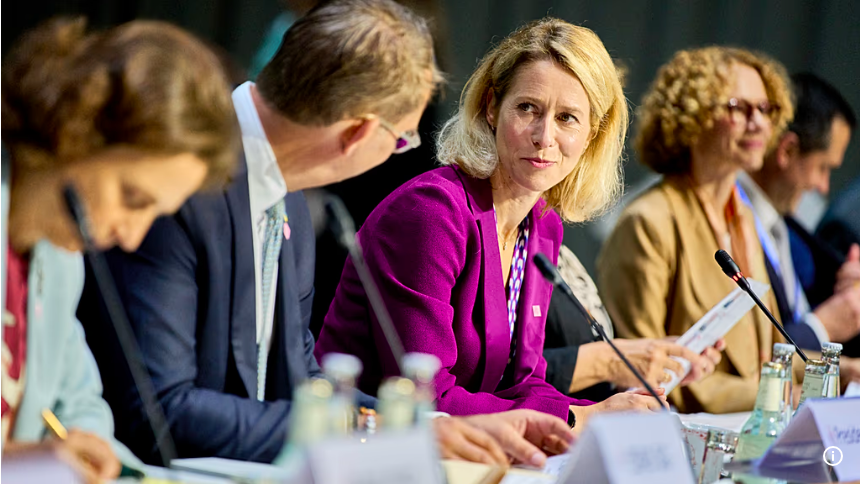
The European Union’s debate over what to do with frozen Russian assets has intensified, following a bold statement by the bloc’s foreign affairs chief, Kaja Kallas. Speaking at an informal meeting of EU foreign ministers in Copenhagen, Kallas declared that Russia should not expect to see its frozen assets returned unless it commits to paying reparations to Ukraine for the destruction caused by the war.
Her remarks signal a growing willingness within parts of the EU to use frozen assets not merely as a temporary measure, but as leverage in shaping a potential peace settlement between Moscow and Kyiv. Yet, the issue remains deeply divisive among member states, raising both legal and political questions about the future of Europe’s economic stance toward Russia.
Frozen Assets: A Massive War Chest
In the wake of Russia’s full-scale invasion of Ukraine in February 2022, the European Union moved swiftly to freeze Russian state assets held within its jurisdiction. Today, the total stands at roughly €210 billion, a staggering sum that has become central to the debate over reparations.
The majority of these funds—an estimated €183 billion—are held in Belgium, largely within the Euroclear clearinghouse that processes international financial transactions. These assets, belonging primarily to the Russian central bank, were originally held in the form of short-term government bonds.
While the EU has not confiscated the assets outright, it has already begun channeling the interest earned on them toward supporting Ukraine. Between €3–5 billion annually is currently being allocated through the European Peace Facility (EPF), a financial mechanism designed to facilitate military and defence support for allied nations. For Kyiv, this steady flow of resources has become a lifeline in its struggle against Russian forces.
Kallas’ Position: Reparations Before Restitution
At the Copenhagen meeting, Kallas was unequivocal in her stance.
“We can't possibly imagine that, if there is a ceasefire or a peace deal, these assets are given back to Russia if they haven’t paid for the reparations,” she said.
Her remarks underscore the principle that Russia, as the aggressor in the conflict, must bear financial responsibility for the immense damage inflicted upon Ukraine. Cities reduced to rubble, critical infrastructure destroyed, and millions of displaced citizens represent costs that far exceed Ukraine’s own ability to repair.
For Kallas, ensuring that Russia’s frozen assets remain tied to reparations is not only a matter of fairness but also a strategic necessity. By setting clear conditions now, the EU signals to Moscow that a peace agreement cannot simply restore the pre-war financial status quo.
Legal and Political Divides Within the EU
Yet the path forward is anything but simple. Confiscating or permanently redirecting frozen state assets is an unprecedented move under international law. Legal experts warn that doing so could open a “minefield” of challenges, setting precedents that may undermine financial systems worldwide.
Some EU member states, including Poland and the Baltic nations, argue for full confiscation of the frozen funds, seeing it as both morally justified and strategically necessary to deter further Russian aggression. They believe using the assets directly for reconstruction would place the burden squarely on Moscow rather than on European taxpayers.
Others, however, remain cautious. Belgium, Germany, and France have expressed serious reservations, warning that outright confiscation could violate property rights and destabilise the Euroclear system. These countries prefer to continue using only the interest generated from the assets, a compromise that avoids legal pitfalls while still aiding Ukraine.
Hungary’s Challenge
Adding to the tension, Hungary recently sued the Council of the EU over its decision to direct billions from frozen Russian assets to Ukraine. Prime Minister Viktor Orbán’s government, which has maintained closer ties to Moscow than most of the bloc, argues that the move breached EU law by ignoring Hungary’s objections.
Budapest’s challenge underscores the broader fault lines within the EU. While the majority of member states remain firmly committed to supporting Kyiv, Hungary has frequently sought to water down or block measures targeting Russia. This lawsuit is unlikely to overturn EU policy in the short term, but it illustrates how fragile consensus on this issue remains.
The Bigger Picture: Peace, Pressure, and Precedent
The debate over frozen assets is not only about Ukraine’s immediate needs but also about the framework of a future peace settlement. If Moscow were to agree to a ceasefire or a broader peace deal, the disposition of its frozen funds would inevitably become a central issue in negotiations.
By making clear that the assets will not be returned without reparations, Kallas and like-minded EU leaders aim to prevent Russia from using peace talks as a way to reclaim its funds without addressing the destruction it has caused. At the same time, the EU must navigate the legal complexities of asset confiscation, balancing the urgent demand for justice with the need to uphold international financial norms.
There is also a global dimension. Countries beyond Europe are watching closely, aware that any precedent set in dealing with Russian assets could, in theory, be applied to them in future conflicts. For this reason, many legal scholars stress the importance of crafting a solution that is both effective and defensible under international law.
Ukraine’s Stakes
For Ukraine, the outcome of this debate is critical. Reconstruction costs are expected to run into the hundreds of billions of euros, far beyond what Kyiv’s allies can sustainably provide. Access to Russia’s frozen assets, whether through interest or full confiscation, could significantly shape the country’s recovery prospects.
Every bombed-out apartment block, destroyed power grid, or shattered bridge adds to the urgency of securing long-term financing. For Ukrainians, the principle is simple: Russia must pay for the devastation it has caused.
Looking Forward
As the war in Ukraine continues and discussions over frozen Russian assets deepen, the EU faces a critical crossroads. The Copenhagen meeting shows there is no single, unified stance yet, but the direction is clear: Russia’s financial accountability will remain at the heart of any eventual peace deal.
Looking ahead, the EU will need to craft a legally sound framework that both satisfies international norms and delivers meaningful reparations for Ukraine’s reconstruction. The balance between justice, legality, and unity will not be easy to achieve—but the decisions made in the coming months could set a precedent for how the world responds to acts of aggression in the future.
Final Thoughts
The EU’s handling of Russia’s frozen assets is shaping up to be one of the most pivotal post-war questions in Europe. Kaja Kallas’s insistence that these funds cannot be returned without reparations reflects not only the moral imperative of holding Moscow accountable but also the practical reality of Ukraine’s staggering reconstruction needs.
Still, the legal and political hurdles are immense. With member states divided, Hungary challenging the process, and the international community watching closely, the EU must strike a balance between justice and legal precedent.
What’s clear is that these frozen billions are no longer just idle numbers in a ledger—they represent both leverage and responsibility. How the EU chooses to wield them could define the future of Ukraine’s recovery, Russia’s accountability, and Europe’s credibility on the world stage.
Conclusion: A Defining Test for the EU
Kaja Kallas’s strong stance on reparations highlights the EU’s struggle to reconcile justice, legality, and unity in its response to the war in Ukraine. The frozen assets question is more than a financial technicality—it is a defining test of the bloc’s resolve and its ability to chart a coherent path toward peace.
As the war grinds on, the debate will only intensify. Whether through interest or outright confiscation, the frozen billions sitting in European accounts represent not just money but leverage. And for Kallas, at least, that leverage must not be surrendered until Russia pays its debt to Ukraine.
Meta Description:
EU foreign affairs chief Kaja Kallas insists Russia’s frozen €210bn in assets cannot be returned unless Moscow pays reparations to Ukraine, as ministers debate legal and political challenges in Copenhagen.
Kallas: EU Won’t Return Frozen Assets to Russia Unless Reparations Are Paid to Ukraine
The European Union’s debate over what to do with frozen Russian assets has intensified, following a bold statement by the bloc’s foreign affairs chief, Kaja Kallas. Speaking at an informal meeting of EU foreign ministers in Copenhagen, Kallas declared that Russia should not expect to see its frozen assets returned unless it commits to paying reparations to Ukraine for the destruction caused by the war.
Her remarks signal a growing willingness within parts of the EU to use frozen assets not merely as a temporary measure, but as leverage in shaping a potential peace settlement between Moscow and Kyiv. Yet, the issue remains deeply divisive among member states, raising both legal and political questions about the future of Europe’s economic stance toward Russia.
Register for Tekedia Mini-MBA edition 20 (June 8 – Sept 5, 2026).
Register for Tekedia AI in Business Masterclass.
Join Tekedia Capital Syndicate and co-invest in great global startups.
Register for Tekedia AI Lab.
Frozen Assets: A Massive War Chest
In the wake of Russia’s full-scale invasion of Ukraine in February 2022, the European Union moved swiftly to freeze Russian state assets held within its jurisdiction. Today, the total stands at roughly €210 billion, a staggering sum that has become central to the debate over reparations.
The majority of these funds—an estimated €183 billion—are held in Belgium, largely within the Euroclear clearinghouse that processes international financial transactions. These assets, belonging primarily to the Russian central bank, were originally held in the form of short-term government bonds.

While the EU has not confiscated the assets outright, it has already begun channeling the interest earned on them toward supporting Ukraine. Between €3–5 billion annually is currently being allocated through the European Peace Facility (EPF), a financial mechanism designed to facilitate military and defence support for allied nations. For Kyiv, this steady flow of resources has become a lifeline in its struggle against Russian forces.
Kallas’ Position: Reparations Before Restitution
At the Copenhagen meeting, Kallas was unequivocal in her stance.

“We can't possibly imagine that, if there is a ceasefire or a peace deal, these assets are given back to Russia if they haven’t paid for the reparations,” she said.
Her remarks underscore the principle that Russia, as the aggressor in the conflict, must bear financial responsibility for the immense damage inflicted upon Ukraine. Cities reduced to rubble, critical infrastructure destroyed, and millions of displaced citizens represent costs that far exceed Ukraine’s own ability to repair.
For Kallas, ensuring that Russia’s frozen assets remain tied to reparations is not only a matter of fairness but also a strategic necessity. By setting clear conditions now, the EU signals to Moscow that a peace agreement cannot simply restore the pre-war financial status quo.
Legal and Political Divides Within the EU
Yet the path forward is anything but simple. Confiscating or permanently redirecting frozen state assets is an unprecedented move under international law. Legal experts warn that doing so could open a “minefield” of challenges, setting precedents that may undermine financial systems worldwide.
Some EU member states, including Poland and the Baltic nations, argue for full confiscation of the frozen funds, seeing it as both morally justified and strategically necessary to deter further Russian aggression. They believe using the assets directly for reconstruction would place the burden squarely on Moscow rather than on European taxpayers.
Others, however, remain cautious. Belgium, Germany, and France have expressed serious reservations, warning that outright confiscation could violate property rights and destabilise the Euroclear system. These countries prefer to continue using only the interest generated from the assets, a compromise that avoids legal pitfalls while still aiding Ukraine.
Hungary’s Challenge
Adding to the tension, Hungary recently sued the Council of the EU over its decision to direct billions from frozen Russian assets to Ukraine. Prime Minister Viktor Orbán’s government, which has maintained closer ties to Moscow than most of the bloc, argues that the move breached EU law by ignoring Hungary’s objections.
Budapest’s challenge underscores the broader fault lines within the EU. While the majority of member states remain firmly committed to supporting Kyiv, Hungary has frequently sought to water down or block measures targeting Russia. This lawsuit is unlikely to overturn EU policy in the short term, but it illustrates how fragile consensus on this issue remains.
The Bigger Picture: Peace, Pressure, and Precedent
The debate over frozen assets is not only about Ukraine’s immediate needs but also about the framework of a future peace settlement. If Moscow were to agree to a ceasefire or a broader peace deal, the disposition of its frozen funds would inevitably become a central issue in negotiations.
By making clear that the assets will not be returned without reparations, Kallas and like-minded EU leaders aim to prevent Russia from using peace talks as a way to reclaim its funds without addressing the destruction it has caused. At the same time, the EU must navigate the legal complexities of asset confiscation, balancing the urgent demand for justice with the need to uphold international financial norms.
There is also a global dimension. Countries beyond Europe are watching closely, aware that any precedent set in dealing with Russian assets could, in theory, be applied to them in future conflicts. For this reason, many legal scholars stress the importance of crafting a solution that is both effective and defensible under international law.
Ukraine’s Stakes
For Ukraine, the outcome of this debate is critical. Reconstruction costs are expected to run into the hundreds of billions of euros, far beyond what Kyiv’s allies can sustainably provide. Access to Russia’s frozen assets, whether through interest or full confiscation, could significantly shape the country’s recovery prospects.
Every bombed-out apartment block, destroyed power grid, or shattered bridge adds to the urgency of securing long-term financing. For Ukrainians, the principle is simple: Russia must pay for the devastation it has caused.
Looking Forward
As the war in Ukraine continues and discussions over frozen Russian assets deepen, the EU faces a critical crossroads. The Copenhagen meeting shows there is no single, unified stance yet, but the direction is clear: Russia’s financial accountability will remain at the heart of any eventual peace deal.
Looking ahead, the EU will need to craft a legally sound framework that both satisfies international norms and delivers meaningful reparations for Ukraine’s reconstruction. The balance between justice, legality, and unity will not be easy to achieve—but the decisions made in the coming months could set a precedent for how the world responds to acts of aggression in the future.
Final Thoughts
The EU’s handling of Russia’s frozen assets is shaping up to be one of the most pivotal post-war questions in Europe. Kaja Kallas’s insistence that these funds cannot be returned without reparations reflects not only the moral imperative of holding Moscow accountable but also the practical reality of Ukraine’s staggering reconstruction needs.
Still, the legal and political hurdles are immense. With member states divided, Hungary challenging the process, and the international community watching closely, the EU must strike a balance between justice and legal precedent.
What’s clear is that these frozen billions are no longer just idle numbers in a ledger—they represent both leverage and responsibility. How the EU chooses to wield them could define the future of Ukraine’s recovery, Russia’s accountability, and Europe’s credibility on the world stage.
Conclusion: A Defining Test for the EU
Kaja Kallas’s strong stance on reparations highlights the EU’s struggle to reconcile justice, legality, and unity in its response to the war in Ukraine. The frozen assets question is more than a financial technicality—it is a defining test of the bloc’s resolve and its ability to chart a coherent path toward peace.
As the war grinds on, the debate will only intensify. Whether through interest or outright confiscation, the frozen billions sitting in European accounts represent not just money but leverage. And for Kallas, at least, that leverage must not be surrendered until Russia pays its debt to Ukraine.
Meta Description:
EU foreign affairs chief Kaja Kallas insists Russia’s frozen €210bn in assets cannot be returned unless Moscow pays reparations to Ukraine, as ministers debate legal and political challenges in Copenhagen.
Share this:
- Click to share on Facebook (Opens in new window) Facebook
- Click to share on X (Opens in new window) X
- Click to share on WhatsApp (Opens in new window) WhatsApp
- Click to share on LinkedIn (Opens in new window) LinkedIn
- Click to email a link to a friend (Opens in new window) Email
- Click to print (Opens in new window) Print