

Kneecap rapper Mo Chara faces a UK court over alleged Hezbollah flag display, sparking debates on activism, free speech, and pro-Palestinian support.

Quote from Alex Bobby on August 22, 2025, 4:04 AM
Kneecap Rapper Mo Chara to Appear in UK Court Over Alleged Support for Terror Group
Kneecap rapper Mo Chara, real name Liam Óg Ó hAnnaidh, is set to appear today at Westminster Magistrates Court in London over charges relating to an alleged display of a Hezbollah flag during a concert in November 2023. The case has drawn widespread attention, not only because of the rapper’s prominence as a member of the politically outspoken Irish hip-hop trio Kneecap, but also due to the heightened tensions around pro-Palestinian activism and freedom of expression in the UK.
This is Mo Chara’s second appearance before the court, following an initial hearing on 18 June, after which he was released on unconditional bail. Today’s proceedings are expected to attract both legal scrutiny and cultural commentary, as Kneecap’s growing political influence collides with the British state’s efforts to clamp down on alleged support for proscribed organisations.
Public Order Act Conditions Issued
Ahead of today’s appearance, the Metropolitan Police issued Public Order Act conditions, citing concerns that protests outside the court could cause “serious disruption.” Such measures are relatively rare for court cases involving musicians but reflect the authorities’ awareness of the scale of public support and potential demonstrations linked to the band’s political stance.
In a statement posted on X, formerly Twitter, Kneecap strongly criticised the conditions, calling them a politically motivated attempt to suppress dissent.
“We massively appreciate the support of what we know are the majority of the public, who can see this farce for what it is. It is a distraction from war crimes that the British State support,” the band wrote. “It is a calculated political decision the night before Mo Chara’s court appearance. There is no basis for this, our last hearing was entirely peaceful and a loving show of solidarity.”
The statement urged supporters to remain calm and cooperative with police instructions: “Please go out of your way to be compliant with all instructions issued, irrespective of how pitiful. Free Palestine.”
Artists Rally in Support
The trial has also drawn the attention of fellow artists, with singer-songwriter Nadine Shah and rapper Maverick Sabre reportedly expected to appear at the court in solidarity with Kneecap. The trio have become a powerful cultural voice not just in Ireland, but across Europe, often using their music and stage presence to highlight political struggles, particularly those related to Irish identity, colonial history, and the ongoing conflict in Gaza.
Kneecap’s vocal support for Palestine has sparked repeated controversies at concerts and festivals. While the band has consistently denied endorsing either Hamas or Hezbollah, their visible advocacy for Palestinian rights and sharp criticism of British and Israeli policies has put them at odds with political establishments in multiple countries.
Political Backdrop: Palestine, Protest, and Controversy
The case against Mo Chara comes during a period of heightened scrutiny of pro-Palestinian activism in the UK. Since the escalation of the Israel-Gaza conflict in October 2023, British authorities have taken a tougher stance on symbols, rhetoric, and public demonstrations that they deem could amount to support for banned organisations. Hezbollah, whose flag Mo Chara allegedly displayed, has been a proscribed group in the UK since 2019.
Kneecap, however, insists that their activism is humanitarian and political rather than an endorsement of terrorism. In a statement reflecting on Mo Chara’s first court appearance, the band wrote:
“Since his last court appearance Israel has murdered another 9,000 Palestinians, mainly children and women. Over 1,000 murdered whilst queuing for aid, starved due to their siege. Young children gunned down by snipers as they scramble for a bag of flour. Whole families, from babies to grandparents, murdered as they huddled in makeshift tents.”
Describing the situation as “evil beyond any f*cking words,” the group framed Mo Chara’s legal battle as part of a larger historical pattern: “British courts have long charged people from the North of Ireland with ‘terrorism’ for crimes never committed. We will fight them. We will win.”
From the Stage to the Courtroom
The current case is not Kneecap’s first major clash with political authorities. Just last month, the group was banned from headlining the final night of the Sziget music festival in Budapest and prohibited from entering Hungary for three years. Prime Minister Viktor Orbán’s government declared the trio a “national security threat,” accusing them of “anti-Semitism and glorifying terror.”
The move, while controversial, highlighted Kneecap’s growing international profile as cultural provocateurs who use music as a platform for political expression. Despite such setbacks, the band has continued to attract attention and support across Europe, with many fans praising their defiance in the face of state repression.
Supporters and Critics
Reactions to the case have been predictably divided. Supporters argue that Mo Chara is being targeted for his political views rather than genuine support for terrorism. To them, the court proceedings are an extension of a broader campaign to silence pro-Palestinian activism.
Critics, however, argue that displaying the flag of a proscribed organisation crosses a line into endorsing violence and extremism. For these voices, Kneecap’s activism cannot be separated from the groups whose symbols they allegedly use.
The Metropolitan Police’s decision to impose restrictions ahead of today’s proceedings demonstrates the sensitivity of the case, as authorities attempt to balance freedom of expression with national security concerns.
Final Thoughts
The case of Mo Chara is more than a single courtroom battle — it is a reflection of the growing tension between political activism and state authority in the UK. For some, the charges are about upholding the law against displaying symbols of banned organisations. For others, they represent a worrying attempt to criminalise political dissent and suppress solidarity with Palestine.
Kneecap’s unapologetic stance ensures that this case will resonate far beyond Westminster Magistrates Court. Whatever the legal outcome, the controversy has already cemented Mo Chara and his bandmates as lightning rods in a wider cultural struggle. Their fight — whether seen as reckless provocation or principled resistance — highlights how music and politics remain inseparable in moments of global conflict.
Conclusion and Looking Ahead
Mo Chara’s appearance in court today underscores the increasingly fraught intersection between art, activism, and state power in the UK. What might once have been dismissed as a musician’s political gesture is now being litigated in a courtroom, with wider implications for how cultural figures engage in political discourse.
As Kneecap continues to insist on their right to speak out on behalf of Palestine, their battles in both the courts and the cultural arena reflect a broader struggle over dissent, identity, and freedom of expression in Britain.
The outcome of Mo Chara’s case could set a precedent for how pro-Palestinian activism is treated in the country going forward. Regardless of the court’s decision, Kneecap’s message remains clear: they see their role not just as entertainers but as cultural agitators committed to challenging what they view as hypocrisy and injustice.
For now, all eyes are on Westminster Magistrates Court — and on the rapper who has become a symbol of the collision between art, protest, and politics in contemporary Britain.
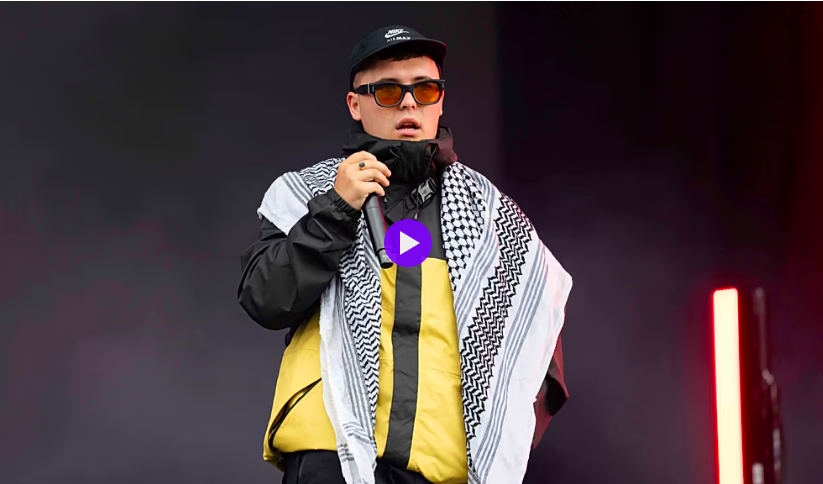
Kneecap Rapper Mo Chara to Appear in UK Court Over Alleged Support for Terror Group
Kneecap rapper Mo Chara, real name Liam Óg Ó hAnnaidh, is set to appear today at Westminster Magistrates Court in London over charges relating to an alleged display of a Hezbollah flag during a concert in November 2023. The case has drawn widespread attention, not only because of the rapper’s prominence as a member of the politically outspoken Irish hip-hop trio Kneecap, but also due to the heightened tensions around pro-Palestinian activism and freedom of expression in the UK.
This is Mo Chara’s second appearance before the court, following an initial hearing on 18 June, after which he was released on unconditional bail. Today’s proceedings are expected to attract both legal scrutiny and cultural commentary, as Kneecap’s growing political influence collides with the British state’s efforts to clamp down on alleged support for proscribed organisations.
Register for Tekedia Mini-MBA edition 20 (June 8 – Sept 5, 2026).
Register for Tekedia AI in Business Masterclass.
Join Tekedia Capital Syndicate and co-invest in great global startups.
Register for Tekedia AI Lab.
Public Order Act Conditions Issued
Ahead of today’s appearance, the Metropolitan Police issued Public Order Act conditions, citing concerns that protests outside the court could cause “serious disruption.” Such measures are relatively rare for court cases involving musicians but reflect the authorities’ awareness of the scale of public support and potential demonstrations linked to the band’s political stance.
In a statement posted on X, formerly Twitter, Kneecap strongly criticised the conditions, calling them a politically motivated attempt to suppress dissent.

“We massively appreciate the support of what we know are the majority of the public, who can see this farce for what it is. It is a distraction from war crimes that the British State support,” the band wrote. “It is a calculated political decision the night before Mo Chara’s court appearance. There is no basis for this, our last hearing was entirely peaceful and a loving show of solidarity.”
The statement urged supporters to remain calm and cooperative with police instructions: “Please go out of your way to be compliant with all instructions issued, irrespective of how pitiful. Free Palestine.”
Artists Rally in Support

The trial has also drawn the attention of fellow artists, with singer-songwriter Nadine Shah and rapper Maverick Sabre reportedly expected to appear at the court in solidarity with Kneecap. The trio have become a powerful cultural voice not just in Ireland, but across Europe, often using their music and stage presence to highlight political struggles, particularly those related to Irish identity, colonial history, and the ongoing conflict in Gaza.
Kneecap’s vocal support for Palestine has sparked repeated controversies at concerts and festivals. While the band has consistently denied endorsing either Hamas or Hezbollah, their visible advocacy for Palestinian rights and sharp criticism of British and Israeli policies has put them at odds with political establishments in multiple countries.
Political Backdrop: Palestine, Protest, and Controversy
The case against Mo Chara comes during a period of heightened scrutiny of pro-Palestinian activism in the UK. Since the escalation of the Israel-Gaza conflict in October 2023, British authorities have taken a tougher stance on symbols, rhetoric, and public demonstrations that they deem could amount to support for banned organisations. Hezbollah, whose flag Mo Chara allegedly displayed, has been a proscribed group in the UK since 2019.
Kneecap, however, insists that their activism is humanitarian and political rather than an endorsement of terrorism. In a statement reflecting on Mo Chara’s first court appearance, the band wrote:
“Since his last court appearance Israel has murdered another 9,000 Palestinians, mainly children and women. Over 1,000 murdered whilst queuing for aid, starved due to their siege. Young children gunned down by snipers as they scramble for a bag of flour. Whole families, from babies to grandparents, murdered as they huddled in makeshift tents.”
Describing the situation as “evil beyond any f*cking words,” the group framed Mo Chara’s legal battle as part of a larger historical pattern: “British courts have long charged people from the North of Ireland with ‘terrorism’ for crimes never committed. We will fight them. We will win.”
From the Stage to the Courtroom
The current case is not Kneecap’s first major clash with political authorities. Just last month, the group was banned from headlining the final night of the Sziget music festival in Budapest and prohibited from entering Hungary for three years. Prime Minister Viktor Orbán’s government declared the trio a “national security threat,” accusing them of “anti-Semitism and glorifying terror.”
The move, while controversial, highlighted Kneecap’s growing international profile as cultural provocateurs who use music as a platform for political expression. Despite such setbacks, the band has continued to attract attention and support across Europe, with many fans praising their defiance in the face of state repression.
Supporters and Critics
Reactions to the case have been predictably divided. Supporters argue that Mo Chara is being targeted for his political views rather than genuine support for terrorism. To them, the court proceedings are an extension of a broader campaign to silence pro-Palestinian activism.
Critics, however, argue that displaying the flag of a proscribed organisation crosses a line into endorsing violence and extremism. For these voices, Kneecap’s activism cannot be separated from the groups whose symbols they allegedly use.
The Metropolitan Police’s decision to impose restrictions ahead of today’s proceedings demonstrates the sensitivity of the case, as authorities attempt to balance freedom of expression with national security concerns.
Final Thoughts
The case of Mo Chara is more than a single courtroom battle — it is a reflection of the growing tension between political activism and state authority in the UK. For some, the charges are about upholding the law against displaying symbols of banned organisations. For others, they represent a worrying attempt to criminalise political dissent and suppress solidarity with Palestine.
Kneecap’s unapologetic stance ensures that this case will resonate far beyond Westminster Magistrates Court. Whatever the legal outcome, the controversy has already cemented Mo Chara and his bandmates as lightning rods in a wider cultural struggle. Their fight — whether seen as reckless provocation or principled resistance — highlights how music and politics remain inseparable in moments of global conflict.
Conclusion and Looking Ahead
Mo Chara’s appearance in court today underscores the increasingly fraught intersection between art, activism, and state power in the UK. What might once have been dismissed as a musician’s political gesture is now being litigated in a courtroom, with wider implications for how cultural figures engage in political discourse.
As Kneecap continues to insist on their right to speak out on behalf of Palestine, their battles in both the courts and the cultural arena reflect a broader struggle over dissent, identity, and freedom of expression in Britain.
The outcome of Mo Chara’s case could set a precedent for how pro-Palestinian activism is treated in the country going forward. Regardless of the court’s decision, Kneecap’s message remains clear: they see their role not just as entertainers but as cultural agitators committed to challenging what they view as hypocrisy and injustice.
For now, all eyes are on Westminster Magistrates Court — and on the rapper who has become a symbol of the collision between art, protest, and politics in contemporary Britain.
Uploaded files:Share this:
- Click to share on Facebook (Opens in new window) Facebook
- Click to share on X (Opens in new window) X
- Click to share on WhatsApp (Opens in new window) WhatsApp
- Click to share on LinkedIn (Opens in new window) LinkedIn
- Click to email a link to a friend (Opens in new window) Email
- Click to print (Opens in new window) Print