

Marilyn Monroe to Joan Crawford: Hollywood’s Most Iconic Superstar Costume Glamours Jewellery

Quote from Alex Bobby on August 20, 2025, 5:02 AM
Marilyn Monroe to Joan Crawford: Hollywood’s Most Stunning Costume Jewellery
Jewellery has always been more than just an accessory—it is a symbol of glamour, status, and self-expression. But until the 20th century, jewellery was mostly the preserve of the wealthy, crafted from precious metals and gemstones that placed it far out of reach for the average person. That all changed with the rise of costume jewellery: dazzling, dramatic pieces made from inexpensive materials and imitation gems.
From the 1930s through the golden age of Hollywood, stars like Marilyn Monroe, Joan Crawford, and even Liberace turned costume jewellery into an icon of style. A new Taschen book, Costume Jewellery, featuring text by jewellery historian Carol Woolton, explores how these sparkling statement pieces reshaped fashion—and made glamour accessible to all.
The Birth of Costume Jewellery
Before the 20th century, jewellery was an either-or proposition: you either wore fine jewellery or you wore nothing at all. Costume jewellery changed that narrative entirely.
Using glass, rhinestones, silver plate, and other affordable materials, designers could create bold, eye-catching pieces that mimicked the look of fine gems. Several factors contributed to its rise. World War Two limited the availability of precious metals and stones, forcing jewellers to explore alternatives. At the same time, women’s roles in society were shifting. With more women entering the workforce, there was a growing appetite for affordable yet stylish accessories.
In Europe, costume jewellery had some traction, particularly among designers experimenting with new materials. But in America, it found its true home. “I think it was embraced much more in the States because you didn’t have that idea of heritage jewellery that was entrenched in Europe,” Woolton explains. While European women often inherited family heirlooms or received fine pieces for major life milestones, American women felt freer to experiment.
Hollywood’s Sparkling Influence
Hollywood played an enormous role in turning costume jewellery into a must-have accessory. When glamorous stars wore it both on-screen and off, it instantly became aspirational.
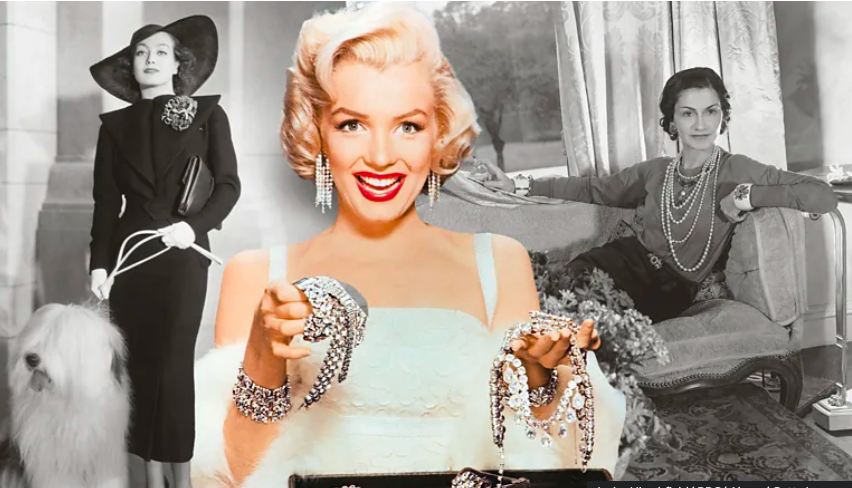
Joan Crawford, for example, was known for her love of bold, oversized jewellery. She often wore dramatic necklaces and chunky bracelets, making a powerful statement about strength and femininity. Her embrace of costume pieces showed audiences that beauty and luxury didn’t always have to come with sky-high price tags.
Marilyn Monroe helped cement costume jewellery’s star power in the 1950s. Her playful yet sensual image, paired with sparkling earrings, layered necklaces, and glittering bangles, created a vision of glamour that women everywhere wanted to emulate. Pieces she wore on set—even if made with rhinestones instead of diamonds—were seen as the epitome of sophistication.
Even entertainers like Liberace leaned into costume jewellery, donning flamboyant, jewel-encrusted accessories that matched his larger-than-life persona. Hollywood stars wore these pieces unapologetically, blurring the line between luxury and imitation.
Affordable Glamour for the Masses
The effect was transformative. Costume jewellery became an industry in itself, and by mid-century, it was being worn by everyone from secretaries to socialites. Department stores and boutique designers offered a wide range of statement pieces, allowing women to switch up their looks without investing in heirloom jewellery.
It wasn’t just about affordability—it was about accessibility. Costume jewellery allowed women to reinvent themselves, to mirror the glamour of Hollywood, and to make bold fashion statements without financial constraints. For working women, it was also practical: durable enough for daily wear, yet glamorous enough for an evening out.
As Woolton notes, costume jewellery “liberated women from the rules of fine jewellery” and democratised the concept of adornment. It wasn’t about fakes pretending to be real—it was about celebrating style in its own right.
Designers and Creativity Unleashed
Some of the most creative names in jewellery made their mark through costume design. Coco Chanel, for instance, famously championed costume jewellery, encouraging women to layer ropes of faux pearls and gold chains. She believed fashion jewellery should be playful and accessible—something women could change as easily as they changed their outfits.
American designers like Miriam Haskell and Trifari became household names by crafting intricate, artistic pieces that rivalled the beauty of fine jewellery. These designs often reflected Hollywood trends, with glamorous rhinestones, oversized cocktail rings, and dramatic bib necklaces.
Because the materials were less expensive, designers had more freedom to experiment with size, shape, and style. This unleashed a wave of creativity that would define mid-century fashion.
Legacy of a Golden Era
Today, vintage costume jewellery from Hollywood’s golden age remains highly collectible. Pieces worn by stars like Monroe or Crawford can fetch significant prices at auctions—not for the intrinsic value of their materials, but for their cultural significance and craftsmanship.
Beyond collectability, the influence of costume jewellery is still felt in modern fashion. Statement necklaces, bold earrings, and stacked bangles are staples on runways and red carpets, carrying forward the spirit of accessibility and drama first championed in the 20th century.
Most importantly, costume jewellery broke down barriers. It allowed women of all backgrounds to participate in fashion trends and to express themselves through sparkle and glamour. It challenged the idea that jewellery’s worth came from its price tag, and instead emphasised creativity, design, and personal expression.
Looking Forward
As fashion continues to evolve, the spirit of costume jewellery is very much alive. Modern designers still take inspiration from Hollywood’s golden age, reimagining bold necklaces, cocktail rings, and oversized earrings for today’s audiences. With sustainability now shaping consumer choices, the idea of jewellery made from alternative materials also feels more relevant than ever.
Just as Marilyn Monroe and Joan Crawford once showed the world that glamour didn’t need to come with a diamond price tag, the future of costume jewellery may lie in its ability to combine affordability, creativity, and conscience. What began as Hollywood sparkle in the mid-20th century is now poised to inspire a new generation of statement-makers who want to shine on their own terms.
Conclusion
From Marilyn Monroe’s shimmering earrings to Joan Crawford’s commanding necklaces, costume jewellery was more than just decoration—it was a cultural shift. By redefining what it meant to be glamorous, Hollywood’s embrace of imitation gems gave ordinary women the chance to shine like stars.
What began as a practical response to material shortages and social change evolved into an enduring fashion revolution. Today, whether we’re slipping on a bold cocktail ring or a pair of oversized hoops, we’re carrying forward the legacy of costume jewellery: glamour made accessible, creativity without limits, and sparkle for everyone.
Marilyn Monroe to Joan Crawford: Hollywood’s Most Stunning Costume Jewellery
Jewellery has always been more than just an accessory—it is a symbol of glamour, status, and self-expression. But until the 20th century, jewellery was mostly the preserve of the wealthy, crafted from precious metals and gemstones that placed it far out of reach for the average person. That all changed with the rise of costume jewellery: dazzling, dramatic pieces made from inexpensive materials and imitation gems.
From the 1930s through the golden age of Hollywood, stars like Marilyn Monroe, Joan Crawford, and even Liberace turned costume jewellery into an icon of style. A new Taschen book, Costume Jewellery, featuring text by jewellery historian Carol Woolton, explores how these sparkling statement pieces reshaped fashion—and made glamour accessible to all.
Register for Tekedia Mini-MBA edition 20 (June 8 – Sept 5, 2026).
Register for Tekedia AI in Business Masterclass.
Join Tekedia Capital Syndicate and co-invest in great global startups.
Register for Tekedia AI Lab.
The Birth of Costume Jewellery
Before the 20th century, jewellery was an either-or proposition: you either wore fine jewellery or you wore nothing at all. Costume jewellery changed that narrative entirely.
Using glass, rhinestones, silver plate, and other affordable materials, designers could create bold, eye-catching pieces that mimicked the look of fine gems. Several factors contributed to its rise. World War Two limited the availability of precious metals and stones, forcing jewellers to explore alternatives. At the same time, women’s roles in society were shifting. With more women entering the workforce, there was a growing appetite for affordable yet stylish accessories.

In Europe, costume jewellery had some traction, particularly among designers experimenting with new materials. But in America, it found its true home. “I think it was embraced much more in the States because you didn’t have that idea of heritage jewellery that was entrenched in Europe,” Woolton explains. While European women often inherited family heirlooms or received fine pieces for major life milestones, American women felt freer to experiment.
Hollywood’s Sparkling Influence
Hollywood played an enormous role in turning costume jewellery into a must-have accessory. When glamorous stars wore it both on-screen and off, it instantly became aspirational.

Joan Crawford, for example, was known for her love of bold, oversized jewellery. She often wore dramatic necklaces and chunky bracelets, making a powerful statement about strength and femininity. Her embrace of costume pieces showed audiences that beauty and luxury didn’t always have to come with sky-high price tags.
Marilyn Monroe helped cement costume jewellery’s star power in the 1950s. Her playful yet sensual image, paired with sparkling earrings, layered necklaces, and glittering bangles, created a vision of glamour that women everywhere wanted to emulate. Pieces she wore on set—even if made with rhinestones instead of diamonds—were seen as the epitome of sophistication.
Even entertainers like Liberace leaned into costume jewellery, donning flamboyant, jewel-encrusted accessories that matched his larger-than-life persona. Hollywood stars wore these pieces unapologetically, blurring the line between luxury and imitation.
Affordable Glamour for the Masses
The effect was transformative. Costume jewellery became an industry in itself, and by mid-century, it was being worn by everyone from secretaries to socialites. Department stores and boutique designers offered a wide range of statement pieces, allowing women to switch up their looks without investing in heirloom jewellery.
It wasn’t just about affordability—it was about accessibility. Costume jewellery allowed women to reinvent themselves, to mirror the glamour of Hollywood, and to make bold fashion statements without financial constraints. For working women, it was also practical: durable enough for daily wear, yet glamorous enough for an evening out.
As Woolton notes, costume jewellery “liberated women from the rules of fine jewellery” and democratised the concept of adornment. It wasn’t about fakes pretending to be real—it was about celebrating style in its own right.
Designers and Creativity Unleashed
Some of the most creative names in jewellery made their mark through costume design. Coco Chanel, for instance, famously championed costume jewellery, encouraging women to layer ropes of faux pearls and gold chains. She believed fashion jewellery should be playful and accessible—something women could change as easily as they changed their outfits.
American designers like Miriam Haskell and Trifari became household names by crafting intricate, artistic pieces that rivalled the beauty of fine jewellery. These designs often reflected Hollywood trends, with glamorous rhinestones, oversized cocktail rings, and dramatic bib necklaces.
Because the materials were less expensive, designers had more freedom to experiment with size, shape, and style. This unleashed a wave of creativity that would define mid-century fashion.
Legacy of a Golden Era
Today, vintage costume jewellery from Hollywood’s golden age remains highly collectible. Pieces worn by stars like Monroe or Crawford can fetch significant prices at auctions—not for the intrinsic value of their materials, but for their cultural significance and craftsmanship.
Beyond collectability, the influence of costume jewellery is still felt in modern fashion. Statement necklaces, bold earrings, and stacked bangles are staples on runways and red carpets, carrying forward the spirit of accessibility and drama first championed in the 20th century.
Most importantly, costume jewellery broke down barriers. It allowed women of all backgrounds to participate in fashion trends and to express themselves through sparkle and glamour. It challenged the idea that jewellery’s worth came from its price tag, and instead emphasised creativity, design, and personal expression.
Looking Forward
As fashion continues to evolve, the spirit of costume jewellery is very much alive. Modern designers still take inspiration from Hollywood’s golden age, reimagining bold necklaces, cocktail rings, and oversized earrings for today’s audiences. With sustainability now shaping consumer choices, the idea of jewellery made from alternative materials also feels more relevant than ever.
Just as Marilyn Monroe and Joan Crawford once showed the world that glamour didn’t need to come with a diamond price tag, the future of costume jewellery may lie in its ability to combine affordability, creativity, and conscience. What began as Hollywood sparkle in the mid-20th century is now poised to inspire a new generation of statement-makers who want to shine on their own terms.
Conclusion
From Marilyn Monroe’s shimmering earrings to Joan Crawford’s commanding necklaces, costume jewellery was more than just decoration—it was a cultural shift. By redefining what it meant to be glamorous, Hollywood’s embrace of imitation gems gave ordinary women the chance to shine like stars.
What began as a practical response to material shortages and social change evolved into an enduring fashion revolution. Today, whether we’re slipping on a bold cocktail ring or a pair of oversized hoops, we’re carrying forward the legacy of costume jewellery: glamour made accessible, creativity without limits, and sparkle for everyone.
Uploaded files:Share this:
- Click to share on Facebook (Opens in new window) Facebook
- Click to share on X (Opens in new window) X
- Click to share on WhatsApp (Opens in new window) WhatsApp
- Click to share on LinkedIn (Opens in new window) LinkedIn
- Click to email a link to a friend (Opens in new window) Email
- Click to print (Opens in new window) Print